All Stories
Browse our complete collection of folk tales, Panchatantra stories, and moral stories from around the world.
 Panchatantra Stories
Ages 9-12
Panchatantra Stories
Ages 9-12
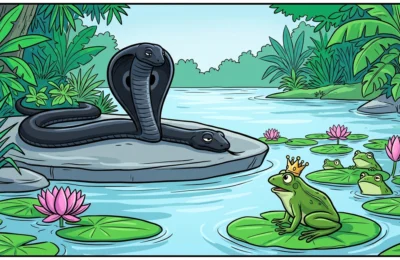
Frogs That Rode a Snake
An old snake tells the frogs he has been cursed to carry them, and the frog-king enjoys the rides so much that he never sees what the snake is planning.
 Panchatantra Stories
Ages 9-12
Panchatantra Stories
Ages 9-12
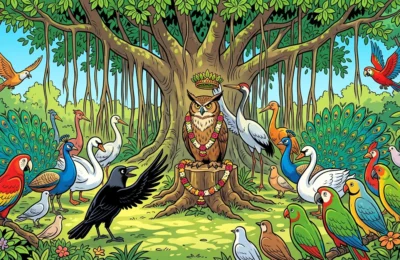
Of Crows and Owls
After the owls raid his banyan tree by night, the crow king's oldest minister lets himself be beaten and abandoned so that the owls will take him in.
 Panchatantra Stories
Ages 9-12
Panchatantra Stories
Ages 9-12
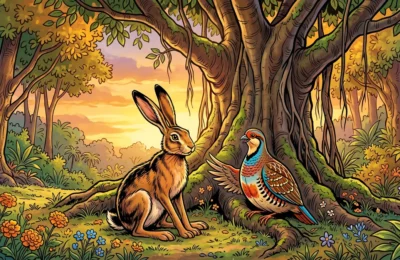
The Hare, the Partridge and the Holy Cat
A partridge comes home to find a hare in his nest, and the two ask a cat who claims to have sworn off hurting anyone to decide whose home it is.
 Panchatantra Stories
Ages 9-12
Panchatantra Stories
Ages 9-12
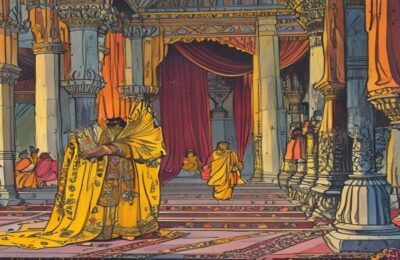
King Joy and Secretary Splendor
A secretary shaves his head and a king neighs like a horse to win back their angry wives, and the secretary's rhyme gives the game away.
 Panchatantra Stories
Ages 6-8
Panchatantra Stories
Ages 6-8
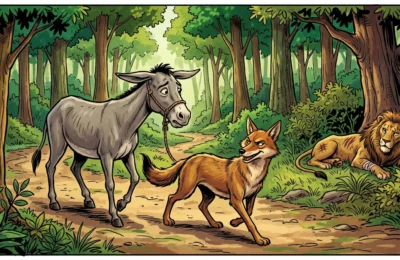
The Lion and the Donkey Go Hunting
A lion hides a loud donkey in the woods to bray and scare the animals into his trap, and the donkey decides that he is the mighty hunter.
 Panchatantra Stories
Ages 9-12
Panchatantra Stories
Ages 9-12
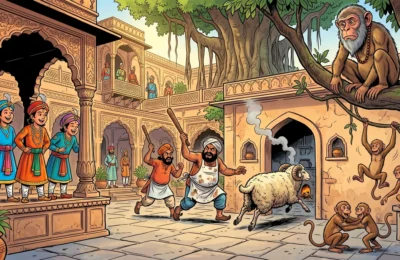
The Lion and the Foolish Donkey
A wounded lion sends his jackal to fetch a donkey, and when the donkey escapes the first time, the jackal sweet-talks him into walking back.
 Panchatantra Stories
Ages 9-12
Panchatantra Stories
Ages 9-12
The Unforgiving Monkey
A king orders his monkeys killed to cure his burned horses, and the one monkey who escaped uses a demon’s pearl necklace to take revenge.
 Panchatantra Stories
Ages 9-12
Panchatantra Stories
Ages 9-12
Slow, the Weaver
A weaver spares a fairy’s tree in return for a wish, takes his wife’s advice to ask for two extra arms and a head, and comes to a bad end.
 Aesop's Fables
Ages 3-5
Aesop's Fables
Ages 3-5
The Cat’s Judgement
Two cats who cannot agree how to share a stolen cheese ask a monkey to weigh it fairly, and he keeps nibbling to even the scales until nothing is left.
 Panchatantra Stories
Ages 6-8
Panchatantra Stories
Ages 6-8
Vishnu-Sarman and the King’s Sons
King Sudarsana despairs that his sons have learned nothing, until an old sage promises to make the princes wise in six months by telling them stories.
 Indian Folk Tales
Ages 6-8
Indian Folk Tales
Ages 6-8
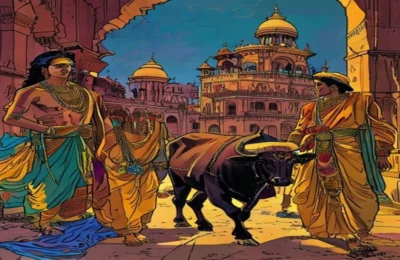
The Merchant and the Bullock
An abandoned injured bull recovers beside the Yamuna. His unfamiliar bellow frightens the lion king, until a jackal investigates and arranges a meeting.
 Jataka Tales
Ages 3-5
Jataka Tales
Ages 3-5
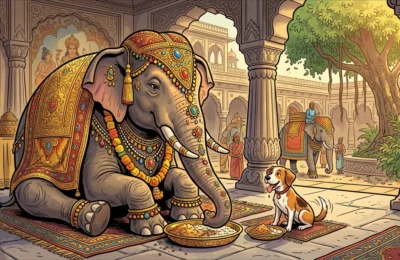
The Elephant and the Dog
When a farmer buys away the little dog who shares his meals, the king's elephant will not eat or bathe, and the king must find out why his elephant is so sad.