Sura and Baya: The Shark and the Crocodile
Sura and Baya: The Shark and the Crocodile: In the waters where the great Brantas River of Java spreads into the sea, there existed a boundary that was

Sura and Baya: The Shark and the Crocodile — How Surabaya Got Its Name
Surabaya — Indonesia’s second-largest city, the “City of Heroes,” gateway of East Java — takes its name from one of the most vivid animal combat myths in Southeast Asian tradition. Sura means shark; baya means crocodile; together they name a legendary battle between two great predators that defined the boundary between sea and land, and gave a city its ferocious, permanent character. This is the story of how two beasts fought for supremacy, reached a truce that neither could keep, and in their final, mutual destruction, named a place that would one day be home to ten million people.

Two Lords of Two Worlds
In the ancient time before the city existed — when the coast of East Java was wild and untamed, the river mouth a tangle of mangrove and mudflat where the brown river water met the blue Java Sea — there lived two creatures of supreme power. In the sea there was Sura, a shark of colossal size, ancient and terrible, who moved through the waves like a living blade. Nothing in the ocean challenged him. The fish fled at his passing, the dolphins leapt clear of his shadow, the fishermen beached their boats when his fin broke the surface.
On the land and in the river there lived Baya, a crocodile of equal antiquity and ferocity — long as a war-canoe, armoured like a fortress, with jaws that could crush a water-buffalo in a single bite. He patrolled the river from its mouth to its headwaters, and no animal dared dispute his passage. The birds watched him from the trees in silence. The deer did not come to drink where Baya rested on the bank.
For a long time, the two lords lived in their separate realms without conflict. Sura kept to the open sea; Baya held the river and the bank. The boundary between them was the point where the river water and the sea water mingled — a shifting, brackish zone that neither claimed exclusively. This uneasy sharing worked because neither creature had yet thought to cross it.

The Violation and the Truce
The trouble began when food grew scarce in the open sea during one particularly lean season. The fish moved deeper and further out; the easy hunting that Sura had always enjoyed became difficult work. He was hungry. And swimming at the mouth of the river, he noticed that the shallower waters held abundant prey — catfish, mullet, the odd carelessly wading animal. Without much deliberation, he crossed the line. He entered the river.
Baya noticed immediately. A crocodile notices everything in his river. He surfaced in a churning of brown water and faced the shark with his jaws open — a declaration of war that needed no words. The shark turned to meet him, and the river mouth became a battlefield. They circled each other in the shallows, the water frothing white. Neither was prepared to back down.
The fight that followed was long and brutal. Sura’s speed and the power of his bite were met by Baya’s armour and his grip. The mudflat was churned to ruin; the water ran dark. Neither creature could gain a decisive advantage. They were, in the most absolute sense, equals. When exhaustion finally overtook them both, they separated, bleeding, and regarded each other with a new and wary respect.
It was Baya who proposed the truce, in the way that equally-matched enemies always eventually do. He said: let there be a boundary. The sea belongs to Sura. The land and the river belong to Baya. Neither shall cross into the other’s territory. If either breaks the agreement, the other has the right to attack without warning and without mercy. Sura agreed. The two great predators parted ways, and for a time there was peace.
The Broken Treaty and the Final Battle

The truce held for a season. Then Sura, whose hunger never truly abated, began to argue with himself about the terms. The river, he reasoned, was not purely land. Water was water. The river flowed into the sea; could it truly be considered Baya’s exclusive domain? With the lawyerly ingenuity of the powerful who wish to expand their power, Sura concluded that the river — being liquid — properly belonged to the sea, and therefore to him.
He entered the river again, hunting quietly, telling himself that he was not truly breaking the agreement. But a crocodile’s eyes see everything. Baya surfaced before him with a fury made greater by betrayal. There was no parley this time, no circling. The battle began at once, with every ounce of strength both animals possessed.
The Javanese tradition describes this battle as one of the great contests of the natural world. Sura attacked with the speed and power of the open sea; Baya fought with the tenacity and leverage of a land animal in shallow water. The shark bit the crocodile’s tail; the crocodile seized the shark’s fin. They rolled and thrashed in the shallows, each refusing to yield. The battle went on until both animals were mortally wounded. When the water finally stilled, both Sura and Baya lay dead at the river mouth — the shark with the crocodile’s jaws locked around his tail, the crocodile with the shark’s teeth buried in his hide.
The people who came to settle on that coast, finding the estuary rich with fish and the land fertile with black soil, named their settlement in memory of the two lords who had fought to the death there: Sura-baya, or — in another reading of the etymology — sura ing baya, meaning “brave in the face of danger.” Both meanings suit the city that grew on that ground: a place that has always been defined by the willingness to fight.
Surabaya: The City of Heroes
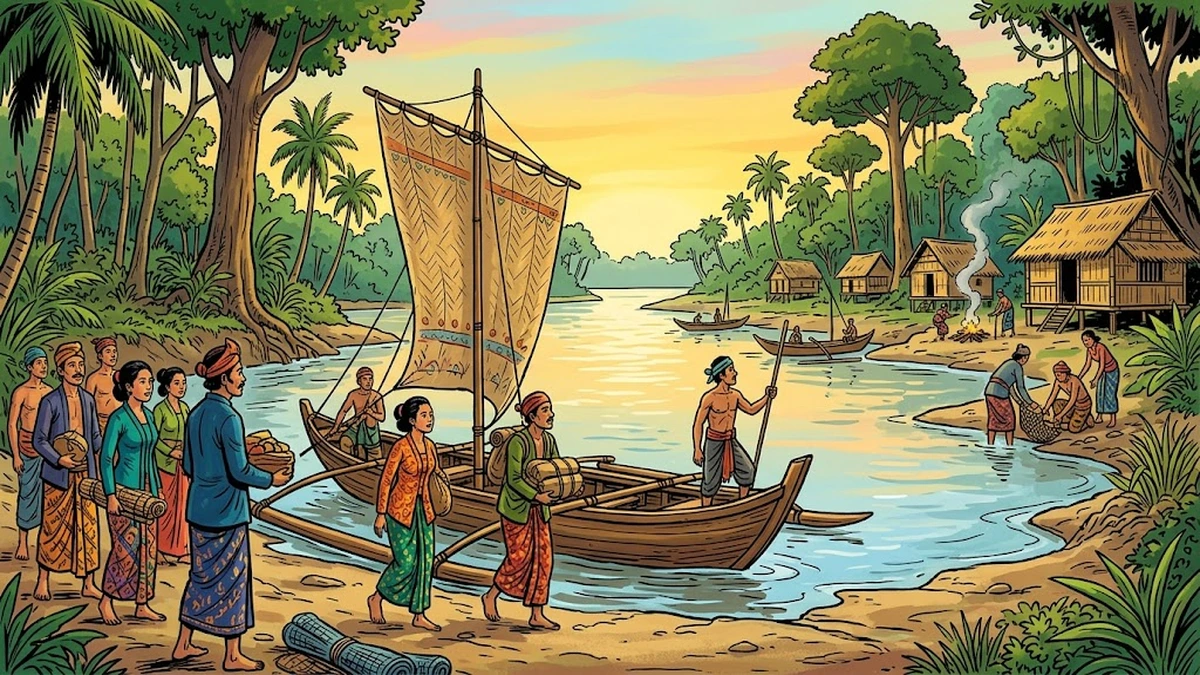
Surabaya today is a city of approximately three million people in the municipality proper, rising to ten million in the greater metropolitan area — Indonesia’s second largest city after Jakarta, and one of the major port cities of Southeast Asia. It has been commercially and militarily significant for centuries: the Nagarakretagama of 1365 CE mentions it as a vassal of the Majapahit empire; it was a major trading port during the Mataram Sultanate; and it was the site of some of the most intense fighting of the Indonesian National Revolution in November 1945, when Indonesian nationalists engaged British and Dutch forces in battles remembered today as the Battle of Surabaya, commemorated annually on 10 November as Indonesia’s Hari Pahlawan (Heroes’ Day).
The emblem of Surabaya — the shark and the crocodile locked in combat — appears everywhere in the city: on official seals, municipal buildings, statues at road intersections, the logos of local sports teams. The most famous version is the large concrete sculpture in front of the Surabaya Zoo, but smaller representations are ubiquitous. The legend is not merely decorative. It is constitutive of the city’s identity — its self-understanding as a place of fighters, of people who do not yield, of a community that has always been willing to defend its ground.

Moral of the Story
“Sura ing baya.”
The legend of Sura and Baya teaches a double lesson. On the surface it is a cautionary tale about greed and broken agreements: Sura could have lived in peace had he honoured the boundary he himself accepted. But at a deeper level, the story is also about the nature of power and territory. The shark who argues that water belongs to the sea wherever it flows is not simply dishonest — he is demonstrating the universal tendency of power to expand until it meets an equal force. The peace between Sura and Baya was never stable because neither had genuinely accepted the other’s legitimacy. What they signed was an armistice, not a peace — and armistices always end. The city built on the site of their battle remembers this truth: that the world’s borders are maintained not by agreements alone, but by the willingness to fight for them.
Scholarly Context and Historical Notes
The Sura-Baya founding legend belongs to a widespread Southeast Asian narrative type in which a place-name is explained by a mythic contest or event — what folklorists call an aetiological legend (from Greek aitia, cause). The motif of rival animal lords establishing a territorial boundary (A1421.1) appears across the archipelago; similar stories in which a predator violates an agreed boundary and precipitates a fatal confrontation are found in Malay, Balinese, and Sundanese traditions. The narrative structure — truce, violation, escalation, mutual destruction — follows the classic pattern of what anthropologists call the “broken compact” story (ATU 92 variant).
The name Surabaya is genuinely contested etymologically. The most popular etymology — sura (shark) + baya (crocodile) — is the folk etymology enshrined in the legend. A competing scholarly interpretation derives the name from sura ing baya, a Javanese phrase meaning “brave in the face of danger” or “courageous amidst peril,” which would make the name a description of the settlement’s character rather than a record of an animal combat. A third suggestion traces the name to the Malay Surapura or Sura + Bhaya (from Sanskrit bhaya, danger), connecting it to a broader pattern of Sanskrit-derived Javanese place-names. The city officially endorses the shark-and-crocodile etymology, and it is this version that has shaped civic identity.
Surabaya’s historical significance in the Majapahit period (1293–1527 CE) is well-documented. The port at the mouth of the Brantas River was a major export point for rice, spices, and luxury goods from the Javanese interior. During the Islamic period, Surabaya became one of the first Muslim communities on Java, and the grave of Sunan Ampel — one of the nine Islamic saints who spread Islam across Java — remains in the city and is a major pilgrimage site. The November 1945 Battle of Surabaya, in which Indonesian revolutionary fighters engaged British Indian Army troops in urban combat over three weeks, is considered one of the defining events of the Indonesian Revolution and the source of the city’s enduring reputation for toughness and independence.
Frequently Asked Questions
What does the name Surabaya mean?
Sura (shark) + baya (crocodile) — commemorating the legendary predator battle. An alternative reading is sura ing baya: “brave in the face of danger.” Both meanings define the city’s character.
Who are Sura and Baya?
Sura is a giant shark ruling the sea; Baya is a giant crocodile ruling the river and land. Their conflict begins when Sura, driven by hunger, crosses into the river — violating the territorial truce between them.
Why is Surabaya called the City of Heroes?
The Battle of Surabaya (November 1945) — where Indonesian nationalists fought British and Dutch forces in fierce urban combat — earned the city the title Kota Pahlawan. November 10 is national Hari Pahlawan (Heroes’ Day) in Indonesia.
What does the legend teach?
That agreements between rivals are only as stable as the willingness to honour them. Power tends to expand until it meets equal force. The city built on the battlefield remembers that borders are maintained not by treaties alone, but by readiness to defend them.
Is there historical evidence for ancient Surabaya?
Yes — it appears in the Majapahit court poem Nagarakretagama (1365 CE) as a significant port. The grave of Sunan Ampel, one of Java’s nine Islamic saints, remains in the city and is a major pilgrimage site.
You May Also Like
 Indian Folk Tales
Ages 3-5
Indian Folk Tales
Ages 3-5
The Story Of Appayya
The Story Of Appayya: In a remote village there lived a poor Brâhmaṇ and his wife. Though several years of their wedded life had passed, they unfortunately had
 Indian Folk Tales
All Ages
Indian Folk Tales
All Ages
The Beggar And The Five Muffins
The Beggar And The Five Muffins: In a bustling town in ancient India, A clever beggar who received five muffins devised an ingenious plan. This tale, beloved
 Indian Folk Tales
Ages 3-5
Indian Folk Tales
Ages 3-5
The Tiger The Brahman And The Jackal
A classic Panchatantra-style Indian folk tale about a trapped tiger, a kind Brahman, and the clever jackal who saves the day through wit and logic.