The Story Weaver
The Story Weaver: Somethings happen by chance. For Vani Balaraman, it was storytelling. Founder of Cuddles and Reads, storyteller and mom, Vani liter ally
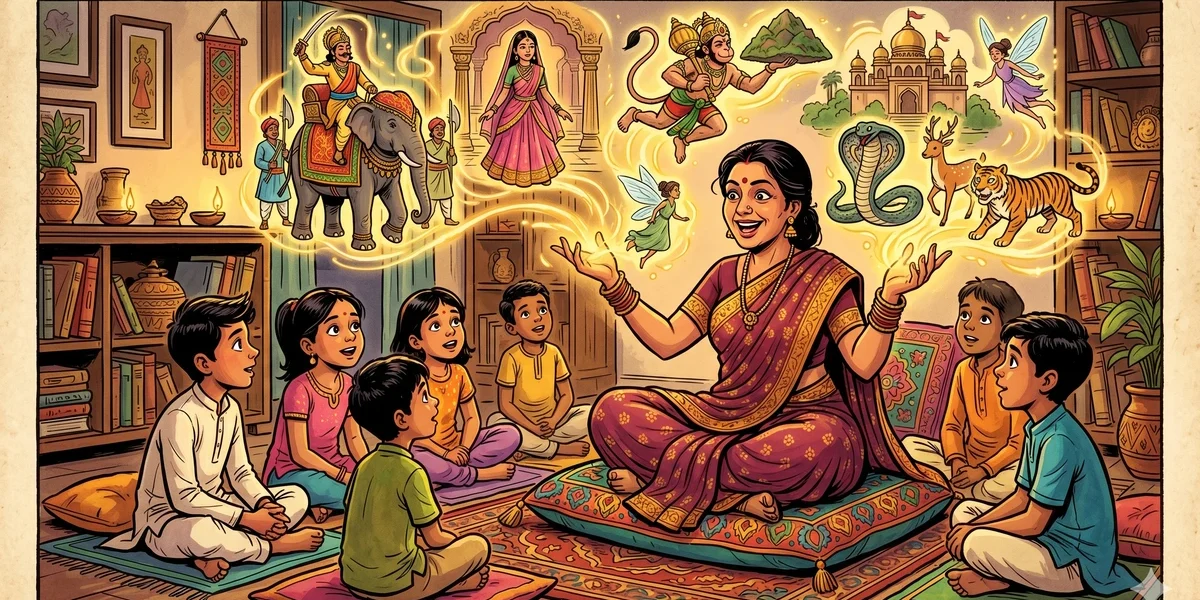
Somethings happen by chance. For Vani Balaraman, it was storytelling. Founder of Cuddles and Reads, storyteller and mom, Vani liter ally stumbled upon storytelling and found a vent to the story weaver in her. Find out more about her in this interview. I work for a technology company, I also double up as a bed time story teller, a terrible cook, a highly imaginative Piscean, and I take great delight in cooking up stories – most of which strike me when I am on the way to work, and stuck in a traffic jam. To that effect I should thank the Bengaluru traffic for turning me into what I am today! I was born and brought up in a small town in Tamil Nadu, Neyveli where I spent my growing up years. I have enjoyed a truly cherished childhood thanks to my mom who left no stones unturned to ensure we had the best experiences. No wonder I love the illustrations and stories in books published by Indian publications delightful, as compared to international titles. I want my stories to reflect the beauty of our country and its rich culture. In 2012, I was at work and was looking for activities for my son who was 2.5 years then. Back then, I wasn’t aware of story workshops, kids’ events and libraries. I was just another working mom, with a small kid in the daycare, that fell sick often and me battling the corporate. It was September and when I look back now, I have no idea how I landed on Pratham books blog and learnt that a champion program was happening 2 days later on World Literacy day. With just 2 days in hand for preparation, and with neither a hard copy of the storybook nor a banner in hand, I went ahead to do my first ever story event with just a color print out of the story – Susheela’s Kolam! The story is hence very dear to me and so is Pratham books and all their events! That was when Storytelling wasn’t as popular as it is today. I hadn’t visited a single event before. What I per formed that day for kids from our apartments, was my first brush with storytelling and I think I fared well. This year in 2016, I would complete my 5th year as a Pratham books champion. Now when I look back, I think I always had a passion for stories. Even as a child, I wrote pretty good essays in school. While a Bachelors degree in Engineering and surviving the corporate might have blurred my true calling, I am glad I went back to doing what I did best as a child. Today I take story writing and spinning a tale as the best gift given to me, so as to strike a work life balance, something which is a MUST for every corporate individual! On the very same evening in 2012, I attended a Pratham books champion’s story event, organized at Atta Galatta, Bengaluru, by a bunch of theater enthusiasts. I was curious to know how different storytellers per form the same story. Atta Galatta was then operating out of their bungalow in Koramangala, in a lane laden with the most beautiful bungalows and old oak trees. Again my brush with Atta Galatta happened accident ally and since then there has been no looking back. I have attended various events, book launches, and even went on to per form at their book store for the Pratham Champion event. Cuddles and Reads was started primarily to chronicle the many events I attended in Bengaluru. Now it has turned into a space where I share my passion for writing, narrating stories and providing reviews on books I enjoy reading or narrating to my son. I also share details of events happening across cities. It is a mixed bag where I share my passion for books, stories, story writing, story narration, etc. People who per form put in a lot of effort to bring the best to the audience. Today social media is the nicest plat form to say a THANK YOU to them and when I feel truly touched by a per formance, I do a huge shout out on my page to THANK them. It is tough and difficult. Because your corporate job keeps you so busy!. I would love to take my stories that I have penned to many schools, activity centers and Kid-lit festivals. On many mornings, I keep dreaming about story events – what I could do with a certain book or a story but most of it remains a dream – because my work hours consume most of my time!
Related Stories in This Collection
Browse more stories from the same collection to discover similar tales and morals. Story enhanced and formatted for modern readers. Originally sourced from Tell-a-Tale.
Moral
The weaver’s power of storytelling transformed a rat into a trusted companion and changed the course of both their lives. His tales revealed that imagination, words, and stories have the power to reshape reality and relationships – proving that sometimes the most valuable gifts we can offer are the ones woven from creativity and kindness.
Historical & Cultural Context
India’s regional folk tale tradition is a vast oral inheritance carried by grandmothers, wandering bards and village storytellers, preserving moral wisdom, social commentary and cultural memory long before any of it was written down.
This tale celebrates the power of narrative itself, reflecting the ancient Indian reverence for storytelling embedded in texts like the Mahabharata frame narrative and the Kathasaritsagara. The weaver-protagonist embodies the archetypal storyteller or bard figure central to oral tradition. The transformation of a rat through stories recalls the Panchatantra and Jataka traditions, where narratives themselves become agents of change and moral education. The tale teaches that words, imagination, and creative expression are forms of power equal to physical strength, a philosophy consistent with Hindu aesthetics (rasa theory) and the Vedic emphasis on the creative power of speech (Saraswati, goddess of learning and arts).
Reflection & Discussion
- How did the weaver’s stories change the rat from something feared into a friend?
- What stories or ideas have changed how you think about someone or something?
- What if the weaver had refused to share his stories with the rat?
Did You Know?
- India has one of the richest oral storytelling traditions in the world, with tales dating back thousands of years.
- Many Indian folk tales were passed down through generations before being written down.
- Indian folk tales often blend real-life wisdom with magical elements to teach moral lessons.
What This Tale Teaches Us Today
Old stories keep their power because their lessons never stop being useful. Here is how this one still applies:
- Folk tales teach ethics without lecturing. A good story can reshape a mind more powerfully than any rule.
- Shared stories are one of the strongest bonds within any community – families, cultures, or whole nations.
- Traditional stories remind us that wisdom belongs to many cultures. No single tradition holds all the answers.
Why This Story Still Matters
The Story Weaver joins a vast global library of folk tales that human beings have been telling one another for thousands of years. Every culture has produced its own stories, but the deepest themes – courage, kindness, cleverness, loyalty, the cost of greed – appear again and again in different clothes. Modern readers who spend time with folk tales inherit something precious: a sense that people have always wrestled with the same basic questions, and that good stories can still help us find good answers. That is why these tales persist. Each one is a small tool for living, handed down quietly through generations.
Cultural Context and Continuing Influence
Folk tales like this one survived for hundreds of years through oral storytelling before any scholar thought to write them down. Grandparents told them to grandchildren, travelers traded them along roads and rivers, and mothers repeated them to babies who would one day repeat them to their own children. Each small retelling sharpened the story, discarded unnecessary parts, and polished the essential lesson. That long process of refinement is why a good folk tale feels so weighty – it has been shaped by thousands of listeners across generations, each contributing something small to the story we read today.
Modern readers sometimes wonder whether folk tales are still relevant in an age of apps and smartphones. The answer is yes, perhaps more than ever. The technology changes, but the underlying questions – about kindness, courage, loyalty, greed, family, fear, love – do not. These are the same questions that children asked around a fire in ancient India, around a hearth in medieval Ireland, around a campfire in 19th-century Korea. And they are the same questions children ask their parents today, just phrased differently. That is why a family that reads folk tales together is doing real cultural and emotional work, not simply entertaining itself.
Reading Folk Tales With Children
Reading folk tales aloud to children is one of the oldest and most effective forms of moral education. Unlike a lecture or a rule, a story slides past a child’s natural resistance and plants its lesson in the imagination, where it quietly grows. Years later, when the child meets a real situation that resembles the story – a bully at school, a dishonest coworker, a moment of temptation – the old tale rises to the surface of memory and offers guidance. That is why parents and teachers across every culture have trusted stories to do the work of raising good humans, long before formal schools or textbooks existed.
When reading this story with a young listener, try pausing at key moments and asking what the child thinks will happen next. Let them guess, even if they are wrong. That small act of prediction turns a passive listener into an active thinker. After the story ends, a simple open question – “What would you have done?” or “Who do you think was the smartest character?” – invites the child to connect the tale to their own life. Those conversations are where real learning happens, not during the reading itself but in the quiet moments that follow.
Older children and teenagers sometimes think they have outgrown folk tales. In reality, the best tales only deepen with age. A ten-year-old hears the surface plot; a fifteen-year-old notices the irony; a twenty-year-old sees the economic and political pressures on the characters; a forty-year-old understands the parents in the story for the first time. A good folk tale is a gift that keeps unfolding for decades. Families who read and reread the same stories across the years discover this naturally, and pass the discovery down.
You May Also Like
 Indian Folk Tales
All Ages
Indian Folk Tales
All Ages
A Traveler’s Tale from India
A Traveler's Tale from India: Once upon a time, in a country called India, on the coast of Nagapattinam far south, there landed a large vessel on the shores of
 Indian Folk Tales
Ages 3-5
Indian Folk Tales
Ages 3-5
How Raja Rasalu Killed The Giants
A rousing Punjabi legend about the hero-prince Raja Rasalu, a grieving mother, and the giants who terrorise the city of Nila until a bold young king ends their reign.
 Indian Folk Tales
Ages 3-5
Indian Folk Tales
Ages 3-5
Rain of Tears – A Greek Mythological Fiction
Rain of Tears – A Greek Mythological Fiction: Mythology is bound by the rules of society as well. Here’s a mythological fiction, an original story built around