The Story of the Bug and the Flea
The Story of the Bug and the Flea: In a certain country lived a king who had a verybeautifully decorated bedroom. An exquisite white silksheet covered the bed
The Story of the Bug and the Flea
Source: Panchatantra, Book I — Mitrabheda (The Separation of Friends), attributed to the sage Vishnu Sharma, composed c. 300 BCE–300 CE; this redaction follows the Sanskrit critical text and Chandra Rajan’s annotated translation (Penguin Classics, 1993).
नवागतेन सह शिष्टा न कचित् तीर्यक्गतेन सहःः
A bedbug named Mandavisarpini has lived in the king’s mattress for many years, feeding gently and carefully at night so as never to be detected. A flea named Agnimukhha arrives as a visitor, admires the living arrangements, and requests permission to stay. The bug grants permission out of hospitality. The flea’s approach to feeding is not gentle. The king wakes in pain. The servants search. The flea, faster than the searchers, hides. The bug, slower and resident, is found and crushed. This tale is the Panchatantra’s most compressed argument about the specific danger of extending hospitality to guests whose habits you have not verified and cannot control.
Part I: The Established Resident
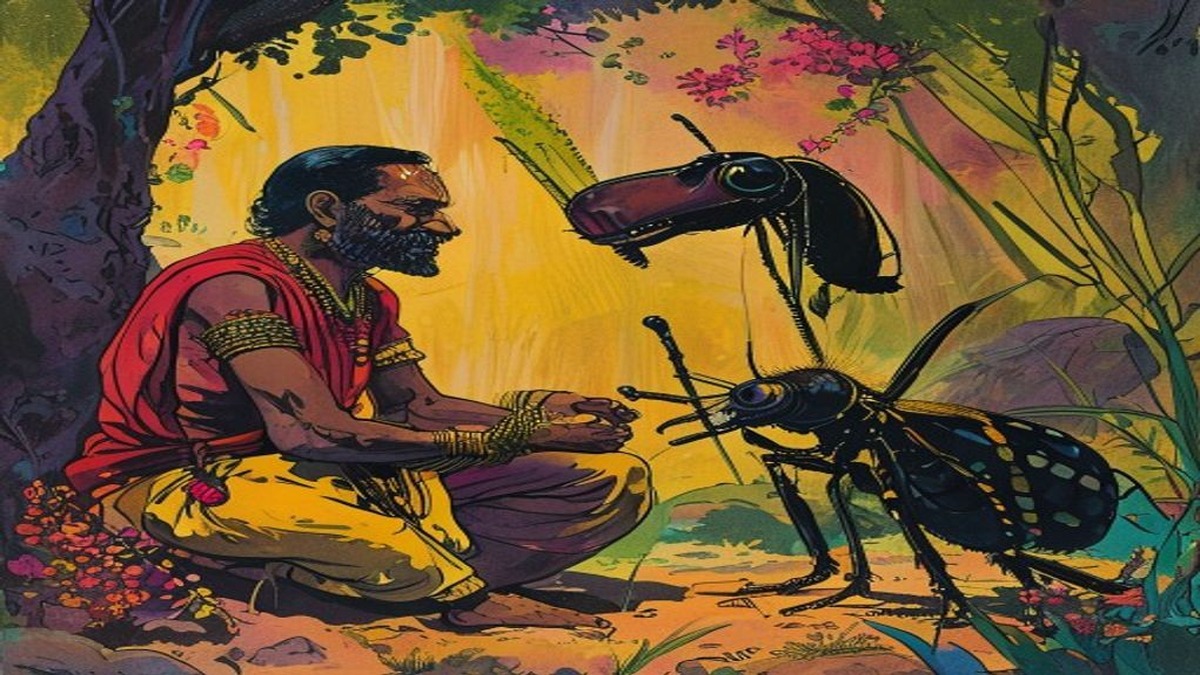
In the palace of King Bimbasara, in the royal bedchamber that was cleaned each morning and aired each afternoon and fitted with a mattress of the finest cotton batting, there lived a bedbug named Mandavisarpini who had occupied the same fold of the mattress ticking for eleven years. She was, by any objective measure, a successful bedbug: she had never been detected, never caused the king to wake, never prompted a search of the bedchamber.
Her success was the product of a specific discipline. She fed only at the deepest point of the king’s sleep, took the minimum necessary quantity, and withdrew to her fold before the king stirred. She had, over eleven years, developed an intuitive sense of the king’s sleep cycles that no court physician possessed, because her life depended on it in a way that no physician’s did.
This was not a comfortable life in the human sense, but it was a sustainable one — the Panchatantra’s highest practical compliment. Sustainability, in Vishnu Sharma’s world, is the product of restraint: taking only what the situation can provide without noticing the taking. Mandavisarpini had achieved something genuinely difficult: invisibility through calibration. Everything that followed resulted from her decision to share that calibrated invisibility with a creature who did not share her calibration.

Part II: The Guest and the Warning
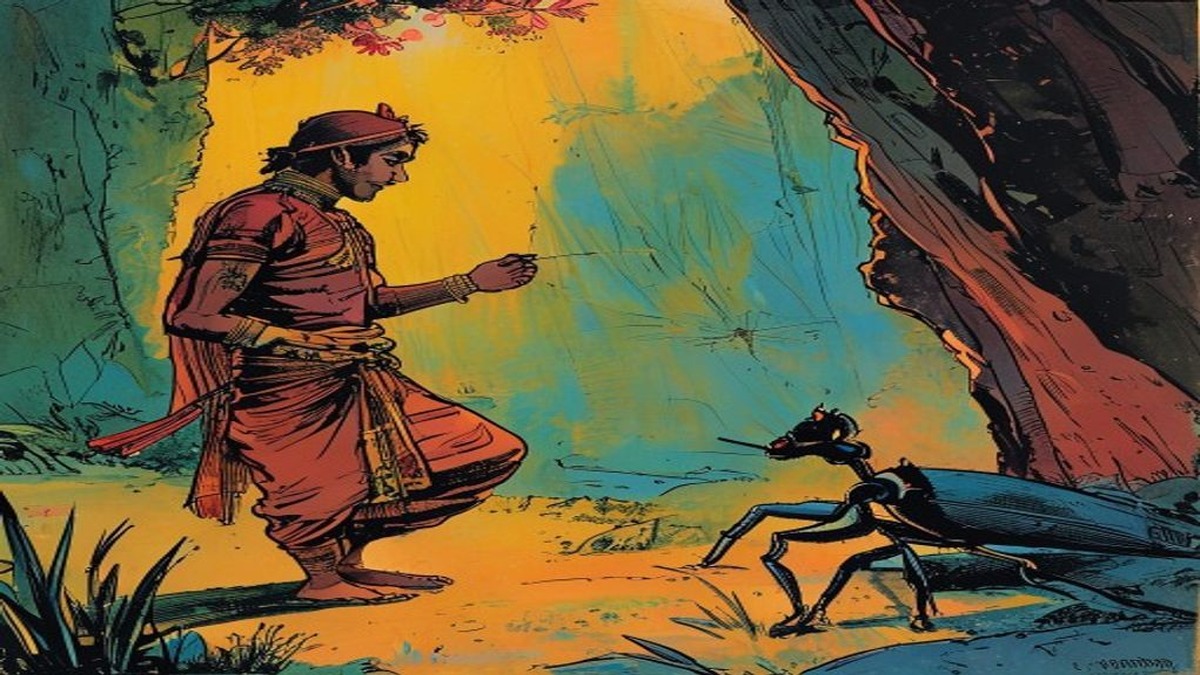
Agnimukha the flea arrived in the royal bedchamber by the route fleas always arrive — through a gap in the doorframe, carried by a visiting servant’s clothing, dropped by chance into an environment of extraordinary quality. He found the mattress and quickly located Mandavisarpini.
He introduced himself with the enthusiasm of a traveller who has found unexpectedly good lodging. He admired the mattress, praised its batting, noted the quality of the king’s blood — which he had sampled, briefly, on arrival — and expressed the desire to remain permanently. He presented this as a mutually beneficial arrangement: he would be company for Mandavisarpini, who had lived alone for eleven years.
Mandavisarpini’s response, recorded in the Panchatantra with the weariness of someone who sees exactly what is about to happen and cannot prevent it without being inhospitable, was a conditional acceptance: “You may stay, but you must follow my rules. Feed only at the deepest point of sleep. Take very little. Withdraw immediately. Never feed when the king is restless. If you cannot do these things, this arrangement will end badly for both of us.”
Agnimukha agreed to all of this immediately, with the confident agreement of someone who has no intention of thinking about it again after the conversation ends. Mandavisarpini noted the quality of the agreement and experienced the particular worry of someone who knows they have just made a mistake but has already made it.
Part III: The Night of Consequences
That very night, before the king had properly settled into sleep — while he was still at the light-sleep stage where a minor irritation produces wakefulness — Agnimukha bit him. Not gently, not at a calibrated point of the sleep cycle, not with Mandavisarpini’s eleven-year-developed sense of minimum intervention. He bit with the energy of a flea who has found excellent food and sees no reason for moderation.
The king woke. The king felt pain. The king called for his servants. The servants entered with lamps and began examining the mattress. Agnimukha, who was a flea and therefore equipped for exactly this situation, jumped from the mattress to the floor before the first lamp entered the room. He was, within seconds, invisible in the gap between the floor-stone and the wall. Mandavisarpini, who was a bedbug and therefore equipped for everything except this situation, retreated to her fold in the mattress ticking and was found by the second servant who searched it.
She was crushed. The servants reported a bedbug found. The king went back to sleep. Agnimukha emerged from his gap in the floor-stone some time later and had the royal mattress entirely to himself.
The Panchatantra ends the tale here, without recording Agnimukha’s subsequent fate. The text’s silence on this point is itself instructive: Agnimukha’s recklessness will eventually find its own reckoning, but that reckoning is not the story’s concern. The story’s concern is Mandavisarpini, who paid for her guest’s behaviour with her life.
Part IV: The Arithmetic of Hospitality
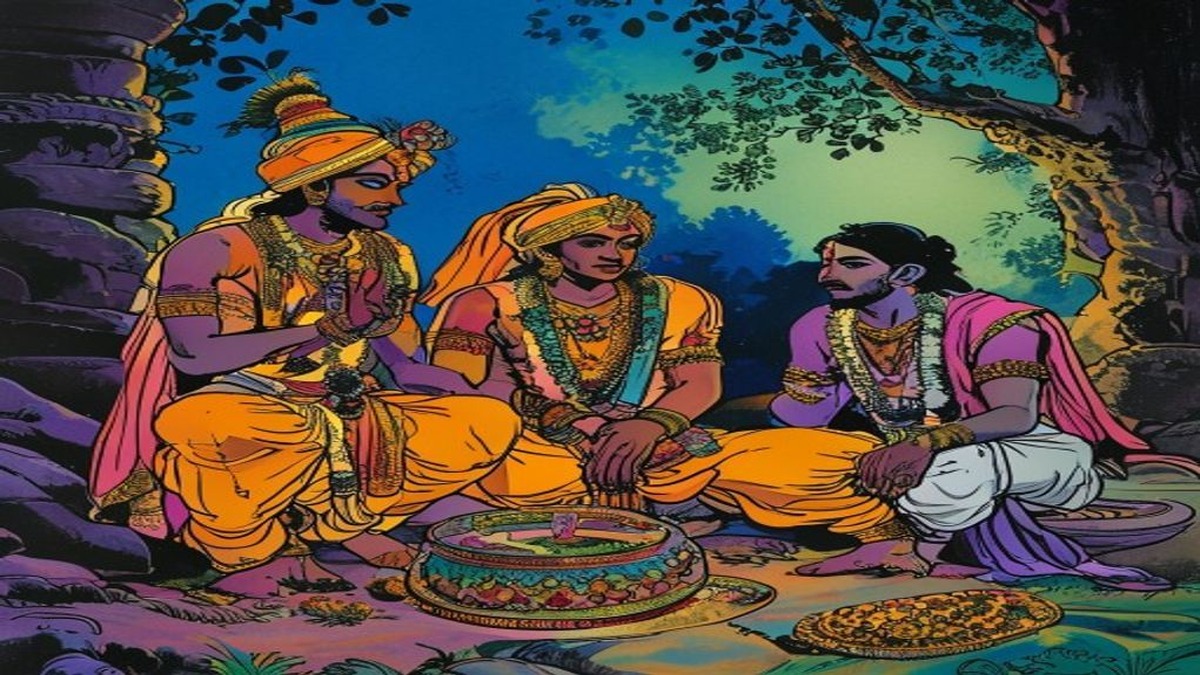
Vishnu Sharma’s closing commentary is among his most direct: “The folly of Mandavisarpini lay not in extending hospitality, which is a virtue, but in extending it to a creature whose character she had assessed correctly and whose assurances she accepted anyway. She knew Agnimukha would not follow her rules. She granted permission nonetheless. The knowledge and the action were inconsistent with each other, and she paid the difference with her life.”
The story’s moral works on two levels. The surface level is practical: do not admit guests whose habits you cannot control to spaces whose safety depends on specific habits being maintained. A sustainable position held through restraint becomes immediately unsustainable when occupied by someone incapable of restraint, and the original occupant bears the consequences.
The deeper level is about knowledge and action. Mandavisarpini had the correct assessment of Agnimukha from the beginning. She warned him accurately. She predicted the outcome correctly. And then she admitted him anyway, because the social pressure of hospitality and the flea’s enthusiastic assurances were sufficient to override her own accurate judgment. This is the failure the Panchatantra names precisely: not ignorance, not deception from outside, but the decision to act against one’s own correct assessment of a situation.
Why This Story Has Lasted Three Thousand Years
“The Story of the Bug and the Flea” endures because it is the most compressed description in ancient literature of a specific failure mode: the person who correctly assesses a risk, clearly articulates that assessment, and then proceeds to accept the risk anyway because the social friction of refusal seems greater than the theoretical danger. The bug’s warning to the flea is her own epitaph.
The story’s particular cruelty is its fairness: Mandavisarpini is not naive. She knows exactly what Agnimukha is. She tells him exactly what the rules are. She even predicts the outcome (“this will end badly for both of us”) with complete accuracy. Her failure is not intellectual. It is volitional: she could not bring herself to enforce the boundary she had correctly identified, and the cost of that failure is precise and total.
The story entered Arabic Kalila wa Dimna and was used in medieval Islamic political literature as a cautionary tale for rulers about extending trust to advisors whose character was already known to be unreliable. In European fable traditions it became a parable about the danger of misplaced charity — the argument being that charity extended to those who will use it destructively is not virtue but negligence.
For modern readers, the story resonates in every institutional context where an established, sustainable position is disrupted by the admission of someone whose incompatibility with the position’s requirements was visible from the beginning. The bug’s discipline had built something worth protecting. The flea’s energy destroyed it in one night. The gap between the two was Mandavisarpini’s failure to enforce her own correct judgment — which is, the story implies, the only gap that mattered.
Frequently Asked Questions
What is the moral of The Story of the Bug and the Flea?
The story teaches that extending hospitality or trust to someone whose character you have already correctly assessed as incompatible with your position is not generosity — it is negligence. Mandavisarpini knows from the beginning that the flea will not follow her rules. She warns him accurately. She predicts the outcome correctly. And then she admits him anyway. Her failure is not ignorance but the inability to enforce her own correct judgment against social pressure.
Why is the bug found and not the flea?
The bug is caught because she is a resident adapted to the mattress — she retreats to the fold of the ticking, which is the first place a competent search finds. The flea is a visitor adapted to transience — he jumps to the floor before the first lamp enters the room and hides in a floor crack. The story notes this without irony: the established, careful resident is findable precisely because her discipline has adapted her to the mattress she called home. The reckless newcomer escapes because he has invested nothing in the space and can abandon it instantly.
Which book of the Panchatantra is this story from?
The story comes from Book I, Mitrabheda (The Separation of Friends), which addresses the many ways that established relationships and positions of stability are undermined — here not through external attack but through a single hospitable decision made against the host's own better judgment.
What does the story say about warnings that are ignored?
The story treats Mandavisarpini's warning to the flea as her own prediction of her fate. She articulates exactly what will happen ('this will end badly for both of us'), receives the flea's enthusiastic assurance, and admits him anyway. The Panchatantra's point is that the warning's accuracy was irrelevant once the admission was granted — the warning needed to be enforced, not just spoken. Correct analysis followed by incorrect action produces the outcome the analysis predicted.
How does this story apply to institutional decision-making?
The story maps onto any situation where an established, sustainable position is disrupted by the admission of someone whose incompatibility with the position's requirements was visible from the start. The bug's discipline had built a sustainable arrangement through years of careful restraint. The flea destroyed it in one night by operating according to his own different standards. The story argues that the decision to admit — made against the resident's own correct assessment — was the only decision that mattered. Everything after it was consequence.
You May Also Like
 Panchatantra Stories
Ages 6-8
Panchatantra Stories
Ages 6-8
Shandili and Sesame Seeds
Shandili's endless greed for sesame seeds transforms a magical gift into the agent of her doom.
 Panchatantra Stories
Ages 3-5
Panchatantra Stories
Ages 3-5
The Merchant and the Bullock
A bullock left behind in the forest befriends a mighty lion - until a jealous jackal whispers lies.
 Panchatantra Stories
Ages 9-12
Panchatantra Stories
Ages 9-12
The Lion, the Camel, the Jackal and the Crow
Trust given despite proven dishonesty proves fatal when a camel ignores a jackal's conspiracy.