The Dove and the Hunter
The Dove and the Hunter: Self-sacrifice is the highest stage of sacrifice.” There was a mean hunter, who used to roam in the jungle in search of birds and
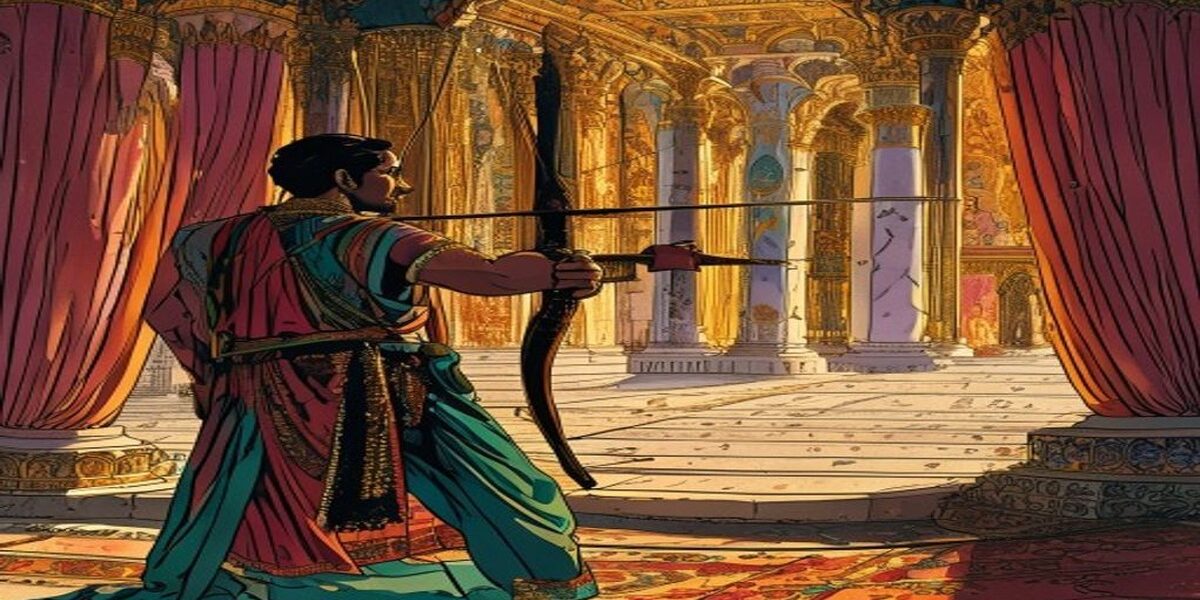
The Dove and the Hunter
Canonical Attribution and Manuscript Tradition
This tale appears in variant forms across the Pancatantra’s Sanskrit recensions and related collections including the Hitopadesha, and is among the most powerful of the tradition’s many demonstrations of atithi-dharma (the dharma of the guest) taken to its absolute limit. The dove story type — a bird whose mate has been captured by a hunter, who then welcomes the hunter as a guest and sacrifices itself to fulfil the obligation of hospitality — recurs with variations that emphasise different aspects of the philosophical argument. Where one version foregrounds the male dove’s self-immolation, this version of the tale develops the full context: the male dove’s deliberation, his recognition that the duty holds regardless of personal suffering, and the moral transformation that the extraordinary conduct produces in the hunter. The Pancatantra preserves multiple versions because the philosophical argument about unconditional duty, mercy toward enemies, and the transformative power of exemplary conduct was central to Vishnu Sharma’s pedagogical programme.

Beat I — The Dove’s Deliberation
The male dove’s first response to finding the hunter beneath his tree was grief: his mate was in the cage, and the hunter was the instrument of her capture. The grief was genuine and the dove did not suppress it. But alongside the grief, the dove recognised something that the grief could not override: the hunter had taken shelter beneath his tree, and in Sanskrit dharmic law, the relationship of guest and host, once established by the act of taking shelter, created obligations that were independent of the guest’s character, intentions, or prior conduct toward the host.
The deliberation that followed — which the Pancatantra records at some length — was the dove working through the implications of this recognition. He considered each possible response: grief without action was not hospitality; abandonment of the hunter was a violation of the duty; hostility toward the hunter was a violation of the duty; the only response consistent with the duty was genuine hospitality, extended without reservation and without the mental reservation that qualifies it into something less than it is. The deliberation ended with the decision: the hunter was his guest, and he would be received as such.
Beat II — The Fulfilment of Hospitality
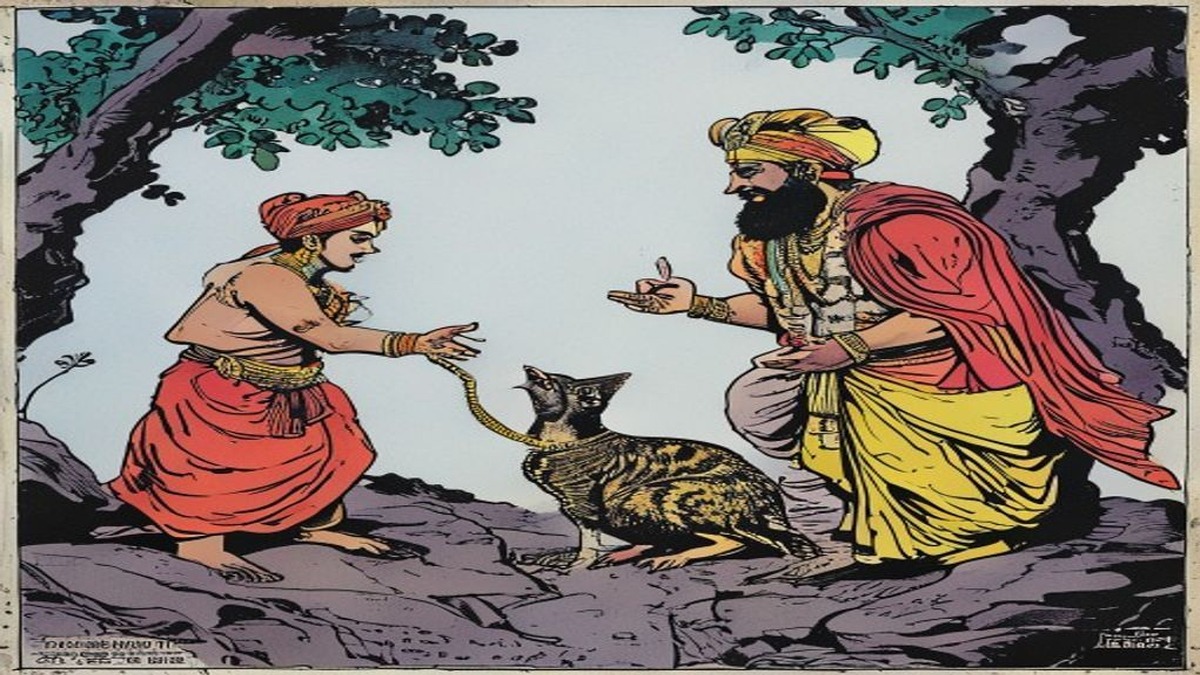
The dove approached the hunter and welcomed him. He provided warmth — gathering materials so that the hunter could make a fire. He provided shelter. He expressed, in the terms available to him, the welcome that a host owes a guest. He did all of this in full knowledge that the hunter held his mate captive; the knowledge did not produce any qualification of the welcome. The female dove, watching from the cage, understood what her mate was doing and supported it: she spoke from the cage to remind him that the duty was unconditional and that the merit of fulfilling it under these conditions was correspondingly greater.
The remaining obligation was food. The dove examined what he could provide. He had no food to give; a host without food to offer has not completed the duty of hospitality. The dove deliberated on this constraint and arrived at the conclusion that the Pancatantra constructs the entire tale to reach: he would offer himself. He circled the fire three times in the ritual preparation of one who is about to enter a sacred act, and flew into the flames. The hunter now had food, provided by the guest’s host at the cost of the host’s own life.
Beat III — The Hunter’s Transformation
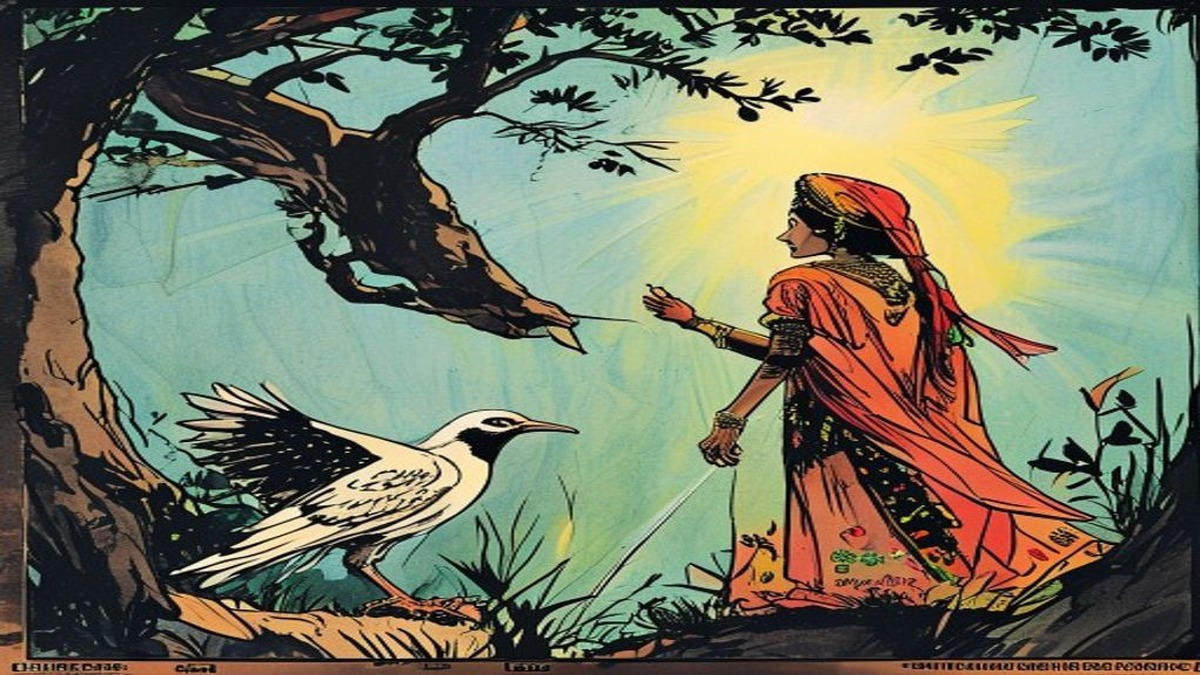
The hunter’s transformation is the tale’s culmination. He had entered the night as a hunter: a person whose professional identity was the taking of animal life, who had that evening caught a female dove as an ordinary part of his work, and who had taken shelter beneath a tree without expecting anything more than the shelter. What he received was something that disrupted, permanently, the framework within which his professional identity had been constructed.
The dove’s conduct confronted the hunter with a reality that his professional practice had allowed him to avoid: the animals he hunted were not merely prey but beings with the capacity for moral reasoning, for the recognition of duty, and for its fulfilment at mortal cost. The dove’s self-immolation was not an act of self-sacrifice in the emotional sense but of duty fulfilled in the logical sense: the dove had reasoned through to the end of an obligation and accepted the consequence without drama or self-pity. The hunter could not respond to this with the professional detachment he had previously maintained. He released the female dove, abandoned hunting, and sought a life consistent with what the dove’s conduct had revealed to him about the nature of the beings he had been killing.
Beat IV — What the Dove and the Hunter Teaches About Unconditional Duty and Moral Transformation
Vishnu Sharma’s argument in this version of the dove tale develops two connected claims. The first is about unconditional duty: the dharmic obligation of hospitality is genuinely unconditional, not merely in the sense that it applies to unworthy guests, but in the deeper sense that its fulfilment does not depend on the host’s circumstances, resources, or personal situation. The dove had every reason — by any ordinary calculation — to refuse the hunter hospitality or to qualify it. His choice to fulfil it without qualification is the Pancatantra’s demonstration of what unconditional actually means.
The second claim is about moral transformation through exemplary conduct. The hunter’s transformation was not produced by argument, instruction, or punishment; it was produced by witnessing conduct of a quality he had no framework for processing within his existing moral scheme. The dove’s example created the transformation by confronting the hunter with a reality that his scheme could not accommodate. This is the Pancatantra’s deepest claim about the power of exemplary conduct: it achieves what instruction cannot, not by providing new information but by creating an encounter with a moral reality that restructures the existing framework from within.

Moral and Sanskrit Wisdom Tradition
“Duty fulfilled without qualification toward those who have harmed you most produces the transformation that no instruction can achieve.”
— Moral of The Dove and the Hunter, Pancatantra Book III (Kakolukiyam)
This moral engages the Sanskrit tradition’s treatment of the relationship between exemplary conduct (acarya) and moral transformation. The Mahabharata’s account of the sage Vidura’s teaching to Dhritarashtra consistently distinguishes between instruction, which provides information, and exemplary conduct, which restructures the observer’s moral framework by confronting them with a reality their existing scheme cannot accommodate. The Pancatantra’s dove is the most concentrated example in Sanskrit didactic literature of this distinction: the hunter was not instructed; he was confronted. The confrontation achieved what instruction had not, because it operated at a level of moral reality that the hunter’s existing framework could not process without transformation.
Why This Story Has Lasted 2,300 Years
The Dove and the Hunter endures because it presents, in its most concentrated form, the claim that Vishnu Sharma’s entire pedagogical project rests on: that conduct of sufficient moral seriousness can transform those who witness it, not by convincing them but by confronting them with a reality that their existing moral scheme cannot accommodate. The dove does not argue with the hunter; the dove acts. The action creates an encounter that the hunter’s professional detachment cannot survive intact. Two thousand three hundred years later, this claim remains as difficult to accept and as impossible to dismiss as it was when Vishnu Sharma first embedded it in the tale of the dove and the hunter.
Sanskrit Tradition: Tantrakhyayika (c. 200 BCE, Kashmir); Hitopadesha; multiple recensions
Key Concept: Atithi-dharma (unconditional hospitality); exemplary conduct vs. instruction as mechanisms of moral transformation; duty fulfilled toward enemies at mortal cost
Author: Vishnu Sharma (attributed, c. 3rd century BCE)
Arthashastra Parallel: Rajadharma as unconditional obligation to those within the ruler’s protection; the transformative effect of exemplary royal conduct on subjects
Frequently Asked Questions
What is the moral of the Dove and the Hunter (P-235) in the Panchatantra?
The moral is that duty fulfilled without qualification toward those who have harmed you most produces the transformation that no instruction can achieve. The dove's unconditional hospitality toward the hunter who held his mate captive — fulfilled at the cost of his own life — confronted the hunter with a moral reality that his existing framework could not accommodate. The transformation this produced was permanent and complete: the hunter abandoned his profession and sought a different life.
How does the dove reason through his decision to help the hunter in this Panchatantra story?
The dove worked through the implications of recognising the hunter as his guest, acknowledging that the duty of hospitality was independent of the guest's character, intentions, or prior conduct toward the host. He considered each possible response — grief without action, abandonment, hostility — and found each incompatible with the duty. The only response consistent with atithi-dharma was genuine hospitality, extended without reservation or mental qualification. When he could not provide food, he reasoned to the only possible fulfilment: offering himself.
What makes the dove's hospitality unconditional in this Panchatantra story?
The hospitality is unconditional in two senses. First, it applies regardless of the guest's character or prior harm to the host: the hunter has captured the dove's mate, which is the gravest possible harm, and this does not discharge the duty. Second, it applies regardless of the cost to the host: when the dove cannot provide food from external resources, he provides himself. Genuine unconditionality means that neither the guest's worthiness nor the host's circumstances can qualify or reduce the obligation.
Why does witnessing the dove's conduct transform the hunter when instruction cannot?
The Pancatantra argues that exemplary conduct creates moral transformation by confronting the observer with a reality that their existing framework cannot accommodate without restructuring. The hunter's professional framework had classified animals as prey; the dove's conduct demonstrated a being capable of moral reasoning, duty recognition, and its fulfilment at mortal cost. This confrontation could not be processed within the old framework: the hunter could not continue to classify beings capable of this conduct as mere prey. Instruction provides information; exemplary conduct creates the encounter that restructures the framework from within.
How does the female dove's role strengthen the tale's argument about unconditional duty?
The female dove, watching from the cage, actively supports her mate's decision to honour the hunter as a guest — despite being the hunter's captive. She reminds her mate that the dharma of hospitality is unconditional and that the merit of fulfilling it under these conditions is correspondingly greater. Her support demonstrates that the duty is understood, endorsed, and embraced by both parties, not just performed under duress. The couple's agreement on the priority of dharma over natural feeling — even extreme natural feeling — is the tale's clearest statement of what unconditional means.
You May Also Like
 Panchatantra Stories
Ages 6-8
Panchatantra Stories
Ages 6-8
Meeting a New Friend
Meeting a New Friend: Hiranyaka, the mouse, and Laghupatanaka, the crow, became great friends. One day, the crow came calling on the mouse with eyes full of
 Panchatantra Stories
Ages 9-12
Panchatantra Stories
Ages 9-12
The Wedge-Pulling Monkey
The Wedge-Pulling Monkey: In a great forest of central India, where enormous trees grew close together and the undergrowth formed an intricate maze of paths
 Panchatantra Stories
Ages 9-12
Panchatantra Stories
Ages 9-12
The Story of the Jackal, the Lion, the Leopard and the Tiger
The Story of the Jackal, the Lion, the Leopard and the Tiger: In a certain part of the 9jungle, there lived a jackal, by the name of Mahachaturaka. One day, he