The Hermit and The Mouse
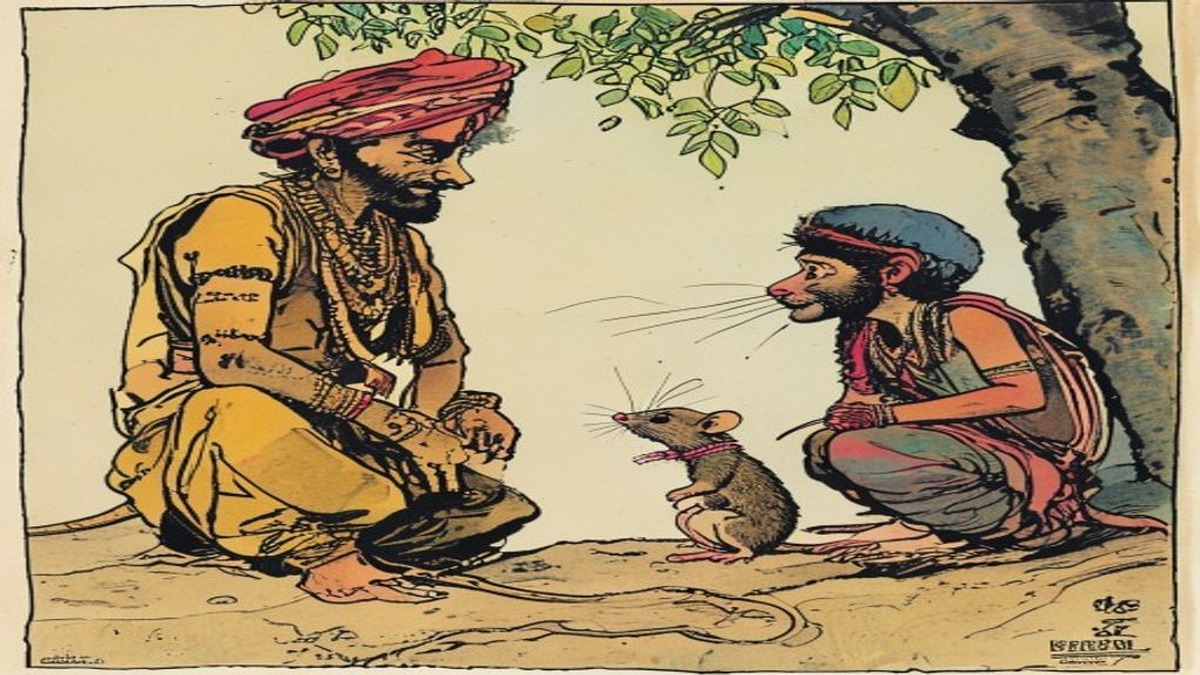
The Hermit and The Mouse: In the southern city of Mahilaropya,” said Hiranyaka, “lived a hermit named Tamrachud in a Shiva temple on the outskirts of the city.
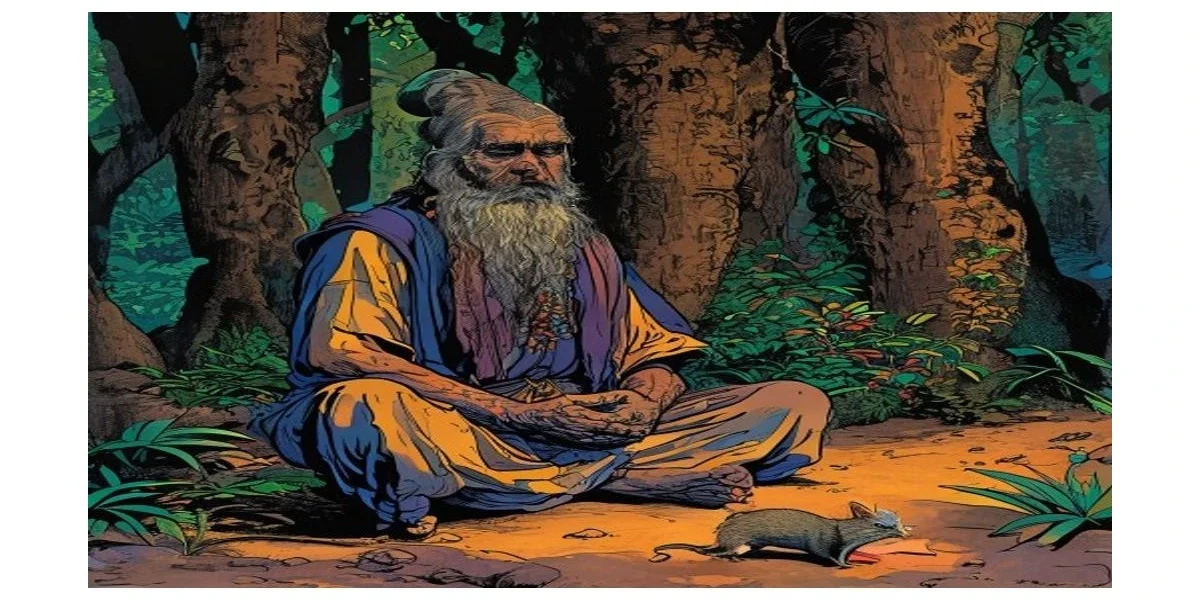
The Hermit and the Mouse
Canonical Attribution and Manuscript Tradition
This tale is preserved in the major Sanskrit recensions of the Pancatantra including the Tantrakhyayika (c. 200 BCE, Kashmir) and appears in related collections. A hermit with yogic powers takes pity on a mouse threatened by a cat, transforms it progressively into stronger and stronger animals to protect it from each successive threat, until he transforms it into a human being. When the now-human expresses contempt for its former mouse nature, the hermit transforms it back. The tale engages two of the Pancatantra’s central philosophical concerns: the persistence of svabhava (inherent nature) through transformation, and the obligation of gratitude — specifically, whether a being that has been transformed owes anything to the being it used to be and to the one who performed the transformation. The hermit’s response to ingratitude is not anger but a quiet pedagogical demonstration that the transformation was never as complete as the transformed being believed.
Beat I — The Progressive Transformations
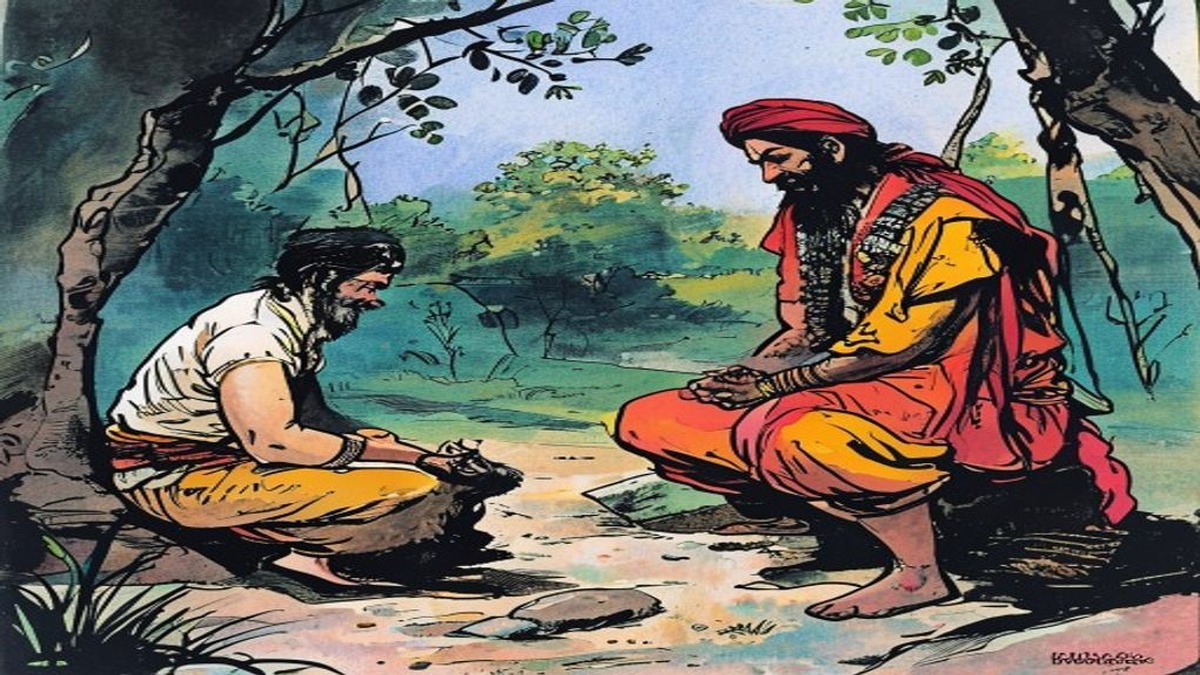
The hermit, seeing a mouse threatened by a cat, transformed it into a cat to defend itself. When a dog threatened the cat, he transformed it into a dog. When a tiger threatened the dog, he transformed it into a tiger. Each transformation was responsive to the specific threat the being faced; each gave the being the form it needed to be safe from its current predator. The hermit’s power and his compassion were both considerable: he was both able to do this and moved to do it by genuine concern for the being’s welfare.
The Pancatantra’s account of the progressive transformation is careful to establish that the hermit’s gifts were genuine. This was not a trick or a test from the beginning; the hermit really did want to protect the mouse, and really did give it progressively greater power to do so. The question the tale is building toward is what the transformed being does with the gifts it has been given — and specifically, whether it remembers what it was before the gifts, and what it owes to the one who gave them.
Beat II — The Transformation to Human and the Ingratitude
Eventually the hermit transformed the tiger into a human being — the highest form in the Hindu cosmological hierarchy, the form capable of spiritual practice and liberation. The now-human lived in the hermitage and received from the hermit’s teaching and care everything that the hermit could give. But as the human settled into its new form and new status, it began to express contempt for its former nature. It was disgusted by mice, by the thought of having been a mouse, by any reminder of the chain of forms it had passed through. It spoke dismissively of the hermit’s earlier transformations as if they were embarrassments rather than gifts.
The Pancatantra treats this ingratitude as a specific and serious failure. The being has been given everything it now has through the hermit’s power and compassion. Its current form, its current status, its current capacity for the very contempt it is expressing — all of it came from the hermit’s gifts. The contempt for what it was is simultaneously contempt for the one who transformed it, because the transformation is what it is expressing contempt toward.
Beat III — The Retransformation
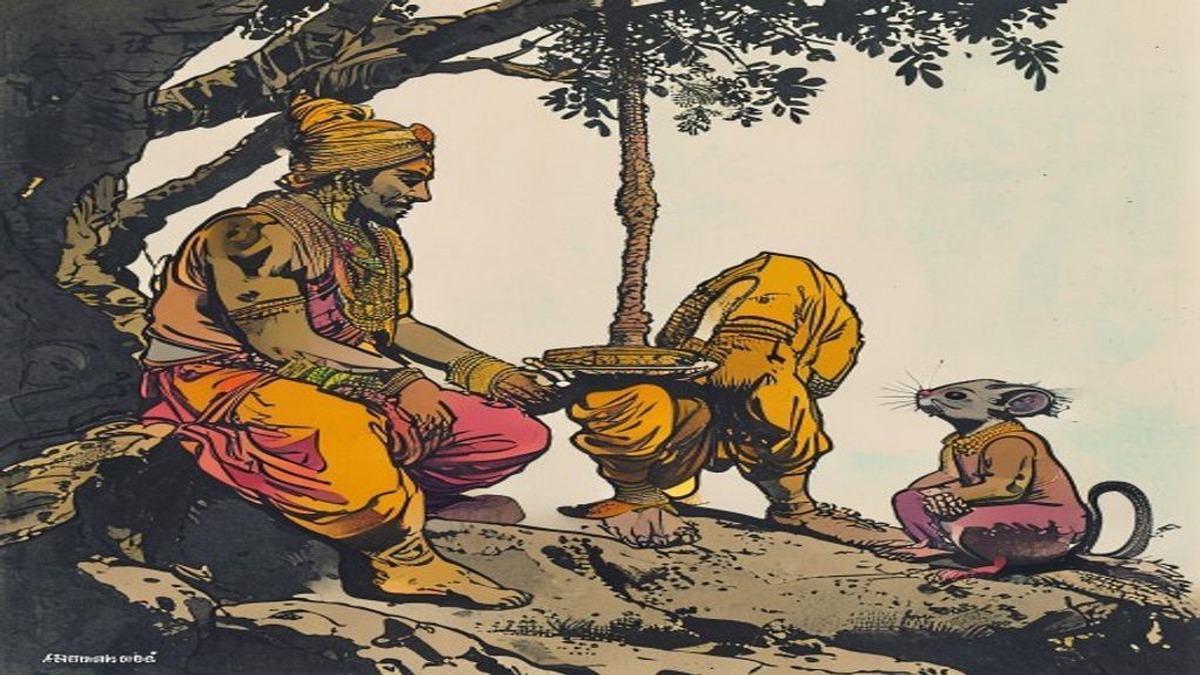
The hermit, without anger or lengthy reproach, transformed the human back into a mouse. The retransformation is not punishment in the conventional sense — it is not painful, it is not accompanied by condemnation — but it is a demonstration. The hermit is showing the human what it has forgotten: that its human nature was given, not intrinsic; that its svabhava — what it actually is at the deepest level — was never human; and that the contempt it expressed for mice was contempt for what it actually is.
The pedagogical gentleness of the retransformation is one of the Pancatantra’s finest details. The hermit does not lecture; he demonstrates. The human’s error was precisely the belief that the transformation of form had transformed svabhava, that being human was now what it genuinely was rather than a gift overlaid upon what it was. The retransformation corrects this belief without argument, because argument cannot achieve what demonstration can. The mouse now knows, in a way that no lecture could have produced, that the hermit’s gifts were real and that gratitude was owed.
Beat IV — What the Hermit and the Mouse Teaches About Gratitude and Transformation
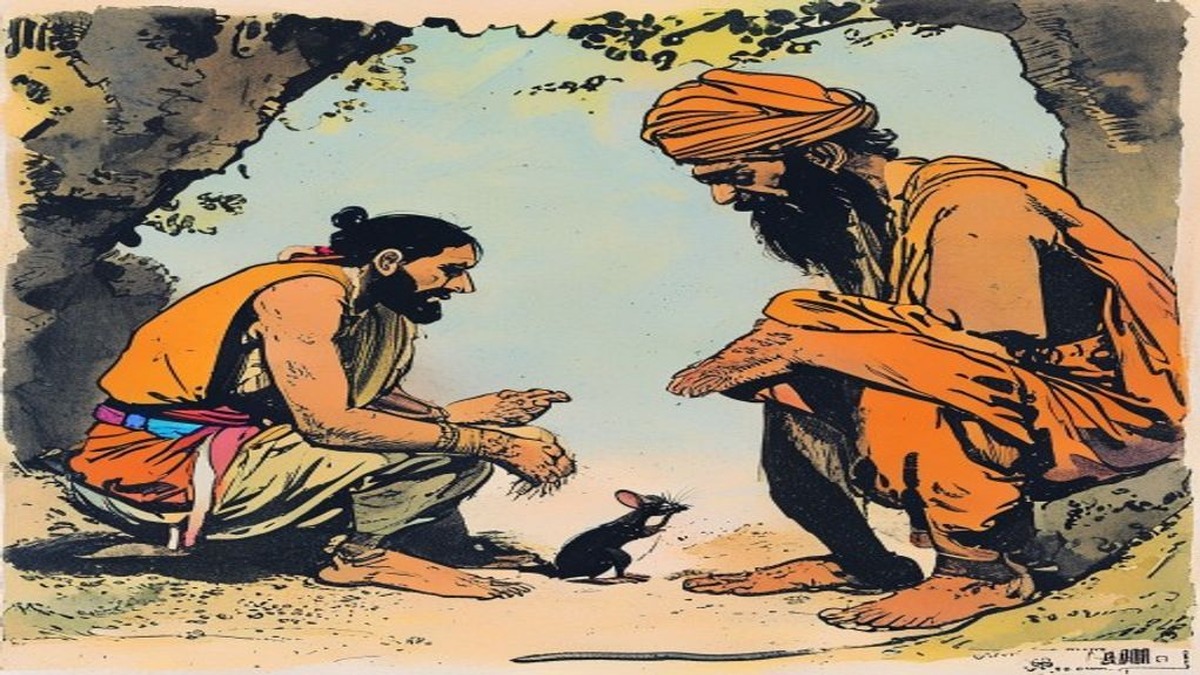
Vishnu Sharma’s argument in this tale addresses two related questions. The first is the question of svabhava: the human’s error was believing that the transformation of form had changed what it fundamentally was. The Pancatantra’s position, consistent across its tales, is that svabhava is prior to and more durable than any transformation of circumstance or form. The human was always, at the level of inherent nature, a mouse; the human form was a gift, not a revelation of its true nature. The ingratitude expressed through contempt for mice was therefore also a misunderstanding of what the human actually was.
The second question is the question of gratitude as a political and social virtue. For Vishnu Sharma’s royal pupils, the tale’s application is direct: those who have been elevated by a ruler’s favour and then express contempt for the ruler’s other beneficiaries, or for the lower status from which they were raised, are committing the same error as the ingrate mouse-become-human. The Arthashastra treats ingratitude among officials as a serious character defect and a ground for dismissal: the official who forgets what they owe is the official who will act as if they owe nothing when it becomes convenient.
Moral and Sanskrit Wisdom Tradition
“He who forgets what he was forgets what he owes; and he who forgets what he owes will be returned to what he was.”
— Moral of The Hermit and the Mouse, Pancatantra Book I (Mitra-bheda)
This moral engages the Sanskrit tradition’s sustained treatment of krtajnata (gratitude, literally: knowledge of what has been done for one) as a foundational virtue. The Mahabharata identifies ingratitude as among the gravest moral failures. The Arthashastra treats gratitude among officials as a reliability indicator: the official who remembers what the ruler did for them is the official who will act loyally when loyalty is tested. Vishnu Sharma’s tale adds the philosophical dimension: ingratitude is simultaneously a moral failure and an epistemic one, because the ingrate has misunderstood the source of their own current status.
Why This Story Has Lasted 2,300 Years
The Hermit and the Mouse endures because the error it illustrates — forgetting what one was, and therefore what one owes — is permanent and universal. The person raised from obscurity who develops contempt for the obscure; the official elevated by patronage who forgets the patron; the student who surpasses the teacher and then dismisses the teaching: all commit the same error as the ingrate mouse-become-human. The Pancatantra’s correction is gentle but absolute: the hermit does not argue, he demonstrates. And the demonstration is the most complete possible: he shows the ingrate, through retransformation, exactly what it has been given and what it has forgotten. What remains with the reader is not a moral rule but a vivid understanding of what ingratitude actually is and what it costs.
Sanskrit Tradition: Tantrakhyayika (c. 200 BCE, Kashmir)
Key Concept: Krtajnata (gratitude) as epistemic and moral virtue; svabhava persisting through transformation; ingratitude as misunderstanding of one’s own nature and obligations
Author: Vishnu Sharma (attributed, c. 3rd century BCE)
Arthashastra Parallel: Gratitude as reliability indicator in officials; ingratitude as grounds for dismissal
Frequently Asked Questions
What is the moral of the Hermit and the Mouse in the Panchatantra?
The moral is that he who forgets what he was forgets what he owes, and he who forgets what he owes will be returned to what he was. The mouse transformed into a human through the hermit's yogic power expressed contempt for mice — forgetting both its own former nature and the debt it owed to the one who elevated it. The hermit's retransformation is not punishment but demonstration: showing the ingrate, through experience, exactly what it has forgotten.
What happens in the Hermit and the Mouse in the Panchatantra?
A hermit with yogic powers sees a mouse threatened by a cat and transforms it into a cat, then into a dog when a dog threatens it, then into a tiger, and finally into a human being. The now-human lives in the hermitage but develops contempt for its former mouse nature and for mice generally. The hermit, without anger, transforms it back into a mouse — demonstrating through retransformation what argument could not achieve: that the transformation of form did not transform svabhava, and that gratitude was owed.
Why does the hermit transform the mouse back into a mouse at the end?
The retransformation is not punishment but pedagogy. The hermit shows the ingrate what no lecture could convey: that its human nature was given, not intrinsic; that its svabhava was never human; and that the contempt it expressed for mice was contempt for what it actually is. The Pancatantra's point is that demonstration achieves what argument cannot: the mouse now knows, through experience, that the hermit's gifts were real and that gratitude was owed.
What does the Hermit and the Mouse teach about gratitude (krtajnata)?
The Sanskrit concept krtajnata (gratitude) literally means knowledge of what has been done for one. The tale demonstrates that ingratitude is simultaneously a moral failure and an epistemic one: the ingrate has misunderstood the source of their own current status. The human's contempt for mice is contempt for what it actually is and for the transformation that made it what it now appears to be. Gratitude is therefore not merely a social virtue but a form of accurate self-knowledge.
How does this Panchatantra story relate to the Arthashastra's treatment of gratitude among officials?
The Arthashastra treats gratitude among officials as a reliability indicator: the official who remembers what the ruler did for them is the official who will act loyally when loyalty is tested. Ingratitude is treated as a character defect and a ground for dismissal. The Pancatantra's hermit-and-mouse tale provides the philosophical basis: the ingrate has not merely forgotten a debt but has misunderstood their own nature and the source of everything they currently have. Such a being cannot be trusted when tested.
You May Also Like
 Panchatantra Stories
Ages 3-5
Panchatantra Stories
Ages 3-5
The Crane and the Mongoose
The Crane and the Mongoose: The solution of the problem should not be worse than the problem itself. That is, while trying to solve the problem, you should not
 Panchatantra Stories
Ages 3-5
Panchatantra Stories
Ages 3-5
The Monkey and the Log
A restless monkey pokes at what he does not understand — and pays a painful price that has lasted thousands of years in the Panchatantra.
 Panchatantra Stories
Ages 6-8
Panchatantra Stories
Ages 6-8
The Foolish Sage
The Foolish Sage: Do not be taken in by the sweet words of a swindler.” Once upon a time, there was a sage called Deva Sharma who lived in a temple in the