The Story of the Sparrow and the Monkey
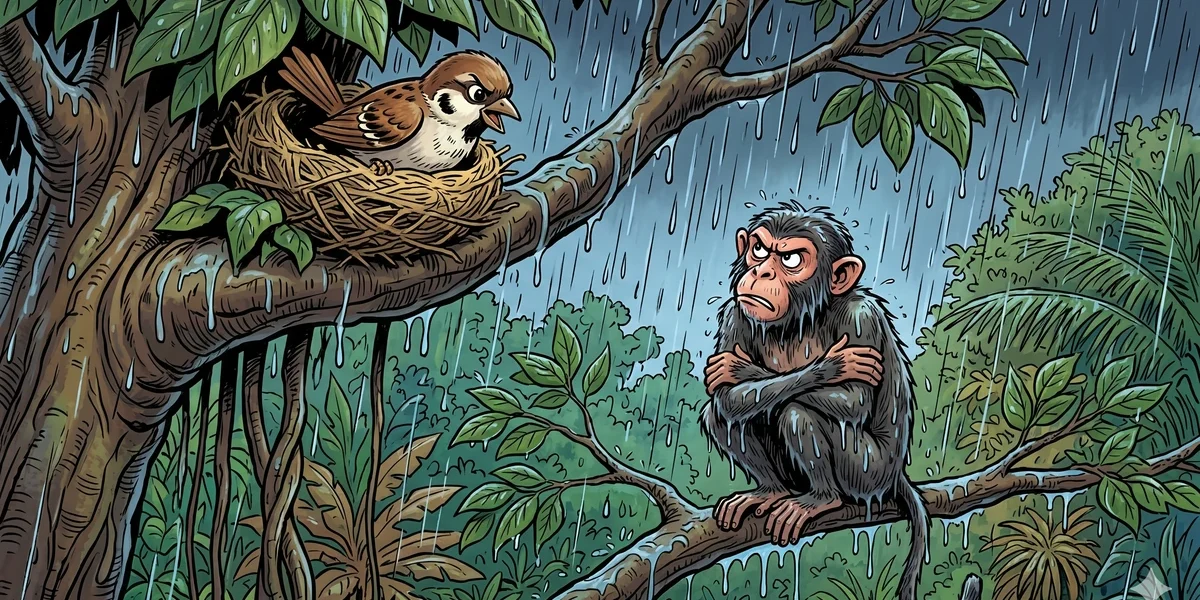
The Story of the Sparrow and the Monkey: Somewhere in the jungle; there grew a Shami tree. On its long branches, a pair of sparrows had made theirhorpe. The
The Story of the Sparrow and the Monkey
Origin and Manuscript Tradition
This story is the Panchatantra’s companion piece to the tale of the Monkey and Suchimukha the bird — where a bird dies for giving unsolicited advice to monkeys. Here, the sparrow gives unsolicited advice to monkeys and the monkeys destroy the sparrow’s nest in retaliation. Together, the two tales form a pair: the first shows what happens to the advisor, the second shows what happens to the advisor’s home. Both are placed in Panchatantra Book I (Mitra-bheda, The Separation of Friends) to establish the principle from two angles: advice given to those who cannot use it, and who did not ask for it, produces retaliation, not improvement. The story survives in all major Sanskrit manuscript families and was faithfully transmitted through the Persian and Arabic Kalila wa Dimna tradition. Its lesson is notably precise: the problem is not that the sparrow was wrong, but that the advice was accurate in a context that made accuracy an insult.
The Shivering Monkeys and the Warm Nest
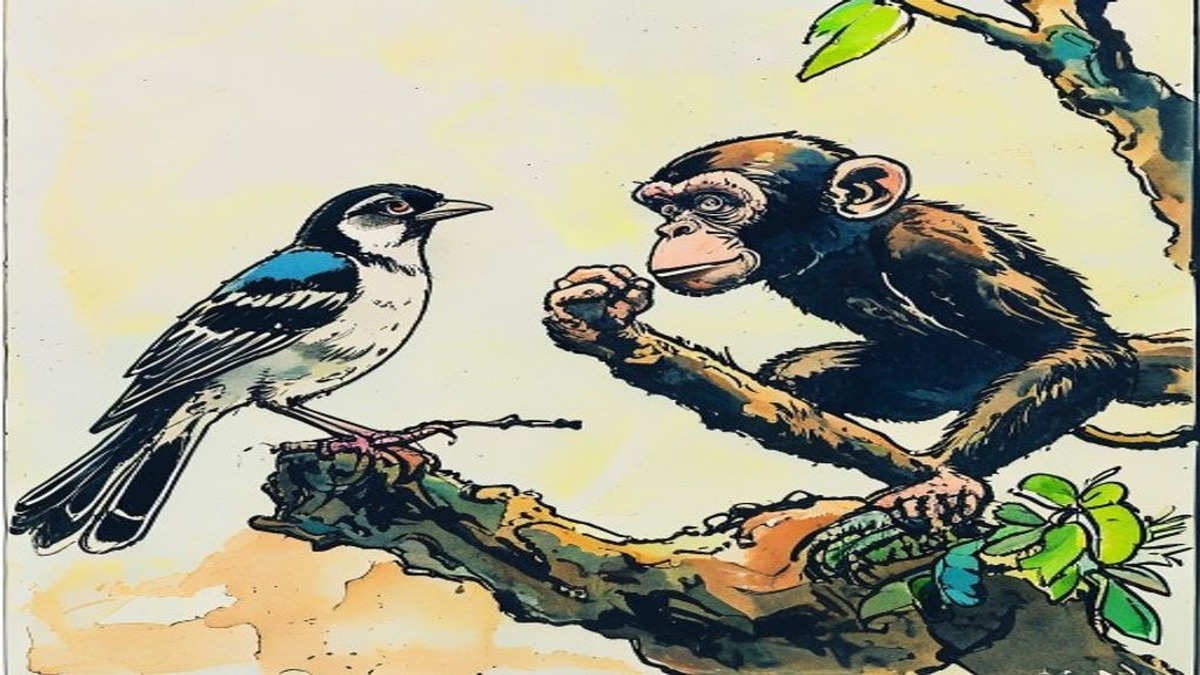
A pair of sparrows had built their nest in the fork of a large peepal tree at the edge of a forest. It was a nest of exceptional quality — woven tight against the wind, deep enough to hold warmth, positioned to catch the morning sun and be sheltered from the afternoon rain. They had lived in it through several seasons and raised multiple clutches of chicks without difficulty. The nest represented years of accumulated expertise in construction, site selection, and material choice.
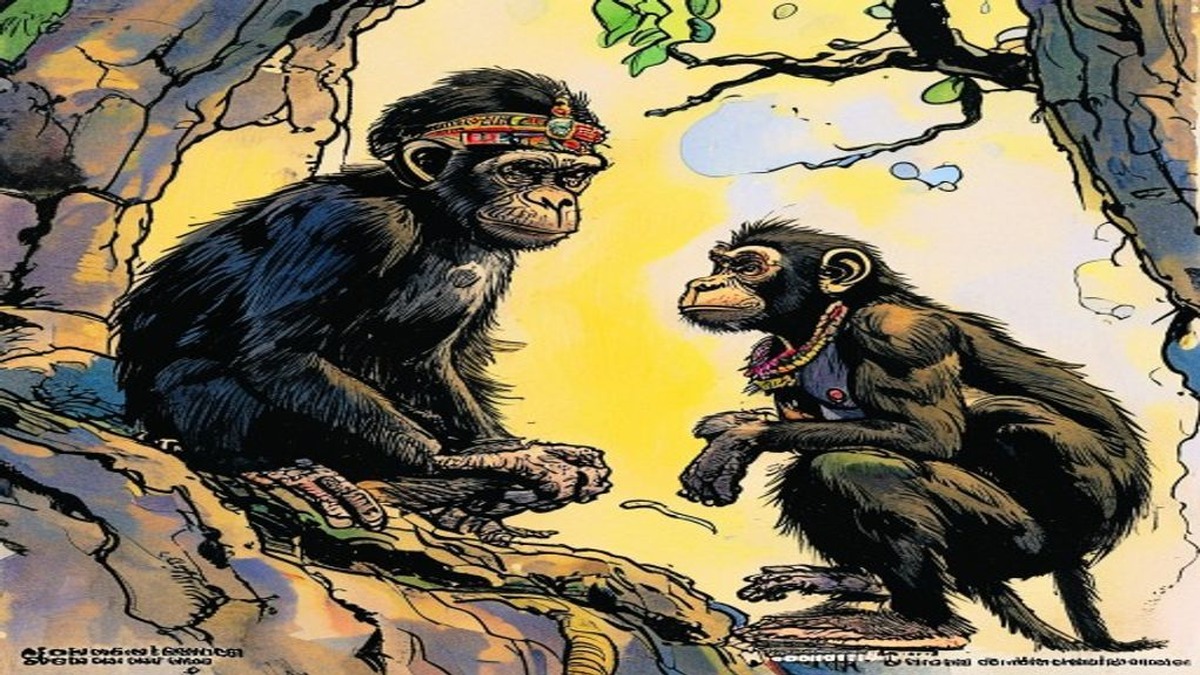
One stormy winter evening, a troop of monkeys came scrambling through the wet branches, soaked to the skin and shaking with cold. They clustered in the tree’s canopy, trying to shelter from the rain behind broad leaves that offered little actual protection. They groaned and chattered and clutched themselves. The storm showed no sign of easing. The monkeys were thoroughly miserable.
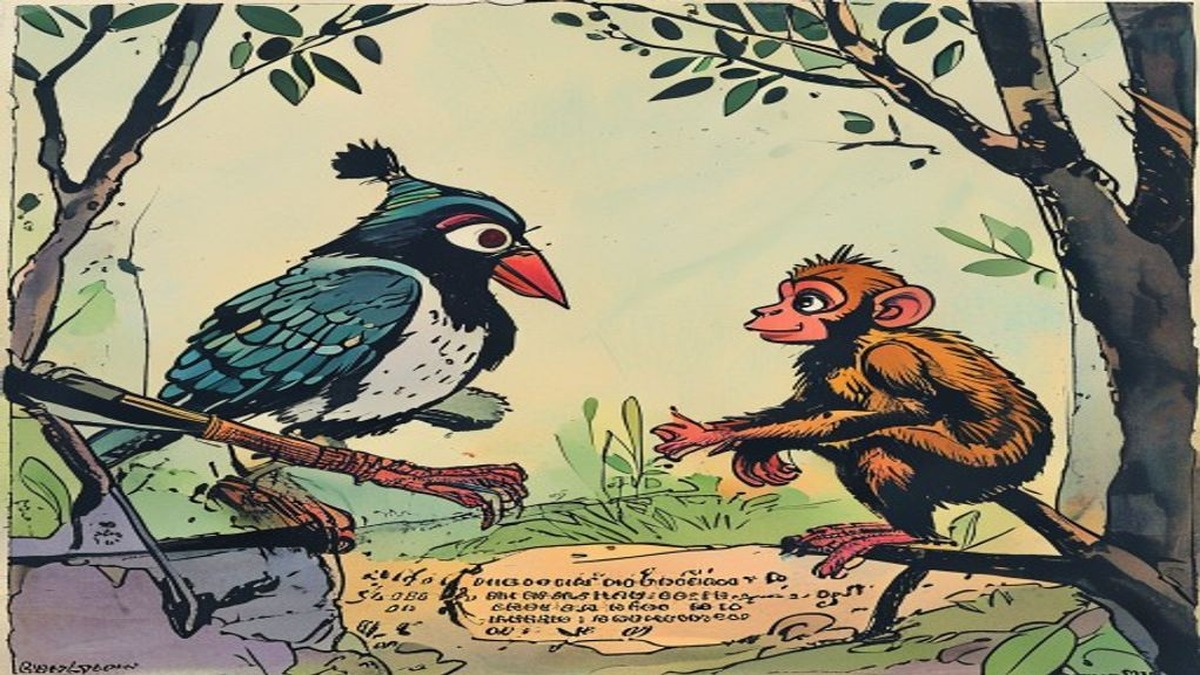
The female sparrow watched them from the nest entrance with what she intended as sympathetic concern. She and her mate were warm; the monkeys were not; and the reason was entirely clear to her. She leaned out and spoke. “Friends, you have hands. You have clever fingers. We are small birds and yet we built this nest that keeps us warm through every storm. Why do you not build yourselves a house? A creature as large and capable as a monkey could build something far better than ours in half a day. You need only gather the right materials and weave them together.”
The Advice That Could Not Be Used
The monkeys heard this and said nothing for a moment. Then the anger came. Not the anger of creatures who have been given false information, but the anger of creatures who have been given accurate information they cannot act on — which is, in the emotional economy of the offended, functionally identical to mockery.
Monkeys do not build nests. They are physically capable of carrying objects and climbing and weaving to some degree, but they do not have the instinct for nest construction that birds possess, they do not have the patience for the sustained, detailed work that a weatherproof nest requires, and they do not have any tradition of doing so. The sparrow’s advice was correct in every particular and completely useless. The sparrow had looked at two animals experiencing the same cold night differently and had attributed the difference entirely to choice and effort, when in fact the difference was largely a matter of species capability and instinct.
What the monkeys heard was not helpful advice but an implicit accusation: you are suffering because you are too lazy or too foolish to do what even a small bird can do. Whether this was the sparrow’s intention was irrelevant. The monkeys could not build a nest, they were cold, and a warm bird in a warm nest was explaining to them that the gap between those two states was their own failure. The largest monkey reached into the tree.
The Nest Destroyed and the Lesson Complete
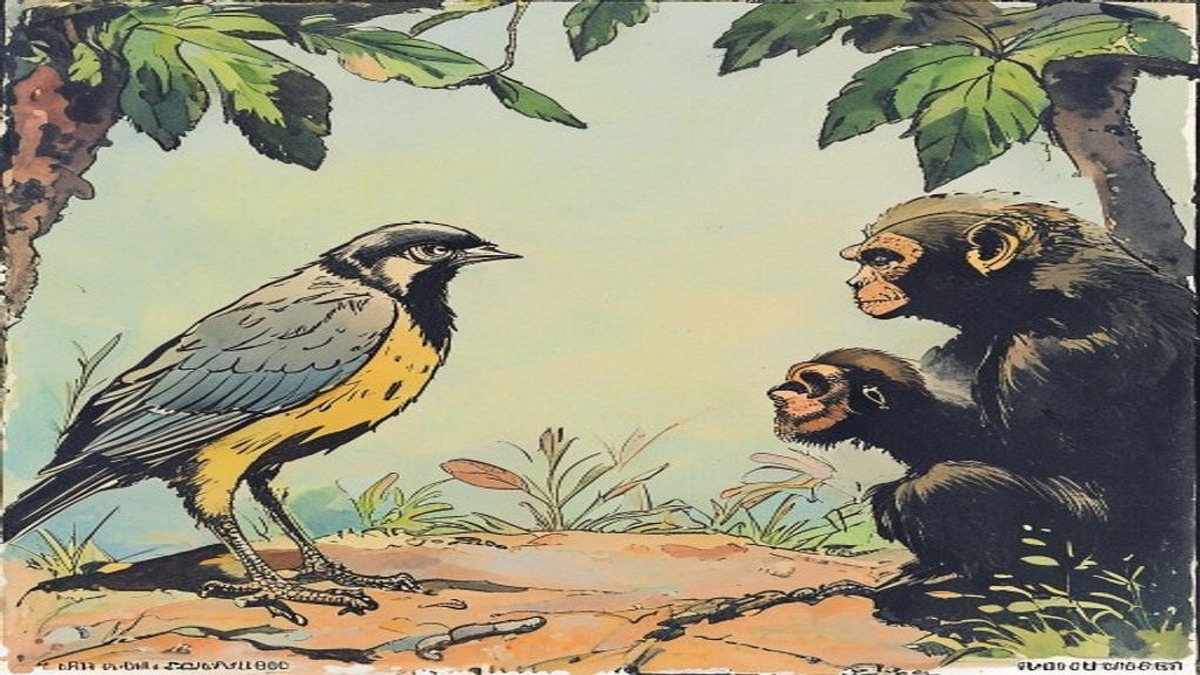
The monkeys tore the nest apart. The sparrows escaped unharmed, but the home they had built and refined over years was reduced to scattered grass and twigs in moments. The monkeys remained cold, because tearing apart a nest does not generate heat. The sparrows were now cold too, having lost their shelter to retaliation for advice they had given out of genuine care. Both parties were worse off than before the advice was given. The advice was accurate. The advice was useless. The consequences of giving it were negative for everyone.
Vishnu Sharma closes with an observation that is simultaneously about the sparrow’s error and the monkeys’ limitation: advice that cannot be acted upon is not experienced as information; it is experienced as judgment. And judgment, delivered by the comfortable to the suffering, is not received as concern; it is received as contempt. The sparrow’s error was not that it lied, not that it was unkind, not even that it misjudged the monkeys’ capabilities. Its error was that it failed to ask the question: can these creatures do what I am suggesting? If the answer is no, then the advice is not advice; it is a mirror showing them what they are not, held up by someone who happens to be warm.
Moral and Sanskrit Wisdom
न देयं मूर्खाय हितमूपदेशं
Na deyam murkhaya hitamupadesham — “Sound advice should not be given to the foolish.”
— Panchatantra I, Sanskrit proverbial tradition
This aphorism sounds harsh until the tale clarifies what it means. The problem with giving sound advice to the foolish is not that the advisor wastes their breath; it is that the advice causes harm to the advisor by provoking a retaliatory response. Vishnu Sharma’s warning is self-protective as much as ethical: before offering counsel, evaluate not only whether the counsel is correct but whether the recipient has the capacity and the motivation to use it. If neither condition is met, the correct action is silence.
Why This Story Has Lasted 2,300 Years
The Sparrow and the Monkey endures because it tells a story the Suchimukha tale does not: what happens not to the advisor’s body but to the advisor’s work. Suchimukha dies. The sparrow lives, but loses the nest it spent years building. This is perhaps the more common consequence of ill-timed advice — not death but destruction of what one has built, through the retaliation of those who received the advice as judgment rather than help.
The story is also richer in its analysis of why advice fails. The Suchimukha tale establishes that monkeys reject advice from birds. The Sparrow and the Monkey adds a dimension: the advice fails not merely because the recipient is disinclined to receive it, but because the recipient cannot act on it, and the inability to act converts accurate information into humiliation. A creature that is suffering and is told that its suffering is avoidable will experience that information not as a guide to action but as a verdict on its inadequacy — unless it can actually take the action that would relieve the suffering.
Applied to human experience, the lesson is widely relevant: advice about exercise given to someone who lacks access to exercise facilities; advice about diet given to someone who cannot afford the recommended food; advice about work habits given to someone whose working conditions make those habits impossible. In each case the advice may be accurate. In each case it is received as blame for a condition the recipient cannot change on the terms proposed. The well-advised action, in Vishnu Sharma’s framework, is to assess capability before offering counsel. Correct advice directed at an incapacity is not helpful; it is provocative, and the consequences are the sparrow’s to bear.
Frequently Asked Questions
What is the moral of the Sparrow and the Monkey?
Sound advice given to those who cannot act on it is experienced as judgment, not help — and judgment delivered by the comfortable to the suffering provokes retaliation. The sparrow's advice was accurate; its timing and audience made it destructive.
How does this story relate to the tale of Suchimukha the bird?
The two stories form a pair. In the Suchimukha tale, the advisor (the bird) is killed by the monkeys. Here, the advisor (the sparrow) survives but loses its home. Together they establish from two angles the cost of giving unsolicited advice to those who cannot receive it.
Why could the monkeys not follow the sparrow's advice?
Monkeys do not have the instinct, patience, or tradition for nest construction that birds possess. The sparrow's advice was physically possible in theory but not actionable in practice — which meant it functioned not as guidance but as a comparison showing the monkeys what they were not.
Which Panchatantra book is this story from?
The tale is in Panchatantra Book I (Mitra-bheda, The Separation of Friends), compiled by Vishnu Sharma around the 3rd century BCE as part of a royal education in statecraft and practical wisdom.
What does this story teach about the limits of good advice?
Correct advice directed at an incapacity is not helpful; it is provocative. Before offering counsel, the advisor must assess whether the recipient has both the capacity and the motivation to act on it. If either is missing, silence is the wiser choice.
You May Also Like
 Panchatantra Stories
Ages 6-8
Panchatantra Stories
Ages 6-8
The Brahmani and the Mongoose
The Brahmani and the Mongoose: A timeless Indian folk tale where one moment of rage destroys lifelong trust. the brahmani's hasty act reveals wisdom's price.
 Panchatantra Stories
Ages 3-5
Panchatantra Stories
Ages 3-5
The Story of the Thief and the Brahmins
The Story of the Thief and the Brahmins: In a certain town, there lived a very learned Brahminwho, as a result of his actions i, n his previous life, had. The
 Panchatantra Stories
Ages 9-12
Panchatantra Stories
Ages 9-12
Frogs That Rode a Snake
The framing tale of pride and slow-motion ruin from Book III of the Panchatantra — an old cobra named Mandavishya pretends weakness, and the proud frog king Gangadatta rides him to the doom of his entire kingdom. A two-thousand-year-old story about flattery, deception, and the most dangerous kind of enemy: the one who appears to surrender first.