The Brahmin and the Crooks
The Brahmin and the Crooks: Untruth spoken repeatedly appears to be truth.” In a small village, there lived a Brahmin, by the name of Mitra Sharma. He was a

The Brahmin and the Crooks
Canonical Attribution and Manuscript Tradition
This tale is preserved in the major Sanskrit recensions of the Pancatantra including the Tantrakhyayika (c. 200 BCE, Kashmir) and the Hitopadesha and belongs to the Pancatantra’s rich tradition of tales about the exploitation of social trust through the performance of legitimate identity. A brahmin travelling with a goat, obtained as a sacrificial fee, encounters a gang of crooks who have devised a coordinated scheme to separate him from it: they pose as fellow travellers, scholars, or persons of apparent respectability, and through a series of approaches, exchanges, and false testimonies persuade the brahmin that his goat is diseased, inauspicious, or not what it appears. The tale is a sophisticated analysis of how social trust — the reasonable reliance on apparent markers of legitimate identity — can be systematically exploited by coordinated actors who have invested in creating those markers.
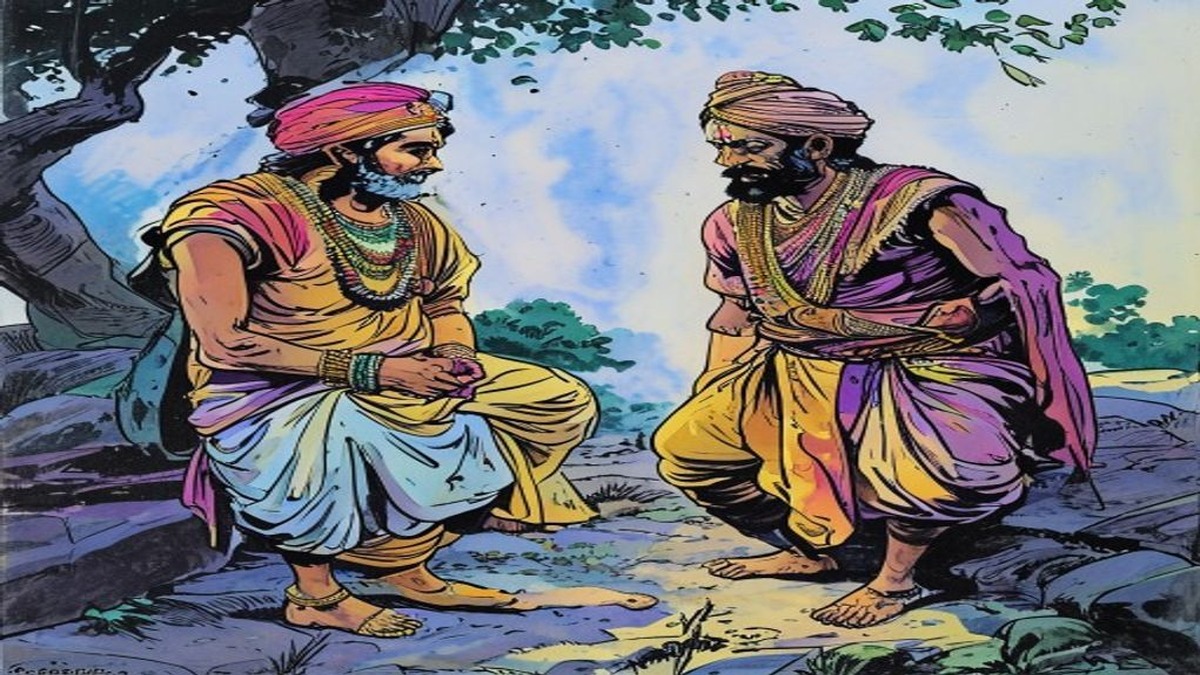
Beat I — The Crooks’ Scheme and Its Logic
The gang of crooks had developed a scheme that exploited the structure of social trust rather than relying on physical force. Physical robbery requires the robbers to be stronger than their victim, involves direct confrontation, and leaves the victim with clear evidence of what has happened. The scheme the crooks had devised required none of these things: instead, it used the brahmin’s own reasonable reliance on social markers of legitimacy to separate him from his property through a process that the brahmin himself would participate in.
The scheme’s architecture was based on the same principle demonstrated in the three-crooks tale: independent apparent sources of testimony converging on the same conclusion overcome the victim’s direct perception. In this version the scheme is more elaborate: it involves not merely false testimony but false identity, false relationships, and false authority, each performed by a different member of the gang in a coordinated sequence designed to progressively undermine the brahmin’s confidence in his own assessment of his situation.
Beat II — The Performance of Legitimate Identity
The crooks encountered the brahmin in the roles they had prepared: apparently respectable travellers, scholars, or persons with knowledge relevant to the brahmin’s situation. Each played their role correctly: the language was appropriate, the manners were appropriate, the claimed knowledge was displayed convincingly. The brahmin had no basis on which to doubt the markers of legitimacy he observed; the crooks had invested in making those markers accurate to observation.
This is the Pancatantra’s most sophisticated observation about this class of deception: the markers of legitimacy that the crooks used to gain the brahmin’s trust were not forgeries in a simple sense. They had genuinely learned the language, the manners, the surface display of the roles they were claiming. What was false was not the performance of the markers but the underlying identity — the alignment between the markers and the intentions behind them. The brahmin could not detect this misalignment through observation of the markers, because the markers were accurate. He could have detected it only by examining the interests behind the markers.
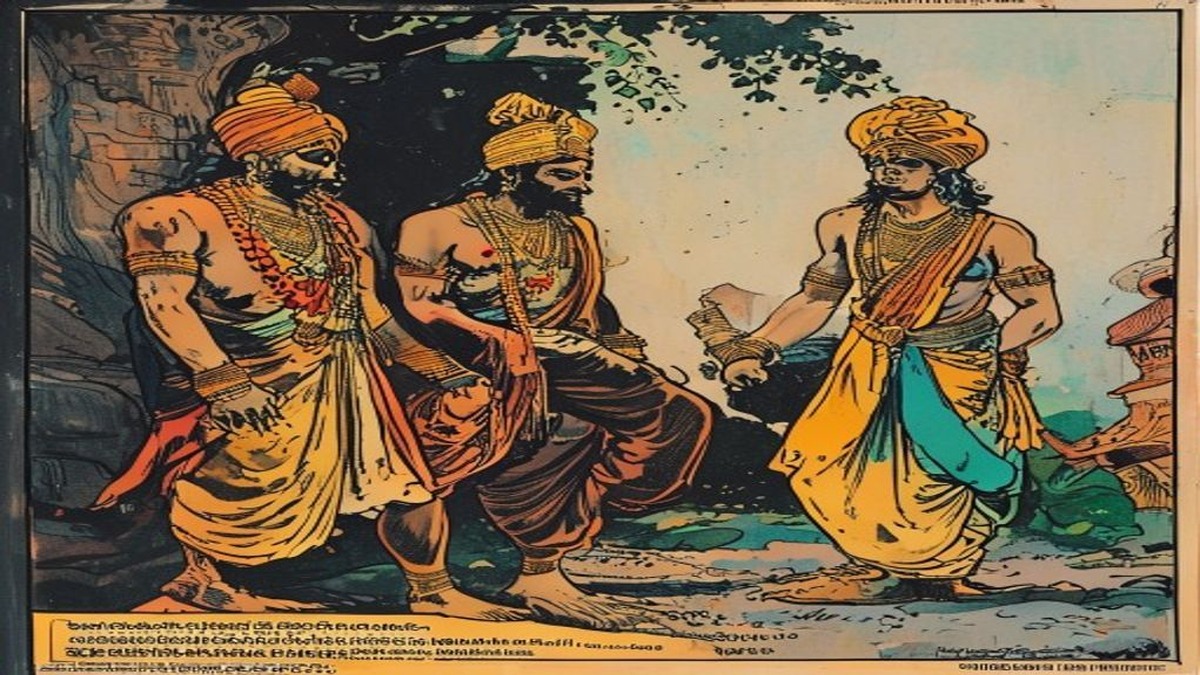
Beat III — The Brahmin’s Loss and Its Cause
Through the coordinated sequence of approaches, the crooks succeeded in separating the brahmin from his goat. The specific mechanism varied — perhaps the goat was pronounced diseased and the brahmin was persuaded to abandon it; perhaps it was exchanged for something apparently more valuable that turned out to be worthless; perhaps the brahmin was persuaded to leave it in the crooks’ care while he attended to some business they had invented. In each version, the brahmin’s loss was the product of his reasonable reliance on the markers of legitimacy that the crooks had carefully constructed.
The Pancatantra’s emphasis is on the cause of the loss. The brahmin was not unusually credulous; he applied the normal social heuristic that apparent legitimacy is correlated with actual legitimacy. This heuristic is correct on average — most people who appear to be scholars are scholars, most people who appear to be respectable travellers are respectable travellers. The crooks had invested specifically in defeating this heuristic by constructing appearances that satisfied its criteria while the underlying reality was incompatible with it.
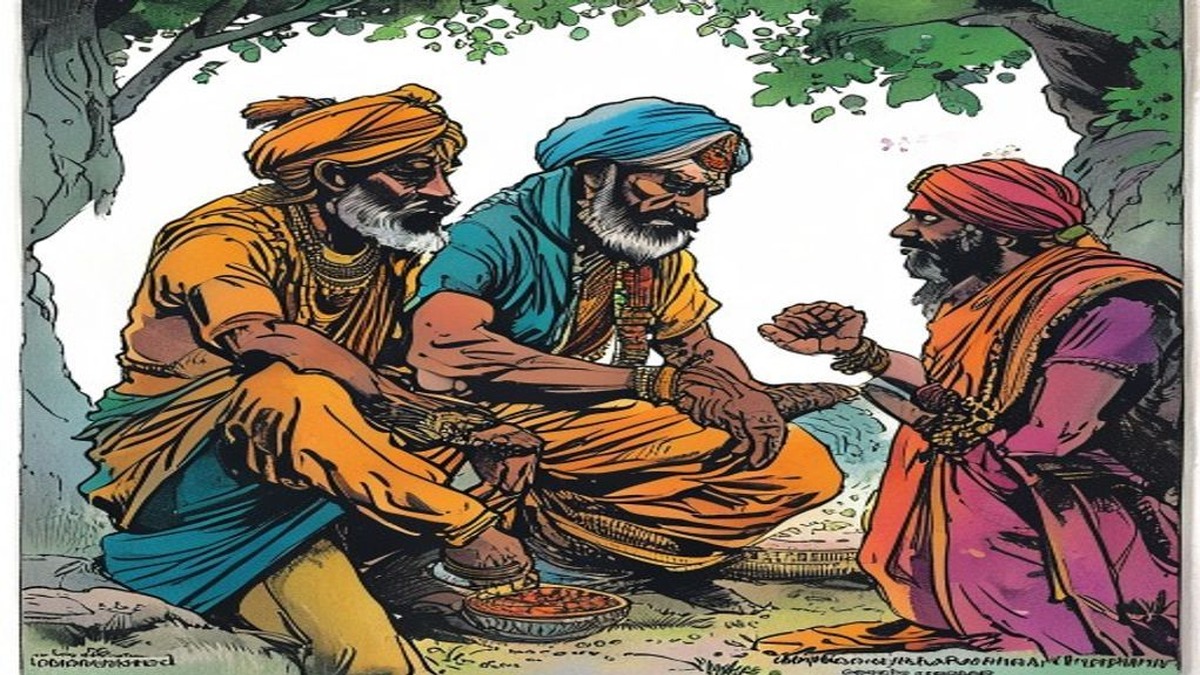
Beat IV — What the Brahmin and the Crooks Teaches About Social Trust and Its Exploitation
Vishnu Sharma’s argument in this tale is among the Pancatantra’s most epistemologically sophisticated: the very mechanisms that make social life possible — the reasonable reliance on markers of legitimate identity, the trust that apparent respectability generates — are simultaneously the primary instruments through which sophisticated deception operates. This is not a paradox that can be resolved by abandoning social trust; a social life in which no one trusted apparent legitimacy would be both unbearable and impossible. It is a structural vulnerability that can only be managed through additional checks.
The additional checks the Pancatantra implies, and the Arthashastra makes explicit, are interest-based rather than marker-based: not “does this person appear legitimate?” but “what interests does this person have in my situation?” A respectable scholar who appears at the right moment, with exactly the knowledge relevant to separating the brahmin from his goat, is a respectable scholar whose interests should be examined before the knowledge is acted upon. The check is not suspicion of all apparent legitimacy but targeted examination of interests in situations where the stakes are high.
Moral and Sanskrit Wisdom Tradition
“The markers of trust are the instruments of fraud; examine interests, not appearances, in any situation where the stakes are high enough to attract deception.”
— Moral of The Brahmin and the Crooks, Pancatantra Book III (Kakolukiyam)
This moral extends the Pancatantra’s epistemological treatment of testimony and social trust into the domain of identity verification. The Sanskrit tradition’s treatment of this problem appears in the Arthashastra’s elaborate protocols for authenticating messengers, documents, and officials — systems designed to make the performance of legitimate identity more costly and detectable. The Pancatantra’s contribution is the narrative demonstration that these protocols exist because the problem they address is real: sophisticated actors invest in constructing the markers of legitimacy precisely because those markers generate trust, and the trust generates the access they need. The brahmin’s loss is the cost of relying on markers without examining the interests behind them.
Why This Story Has Lasted 2,300 Years
The Brahmin and the Crooks endures because the mechanism it demonstrates — exploiting social trust through the performance of legitimate identity — is permanent and has only grown more sophisticated with the development of institutional and technological tools for identity construction. The crooks who dressed as respectable travellers have become the phishing email that perfectly replicates a bank’s visual identity, the fraudulent charity that genuinely feeds some people while diverting most donations, the con artist who genuinely possesses the credentials they claim while using those credentials to deceive. The Pancatantra’s prescription remains: in high-stakes situations, examine interests, not appearances. Ask what the person with impeccable credentials gains from the advice they are giving you.
Sanskrit Tradition: Tantrakhyayika (c. 200 BCE, Kashmir); Hitopadesha
Key Concept: Social trust exploited through performance of legitimate identity; markers vs. interests; interest-based verification in high-stakes situations; coordinated identity fraud
Author: Vishnu Sharma (attributed, c. 3rd century BCE)
Arthashastra Parallel: Authentication protocols for messengers, documents, officials; making performance of legitimate identity costly and detectable
Frequently Asked Questions
What is the moral of the Brahmin and the Crooks in the Panchatantra?
The moral is that the markers of trust are the instruments of fraud; in any situation where the stakes are high enough to attract deception, examine interests rather than appearances. The crooks invested in constructing the markers of legitimate identity precisely because those markers generate the trust that gave them access to what they wanted. The brahmin's reasonable reliance on apparent legitimacy was the instrument of his deception. He should have asked not 'do they appear legitimate?' but 'what do they gain from what they are telling me?'
What happens in the Story of the Brahmin and the Crooks in the Panchatantra?
A brahmin travelling with a goat obtained as a sacrificial fee encounters a gang of crooks who have dressed as respectable travellers and scholars. Through a coordinated sequence of approaches and false testimonies, each performed with the markers of legitimate identity, they progressively undermine the brahmin's confidence in his assessment of his goat and separate him from it. The brahmin's loss was the product of his reasonable reliance on markers of legitimacy that the crooks had carefully constructed.
How does the deception in the Brahmin and the Crooks work?
The crooks exploited the structure of social trust rather than using physical force. They invested in genuinely learning the language, manners, and surface display of respectable identity, making their performance accurate to observation. What was false was not the markers but the alignment between markers and intentions. The brahmin could not detect this misalignment by observing the markers; he could only have detected it by examining the interests behind them. Multiple coordinated actors delivering the same conclusion from apparently independent positions then overcame his direct perception.
What additional check does the Panchatantra recommend against this kind of fraud?
The Pancatantra implies, and the Arthashastra makes explicit, that the defence against identity-based fraud is interest-based verification rather than marker-based verification. The question is not 'does this person appear legitimate?' but 'what interests does this person have in my situation?' A respectable scholar who appears at exactly the right moment with exactly the knowledge relevant to separating the brahmin from his goat should be asked: what do you gain from this advice? In high-stakes situations, the coincidence of apparent legitimacy and relevant advice is itself a signal requiring scrutiny.
How does this Panchatantra story relate to the Arthashastra's authentication protocols?
The Arthashastra devotes extensive attention to authenticating messengers, documents, and officials through protocols designed to make the performance of legitimate identity more costly and detectable. These include seals, counter-signs, independent verification through separate channels, and cross-checking of credentials. The brahmin-and-crooks tale demonstrates why these protocols exist: sophisticated actors invest in constructing the markers of legitimacy precisely because those markers generate trust. The Arthashastra's authentication systems are the institutional response to exactly the vulnerability the brahmin experienced.
You May Also Like
 Panchatantra Stories
Ages 3-5
Panchatantra Stories
Ages 3-5
5 Panchatantra Stories About Animals That Kids Love
5 Panchatantra Stories About Animals That Kids Love: Kids love stories with animals in them. Stories of dense forests, strange birds and animals, beautiful
 Panchatantra Stories
Ages 3-5
Panchatantra Stories
Ages 3-5
The Story of the Frogs and the Black Snake
The Story of the Frogs and the Black Snake: Near Varuna mountain, there lived an old snake, by the name of Mandavishya. One day, he thought toh imsdf, ‘I am
 Panchatantra Stories
Ages 9-12
Panchatantra Stories
Ages 9-12
The Lion and The Jackal
The Lion and The Jackal: Vajradanstra was a lion living in a forest. He had two friends, a jackal named Chaturaka and a wolf named Kravyamukha. Because of