The Crafty Crane And The Craftier Crab
The Crafty Crane And The Craftier Crab: Once upon a time an old crane lived on the rim of a large lake in the middle of a jungle. Because of age, it was not

The Crafty Crane and the Craftier Crab
Canonical Attribution and Manuscript Tradition
This tale belongs to Pancatantra Book I, Mitra-bheda, and is one of the collection’s most celebrated studies in false prophecy, manufactured trust, and the limits of predatory cunning. The crane’s stratagem — a fabricated astrological catastrophe used to position himself as a rescuer — and the crab’s counter-stratagem — forcing physical verification of the crane’s claims before committing to vulnerability — are among the Pancatantra’s most precisely constructed demonstrations of how to detect and defeat deception. The tale survives in all major Sanskrit recensions including the Tantrakhyayika (c. 200 BCE, Kashmir). It does not carry a specific ATU (Aarne-Thompson-Uther) tale-type number, though it shares structural kinship with ATU 56 (The Deceiver Falls into His Own Trap) and the broader international type of the false benefactor whose deception is discovered and punished by the most alert of his intended victims. The Hitopadesha includes a version of this tale. Vishnu Sharma placed it in Mitra-bheda to illustrate a specific intelligence failure: the fish, who accepted the crane’s prophecy without demanding verification, and the crab, who did not. The contrast is the lesson.
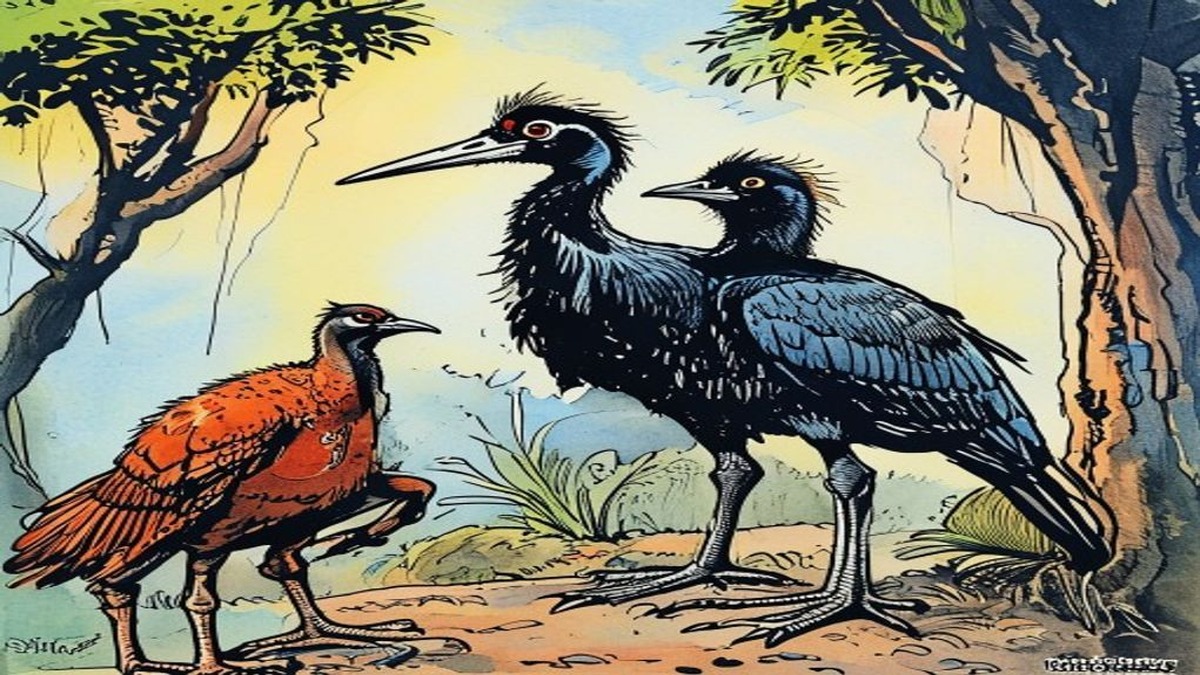
Beat I — The False Prophecy and the Trust It Manufactures
An old crane living beside a large jungle lake could no longer hunt effectively. Unable to endure hunger, it devised a stratagem. When a crab asked why it was not hunting, the crane announced that it had renounced violence and had heard from astrologers that the planets foretold twelve years of drought. The lake would dry up entirely. All the fish and creatures would die. Moved by compassion for his lifelong companions, the crane had decided to fast unto death rather than eat the very creatures he loved. He wept conspicuously.
The Pancatantra’s anatomy of this deception is worth examining element by element. The crane’s stratagem contains four components, each designed to neutralise a different form of scepticism. First, the renunciation of hunting establishes that the crane now has no predatory interest in the fish; a creature who refuses to eat cannot be a predator in disguise. Second, the astrological prophecy creates a threat that is external, large, and unverifiable by the fish themselves; they cannot check the planets. Third, the timeline of twelve years makes the threat serious enough to justify immediate action but distant enough that the fish cannot observe its first effects. Fourth, the crane’s conspicuous grief establishes emotional identification with the fish; a creature weeping for the fish cannot be using the fish. Each element addressed one possible objection. The fish accepted the entire package without verification.
Beat II — The Crane’s Harvest and the Crab’s Demand
The fish asked the crane what could be done. The crane described another lake some distance away — deep, spring-fed, permanent, perfect. He offered to carry them there, one or two at a time, in his bill. The fish, convinced by the prophecy and the crane’s apparent grief, agreed gratefully. The crane carried fish to the lake, ate them one by one on a large rock, and returned each time for more. Gradually, the bones accumulated on the rock. The crane was no longer hungry and had solved the problem of his old age.
Eventually the crab asked to be carried. The crane agreed. Midway, the crab asked to see the lake they were heading to. The crane gestured toward the rock covered in fish bones. The crab understood immediately, seized the crane’s neck with its claws, and cut through it. The crab returned to the lake and reported what it had found.
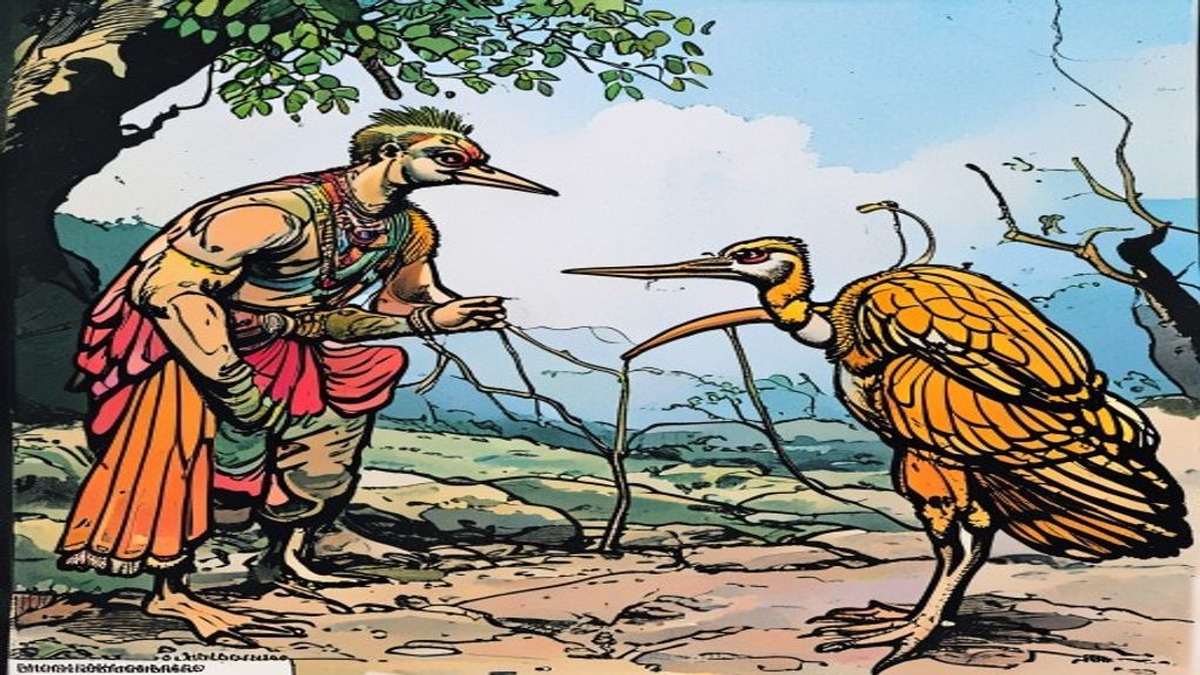
Beat III — Why the Crab Survived and the Fish Did Not
The Pancatantra’s explanation for the crab’s survival, which Vishnu Sharma makes explicit through the frame narrative, is a single discipline: the crab demanded verification before becoming vulnerable. The fish accepted the crane’s prophecy because the crane had correctly identified their cognitive vulnerabilities — their inability to check the planets, their legitimate fear of drought, their emotional susceptibility to a creature who appeared to share their concerns. The crab accepted nothing. It agreed to be carried but required, midway, to see physical evidence of the destination. When the crane pointed toward the rock, the crab observed the bones. The bones were the verification of everything it needed to know.
The fish could not reach the alternative lake themselves, but they could have asked the crane to show it empty-billed first, demanded that a trusted third party verify the astrological prophecy, or observed that a creature claiming to have renounced predation was suspiciously eager to carry them one by one. None of these demands were made, because the crane’s performance had been designed precisely to suppress them.
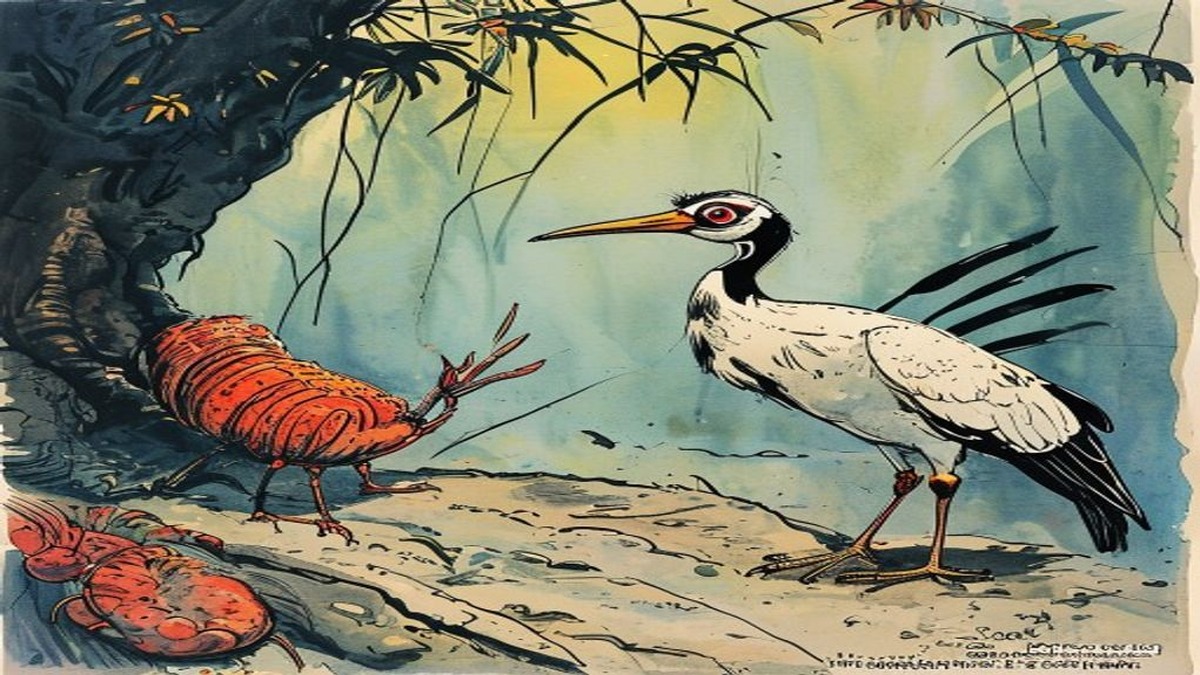
Beat IV — The Structure of Successful Deception
The Pancatantra uses this tale to teach its royal pupils not only how to detect deception but how to understand the architecture of a well-constructed deception in order to dismantle it. The crane’s stratagem was well-constructed: it addressed every obvious objection, created an external threat large enough to dominate the fish’s thinking, and established the crane’s credentials as a protector rather than a predator through conspicuous self-sacrifice. A poorly constructed deception can be detected by ordinary scepticism. The crane’s deception was constructed well enough to defeat ordinary scepticism in all its potential forms.
What defeated it was a demand that it survive contact with physical reality. The crab did not need to be smarter than the crane or to see through the performance in real time. It needed only to insist, at the moment of maximum vulnerability, on observable evidence rather than the crane’s testimony. The fish bones on the rock were not subtle; they were not hidden; they required no special intelligence to interpret. They required only that someone look at them before it was too late. The crab looked. Vishnu Sharma’s lesson is embedded in the comparison: between the fish who trusted the crane’s account of reality, and the crab who trusted only reality itself.
Moral and Sanskrit Wisdom Tradition
“Examine what is offered before you trust it; the craftiest deceivers dress their traps in the language of kindness.”
— Distilled teaching of The Crafty Crane and the Craftier Crab, Pancatantra Book I (Mitra-bheda)
The Kautilya Arthashastra, roughly contemporary with the Pancatantra, devotes an entire section to the identification of false counsellors and false allies — those who serve their own interests while presenting themselves as servants of another’s welfare. Kautilya’s test for distinguishing genuine allies from false ones is behavioural rather than testimonial: observe what they do, not what they say; observe whom their actions benefit, not whom their words describe as their intended beneficiary. Applied to the crane: what did the crane’s actions actually produce? Fish on a rock. What did the crane’s words claim to produce? Fish in a better lake. The gap between the claim and the result is the measure of the deception. The crab read the result before the process was complete. The fish read only the claim.
Why This Story Has Lasted 2,300 Years
The Crafty Crane and the Craftier Crab endures because it models both sides of a contest between intelligence and cunning at a level of clarity that has made it reproducible and teachable across 2,300 years of transmission. The crane is not an ordinary predator; it is an unusually skilled one, whose deception addresses every available form of scepticism. The crab is not simply lucky; it is the one creature who applied the one test that the crane’s deception could not survive: demand observable evidence at the moment of maximum vulnerability. The story is a curriculum in two lessons taught simultaneously in a single narrative: how to construct a deception that defeats ordinary scepticism, and how to defeat even an extraordinary deception with one simple demand. That a story can carry both lessons at once, told through animals in a jungle lake, and remain teachable to children and kings alike — this is why Vishnu Sharma’s Pancatantra has survived where most of its contemporaries have not.
Sanskrit Tradition: Tantrakhyayika recension (c. 200 BCE, Kashmir); Hitopadesha parallel
Key Contrast: The fish (accept testimony without verification) vs. the crab (demand observable evidence before vulnerability)
Author: Vishnu Sharma (attributed, c. 3rd century BCE)
Core Lesson: Trust observable evidence, not the account of a party whose interests are served by your compliance
You May Also Like
 Panchatantra Stories
Ages 9-12
Panchatantra Stories
Ages 9-12
The Story of the Heron And’ the Crab
An ancient Panchatantra tale teaching timeless wisdom about virtue and character.
 Panchatantra Stories
Ages 9-12
Panchatantra Stories
Ages 9-12
The Story of the Four Learned Fools
The Story of the Four Learned Fools: In a certain town, there lived four Brahmins whohad become great friends. They were all extremely naiveby nature. The
 Panchatantra Stories
All Ages
Panchatantra Stories
All Ages
The Story of Mother Shandili
The Story of Mother Shandili: Once, during the monsoon season, I requested a Brahmin to allow me to stay with Qim, so that I couldfast and pray undisturbed.