The Unlucky Weaver
An unlucky weaver discovers that his belief in bad fortune was his true enemy, and only determination can break the cycle.
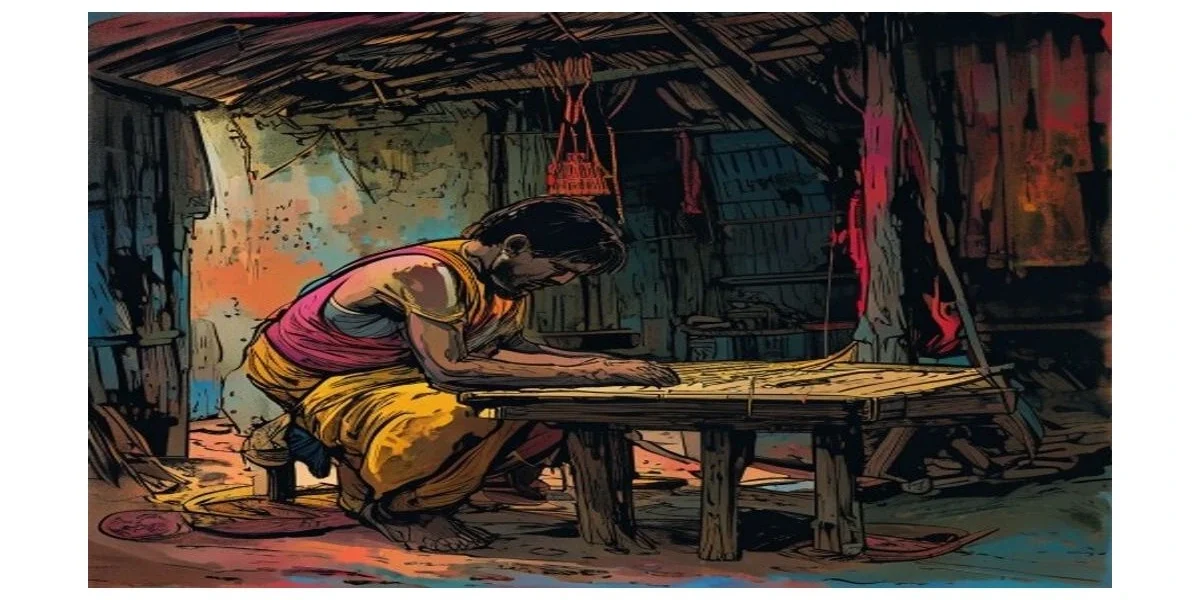
The Unlucky Weaver
Canonical Attribution and Manuscript Tradition
This tale is preserved in the major Sanskrit recensions of the Pancatantra including the Tantrakhyayika (c. 200 BCE, Kashmir) and appears in the Hitopadesha. The unlucky weaver is a figure who attributes his chronic poverty and misfortune to fate (daiva) rather than to the quality of his own conduct, skills, or decisions. The tale engages one of the Pancatantra’s most persistent philosophical concerns: the relationship between daiva (fate, the given) and purusha-kara (human effort, the made). The Pancatantra consistently argues against pure fatalism — not because fate plays no role but because the fatalist belief, when held, actively prevents the effort that could improve outcomes. The unlucky weaver is unlucky partly because he believes himself to be unlucky, and this belief shapes his conduct in ways that make the bad outcomes more likely. The tale is an argument for what the Pancatantra calls karma in its original sense: action, effort, the human contribution to outcomes.
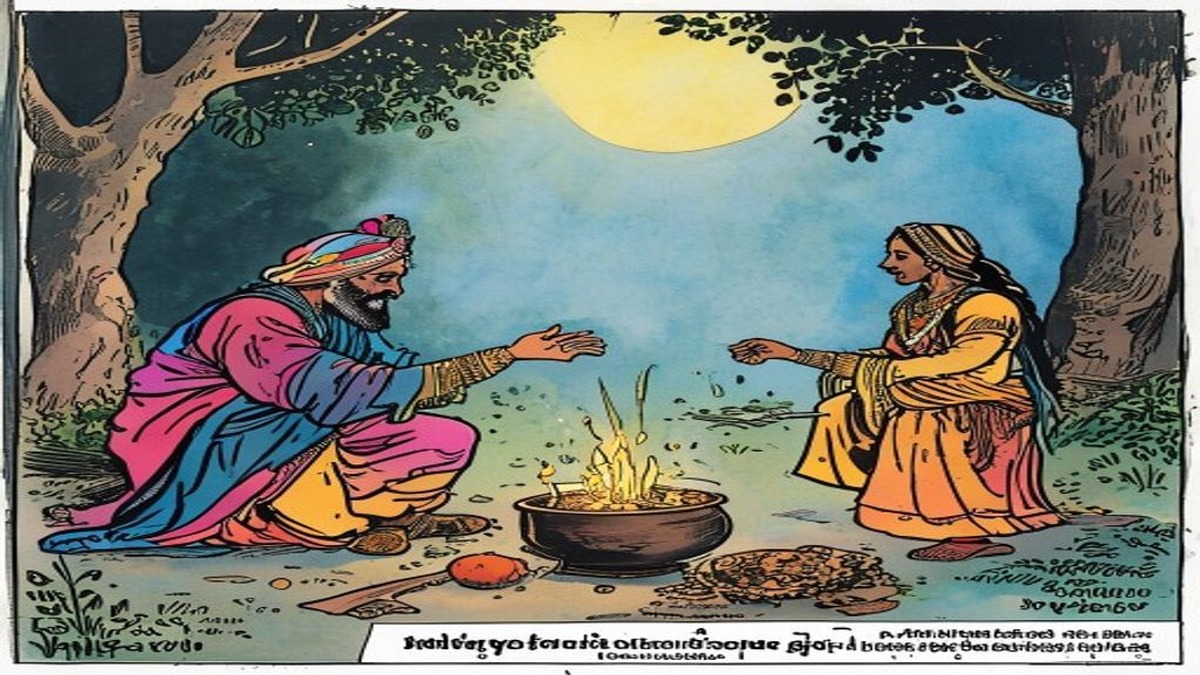
Beat I — The Attribution to Fate
The weaver was poor and had been poor for as long as he could remember. He attributed his poverty entirely to fate: he was born unlucky, the stars were against him, daiva had determined his circumstances before he could influence them. This belief was not merely a passive resignation to circumstances; it was an active interpretation of every event in his life that confirmed and reinforced the fatalist framework. When his cloth sold poorly, it was fate. When his loom broke, it was fate. When his neighbours prospered while he struggled, it was because they had been born under better stars, not because their conduct differed from his in any relevant way.
The Pancatantra is precise about what this belief costs the weaver. The fatalist interpretation, applied consistently, eliminates the feedback loop that learning requires: if outcomes are determined by fate rather than by conduct, there is nothing to learn from bad outcomes, no adjustment to make, no skill to improve. The weaver who believes his cloth sells poorly because of his stars cannot learn to weave better cloth. The fatalist framework is self-sealing: it explains failure in a way that prevents the response to failure that could turn failure into improvement.
Beat II — The Test of the Fatalist Framework
The tale brings the weaver into a situation that tests the fatalist framework directly. Through a series of circumstances — the specific mechanism varies in the recensions — the weaver is presented with an opportunity that his fatalism would have led him to dismiss: something that required initiative, effort, and the willingness to act on the possibility of a good outcome. The fatalist, believing outcomes to be predetermined, has no strong reason to seize such opportunities; the effort is pointless if fate has already decided.
The contrast the Pancatantra draws is with a figure who interprets the same circumstances differently: who sees the opportunity, acts on it, and obtains a good outcome that the fatalist’s passivity has made unavailable to him. The Pancatantra is not making the naive argument that effort always produces good outcomes; it is making the more precise argument that effort is a necessary condition for good outcomes, and that the fatalist belief systematically prevents the effort that is necessary.
Beat III — The Recognition and the Shift
The weaver’s recognition — the moment at which the fatalist framework becomes visible to him as a framework rather than as a description of reality — comes through the accumulation of observed contrasts between his own outcomes and those of people who work in similar conditions but with different beliefs about the relationship between effort and outcome. The recognition is not sudden; it builds through a series of observations that the fatalist framework can explain individually (those people were luckier than I am) but that become increasingly difficult to sustain as an explanation when the pattern is clear.
The Pancatantra presents the weaver’s shift away from pure fatalism not as a philosophical conversion but as a practical adjustment: he begins to apply effort where he had previously waited for fate. The results improve proportionally. This is the tale’s central demonstration: not that fate plays no role but that the conduct the fatalist framework produces is systematically worse than the conduct that belief in the efficacy of effort produces, and that this difference is legible in outcomes.
Beat IV — What the Unlucky Weaver Teaches About Fate and Effort
Vishnu Sharma’s argument in this tale engages the classical Indian debate between daiva (fate) and purusha-kara (human effort). The Pancatantra’s position is not that fate plays no role — the Sanskrit tradition broadly accepts that circumstances are partly given and not entirely within individual control — but that the pure fatalist belief, held and acted upon, is practically destructive regardless of its metaphysical accuracy. The person who believes that outcomes are entirely determined by fate will not apply the effort that could influence outcomes; the absence of that effort will produce worse outcomes; the worse outcomes will confirm the fatalist belief. The fatalist is trapped in a self-reinforcing cycle that the belief itself creates.
For Vishnu Sharma’s royal pupils the governance application is direct. The minister or ruler who attributes bad outcomes entirely to fate rather than examining the quality of the decisions and actions that produced them cannot learn from those outcomes. The Arthashastra’s insistence on rigorous post-action review — the analysis of why campaigns succeeded or failed, why policies produced their outcomes — rests on the premise that outcomes are at least partly the result of decisions, and that examining those decisions can improve future outcomes.
Moral and Sanskrit Wisdom Tradition
“He who blames fate for what conduct could have changed will never change his conduct, and fate will oblige him by confirming his belief.”
— Moral of The Unlucky Weaver, Pancatantra Book II (Mitra-samprapti)
This moral engages the Sanskrit tradition’s sustained debate between daiva and purusha-kara that appears across the Mahabharata, the Arthashastra, and the Pancatantra. The Mahabharata’s Shanti Parva contains extended debates between fatalism and voluntarism, generally concluding that both fate and effort play roles and that the practical question is what a wise being does given this uncertainty: the Mahabharata’s answer, like the Pancatantra’s, is that effort is always rationally indicated because it is a necessary condition for good outcomes even if it is not a sufficient one. The unlucky weaver illustrates the cost of the fatalist belief through its practical consequences rather than through metaphysical argument.
Why This Story Has Lasted 2,300 Years
The Unlucky Weaver endures because the error it illustrates — attributing to fate what conduct could have influenced, and thereby producing the conduct that makes the fatalist outcome more likely — is permanent and universal. Every age and every culture produces unlucky weavers: people whose genuine misfortune is compounded and extended by the belief that misfortune is all they can expect, a belief that shapes their conduct in ways that make further misfortune more probable. The Pancatantra’s response is not the naive optimism that effort always succeeds but the practical argument that effort is always rationally indicated: it is the only variable within individual control, and the fatalist who abandons it has surrendered the only leverage they have over their own outcomes.
Sanskrit Tradition: Tantrakhyayika (c. 200 BCE, Kashmir); Hitopadesha
Key Concept: Daiva (fate) versus purusha-kara (human effort); fatalism as self-reinforcing cycle; effort as necessary condition for good outcomes
Author: Vishnu Sharma (attributed, c. 3rd century BCE)
Arthashastra Parallel: Post-action review as premise that outcomes are partly the product of decisions; fatalist officials as governance risk
Frequently Asked Questions
What is the moral of the Unlucky Weaver in the Panchatantra?
The moral is that he who blames fate for what conduct could have changed will never change his conduct, and fate will oblige him by confirming his belief. The unlucky weaver's poverty was compounded by his fatalist belief, which prevented the effort that could have improved his situation. The Pancatantra argues not that effort always succeeds but that it is a necessary condition for good outcomes, and the fatalist who abandons it has surrendered the only leverage they have over their circumstances.
What happens in the story of the Unlucky Weaver in the Panchatantra?
A weaver attributes his chronic poverty to fate rather than to his own conduct, skills, or decisions. This fatalist belief creates a self-reinforcing cycle: he sees no point in effort, applies less of it, gets worse outcomes, and interprets these as confirmation of his bad luck. Through a series of observed contrasts and missed opportunities, he begins to recognise that the framework itself is the problem. When he shifts to genuine engagement with his craft, his outcomes improve proportionally — the practical demonstration the tale offers against pure fatalism.
What does the Panchatantra say about the debate between fate (daiva) and human effort (purusha-kara)?
The Pancatantra's position is that pure fatalism is practically destructive regardless of its metaphysical accuracy. The tale does not claim that fate plays no role, but argues that the fatalist belief, when acted upon, systematically prevents the effort that is a necessary condition for good outcomes. The person who believes outcomes are entirely predetermined will not seize opportunities or learn from failures, producing worse outcomes that then confirm the fatalist belief. The wise response under uncertainty is always to apply effort, because effort is the only variable within individual control.
Why is the fatalist belief self-reinforcing according to the Panchatantra?
The fatalist framework is self-sealing because it explains failure in a way that prevents the response to failure that could turn failure into improvement. If bad outcomes are caused by fate rather than by conduct, there is nothing to learn from them and no adjustment to make. The weaver who believes his cloth sells poorly because of his stars cannot learn to weave better cloth. The absence of this learning produces genuinely worse outcomes, which the fatalist then interprets as further confirmation of bad luck rather than as the result of the framework itself.
How does the Unlucky Weaver relate to the Arthashastra's treatment of governance?
The Arthashastra insists on rigorous post-action review — analysis of why campaigns succeeded or failed, why policies produced their outcomes — on the premise that outcomes are at least partly the result of decisions, and that examining those decisions can improve future performance. The fatalist official who attributes bad outcomes to fate rather than examining the quality of decisions that produced them cannot learn from those outcomes and will repeat the same errors. The Pancatantra's unlucky weaver demonstrates this dynamic at the scale of individual commercial life.
You May Also Like
 Panchatantra Stories
Ages 3-5
Panchatantra Stories
Ages 3-5
The Story of Mantharaka, the Weaver
The Story of Mantharaka, the Weaver: In a certain town, there lived a weaver, by the name of Mantharaka. One day, while he was weaving, the wooden supports of
 Panchatantra Stories
Ages 6-8
Panchatantra Stories
Ages 6-8
The Elephant and the Sparrow
The Elephant and the Sparrow: Even the low and humble achieve results when they work together.” A couple of sparrows lived happily in their nest on top of a
 Panchatantra Stories
Ages 6-8
Panchatantra Stories
Ages 6-8
The Story of the Brahmin and the Three Crooks
The Story of the Brahmin and the Three Crooks: In a certain town, there lived a Brahmin, b y the nameof Mitra Sharma, who was a fire worshipper. One day, in