The Thanksgiving Of The Wazir
The Thanksgiving Of The Wazir: Once upon a time there lived in Hindustan two kings whose countries bordered upon each other; but, as they were rivals in wealth
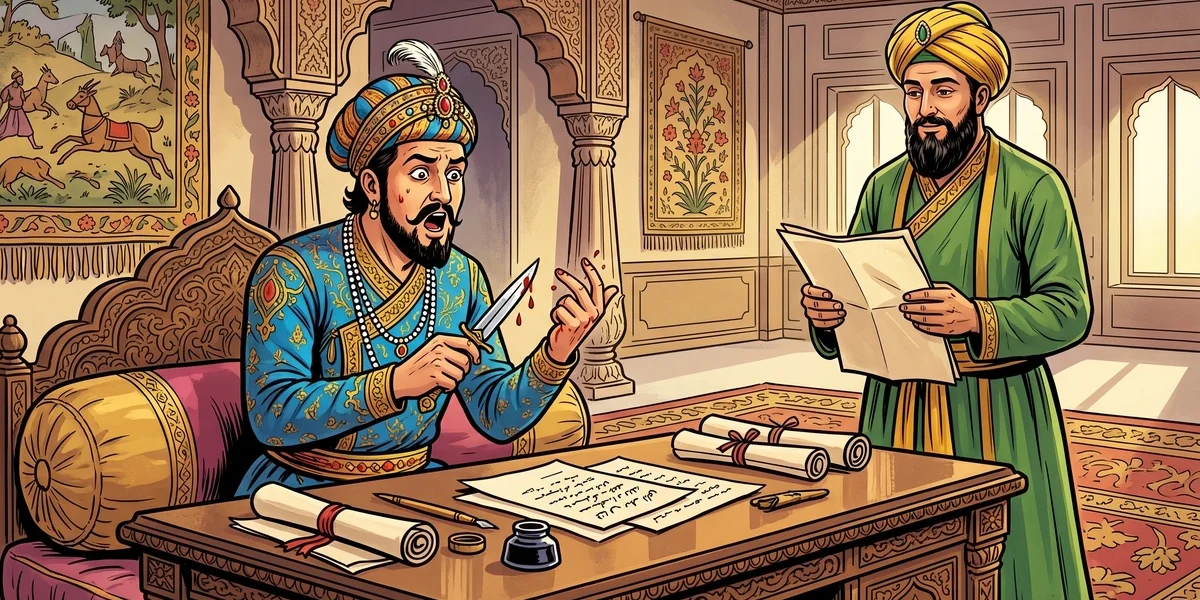
The Wazir’s Gratitude: Finding Blessing in Calamity
The figure of the wazir — the chief minister or vizier in the Indo-Persian court tradition — occupies a distinctive place in South Asian narrative. Unlike the king, who embodies sovereign power, the wazir embodies sovereign wisdom: he is the thinking instrument of the court, the one whose counsel makes the king’s decisions worthy of the throne. A wazir who gives thanks in adversity is therefore not merely displaying personal piety but demonstrating the quality that makes him uniquely suited to his role: the capacity to read situations correctly even when those situations are personally painful.
The Thanksgiving of the Wazir belongs to a well-attested family of wisdom tales in which a counsellor’s apparently counterintuitive response to misfortune — gratitude rather than complaint — is eventually vindicated by events. The structural pattern is the same across Persian, Indian, and Arabic variants: disaster strikes, the wise figure gives thanks, observers consider him mad or sycophantic, the disaster turns out to have been a concealed blessing, and the wise figure’s original gratitude is revealed as the correct reading of a reality whose full pattern was not yet visible. This structure is a narrative enactment of the Quranic concept of khair (divine goodness concealed in apparent harm) and the Hindu concept of adrshta (unseen consequence).
Shukrana and Sabr: Gratitude and Patience in Indo-Muslim Folk Ethics
The Thanksgiving of the Wazir operates within the ethical vocabulary of the Indo-Muslim tradition, where shukrana (thankfulness/gratitude) and sabr (patient endurance) form a complementary pair of virtues. Shukrana is not passive; it requires active cognitive reframing — the deliberate choice to interpret events as gifts even before their beneficial aspect is visible. Sabr is not resignation; it is the sustained maintenance of shukrana through time, resisting the pull toward complaint and despair that adverse events naturally generate.
In the Sufi tradition, which deeply influenced the folk narrative culture of Mughal India, both virtues are ranked among the highest stations of spiritual development. The poet Rumi famously argued that the reed’s lament for the reed bed is itself a form of gratitude — the longing that recognizes what it has lost implicitly acknowledges what it once had. The wazir who gives thanks at the moment of his misfortune is practicing a Sufi discipline: he is refusing to be governed by immediate sensory evidence, trusting instead in a larger pattern whose goodness he affirms before he can verify it.
The Court as Ethical Laboratory: What the Wazir’s Response Reveals
The tale’s drama is often heightened by the reaction of the court to the wazir’s thanksgiving. Courtiers who expect complaint find gratitude; the king who stripped the wazir of position or fortune expects distress and finds serenity. This contrast functions as a diagnostic tool: the court’s confusion reveals its own shallowness — its inability to conceive of a response to adversity other than self-interest and complaint. The wazir’s equanimity is not merely individual virtue; it is an implicit critique of the court’s entire ethical formation.
Indian narrative frequently uses the court as this kind of ethical laboratory, placing its wisest characters in adversity to reveal the quality of the surrounding moral environment. The Vidura-niti passages of the Mahabharata, the Panchatantra’s minister-stories, and Birbal’s tales all operate by similar logic: the wise figure’s response to crisis exposes the gap between genuine wisdom and mere political survival instinct. The Thanksgiving of the Wazir adds a specifically spiritual dimension — the court cannot understand the wazir’s response because it lacks the theological category that makes it intelligible.
Vindication’s Structure: How the Concealed Blessing Reveals Itself
The tale’s resolution — when the apparent disaster reveals itself as a concealed benefit — is structured to maximize the audience’s retrospective recognition. What seemed like the wazir’s worst moment (dismissal, loss, injury) turns out to have been protection: had he retained his position, he would have been present at a later catastrophe; had he kept his finger, he would have been sacrificed as a flawless victim. The timing of his removal from office or fortune was precisely calibrated by providence to save him.
This structural feature — the disaster that is also an escape — is what philosophers of narrative call a felix culpa (fortunate fault) or, in Indian terms, shubha-apatti (auspicious misfortune). It is not unique to this tale: the biblical Joseph’s enslavement becomes the precondition of Egypt’s salvation; Rama’s exile becomes the precondition of Lanka’s liberation. In each case, the surface-level harm conceals a deeper-level benefit that requires the passage of time to become visible. The wazir’s gratitude is prescient precisely because he has internalized this theological pattern deeply enough to apply it before the benefit is visible.
“When the blow fell, the wazir gave thanks — and the court called him a fool. When the palace burned and only the wazir was safe, the court understood that he had read the event more accurately than any of them.”
Why This Story Lasted
The Thanksgiving of the Wazir endures because it addresses one of the most universal human challenges: how to respond to unexpected loss with something other than bitterness or despair. The wazir’s example is not a counsel to passivity — he does not claim that harm does not matter — but a counsel to interpretive patience: to resist the hasty conclusion that what feels bad is bad, because the pattern of events is larger than any single moment within it. This lesson requires no particular faith — it is equally accessible as Sufi theology, Hindu adrishta, Buddhist impermanence, or secular wisdom about long-term perspective. Its breadth of application across traditions may be the deepest reason it has lasted.
Frequently Asked Questions
What is shukrana and how does it function in this tale?
Shukrana is thankfulness/gratitude in the Indo-Muslim ethical tradition — not passive acceptance but active cognitive reframing: the deliberate choice to interpret events as gifts before their beneficial aspect is visible. The wazir’s shukrana at the moment of misfortune is the tale’s central act of wisdom, demonstrating a Sufi discipline of trusting a larger pattern before it can be verified.
Why does the court not understand the wazir’s thanksgiving?
The court lacks the theological category that makes the wazir’s response intelligible — the concept that apparent harm may conceal divine goodness (khair in Islamic tradition, adrishta in Hindu thought). The court’s confusion serves as an ethical diagnostic: it reveals that political survival instinct has replaced genuine wisdom in the surrounding moral environment.
How does the felix culpa (fortunate fault) structure work in this tale?
The wazir’s apparent disaster (dismissal, injury, loss) turns out to have been protective — had he retained his position or physical wholeness, he would have faced a worse fate. This shubha-apatti (auspicious misfortune) structure — where surface harm conceals deeper benefit — also appears in Joseph’s enslavement and Rama’s exile, showing it is a pan-cultural theological pattern.
What is the Sufi influence on this story?
Sufi tradition, which deeply shaped Mughal India’s folk narrative culture, ranks shukrana and sabr among the highest spiritual stations. Rumi’s teaching that even the reed’s lament is a form of gratitude — recognizing what it once had — informs the wazir’s response. His thanksgiving before the benefit is visible is a Sufi practitioner’s act: affirming divine goodness in a pattern not yet fully revealed.
Is this tale unique to Indo-Persian tradition or does it appear elsewhere?
The pattern — wise counsellor gives thanks for apparent misfortune, is vindicated by events — appears across Persian, Arabic, and Indian traditions. The Thousand and One Nights contains similar vizier tales; Indian Panchatantra minister stories share the structural logic; the biblical Joseph narrative is a longer version of the same felix culpa pattern. The Indo-Persian wazir version is distinctive in its explicit Sufi-inflected vocabulary of shukrana and sabr.
Frequently Asked Questions
**Q: Why is this story important?**
You May Also Like
 Aesop's Fables
Ages 3-5
Aesop's Fables
Ages 3-5
The Sparrow And The Crow
A delightful Indian folk tale about a tidy sparrow, a dirty crow, and a meal of khichri. Learn why small habits and truthful friendship matter.
 Aesop's Fables
Ages 3-5
Aesop's Fables
Ages 3-5
The Story Of The King Who Would Be Stronger Than Fate
The Story Of The King Who Would Be Stronger Than Fate: Once upon a time, far away in the east country, there lived a king who loved hunting so much that, when
 Aesop's Fables
Ages 3-5
Aesop's Fables
Ages 3-5
Grasp All Lose All
Grasp All Lose All: Once, in former times, there lived in a certain city in India a poor oil-seller, called Déna, who never could keep any money in his