The Bug and the Poor Flea
The Bug and the Poor Flea: The false promises of friends as well as strangers have no value. You end up paying for it.” Mandavisarpini was a white flea. The

The Bug and the Poor Flea
Canonical Attribution and Manuscript Tradition
This tale appears in Pancatantra Book I, Mitra-bheda (“The Separation of Friends”), as the ninth story in the frame narrative. It is one of the Pancatantra’s most concentrated explorations of broken trust between unlikely companions and the fatal consequences of impatience. The tale survives in all major Sanskrit recensions, including the Tantrakhyayika (c. 200 BCE, Kashmir) and the southern recension preserved in the Panchakhyanaka. It does not carry a separate Sanskrit title in most recensions but is indexed in scholarship as “the story of Mandavisarpini,” the flea’s given name, which means literally “she who moves slowly and gently.” The name is the tale’s first irony: the creature destroyed by haste is named for deliberateness. The tale is not assigned a specific ATU (Aarne-Thompson-Uther) number in the international folklore index, though it shares structural kinship with tales of ATU type 178 (The Foolish Impatient Friend). Vishnu Sharma placed it in Mitra-bheda to illustrate how alliances forged under necessity collapse when one party cannot restrain its own impulses at the critical moment.

Beat I — The Arrival of the Bug and the Terms of the Alliance
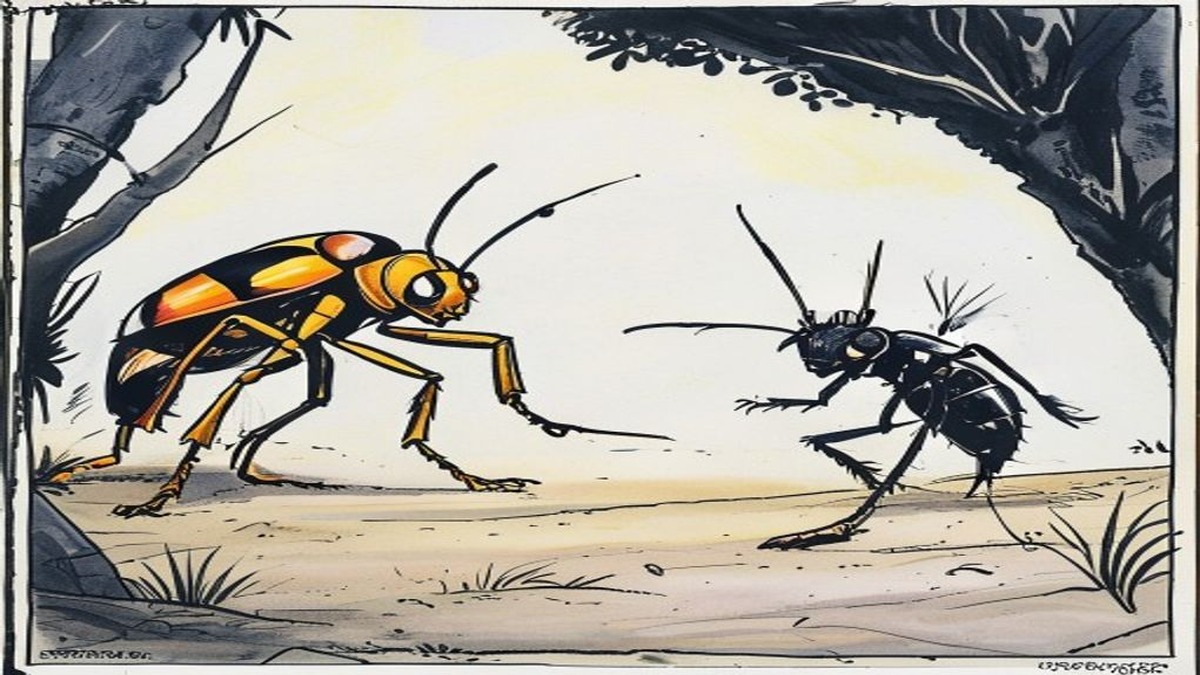
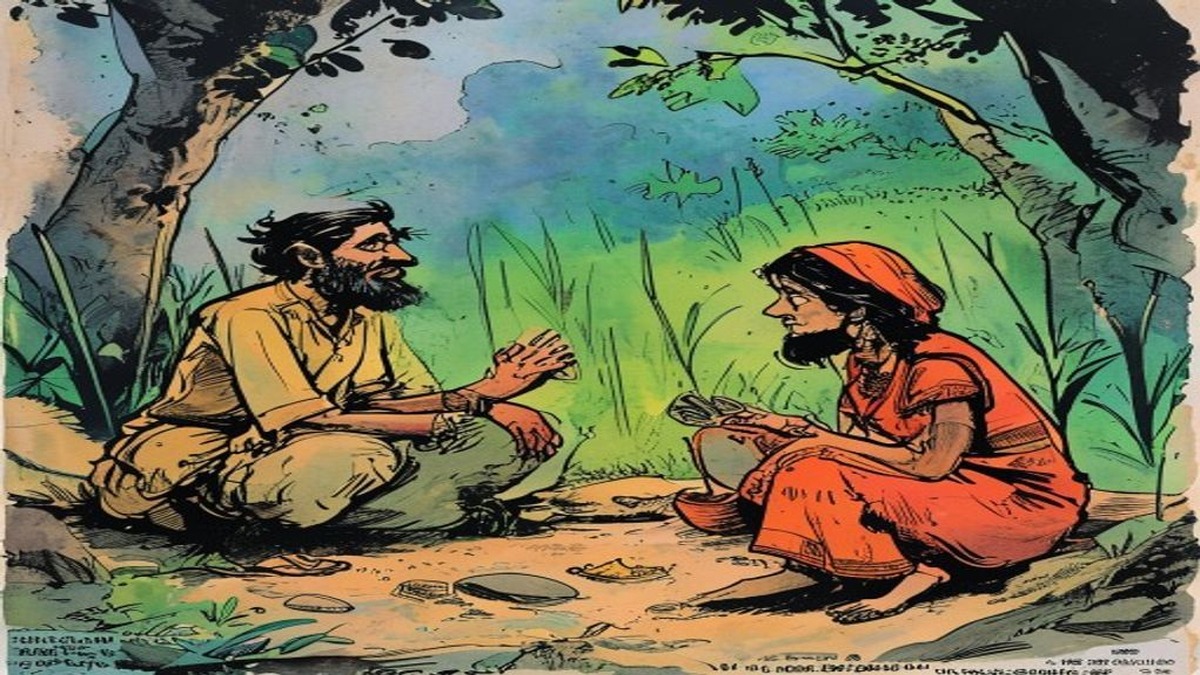
Mandavisarpini, a white flea, had established herself in the silk folds of the royal bedsheet with considerable skill. She fed on the king’s blood only when he was deeply asleep, her bite too gentle to wake him, her retreats too quick to be detected. It was a sustainable arrangement built on absolute patience and discipline: every night, the wait; every night, the same careful moment; every night, the same careful withdrawal.
A bug found its way into the royal chamber. Mandavisarpini recognized the danger immediately and told him to leave before he was caught. The bug, instead of leaving, invoked the law of hospitality — a guest, even an uninvited one, must be received with courtesy — and made his request explicit: he had tasted many kinds of blood, but never a king’s. The king ate the finest foods; his blood must be correspondingly rich. Would the flea permit him to share the arrangement, just once?
The flea set one condition: the bug must wait until the king was in deep sleep, and must not bite until she had fed first and withdrawn. The bug agreed. The agreement was explicit, bilateral, and both parties understood what was at stake: if the king woke, servants would search the bed, and anyone found would be killed. The alliance depended entirely on the bug’s ability to wait.
Beat II — The Broken Promise and Its Consequence
The king entered, lay down, and had not yet fallen asleep when the bug, unable to contain itself, bit him. The king woke at once, shouting for servants. The bug had prepared for this: it slipped between the bed frame and the mattress before the servants could find it. The servants searched methodically, sheet by sheet, fold by fold. They found Mandavisarpini.
They killed her.
The Pancatantra notes, with its characteristic compression, that the servants did not find the bug. This is not an incidental detail. The bug survived because it was large enough and quick enough to find a hiding place that the smaller, slower flea could not reach in time. The flea, whose name meant “she who moves gently,” could not move quickly enough to escape the consequences of the bug’s speed in breaking the agreement. The bug’s impatience was fast; its survival was fast. The flea’s caution was deliberate; her death was just as deliberate.
Vishnu Sharma does not tell us how the bug felt afterward. This silence is deliberate. The tale’s lesson is not about guilt but about the structural reality of asymmetric risk. The flea had more to lose from the agreement’s failure than the bug did, because the flea was more visible, less mobile at speed, and had established the arrangement she was now dependent on. The bug had nothing to lose that it had built. When it broke the agreement, the consequences fell not on the breaker but on the one who had kept their side. This is what the Pancatantra calls the danger of false promises: not merely that they cause harm, but that they cause harm to the wrong party.
Beat III — The Architecture of Broken Trust
The bug made a promise it was constitutionally incapable of keeping: its bite was sharp as a needle, its appetite for the king’s blood overwhelming by the flea’s own assessment. The flea knew this when she extracted the promise, yet extracted it anyway. What the Pancatantra identifies as her error is not the generosity of admitting the bug but the credulity of trusting the promise. The Pancatantra’s political science is consistently sceptical of promises made under conditions that make compliance structurally improbable: a bug who promises to wait when a king’s blood is immediately available has made a promise that its own nature will break. Knowing this, the flea should have refused — not because hospitality is wrong, but because the structural conditions made the promise worthless before it was spoken.
Beat IV — What the Flea’s Name Teaches
Mandavisarpini — “she who moves gently” — is destroyed by someone else’s speed. This is not accidental. The name describes both her virtue and her vulnerability: the patience and delicacy that made her arrangement with the king sustainable were exactly the qualities that left her exposed when the agreement collapsed suddenly. She had optimised for the conditions of stability. She had not prepared for the conditions of chaos.
For Vishnu Sharma’s royal pupils, the tale illustrated a principle of alliance management: before entering an arrangement with another party, assess not only whether they have agreed to the terms but whether they are structurally capable of keeping them under pressure. An ally who is constitutionally likely to break under specific conditions will break under those conditions regardless of what they have promised. The king’s counsellors, Vishnu Sharma suggests, must be able to evaluate not the promise but the promisor. The flea evaluated the promise. The bug broke it. The flea paid.

The tale survives across 2,300 years of transmission because it describes a failure pattern that remains recognisable in every era: the partner who agrees to conditions they cannot meet, and the collaborator who trusts the agreement rather than the partner’s capacity to keep it. The consequences fall on the one who held their side. Vishnu Sharma’s instruction is not cynical — he does not say do not trust; he says assess carefully before trusting, and when the structural conditions make compliance improbable, decline the arrangement regardless of the agreement on offer.
Moral and Sanskrit Wisdom Tradition
“The false promises of friends as well as strangers have no value. You end up paying for it.”
— Moral of The Bug and the Poor Flea, Pancatantra Book I (Mitra-bheda)
The Pancatantra’s moral here is directed not at the bug’s dishonesty but at the flea’s credulity. The Hitopadesha, drawing on this tradition, offers the complementary formulation: one should assess an ally’s capacity, not merely their intentions. A related principle appears in the Arthashastra of Kautilya, Vishnu Sharma’s near-contemporary, who devotes an entire section to the evaluation of allies before entering agreements: intentions are private and unverifiable; capacity is structural and assessable. Kautilya would have found the flea’s error elementary — she assessed the bug’s stated intention without assessing its structural capacity for patience. Vishnu Sharma, writing for princes who would themselves need to evaluate alliances and promises in conditions of high stakes, embedded the same lesson in a tale compact enough to be remembered across a lifetime.
Why This Story Has Lasted 2,300 Years
The Bug and the Poor Flea endures because it states one of the oldest problems of cooperation with unusual precision: the party most harmed by the failure of an agreement is rarely the party who broke it. The bug broke the agreement and survived. The flea kept the agreement and died. This distribution of consequences — morally backwards from any intuitive sense of justice — makes the tale useful as a teaching tool precisely because it refuses to resolve the discomfort. The tale ends with the flea dead, the bug hiding, and the king asleep. Alliances break; consequences fall unevenly; the party with less to lose bears less of the cost. Assessing the promisor’s structural capacity before trusting the promise is the beginning of wisdom about whom to trust and under what conditions.
Sanskrit Tradition: Tantrakhyayika recension (c. 200 BCE, Kashmir); Panchakhyanaka southern recension
Protagonist: Mandavisarpini (“she who moves gently”), the white flea
Author: Vishnu Sharma (attributed, c. 3rd century BCE)
Core Lesson: Assess the promisor’s structural capacity, not merely their stated intention
You May Also Like
 Panchatantra Stories
Ages 9-12
Panchatantra Stories
Ages 9-12
The Story of the Four Learned Fools
The Story of the Four Learned Fools: In a certain town, there lived four Brahmins whohad become great friends. They were all extremely naiveby nature. The
 Panchatantra Stories
Ages 9-12
Panchatantra Stories
Ages 9-12
How a Sparrow came to Grief
The Panchatantra's small, sharp tale of Sūcīmukhī — the Needle-Beaked sparrow — and the soaked, shivering monkey to whom she gave one piece of unwanted advice too many. The story is found in Book III of the Panchatantra (Kakolukiyam, "Of Crows and Owls"), and it is one of Vishnu Sharma's quietest, hardest lessons: being right is not the same as being wise. The wise person learns to read the listener — and learns, sometimes, to keep silent.
 Panchatantra Stories
Ages 3-5
Panchatantra Stories
Ages 3-5
The Monkey and The Wedge – For Children
The Monkey and The Wedge – For Children: Once upon a time in a town, a rich merchant decided to build a temple in his courtyard. He assembled many skilled