The Farmer of Liddesdale
The Farmer of Liddesdale: here was in Liddesdale (in Morven) a Farmer who suffered great loss within the space of one year. In the first place, his wife and
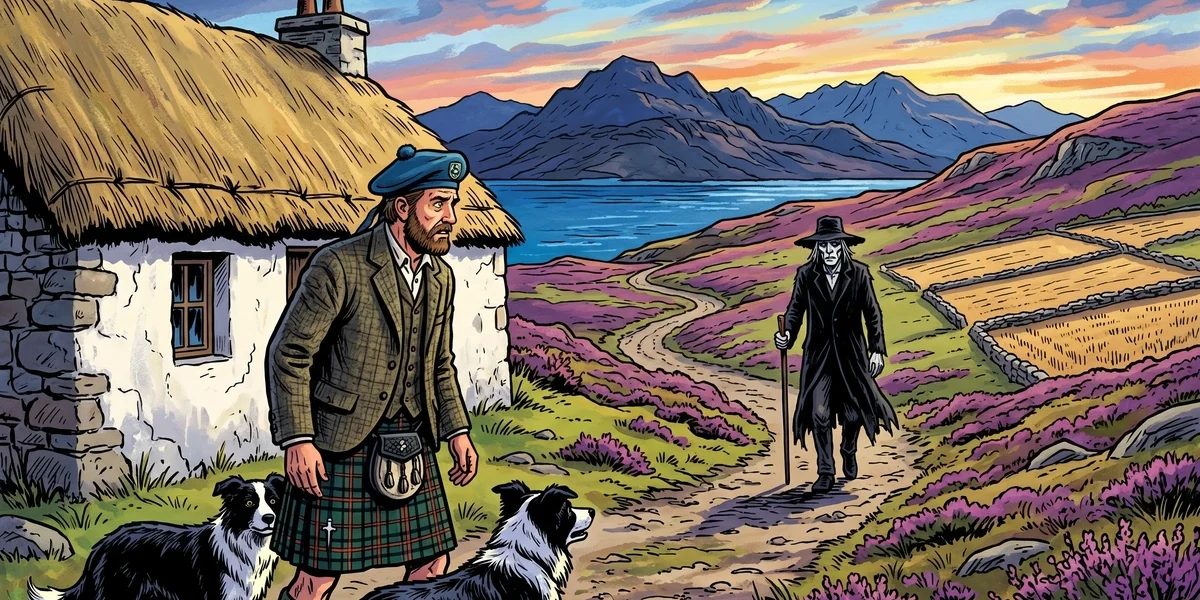
The Farmer of Liddesdale (Scottish Gaelic, in its original recital, Tuathanach Lios-Dail) is a Gaelic Highland Faust-tale collected in the second half of the nineteenth century from oral tradition in the West Highlands of Scotland and printed by the Rev. James MacDougall (1833-1906), parish minister of Duror in Appin and one of the leading Gaelic folklorists of his generation, in Waifs and Strays of Celtic Tradition, vol. III, item ix, pp. 216-221 (David Nutt, London, 1891), under the editorship of Lord Archibald Campbell. From there it was selected by Joseph Jacobs (1854-1916) as Tale XXXVI of his More Celtic Fairy Tales (David Nutt, London, 1894), illustrated with line-drawings by John D. Batten, where it has been read by every English-speaking child interested in Highland folklore for more than a century. The Liddesdale of the title is not the more famous Borders valley between Roxburghshire and Cumbria, but a small Gaelic-speaking glen on the south coast of the Morvern peninsula in Argyllshire — Jacobs preserves MacDougall’s parenthetical clarification “in Morven” precisely because his English readers might otherwise mistake it for Walter Scott’s Liddesdale of Border ballad fame.
In the international classification of folk narrative the tale is closely related to ATU 820 (The Devil as Substitute for Day Laborer at Mowing), the family of European stories in which the Evil One contracts with a peasant or farmer to do impossible work in exchange for a deceptively measured wage; it shares structural elements with ATU 1199 (The Lord’s Prayer), in which the bargain is broken by the timely speaking of a holy formula. The closest sibling within the same Gaelic tradition is the version Campbell of Islay collected as The Master and the Man (Popular Tales of the West Highlands, vol. III, pp. 288-292, 1862), a parallel Jacobs himself notes in his Notes and References to More Celtic Fairy Tales. The hinge of MacDougall’s version — the mysterious ploughman who keeps three stakes in the soil to test when the land is ripe, and the twisted withe which can hold a whole field of corn in a single binding — descends from the Highland tradition of the Each-Uisge and the Bòcan, the dark supernatural strangers of the Gaelic countryside, fused with the Christianised motif of the contracted Devil and brought down to earth by the simple farmer’s appeal to the threefold name of the agricultural Màrt — the Gaelic month-time of sowing, baking and harrowing — which dissolves the binding spell on the spot.
I. A Year of Loss in Morvern: The Widowed Farmer Bargains with a Stranger
MacDougall opens with the bare prose of West Highland tradition: in Liddesdale, in Morvern, on the rocky south coast of the Argyllshire peninsula that looks across the Sound of Mull to Tobermory, there dwelt a Gaelic farmer who in the space of a single twelvemonth lost his wife, his children and the ploughman who had served him through the previous winter. Wife and children died — in MacDougall’s terse Highland register, that is all we hear of them, and the sentence does the same heavy lifting as the opening of a ballad. The hiring-markets of Lammas and Martinmas had already passed when the ploughman quit his service, and there was no other man to be had in the parish: in nineteenth-century Argyll the spring sowing-time was a hard ceiling, with neighbour-farmers already turning their first furrows and the new oats waiting to go in before the lengthening days raced away from them.
The Farmer’s despair has a specific Highland edge. By the 1860s, when MacDougall’s informants would have learned this tale at the fireside, the great Highland Clearances had stripped much of Morvern of its Gaelic-speaking tenantry; the Argyll Estates and the Sellar improvers had emptied entire glens to make room for blackface sheep, and a man losing his ploughman in the new economy could not simply walk down the road and find another. Out of that pressure the Farmer makes the rash speech which sets the whole machine of the story in motion: he will engage the first man who comes his way, whoever he should be. In the moral physics of the Gaelic supernatural tale, an oath like that is a small bell rung in the Otherworld; a stranger appears at the door before the words have settled. The price the stranger names is impossible-sounding only if you do not know the Highland custom: as much of the corn at harvest as I can carry off in one burden-withe — a single twisted band of green wood used to bind a back-load of straw or hay. To a Highland labourer, that is a few sheaves; to the Devil, as MacDougall’s listeners knew at once, it is the entire field.
II. The Three Stakes and the Furrow that Out-Ploughs the Parish
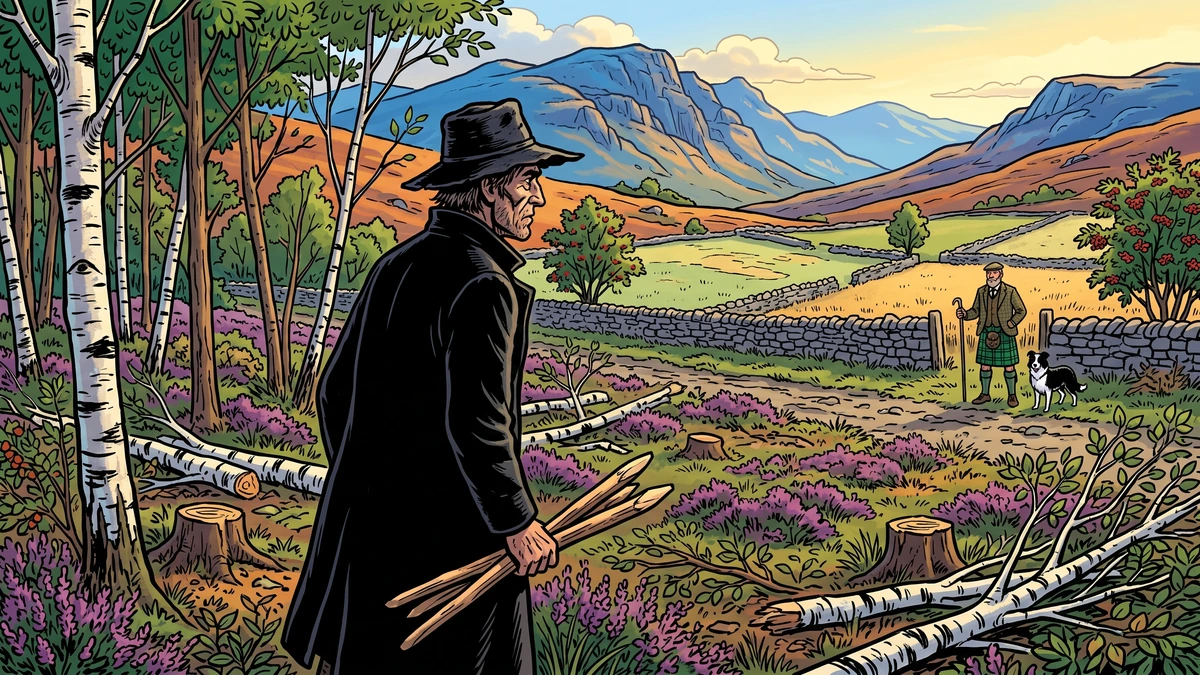
The bargain made, the new ploughman walks out to the three fields the Farmer means to sow, but does not begin work. Instead he goes into the wood, cuts three stakes, and drives one into the ground at the head of each field. Then he goes home and remains idle. Day after day he is idle. The Farmer presses him — the spring is escaping, the neighbours have half-finished their work — and the Ploughman answers with his strange refrain: “Oh, our land is not ready yet. I know it by the stakes.” This stake-test is a remarkable piece of Highland weather-magic, and one that MacDougall’s source community would have recognised as the trace of an old practice rather than a fairy-tale invention. Country wisdom in Argyllshire and Skye long held that ground was fit for sowing when a wooden peg drawn from the soil bore on its tip the smell of fermenting grass-roots: fàile na talmhainn, “the breath of the earth.” The Devil, in MacDougall’s tale, has merely systematised it. He pulls each stake, sniffs it, shakes his head, and replaces it; he tries them at dusk; he tries them at dawn.
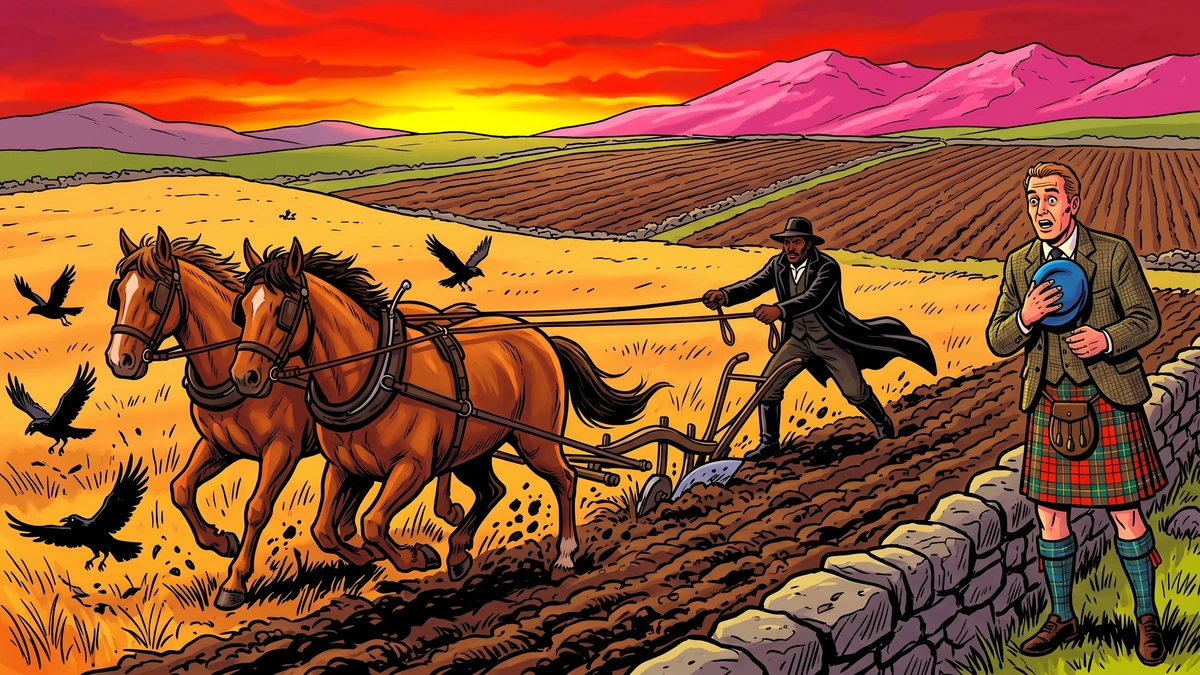
On the third morning the test passes. The Ploughman flings his stake away and sprints home for the horses, the leather traces and the plough; he drives the team to the head of the first field, thrusts the share into the ground, and chants the famous shouting-couplet of MacDougall’s text: “My horses and my leather-traces, and mettlesome lads, the earth is coming up!” Between sunrise and sunset he has ploughed, sowed and harrowed not one field but all three — an impossible day’s work in the pre-tractor Highland economy, where a single man with a foot-plough and a pair of garrons could expect at most an acre by daylight. The neighbours, MacDougall makes a small careful point of, had only got half their work in: the Devil’s idle-then-furious sowing day puts the Farmer level with the parish at a single stroke. The reader who knows the Argyllshire countryside hears in the line a faint echo of an old proverb, “Cuir an siol an aon là agus tog e an aon là” — “Sow it in one day and lift it in one day” — the proverbial extreme that the Faustian helper here makes literal.
III. Harvest and the Withe: The Bargain Comes Due
Through the long summer the Ploughman is everything a Highland farmer could wish for. He is quick, biddable, steady at the byre and at the peats; the bond between master and man is friendly, even comfortable. The trouble of the bargain has been comfortably forgotten when, on a warm day after the corn is reaped and stooked, the Farmer remarks that the grain is dry enough to be put into the barn. The Ploughman tries a sheaf or two between his palms — the Highland test for over-dry rather than ripe oats — and answers, with the same patience he has shown all year, that it is not yet ready. A few days later he says it is. “Then we will begin putting it in,” says the Farmer, and the Ploughman names the price he had not yet drawn: “Not until I get my share out of it first.”
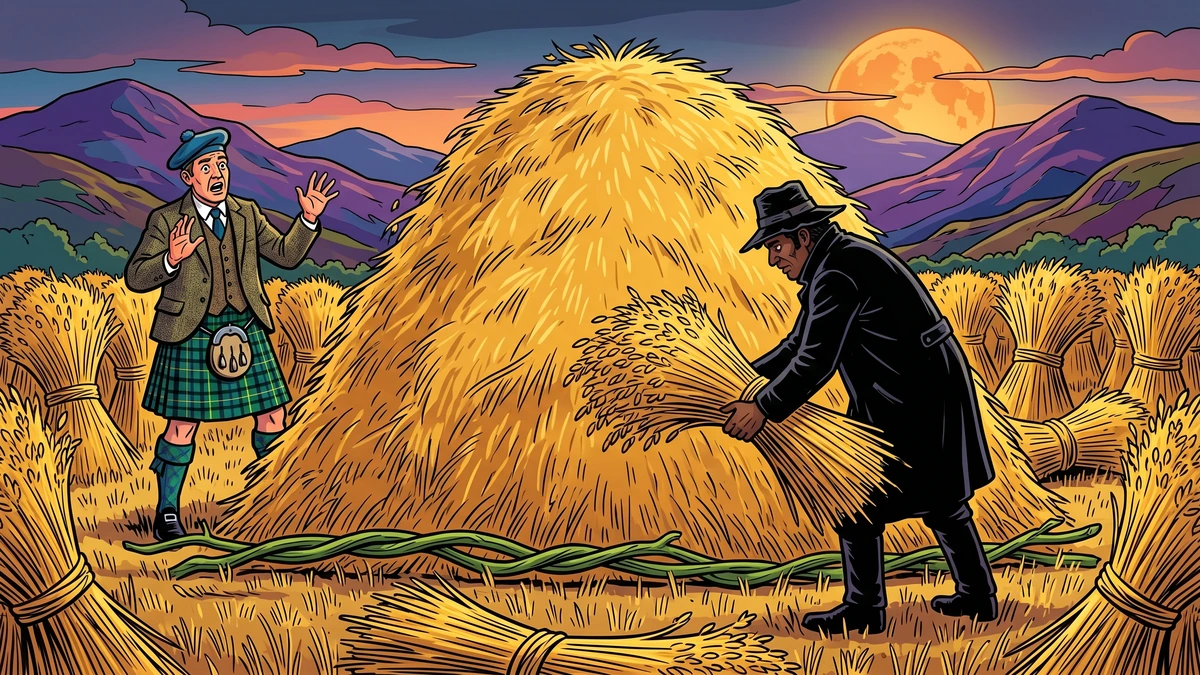
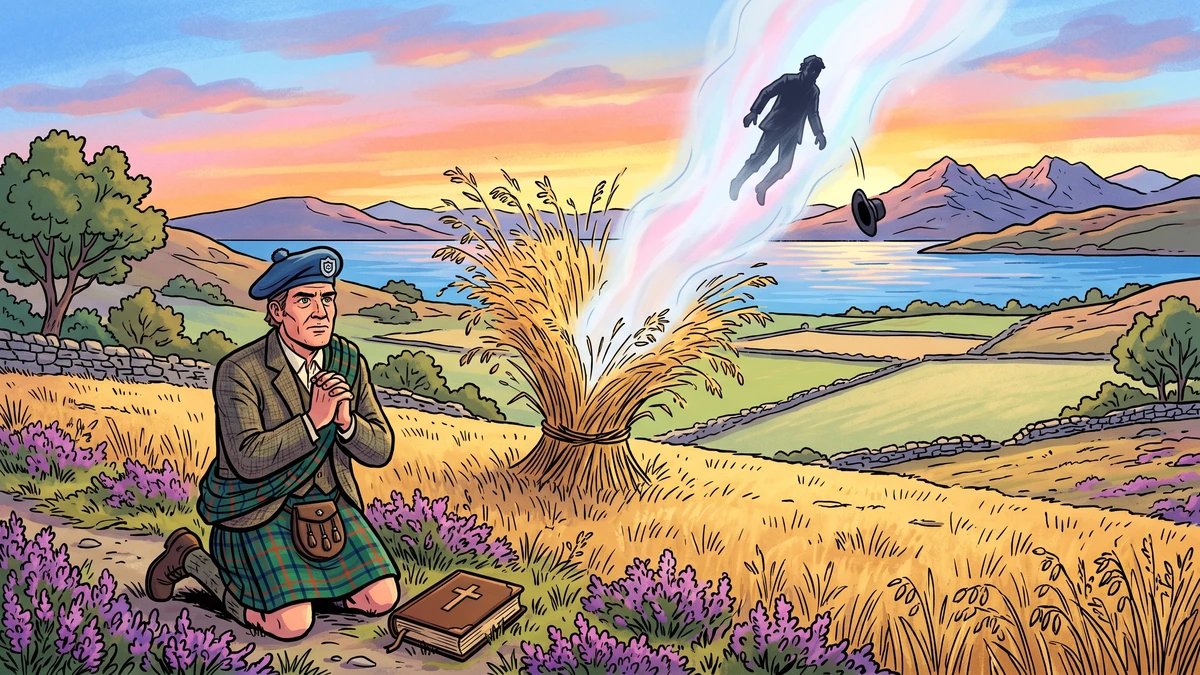
What follows is the central image of the tale, and the one in which MacDougall’s Gaelic background shows most plainly. The Ploughman walks into the wood and returns with a single siaman — a Gaelic burden-withe of green hazel, scraped and twisted with the simple two-handed motion every Highland labourer learned as a boy. He stretches it out on the field. Then he begins to lift sheaf after sheaf and lay it across the withe. The withe does not fill. He keeps laying sheaves down. Sheaf after sheaf goes onto the band, and the band still does not fill, until at last the whole reaped harvest of the three great fields lies along the green hazel withe, and the Ploughman is shutting the binding round it. The Farmer asks what he means by that. “Thou didst promise me as much corn as I could carry with me in one burden-withe,” says the Devil, “and here I have it now.”
IV. The Three Màrts: A Prayer that Breaks the Spell
Faced with ruin, the Farmer of Liddesdale does not bargain or curse. He prays. MacDougall preserves the prayer in metrical form, in a verse-shape Highland readers will recognise as a òran-rann, a charm-rann, with three parallel lines and a turn:
“‘Twas in the Màrt I sowed,
‘Twas in the Màrt I baked,
‘Twas in the Màrt I harrowed.
Thou Who hast ordained the three Màrts,
Let not my share go in one burden-withe.”
The Gaelic word here translated Màrt is the old Highland month-name for the agricultural early year — March in the modern calendar, the season of sowing in Argyll — but in folk usage the Three Màrts have become a triad of working-times within the year: the Màrt of sowing (Màrt a’ chura), the Màrt of baking the seed-bread (Màrt a’ bhristidh aràin), and the Màrt of harrowing (Màrt na cleithidh). The prayer’s economy is exquisite: in calling on the One who ordained the three Màrts — that is, the Christian God who gave the year its sown-and-reaped pattern — the Farmer asks that the work of three seasons not be carried off in a single hellish bundle. The cosmic frame snaps tight. The withe gives way with a report that, MacDougall tells us, “echo answered from every rock far and near”; the corn flies back across the field; and the Ploughman vanishes “in a white mist in the skies, and was seen no more.” It is the perfectly judged Highland sky-departure of the Faustian helper, neither fire nor brimstone but the quiet uncoupling of the supernatural from the natural at the moment a holy word is rightly spoken.
V. The Withe, the Place-Name and the Variants
Three small things in MacDougall’s text repay closer scholarly attention. The first is the siaman, the burden-withe, which the Ploughman cuts and twists. In Highland farming a siaman was a green hazel or birch rod about the thickness of a man’s thumb, peeled, twisted lengthwise so that its fibres separated, and looped: it was used for binding loads of straw to the back of a labourer or pony, and for tying together rough fences. A finished siaman could be wound around a back-load of perhaps fifty pounds of dried oats. The Devil’s siaman in the tale, by contrast, holds the entire harvest of three large fields — a comic-grotesque inflation that the Highland audience would have grasped at once, and which has its closest folkloric parallel in the Norse tale The Master and the Pupil, where the magician’s binding-band similarly stretches to hold an impossible load. That MacDougall preserves the Gaelic technical term in his English translation (rather than substituting some bland word like “rope”) is one of several small marks that he was working close to a real informant rather than retelling from memory.
The second is the place-name. Liddesdale-in-Morvern, in Gaelic Lios Dàil (“the meadow of the enclosure”) or in some sources Liosa Dail, is a small wooded coastal valley running south-east toward Loch Aline on the Morvern peninsula in north-west Argyll. It lies south of Duror, where MacDougall served as Free Church minister, and the tale was almost certainly collected within a day’s pony-ride of his manse. Jacobs’s parenthesis “in Morven” is therefore not a mere scholarly tic but the necessary geographical correction without which the English-speaking reader, schooled by Walter Scott on Liddesdale-in-Roxburghshire, would have placed the story two hundred miles south-east in the Anglo-Scottish Borders, in an entirely different language community and folkloric tradition.
The third is the parallel Jacobs notes from Campbell of Islay’s Popular Tales of the West Highlands, “The Master and the Man” (vol. III, pp. 288-292, 1862). In Campbell’s version the Devil is engaged not as a ploughman but as a herd, and the breaking-prayer takes a slightly different metrical shape, but the core triad — impossible bargain, perfect service, and the dissolution of the contract by a country invocation — is identical. The two together establish the type as native to West Highland Gaelic tradition, well attested across at least Argyll, the Inner Hebrides and the southern Lochaber mainland, with a likely date of formation in the late mediaeval Christianised re-fashioning of an older Otherworld-helper story (the kind of helper attested in the Each-Uisge and Bòcan beliefs that survived into MacDougall’s day).
Moral
“Thou Who hast ordained the three Màrts, let not my share go in one burden-withe.” The moral of the Liddesdale farmer’s tale is the moral of every Highland Faust-story: a contract made in heat with a stranger whose name is not asked is a contract that may never be kept on its own terms, and the only safe escape is to step outside the terms altogether by appealing to a higher law. The Farmer does not haggle. He does not try to outwit the Devil with finer words. He invokes the Maker of the seasons, and the bargain unravels because it was never legitimate to begin with. In MacDougall’s quiet Highland Calvinist register the lesson is double: do not swear rash oaths in distress, and when you have, remember Whose year it is.
Why The Farmer of Liddesdale Has Lasted
The tale has lasted because it does the small, exact thing the best of MacDougall’s Argyllshire stories do: it sets a perfectly ordinary moment of rural anxiety — a widowed farmer staring at empty fields he cannot plough — against the cold geometry of a supernatural bargain, and lets the resolution arrive not by violence or trickery but by the speaking of a true word about the working year. Joseph Jacobs, choosing it for More Celtic Fairy Tales in 1894, recognised that it stood beside Goethe’s Faust and Marlowe’s Doctor Faustus as a folk-form of the same plot — he calls the Ploughman, in his Notes, “the rustic Faust” — but with a moral economy quite particular to the West Highlands. The Devil here is not a flamboyant Mephistopheles; he is a man with a dark coat and a steady hand on the plough, and he is defeated not by Margaret’s love nor by the Final Hour but by the country prayer of a man who knows what month it is. Children read the tale for the burden-withe and the white mist; adults read it for the rann of the three Màrts; folklorists read it as MacDougall’s careful Argyllshire variant on a tale-type that runs from Iceland to the Mediterranean; and Gaels themselves read it as a small, true picture of the year their grandfathers worked, with the Devil offering, as he always does, to take the harvest off their hands in a single burden, and the Highland answer, as it has always been, that the harvest is owed to the One who ordained the three Màrts and to no one else.
Frequently Asked Questions
Where is the Liddesdale of this tale, and who first wrote it down?
The Liddesdale of the title is not the famous Borders valley between Roxburghshire and Cumbria, but a small Gaelic-speaking glen on the south coast of the Morvern peninsula in Argyllshire (in Gaelic Lios Dail, the meadow of the enclosure), looking south across the Sound of Mull. The tale was collected from West Highland oral tradition by the Rev. James MacDougall (1833-1906), Free Church minister of Duror in Appin, and printed as item ix of volume III of Lord Archibald Campbell’s Waifs and Strays of Celtic Tradition (David Nutt, London, 1891), pages 216-221. Joseph Jacobs reprinted it as Tale XXXVI of his More Celtic Fairy Tales (David Nutt, London, 1894), illustrated by John D. Batten, where it has been read by English-speaking children for more than a century. Jacobs preserves MacDougall’s parenthesis ‘in Morven’ precisely so that readers schooled by Walter Scott on Borders Liddesdale do not misplace the story by two hundred miles.
What is the Aarne-Thompson-Uther tale type of The Farmer of Liddesdale?
In the Aarne-Thompson-Uther international tale-type index The Farmer of Liddesdale is principally ATU 820 (The Devil as Substitute for Day Laborer at Mowing), the family of European stories in which the Devil contracts with a peasant to do impossible work in exchange for a deceptively measured wage. It also draws on ATU 1199 (The Lord’s Prayer), in which a supernatural bargain is broken by the timely speaking of a holy formula. The closest sibling within the same Gaelic tradition is John Francis Campbell of Islay’s The Master and the Man, collected on the West Highland mainland in the 1850s and printed in his Popular Tales of the West Highlands, vol. III, pp. 288-292 (Edinburgh, 1862), a parallel that Jacobs himself notes in his Notes and References.
What is a burden-withe and why does it matter to the story?
A burden-withe (in Scottish Gaelic siaman) is a green hazel or birch rod about the thickness of a man’s thumb, peeled, twisted lengthwise so that its fibres separate, and looped into a binding. Highland labourers used it for tying back-loads of straw or hay onto their shoulders or onto a pony, and a finished siaman might bind perhaps fifty pounds of dried oats. When the disguised Ploughman in MacDougall’s story names his wages as ‘as much of the corn at harvest as I can carry with me in one burden-withe’, the Farmer hears a few sheaves; what the Devil intends, and what at harvest he produces, is a single supernaturally elastic withe which holds the entire reaped crop of three fields. MacDougall’s preservation of the Gaelic technical term in his English translation is one of several small marks that he was working close to a real Argyllshire informant rather than retelling a tale from memory.
What are the three Marts in the Farmer’s prayer that breaks the bargain?
The Gaelic word Mart in MacDougall’s prayer-text is the old Highland month-name for the agricultural early year, equivalent to March in the modern calendar and the season of sowing in Argyll. In folk usage the Three Marts are a triad of working-times rather than three calendar months: the Mart of sowing (Mart a’ chura), the Mart of baking the seed-bread (Mart a’ bhristidh arain) and the Mart of harrowing (Mart na cleithidh). When the Farmer chants ‘Twas in the Mart I sowed, ‘Twas in the Mart I baked, ‘Twas in the Mart I harrowed. Thou Who hast ordained the three Marts, let not my share go in one burden-withe’, he is invoking the Christian God who gave the year its sown-and-reaped pattern, asking that the work of three seasons not be carried off in a single hellish bundle. The withe gives way at once with a report that echoes from every rock far and near, and the Ploughman vanishes into a white mist in the skies.
Why does Joseph Jacobs call the Ploughman ‘the rustic Faust’?
In his Notes and References to More Celtic Fairy Tales (1894), Joseph Jacobs identifies the disguised Ploughman as the Devil and writes that ‘the rustic Faust evades his contract by a direct appeal to the higher powers’. He is signalling that this Argyllshire tale belongs to the same European plot family as Christopher Marlowe’s Doctor Faustus (1604) and Goethe’s Faust I (1808), in which a man bargains with the Devil and must be rescued by a higher law; but the Highland Faust is not a scholar in a study, he is a widowed farmer staring at empty spring fields, and the Devil here is not a flamboyant Mephistopheles but a quiet stranger with a steady hand on the plough. Jacobs’s small phrase recognises this Gaelic version as a folk-form of the Faust plot brought down to ordinary Highland soil, and resolved not by Margaret’s love nor by the Final Hour but by the country prayer of a man who knows what month it is.
You May Also Like
 Celtic Folk Tales
Ages 9-12
Celtic Folk Tales
Ages 9-12
The Shee An Gannon And The Gruagach Gaire
The Shee An Gannon And The Gruagach Gaire: The Shee an Gannon was born in the morning, named at noon, and went in the evening to ask his daughter of the king
 Celtic Folk Tales
Ages 9-12
Celtic Folk Tales
Ages 9-12
How Cormac Mac Art went to Faery
How Cormac Mac Art went to Faery: ormac, son of Art, son of Conn of the Hundred Battles, was high King of Ireland, and held his Court at Tara. One day he saw a
 Celtic Folk Tales
Ages 9-12
Celtic Folk Tales
Ages 9-12
Battle Of Birds
<p>A hero witnesses a magical battle between birds and must choose between safety and helping those in peril.</p>