The Story of the Female Mouse
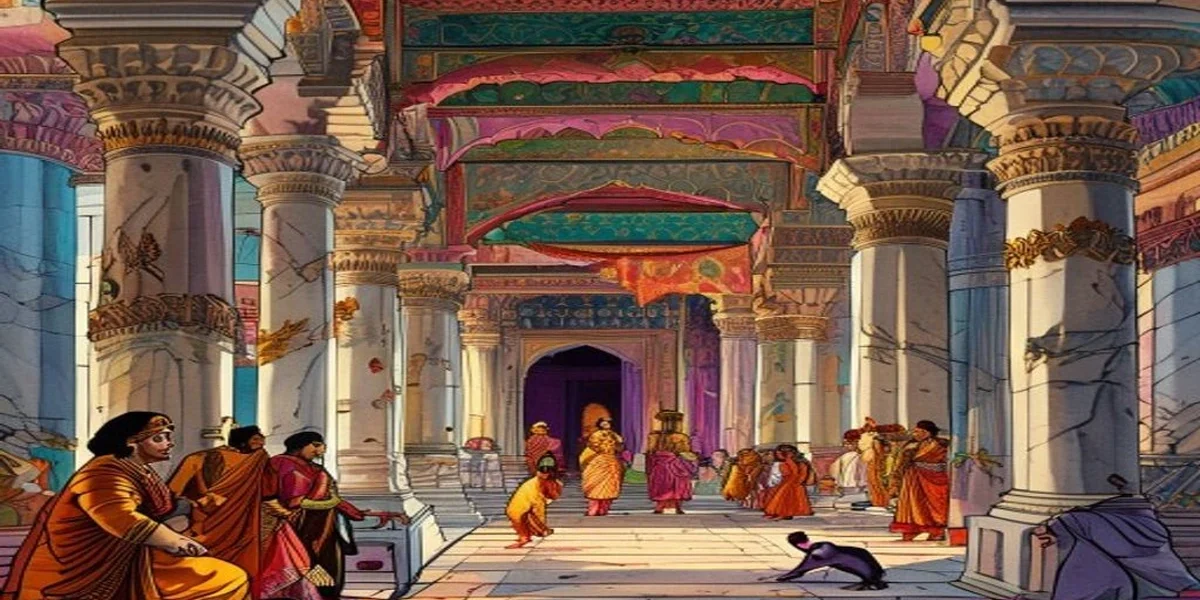
The Story of the Female Mouse: On the bank of the river Ganga, there was a beautifulashrama. The water from the river gushed down onrocks, making a tremendous
The Story of the Female Mouse
Canonical Attribution and Manuscript Tradition
This tale is the female-perspective complement to the Pancatantra’s famous Sadhu-and-Mouse story: where that tale demonstrated svabhava through a mouse transformed into a girl who chose a mouse as a husband, this tale demonstrates it through the female mouse herself — a mouse who has been transformed into a girl and is offered successive suitors of increasing cosmic power, each rejected, until she reaches the mouse and chooses him. The tale is preserved in the major Sanskrit recensions of the Pancatantra including the Tantrakhyayika (c. 200 BCE, Kashmir) and is closely related to, and sometimes conflated with, the Sadhu-and-Mouse narrative. The Pancatantra’s interest in this version is in the female mouse’s own perspective: her rejection of the sun, cloud, wind, and mountain is not merely behavioural but expressive of an inner orientation that the suitor process makes visible. The tale is among the Pancatantra’s most direct treatments of the theme that svabhava is prior to circumstance and that circumstance, however transformed, cannot displace it.
Beat I — The Transformation and the Suitor Process
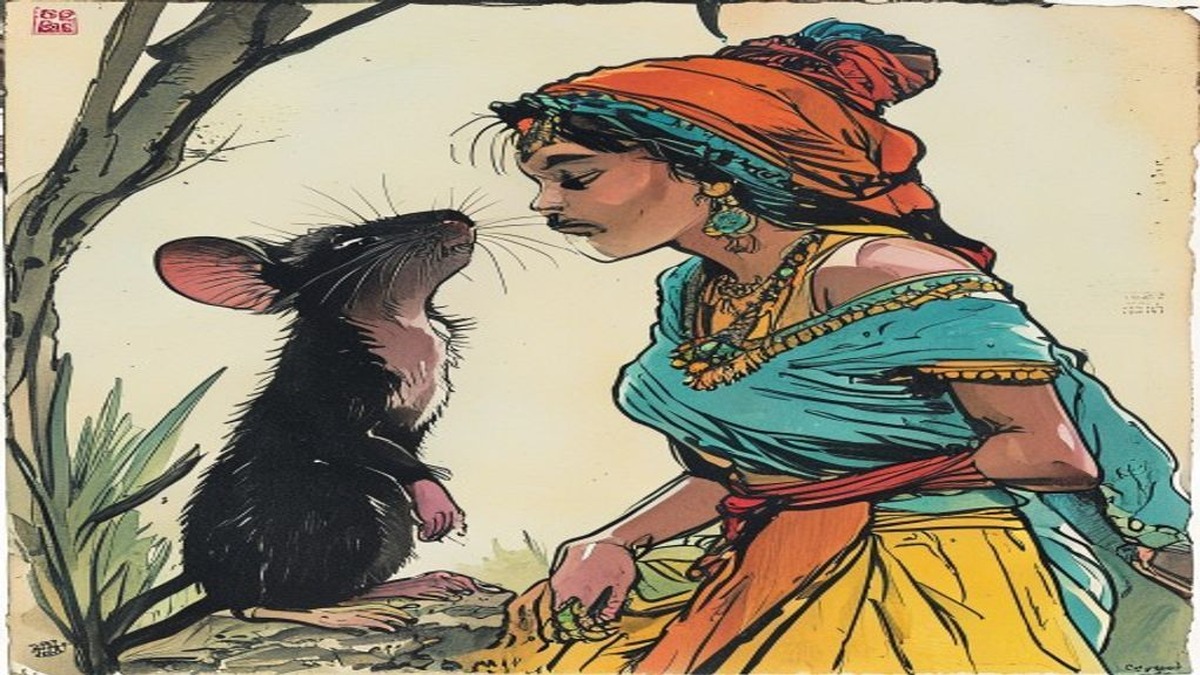
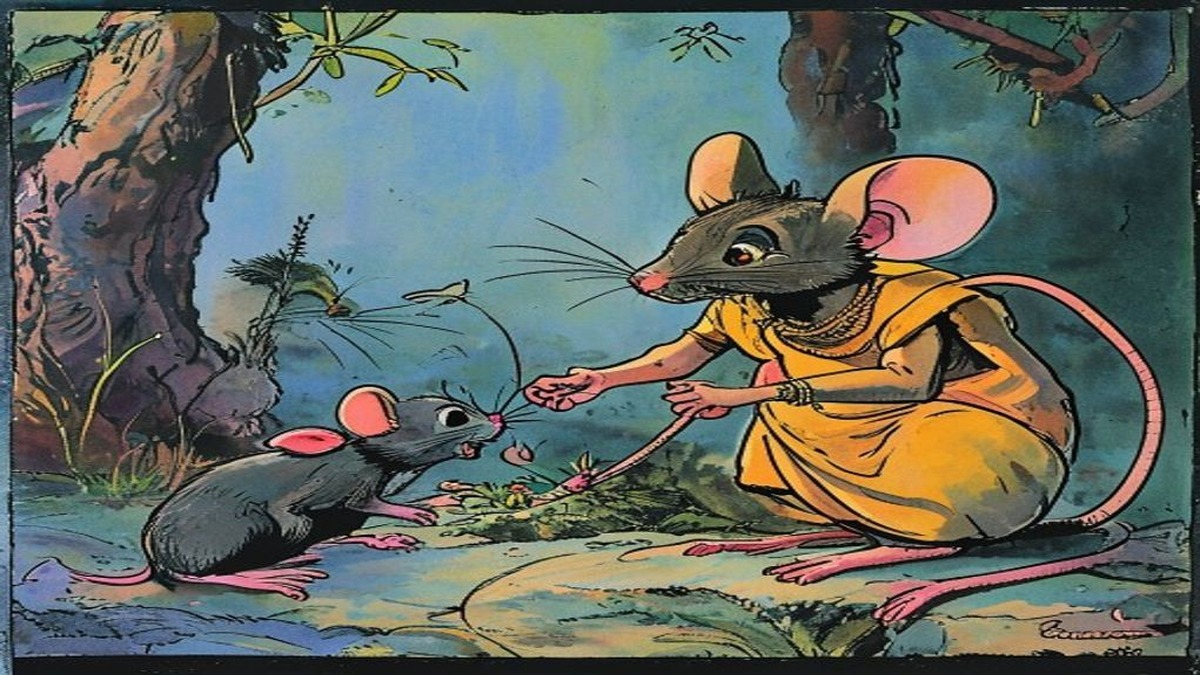
The female mouse had been transformed into a girl through the yogic powers of a holy man, who wished to give her the best possible life in the highest possible form. When she reached marriageable age, the holy man began the process of finding her a suitable husband, applying his powers to secure the most impressive possible suitors: the sun, representing light and divine power; the cloud, which can obscure the sun; the wind, which drives the cloud; and the mountain, which stops the wind. Each represented a form of cosmic superiority over the previous candidate.
The suitor sequence is the tale’s analytical instrument: it works by elimination, using the logic of “who is greater?” to move through the cosmic hierarchy until it reaches the answer that the female mouse’s svabhava has already determined. The holy man presents each suitor as genuinely superior; the female mouse’s rejections are not capricious but follow the same logic — each suitor is dismissed in favour of whoever is described as greater. The sequence is designed so that the final answer — the mouse, who burrows beneath the mountain and undermines its foundations — is the one that will reveal the girl’s true orientation.
Beat II — The Rejections and Their Logic
The sun was too powerful; she would be blinded by his glory. The cloud was preferred, because the cloud could obscure the sun — making the cloud, in this functional sense, greater. But the wind drove the cloud, and so the wind was preferred. But the mountain stopped the wind, so the mountain was preferred. Each rejection followed directly from the logic of superiority that the suitor process had established: the female mouse was consistently choosing the greater, not expressing mere preference.
The Pancatantra’s analysis of the rejection sequence is subtle. The female mouse is not consciously choosing the mouse; she is consciously applying a criterion of greatness that, as the mountain reveals, leads to the mouse. Her svabhava is not expressing itself as a felt preference for mice over other suitors; it is expressing itself as the specific criterion of greatness — who is ultimately most powerful? — that, when applied to the cosmic hierarchy, produces the mouse as its answer. The svabhava operates through the reasoning process rather than against it.
Beat III — The Choice and the Retransformation
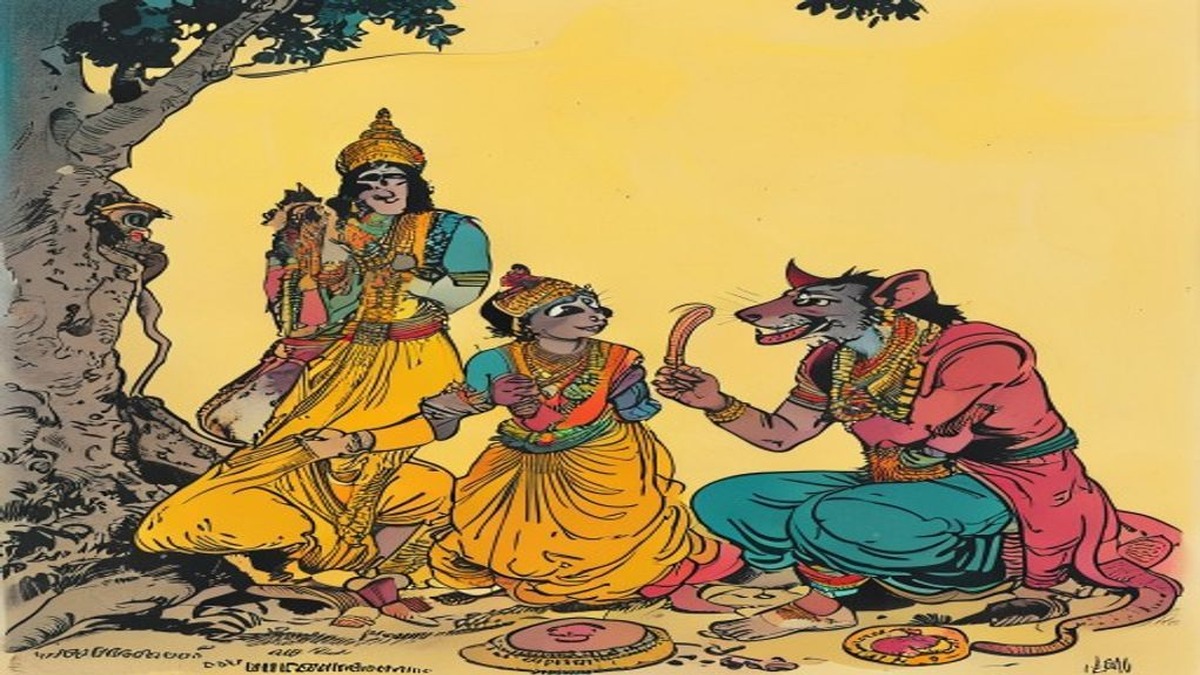
When the mountain identified the mouse as the one who undermines even the mountain’s foundations, the female mouse’s orientation asserted itself: she chose the mouse without hesitation. The holy man, observing this, understood what the suitor sequence had revealed: her svabhava was that of a mouse, and no transformation of form had changed it. He transformed her back into a mouse and gave her to the mouse she had chosen.
The Pancatantra’s account of the holy man’s response is as important as the female mouse’s choice. He does not lament; he does not persist in the attempt to find her a husband more suited to her human form; he accepts the revelation of svabhava and acts in accordance with it. The retransformation is presented as the correct, wise, and compassionate response to what the suitor sequence has revealed: aligning with svabhava rather than resisting it. The female mouse is returned to what she actually is, and the tale ends in the specific rightness of beings in their correct form.
Beat IV — What the Female Mouse Teaches About Svabhava and Preference
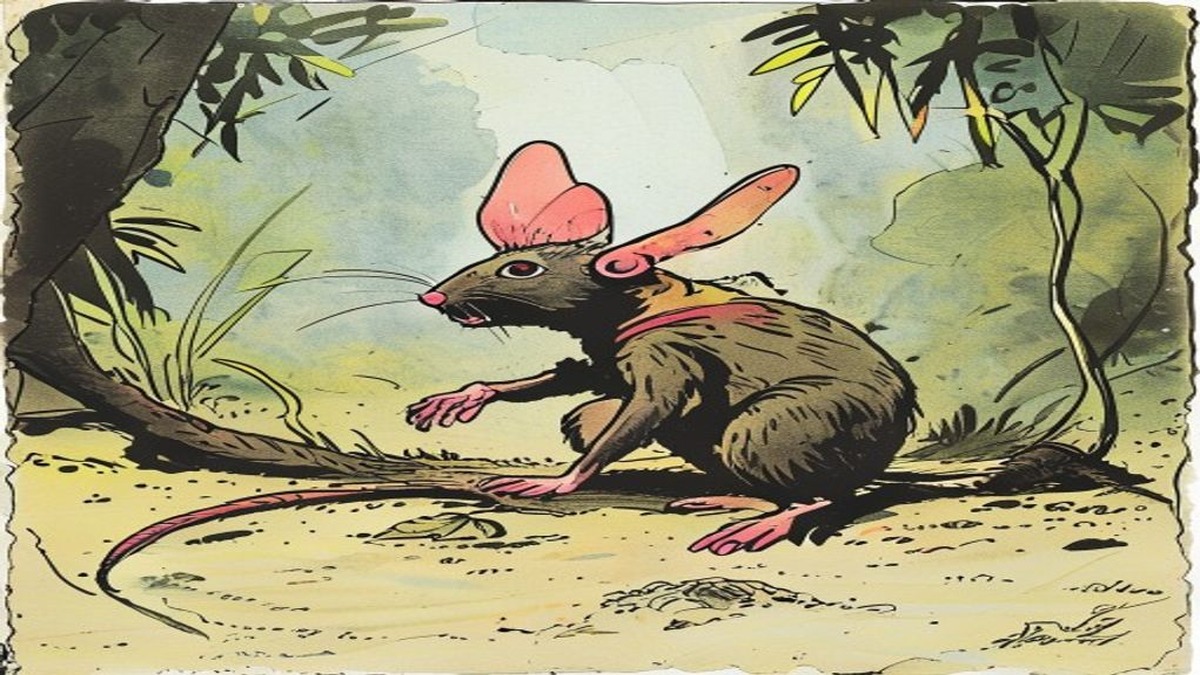
Vishnu Sharma’s argument in this tale extends the Sadhu-and-Mouse story’s treatment of svabhava in an important direction: svabhava does not always assert itself through felt preference or obvious desire. In this tale, it asserts itself through the specific criterion of evaluation that the female mouse applies to her suitors — a criterion that appears, to her and to the observer, to be a neutral rational standard (who is greatest?) but that is, at a deeper level, the expression of her inherent orientation toward her own kind. She is not choosing mice; she is choosing what is greatest, and her svabhava shapes what she recognises as greatest.
For Vishnu Sharma’s royal pupils the governance application is to the assessment of ministers and advisers. A minister whose svabhava inclines toward a particular faction or interest will not always express this through obvious disloyalty; they may express it through the specific criteria of assessment they apply to situations, through what they recognise as important and what they discount. The Arthashastra’s emphasis on observing officials across many situations, not just the obvious tests, reflects awareness that svabhava expresses itself in characteristic patterns of judgment, not only in dramatic behavioural choices.
Moral and Sanskrit Wisdom Tradition
“Svabhava expresses itself not only in what one desires but in how one reasons; the criterion a being applies to judge greatness reveals the nature it was born with.”
— Moral of The Story of the Female Mouse, Pancatantra Book III (Kakolukiyam)
This moral extends the Sanskrit tradition’s treatment of svabhava into the domain of epistemic rather than merely behavioural expression. The Mahabharata’s treatment of svabhava in the Shanti Parva focuses on behavioural expression under pressure; the Pancatantra’s female mouse tale demonstrates a subtler form: svabhava operating through the criteria of evaluation that a being applies to its choices. The Nyaya school’s treatment of pramana (valid knowledge sources) implicitly recognises that beings reason differently, and that the differences in how they reason are not merely accidental but reflective of deeper orientation. Vishnu Sharma’s contribution is the narrative demonstration through the suitor sequence.
Why This Story Has Lasted 2,300 Years
The Story of the Female Mouse endures because it demonstrates svabhava in its most subtle form: not the obvious preference or the dramatic behavioural choice but the quiet, consistent shaping of judgment that produces the same outcome through whatever reasoning process the being applies. This is the most difficult form of svabhava to observe, and therefore the most important for those who need to assess others accurately. The female mouse’s criterion of greatness leads, inexorably, to the mouse — not because she is thinking about mice but because her svabhava is expressed in how she thinks. The Pancatantra’s recognition that svabhava works at this level, not only at the level of obvious preference, is among its most durable contributions to the understanding of character.
Sanskrit Tradition: Tantrakhyayika (c. 200 BCE, Kashmir)
Key Concept: Svabhava expressed through criteria of evaluation, not only through felt preference; epistemic expression of inherent nature; alignment with svabhava as wisdom
Author: Vishnu Sharma (attributed, c. 3rd century BCE)
Arthashastra Parallel: Assessment of officials through characteristic patterns of judgment across many situations; svabhava expressed in what one recognises as important
Frequently Asked Questions
What is the moral of the Story of the Female Mouse in the Panchatantra?
The moral is that svabhava expresses itself not only in what one desires but in how one reasons; the criterion a being applies to judge greatness reveals the nature it was born with. The female mouse did not consciously choose mice; she applied a criterion of greatness that, when traced through the cosmic hierarchy, produced the mouse as its answer. Her inherent nature expressed itself through her reasoning process rather than as an obvious felt preference.
What happens in the Story of the Female Mouse in the Panchatantra?
A female mouse has been transformed into a girl by a holy man who wants to give her the best possible life. When she reaches marriageable age, the holy man offers her the sun, cloud, wind, and mountain as successive suitors, each rejected in favour of whoever is described as greater. The mountain reveals that the mouse is greatest because he burrows beneath the mountain. She immediately chooses the mouse. The holy man, understanding what the suitor sequence has revealed about her svabhava, transforms her back into a mouse and gives her to the mouse.
How is this story different from the Sadhu and Mouse story in the Panchatantra?
Both tales demonstrate the persistence of svabhava through transformation, using the same suitor sequence. The key difference is in the perspective and the mechanism: the Sadhu-and-Mouse story focuses on the holy man's recognition of what has happened and his acceptance. This tale focuses on the female mouse's own perspective and demonstrates that svabhava operates through her criteria of evaluation, not just through obvious desire. She is not choosing mice — she is choosing what is greatest, and her svabhava shapes what she recognises as greatest.
What does this Panchatantra story teach about how svabhava operates?
The tale demonstrates that svabhava can operate through the criteria of evaluation a being applies to its choices, not only through obvious felt preference. The female mouse applies a neutral rational criterion (who is greatest?) but her svabhava shapes what she recognises as greatest. This is the subtlest form of svabhava and therefore the most difficult to observe. The Pancatantra's recognition that inherent nature works at this epistemic level — in how one thinks, not only in what one obviously wants — is among its most sophisticated contributions.
Why does the holy man retransform the female mouse rather than finding her a different husband?
The holy man retransforms her because the suitor sequence has revealed her svabhava: she is, at the level of inherent nature, a mouse, and no transformation of form has changed this. The Pancatantra presents this retransformation as the wise and compassionate response: alignment with svabhava rather than resistance to it. Persisting in the attempt to find her a husband suited to her human form would be resisting a reality that the suitor sequence has demonstrated clearly. The correct response to the revelation of svabhava is acceptance and alignment.
You May Also Like
 Panchatantra Stories
Ages 9-12
Panchatantra Stories
Ages 9-12
The Monkey and the Crocodile
Read 'The Monkey and the Crocodile' — a classic Panchatantra story about nature and animals. The Monkey and the Crocodile is a beloved Panchatantra tale...
 Panchatantra Stories
Ages 9-12
Panchatantra Stories
Ages 9-12
The Elephant And The Sparrows: Panchatantra Book I (Mitra-Bheda) — Stories From India Retold
How can creatures the size of your palm bring down a creature the size of a hill? The classic Panchatantra Book I tale of two sparrows, a wise owl, a mosquito, a woodpecker and a frog who teach a proud elephant the cost of forgetting how to listen.
 Panchatantra Stories
Ages 3-5
Panchatantra Stories
Ages 3-5
The Tortoise and The Geese
A tortoise and geese become best friends. When the geese offer a journey to the mountains, pride and anger lead to a tragic fall.