Suchimukha and The Monkey
A Panchatantra fable about a well-meaning bird named Suchimukha, a troop of cold monkeys, and the danger of giving advice where none is wanted.
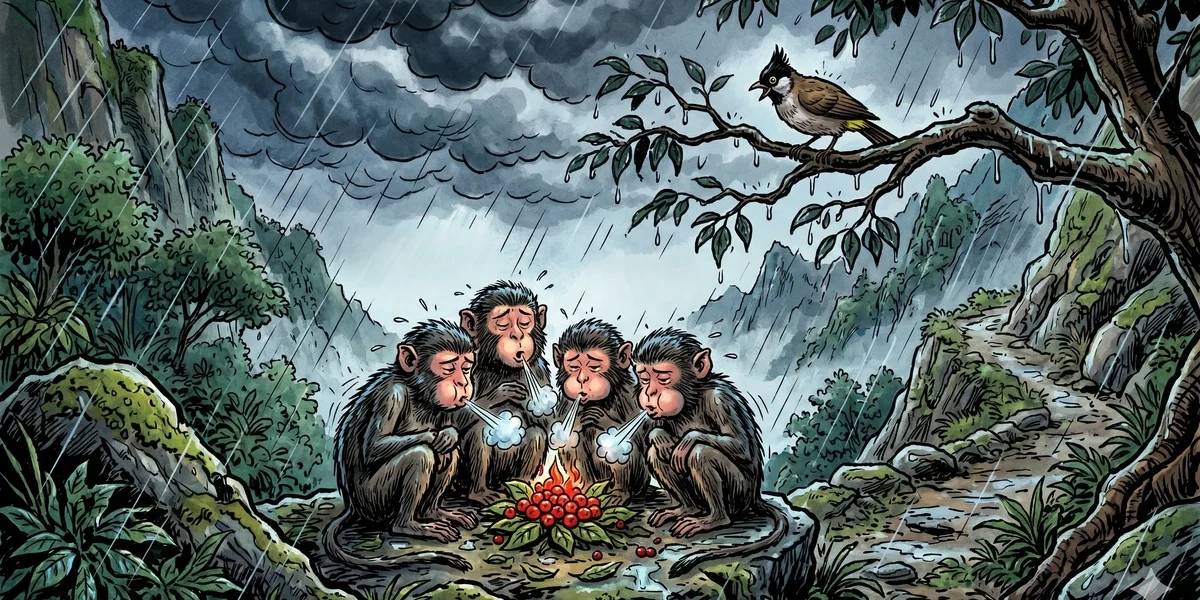
Suchimukha and the Monkey
Source: Panchatantra, Book IV — Labdhapranasham (Loss of Gains), attributed to the sage Vishnu Sharma, composed c. 300 BCE–300 CE; this redaction follows the Sanskrit critical text and Chandra Rajan’s annotated translation (Penguin Classics, 1993).
न देयं शिक्षा न च वाच्या ट्टनं निर्त्र्यका्डशिनःः
A needle-beaked weaver bird named Suchimukha watches a monkey shivering in the monsoon rain and, moved by charitable impulse, offers advice on how to build a shelter. The monkey has hands perfectly suited for the task, the bird observes. The monkey has everything required. The monkey has never built a shelter and does not intend to. The advice is unsolicited, the source is a creature the monkey regards as beneath him, and the combination produces not gratitude but destruction. The tale is the Panchatantra’s most succinct argument that wisdom offered to those incapable of receiving it is not generosity but provocation.
Part I: The Charitable Observation
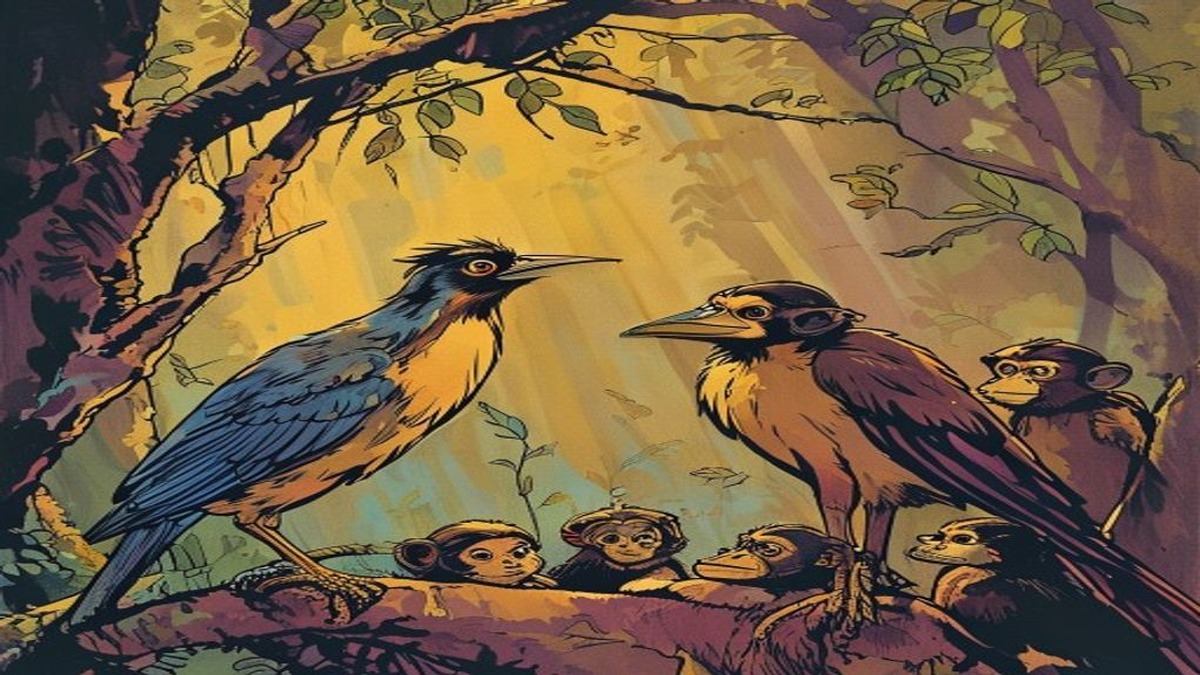
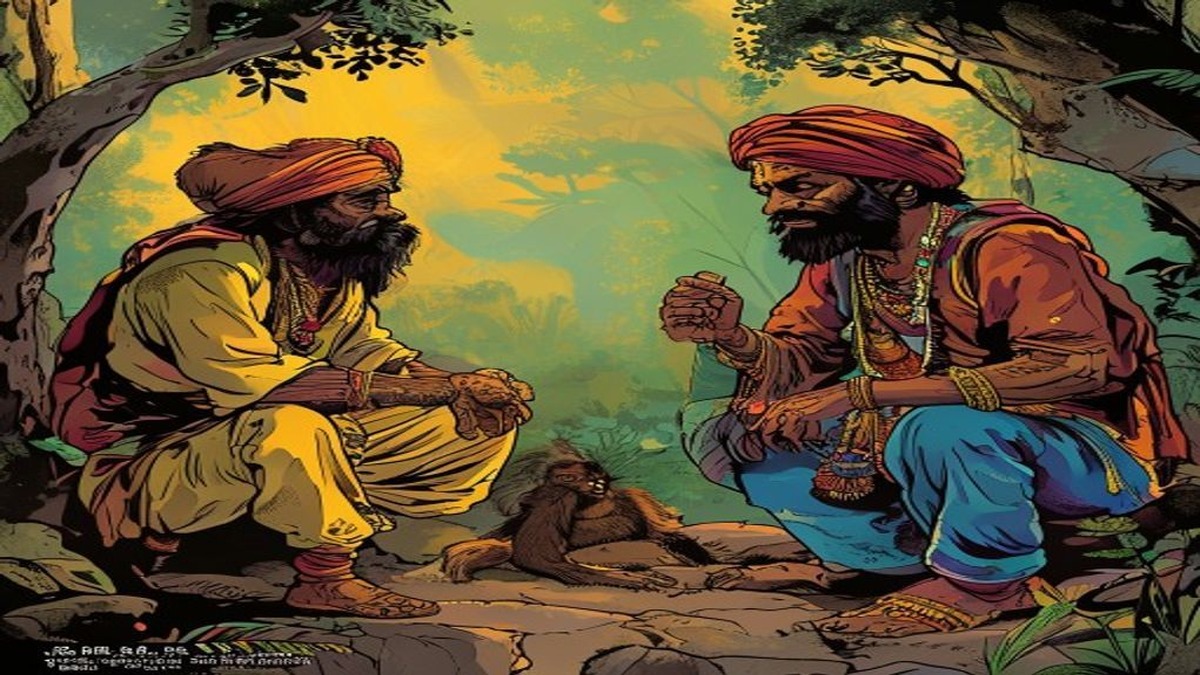
In the forest of the Western Ghats, a weaver bird named Suchimukha had built his nest with the architectural precision of his kind: a perfectly woven globe suspended from the tip of a branch, impossible to enter from below, dry in the heaviest rain, ventilated through a small entrance designed to admit a bird but not a snake. He had constructed it over four days using dried grass, leaf strips, and the careful technique that weaver birds carry in their bones.
During the height of the monsoon season, a large monkey named Mahavira sheltered in the same tree. He was powerful, rank-conscious, and entirely without a shelter of his own. The rain was considerable and his fur provided less insulation than he would have preferred. He sat in a wide fork of the tree with the expression of an animal who is wet, cold, and composing resentment.
Suchimukha watched him for a time with the combined feeling of a craftsman who sees an obvious problem with an obvious solution and a citizen who sees suffering he could alleviate. He was aware, in some corner of his bird intelligence, that the monkey was larger, stronger, and not obviously receptive to counsel from birds. He offered it anyway. The charitable impulse in small creatures toward large ones is a specific form of courage that the Panchatantra examines here without approval but also without contempt.
“Friend,” said Suchimukha, “you have hands. Four of them, in fact, which is two more than I have. You have fingers that can weave. You have everything required to build a nest that would keep you dry through this and every monsoon. I could show you how I made mine, if you were interested.”
He delivered this with genuine goodwill. It was, objectively, correct advice. The monkey had hands; weaving was within his physical capability; a shelter would clearly improve his situation. Suchimukha had done nothing wrong except to misread his audience.
Part II: The Advice Received
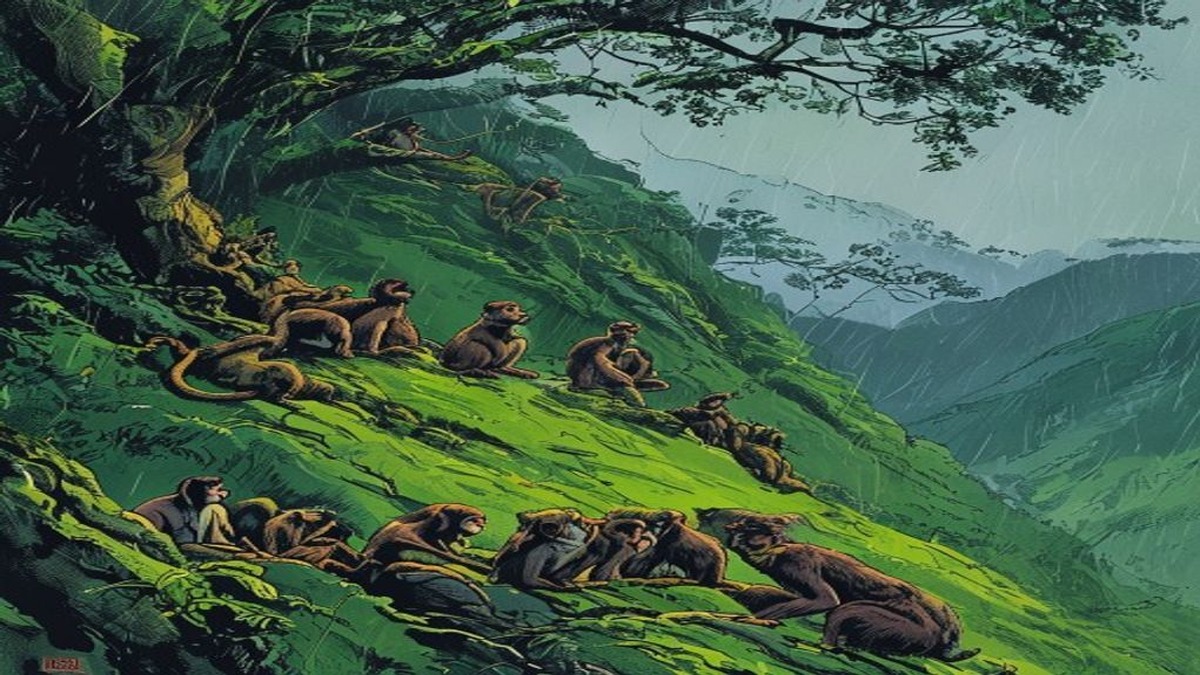
The monkey heard the advice the way that advice is always heard when it is correct, unsolicited, and delivered by someone the recipient does not respect: as an attack. The specific topology of the offense was this: a small bird, warm in a nest of its own making, had told a large monkey with opposable thumbs that he was capable of doing what the bird had done and had chosen not to do it. The implication — that the monkey’s present discomfort was a consequence of his own failure of initiative — was accurate and therefore unforgivable.
The monkey did not respond immediately. The Panchatantra notes this interval and treats it as meaningful: the moment in which a creature who knows advice is correct converts that knowledge into anger, because accepting correct advice from an inferior source requires a degree of humility that pride cannot supply.
Then the monkey spoke. He did not address the content of the advice. He addressed Suchimukha’s standing to give it. “A bird who builds a nest of straw speaks to me of shelter?” he said. “You live in a ball of dried grass. Your entire house fits in my hand. I choose not to build because I do not need what you need. I am not cold because of inadequacy; I am wet because of weather, which passes. You are building houses because you are a bird, not because house-building is a virtue.”
This argument had the form of reasoning without its substance, and Suchimukha, who was an intelligent bird, recognised it immediately. The monkey was not addressing the question; he was reframing the questioner. The correct response, Vishnu Sharma implies, was to stop talking. Suchimukha did not stop talking. He tried once more to explain, with additional detail, the practical benefits of a woven shelter over open-air roosting in monsoon conditions.
Part III: The Destruction
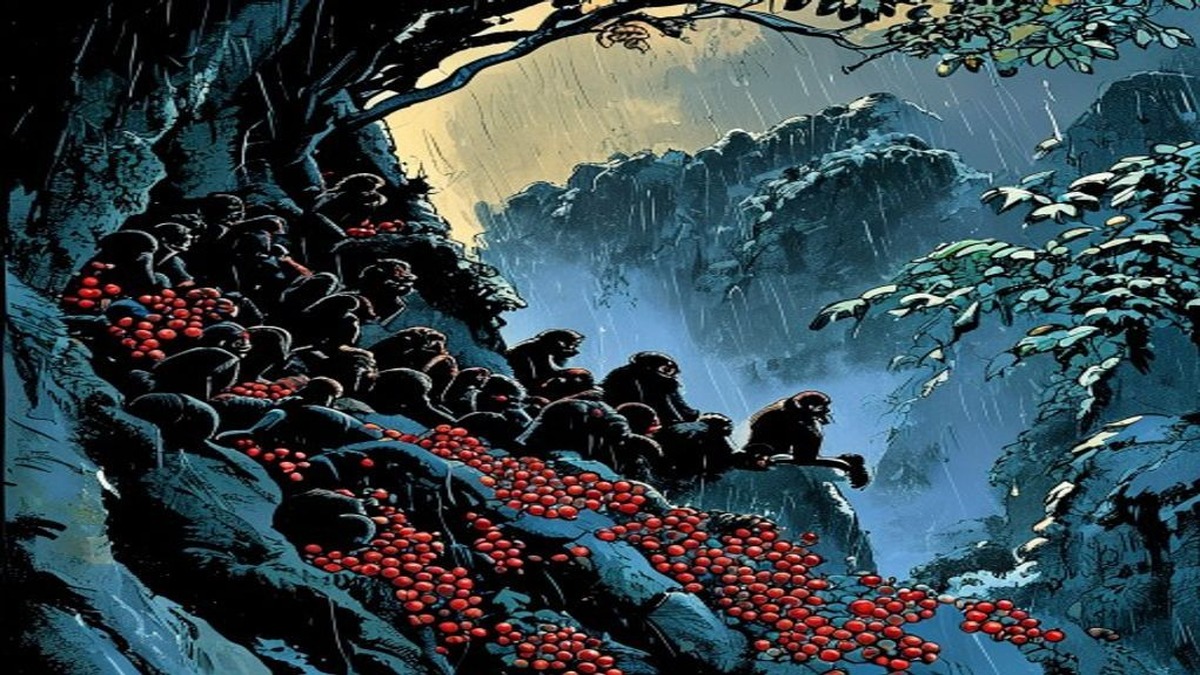
The monkey reached over and tore Suchimukha’s nest from its branch. He did it methodically and completely — not in a single rage-impulse but with the deliberate quality of an animal making a point. The woven globe that had taken four days to construct and had survived three weeks of monsoon was reduced to a scattered arrangement of grass and fibre in approximately thirty seconds. He scattered the pieces into the rain.
“That,” said the monkey, with the satisfaction of an argument he considered conclusive, “is my opinion of shelters.”
Suchimukha did not respond. He watched his nest scattered into the rain from a nearby branch. The Panchatantra does not record what he felt, but it records what he understood: that he had given correct advice to a creature constitutionally incapable of receiving it, and had paid for the advice with the loss of something that had cost him considerable labour and had harmed no one.
The text then gives Suchimukha a brief soliloquy that constitutes the tale’s moral: “I offered what I knew because I saw suffering that I could help address. But suffering that is not acknowledged as suffering cannot be helped; and an animal who defines his suffering as weather and not as a problem he could solve will not thank anyone who offers to help him solve it. I knew this before I spoke. I spoke anyway. The nest was the price of that error.”
Part IV: The Two Errors
Vishnu Sharma’s analysis of this tale in the commentarial tradition is unusual in its evenhandedness: he does not exonerate Suchimukha entirely. The bird made an error before the monkey made his. Correct advice is not always beneficial advice; beneficial advice requires a recipient capable of receiving it. A physician who prescribes the right medicine to a patient who will not take medicine has not done the patient good; he has wasted a prescription and possibly provoked a scene.
The error of offering unsolicited advice to the unready is, in the Panchatantra’s taxonomy, a form of the same failure it identifies in “The Lion that Sprang to Life” and “The Musical Donkey”: the failure to ask, before the action, whether the action is appropriate to the situation. Suchimukha’s charitable impulse was genuine. His judgment about when to exercise it was not.
The monkey’s error is larger and more consequential, because he destroyed something valuable in response to advice that was simply correct. But his error is also the less interesting one, because it is the error of pride, which is well-documented and easily named. Suchimukha’s error is more subtle: the error of generosity miscalibrated, of wisdom offered without first assessing whether the soil could receive it.
The Sanskrit term for this failure is patra-abhava — the absence of a suitable recipient — and it appears in multiple Panchatantra contexts as the condition that makes even excellent advice harmful rather than helpful. The story’s final point is addressed to the giver rather than the receiver: before you offer what you know, ask whether the one who receives it can use it. If not, the nest is the price of the sermon.
Why This Story Has Lasted Three Thousand Years
“Suchimukha and the Monkey” endures because it speaks to one of the most consistently frustrating experiences in human life: offering help that is refused, and paying a cost for having offered it. The story’s particular value is its refusal to place all the blame on the monkey. Every reader who has ever offered correct, well-intentioned advice to someone constitutionally unable to receive it recognises Suchimukha’s error — the second attempt, the elaboration, the persistence past the point where the reception has already been made clear.
The story entered Arabic Kalila wa Dimna and was used in medieval Islamic and Persian court literature as a cautionary tale for advisors: know your audience before you speak, because the correctness of the advice does not protect you from the consequences of delivering it to the wrong recipient. In European conduct literature it appeared as a parable about the difference between wisdom and the wisdom to know when to deploy it.
For modern readers the story resonates in every professional and personal context where advice is offered across a power differential: the junior employee who offers a correct suggestion to a defensive senior, the therapist who offers insight to a patient not yet ready to hear it, the friend who points out what everyone can see except the person who needs to see it. In all these cases the monkey’s destruction of the nest is recognisable — and so, if we are honest, is Suchimukha’s second attempt.
Frequently Asked Questions
What is the moral of Suchimukha and the Monkey?
The story teaches that correct advice offered to the wrong recipient is not wisdom but provocation — and the giver pays a price for it. Suchimukha's advice is accurate and well-intentioned, but the monkey cannot receive it without experiencing it as an insult to his pride. The story's deeper lesson is about the giver: before offering what you know, assess whether the recipient can use it. The Sanskrit term patra-abhava — the absence of a suitable recipient — describes the condition that converts even excellent advice into harm.
Why does the monkey destroy Suchimukha's nest?
The monkey destroys the nest because he cannot refute the advice on its merits — it is correct — and so he refutes it through the only means available to injured pride: destruction of the source. He also needs to reassert his dominance in a situation where a small bird has implicitly demonstrated superior judgment by being warm and dry. The destruction is not rational; it is the response of someone who is right to be ashamed but cannot afford to admit it.
Which book of the Panchatantra does this story come from?
The story comes from Book IV, Labdhapranasham (Loss of Gains), which examines how things already acquired are destroyed through carelessness or poor judgment. Here the loss is Suchimukha's nest — something built through skill and labor, destroyed because its owner misjudged the cost of offering unsolicited advice to a proud creature.
Does the Panchatantra blame only the monkey?
No. Vishnu Sharma's analysis is unusually evenhanded: he identifies Suchimukha's error before the monkey's. The bird made a mistake in offering advice to someone constitutionally unable to receive it, and compounded it by trying again after the first refusal. The monkey's error is larger and more visible — he destroys something valuable in response to correct advice — but Suchimukha's error is the subtler one: generosity miscalibrated, wisdom deployed without assessing whether the recipient could use it.
How has this story been used in political and advisory literature?
The story entered Arabic Kalila wa Dimna and was widely used in medieval Islamic and Persian court literature as a cautionary tale for advisors: know your audience before you speak, because the correctness of the advice does not protect you from a bad reception. In European conduct literature it became a parable about the difference between wisdom and the wisdom to know when to deploy it — the argument being that the timing and recipient of advice are as important as its content.
You May Also Like
 Panchatantra Stories
Ages 3-5
Panchatantra Stories
Ages 3-5
The Potter Who Became a Warrior
A humble potter with a strange scar nearly marches into battle - until a wise captain sees the truth.
 Panchatantra Stories
Ages 9-12
Panchatantra Stories
Ages 9-12
The Dove and the Hunter
The Dove and the Hunter: Self-sacrifice is the highest stage of sacrifice.” There was a mean hunter, who used to roam in the jungle in search of birds and
 Panchatantra Stories
Ages 6-8
Panchatantra Stories
Ages 6-8
The Story of Soma Sharma’s Father
The Story of Soma Sharma’s Father: In a certain village, there lived a Brahmin, by the name of Swabhavakripana He used to live by begging. Whenever he got