The White Elephant of Thailand
The White Elephant of Thailand: In a kingdom where mountains descended into valleys and rivers wound through forests of extraordinary abundance, there ruled a
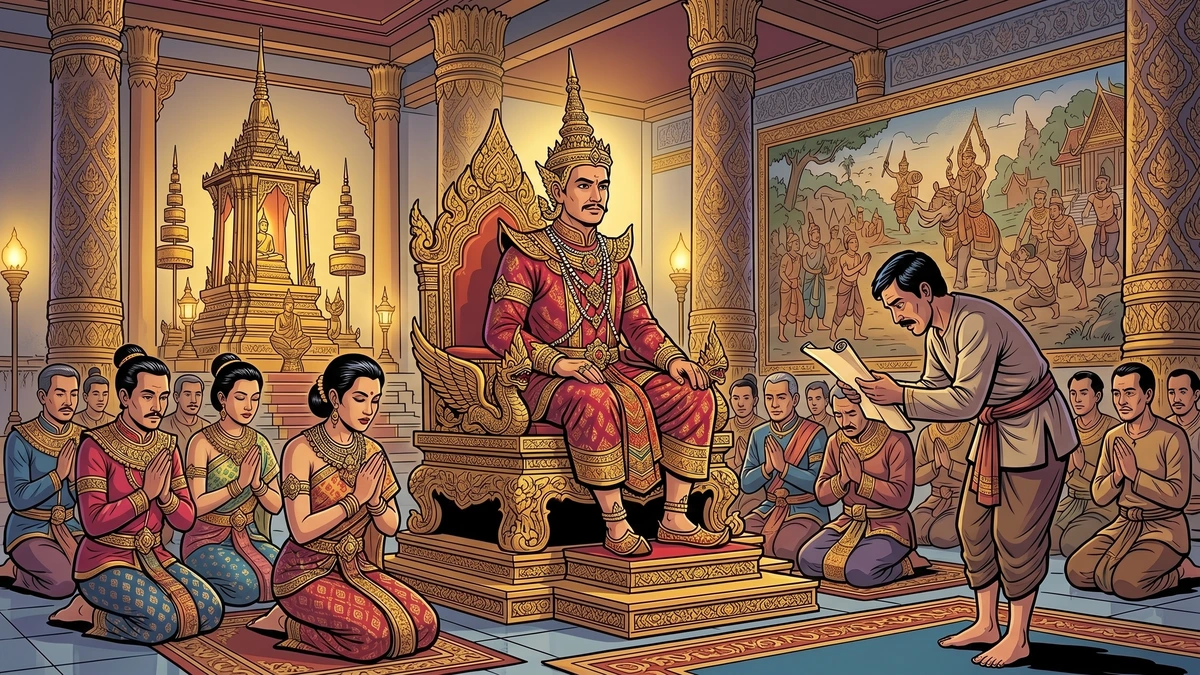
In a kingdom where mountains descended into valleys and rivers wound through forests of extraordinary abundance, there ruled a King of considerable pride and power. He had conquered neighboring territories through superior military strategy, had accumulated wealth through taxation and trade, and had built his reputation on the foundation of absolute power and the submission of all beneath him. He believed that power was the greatest virtue, that strength was the only true measure of worth, and that a kingdom’s stability depended entirely on the absolute authority of its ruler.
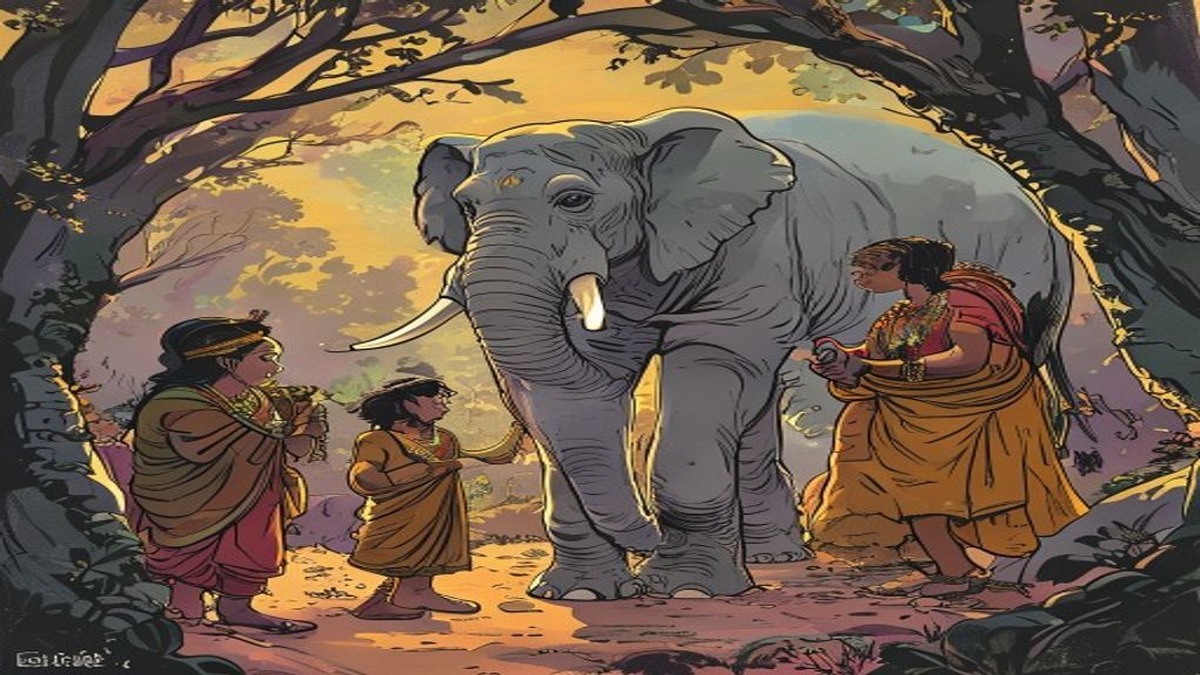
One day, while hunting in the deep forests beyond the boundaries of his cultivated lands, the King’s party encountered something extraordinary – a white elephant of breathtaking beauty. Its tusks were carved with intricate patterns that seemed to have formed naturally over its lifetime. Its hide was not pure white but held subtle gradations of ivory, cream, and pearl. Its eyes were intelligent and gentle, and it moved with a grace that seemed impossible for a creature of such immense size and power.
The King’s hunters immediately moved to capture the beast, seeing in it a trophy worthy of the greatest royal collection. But the white elephant, with a gentleness that was astonishing, did not flee or fight. Instead, it approached the King directly and looked at him with an expression of such profound sadness and understanding that something in the King’s heart was suddenly troubled.
“Do not capture me,” said the elephant, speaking words that the King could somehow understand despite having no experience of animals speaking before. “I am not your prey. I am a teacher sent to you because your kingdom, though materially prosperous, is spiritually desolate.”
The King, shocked but intrigued rather than frightened, agreed to spare the elephant’s life. Instead, he commanded that the creature be brought to the palace in comfort and given every luxury his kingdom could provide. But the elephant made a single request: “Do not confine me. Allow me to roam freely throughout your kingdom, and permit me to interact with your people. This is how I will teach.”
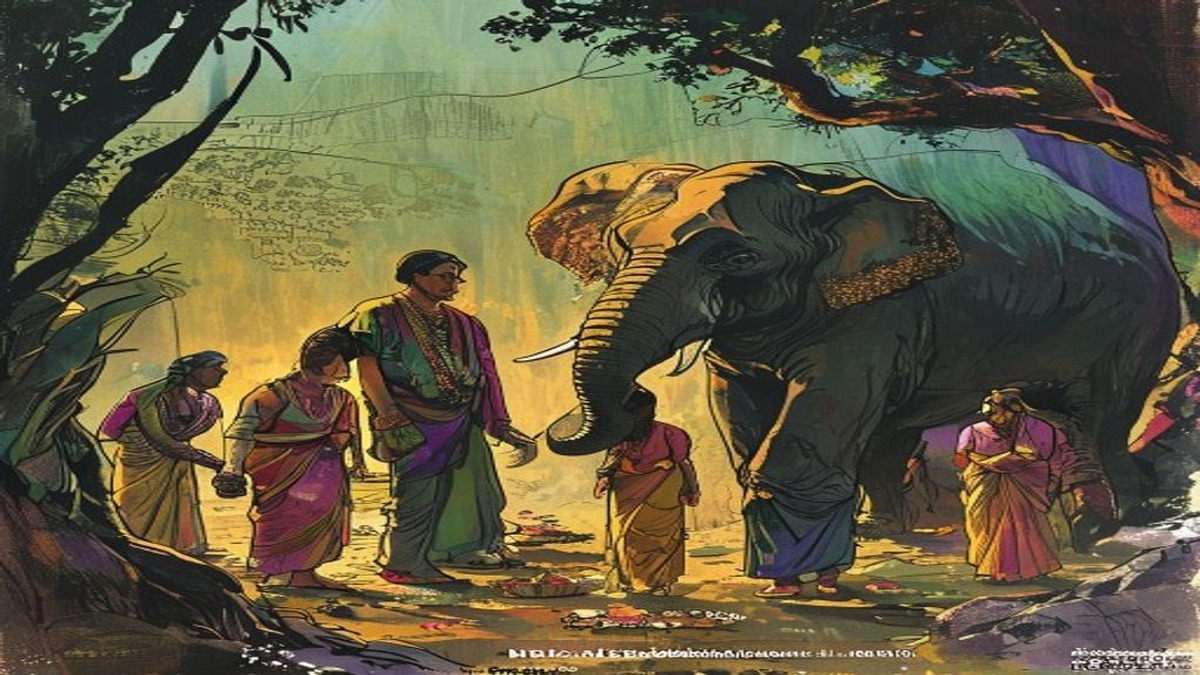
The King agreed, and the white elephant was released into the kingdom to wander as it pleased. Something extraordinary began to happen. Wherever the elephant went, it seemed to bring transformation. A soldier who was consumed with pride approached the elephant and wept as he came to understand that his strength meant nothing compared to the gentleness he felt in the elephant’s presence. A wealthy merchant who had become obsessed with accumulating more and more wealth found himself giving generously to the poor after encountering the elephant, understanding through some mysterious communication that abundance had no value if it was hoarded.
A mother who had lost her child came upon the elephant in the forest and found herself comforted by its presence in a way that no words could have achieved. A scholar who was arrogant in his learning was humbled by the elephant, understanding through simple interaction that true wisdom was gentleness, not cleverness. A thief ceased his crimes after the elephant looked at him with eyes that seemed to see his potential for goodness rather than his current degradation.
The transformation spread throughout the kingdom. People began to treat one another with greater kindness. Violence decreased. Disputes that had seemed intractable began to resolve themselves as people learned to listen to one another. The crops seemed to grow more abundantly. The rivers seemed to flow more gently. The very air seemed lighter and more filled with peace.
The King observed all this with a mixture of wonder and consternation. His kingdom was becoming more prosperous and peaceful, yes, but this prosperity was not the result of his power or his authority. It was the result of the elephant’s presence and teaching. And the King, who had built his entire sense of self on the foundation of being the source of his kingdom’s well-being, felt something like jealousy and resentment beginning to grow in his heart.
One night, in a moment of darkness and rage, the King summoned his guards and ordered them to capture and execute the white elephant. “This creature challenges my authority,” declared the King. “It has made my people think that peace comes from gentleness rather than strength, that they can be happy without obedience to my will. I will not tolerate a rival source of spiritual authority in my kingdom.”
The guards, troubled but obedient, pursued the elephant. But the elephant did not run. Instead, it walked directly toward the King, and as it approached, it did something unexpected. It knelt before him – a gesture of absolute submission and respect. “I have taught what I came to teach,” said the elephant. “If you must take my life, I will not resist. But before you do, I ask you to understand this: The power you wield comes from your people’s fear or their obedience. The power I have represents comes from their recognition of something valuable beyond themselves. You can kill me, but you cannot prevent the awakening that has already occurred within your people.”
The King, holding his sword above the elephant’s neck, found himself unable to strike. Tears began to flow from his eyes – tears he did not fully understand. In that moment, something within him broke open. He saw himself as he truly was: a man whose strength had been built on the suffering of others, whose authority had been maintained through fear, whose pride had isolated him from the very people he governed.
He dropped his sword and fell to his knees beside the elephant. “I have been a fool,” he said. “I thought power was strength, but you have shown me that true strength is gentleness. I thought authority required dominance, but you have shown me that true authority comes from inspiring goodness in others.”
The King rose to his feet and issued a decree that changed the nature of his rule. He proclaimed that his kingdom would henceforth prioritize the welfare and spiritual development of his people. He reduced taxes on the poor and used the royal treasury to build schools and temples. He established courts that emphasized reconciliation and healing rather than punishment and pain. And he ensured that the white elephant would be protected forever, honored not as a trophy but as a sacred teacher.
In the years that followed, the kingdom transformed. It became known throughout the region not as a place of fearful obedience but as a sanctuary of peace and learning. Other rulers came to understand the King’s transformation and gradually began to emulate his approach. The white elephant lived out its days in peace and comfort, and it became a symbol throughout the land – not of the King’s power, but of the power of compassion and gentleness to transform even the most hardened hearts.
The moral that resonated through the ages was this: True power is not the ability to compel obedience through fear or force. True power is the ability to inspire goodness, to awaken wisdom, and to create conditions where people choose to act well because they have glimpsed something greater than themselves. A leader who rules through fear may maintain order, but a leader who inspires through gentle teaching creates transformation. And sometimes, the greatest strength is the willingness to kneel, to admit error, and to be transformed by those we thought beneath us.
What This Tale Teaches Us Today
Old stories keep their power because their lessons never stop being useful. Here is how this one still applies:
- Every gift has a cost. Accepting without thinking about upkeep can leave you worse off than before.
- National and corporate symbols still matter. The story of a flag, a mascot, or an emblem often shapes how people feel about an organization.
- Conservation is now a moral imperative. Folk tales of sacred animals remind us how much we have to lose if we do not protect them.
Did You Know?
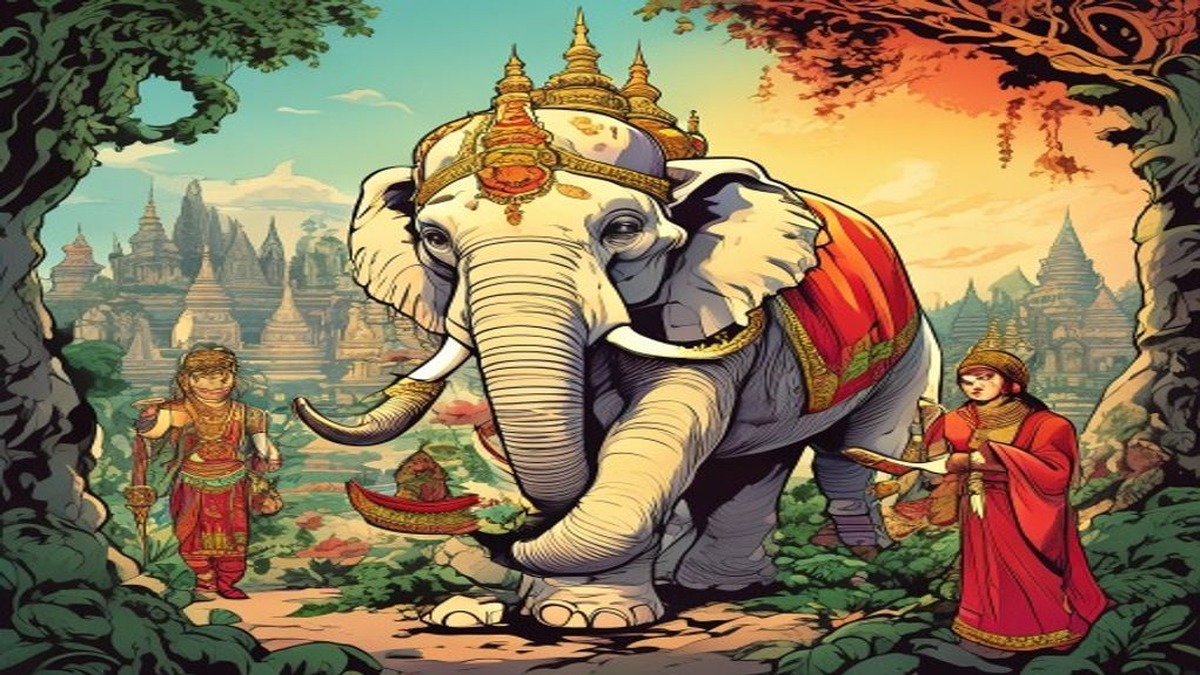
- The white elephant is a sacred symbol in Thai, Burmese, and Lao culture – Thai kings once kept white elephants as living proof of divine favor.
- The Thai royal flag featured a white elephant from 1855 to 1916, and the elephant remains a national symbol.
- In Thai tradition, gifting a white elephant to an enemy was a ruinous curse – they were so expensive to feed they could bankrupt the receiver.
- This is the origin of the English phrase ‘white elephant’ to mean a burdensome gift.
- Thailand’s elephant population has declined from 100,000 in 1900 to about 3,000 today, making their folklore even more precious.
Why This Story Still Matters
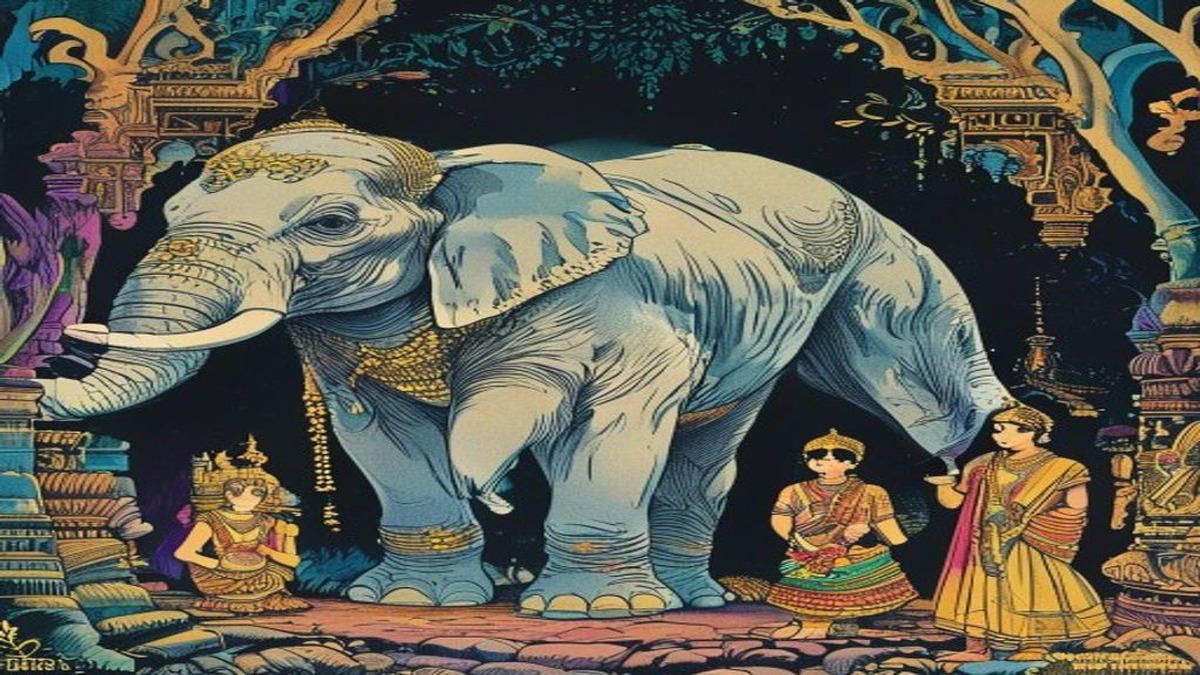
The White Elephant of Thailand is both a charming story and a quiet warning. Sacred does not mean easy – and what is admirable on the surface can be a heavy responsibility underneath. Thai grandparents tell this tale with a small smile, knowing it contains a whole theory of leadership: be careful what honors you accept, and be even more careful what honors you give. Today, as Thailand works to save its real elephants from extinction, the tale carries a second message: treating something as sacred means protecting it, not just celebrating it.
Moral
มิตรแท้ย่อมรู้จักถามก่อนตัดสิน – Mit thae yom ruchak tham kon tatsin — “A true friend asks before judging.” In the Thai oral commentary that traditionally closes this tale, the white elephant teaches that friendship is built on the courage to ask what the silence means rather than the comfort of guessing the worst. Pride collapses a kingdom; assumption collapses a friendship. The same Theravada Buddhist ethic of samma-vaca (right speech) that guides the king’s humbling guides the animals’ reconciliation — three steps of right speech being to speak only what is true, what is timely, and what is kind. The white elephant of Siam, sacred to the throne and to the dharma, is held up here as the model of all three.
Historical & Cultural Context
India’s regional folk tale tradition is a vast oral inheritance carried by grandmothers, wandering bards and village storytellers, preserving moral wisdom, social commentary and cultural memory long before any of it was written down.
White elephants hold sacred significance in Thai and broader Southeast Asian culture, where they symbolize royal power and divine protection. This tale belongs to the family of animal-friendship narratives found throughout the region, where creatures of different natures learn to cooperate. The story draws on Buddhist values of compassion and right speech, themes central to Theravada Buddhism in Thailand and neighboring lands. Such tales serve to teach children about communication, difference, and the foundations of friendship.
Reflection & Discussion
- What made the white elephant think its friends didn’t care about it anymore?
- When a friend seems distant or angry, what’s the best way to find out what’s really wrong?
- What if the friends had given up on the white elephant instead of going to find out the truth?
You May Also Like
 Indian Folk Tales
Ages 3-5
Indian Folk Tales
Ages 3-5
The Lambikin
The Lambikin: Once upon a time, there was a wee wee Lambikin, who frolicked about on his little tottery legs, and enjoyed himself amazingly. Now one day he set
 Indian Folk Tales
Ages 9-12
Indian Folk Tales
Ages 9-12
How Raja Rasalu Was Born
How Raja Rasalu Was Born: Once there lived a great Raja, whose name was Sâlbâhan, and he had two Queens. Now the elder, by name Queen Achhrâ, had a fair young
 Indian Folk Tales
Ages 3-5
Indian Folk Tales
Ages 3-5
The Faithful Prince
The Faithful Prince - a folk tale retold for young readers with a clear moral, simple words, and the warmth of a bedtime story from long ago.