The Story of the Dove and the Hunter
The Story of the Dove and the Hunter: A wicked bird hunter, with the appearance of Yama, used to roam about in the jungle. He had neither friendsnor relatives.
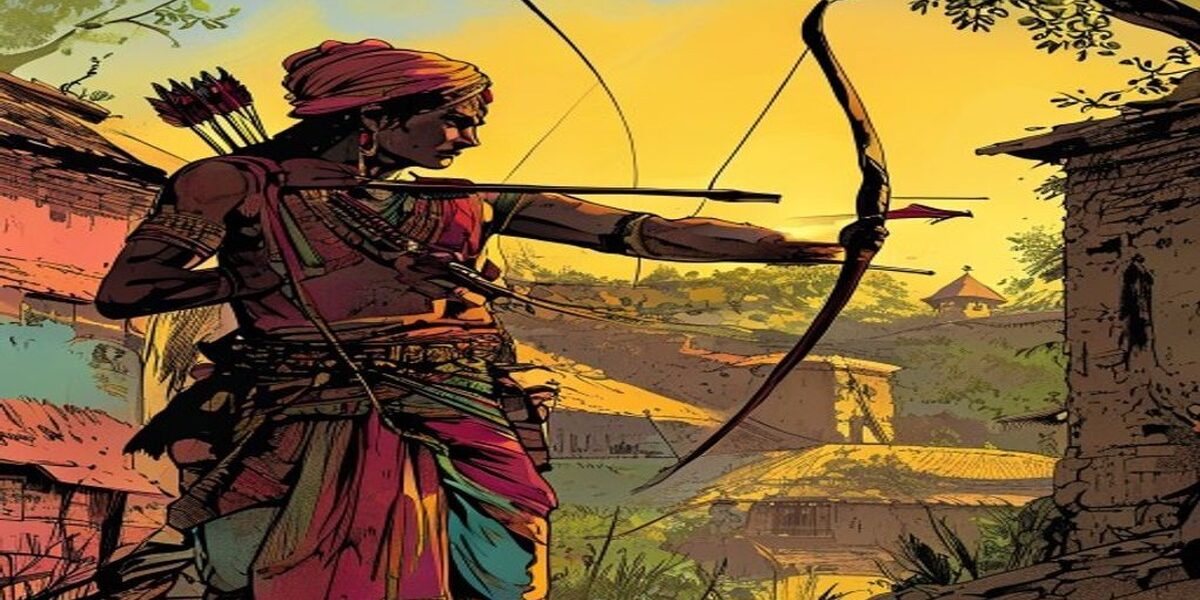
The Story of the Dove and the Hunter
Canonical Attribution and Manuscript Tradition
This tale is among the most morally concentrated in the Pancatantra: a male dove, whose mate has been caught by a hunter, finds the hunter sheltering under the tree where he lives. Despite the hunter holding his captured mate, the dove treats the hunter as a guest and fulfils all the obligations of hospitality — including ultimately offering his own body as food when he cannot otherwise feed his guest. The tale is preserved in all major Sanskrit recensions of the Pancatantra including the Tantrakhyayika (c. 200 BCE, Kashmir) and is one of the most cited examples in Sanskrit didactic literature of atithi-dharma (the dharma of the guest) taken to its absolute limit. The Pancatantra uses the dove’s extraordinary conduct not as a simple moral example but as a philosophical demonstration: the dove understands that dharmic obligation to a guest does not admit of exceptions based on the guest’s moral character or even on the guest’s direct role in one’s own suffering. The hunter is a guest; the dove is the host; the obligations hold.

Beat I — The Hunter’s Shelter and the Dove’s Recognition
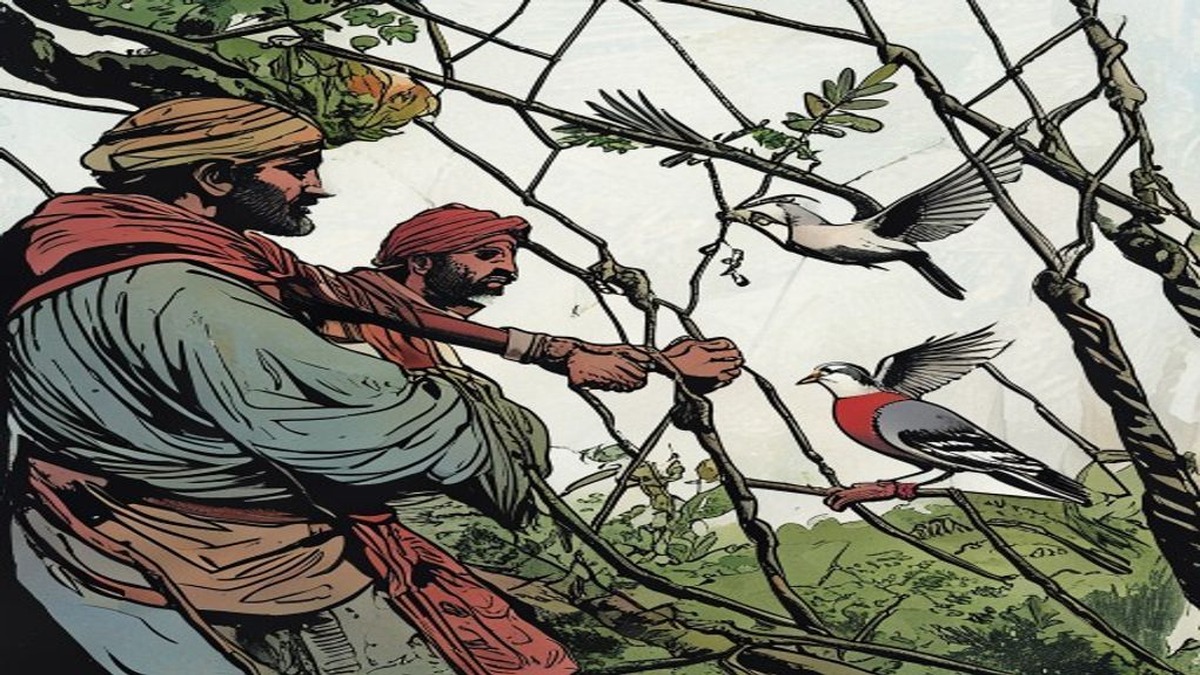
A hunter had trapped a female dove and was sheltering for the night under the tree where the male dove lived. The male dove’s natural response to the sight of his captured mate would have been grief, rage, or fear — any of which would have been entirely understandable. The Pancatantra records something different: the dove recognised the hunter as a guest who had taken shelter under his tree, and therefore as someone to whom atithi-dharma applied. The obligations of the host did not depend on the guest’s virtue or on the guest’s prior conduct toward the host; they depended on the fact of taking shelter.
This is the tale’s most philosophically demanding move, and the Pancatantra makes it without hesitation. The dove, whose mate is in the hunter’s cage, welcomed the hunter as a guest. The female dove, from inside the cage, supported this decision: she reminded her mate that the dharma of hospitality is not conditional, and that the merit of fulfilling it under these conditions was correspondingly greater. The couple’s agreement on the priority of dharma over natural feeling is the tale’s moral foundation.
Beat II — The Obligations of Hospitality
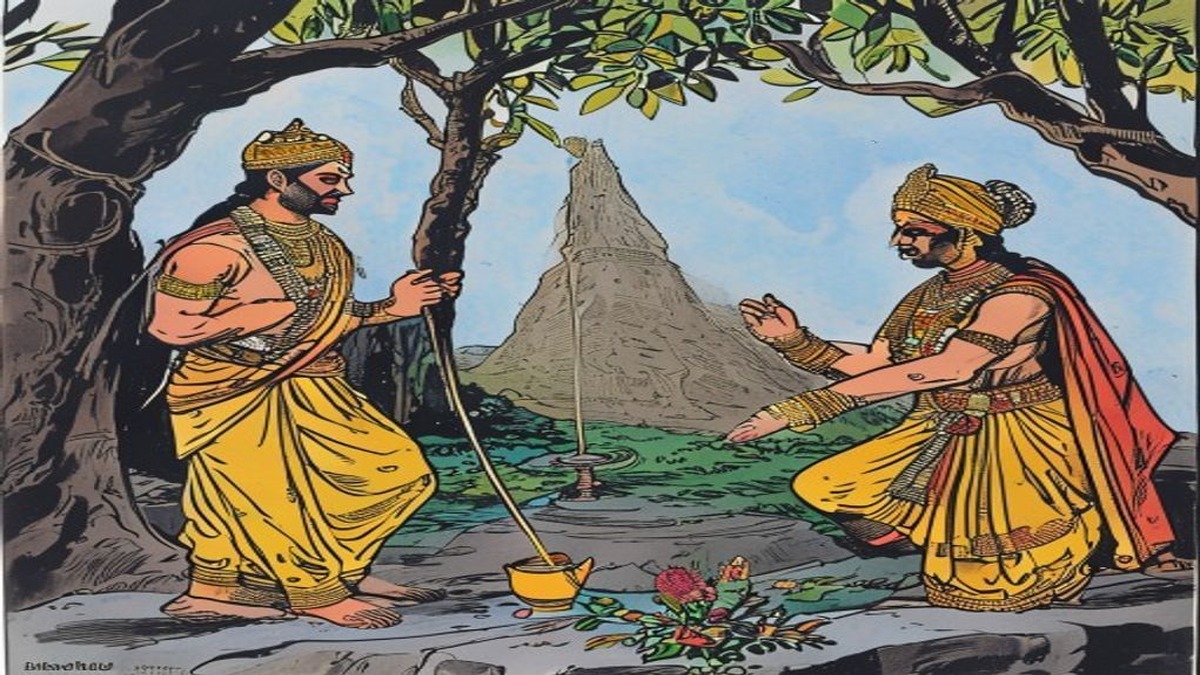
The dove set about fulfilling the obligations of hospitality. He provided warmth by gathering materials for a fire. He provided shelter. The obligation he could not immediately fulfil was food: the dove had nothing to feed the hunter, and the dharma of the host required that the guest be fed. The dove deliberated on this problem and arrived at the solution that the tale is constructed to demonstrate: he would provide himself as food. He circled the fire three times in ritual preparation and flew into it.
The Pancatantra’s account of the dove’s self-immolation is matter-of-fact rather than dramatic. The dove had assessed the situation, identified the obligation, identified that it could only be fulfilled in one way, and fulfilled it. The sequence is presented as the product of clear reasoning from dharmic premises rather than as an act of emotional self-sacrifice. The dove was not swept away by feeling; he was following a logical chain from obligation to its only possible fulfilment.
Beat III — The Hunter’s Transformation
The hunter was transformed by what he witnessed. He had spent his life taking life as a profession; he had caught the dove’s mate as an ordinary part of that profession; and he had accepted the dove’s hospitality without initially understanding what it would cost. The dove’s self-immolation confronted him with a moral reality he had not previously encountered in a form that made it unavoidable: a being that had every reason to hate him had chosen, on principle, to fulfil the highest obligation of conduct toward him, at the cost of its own life.
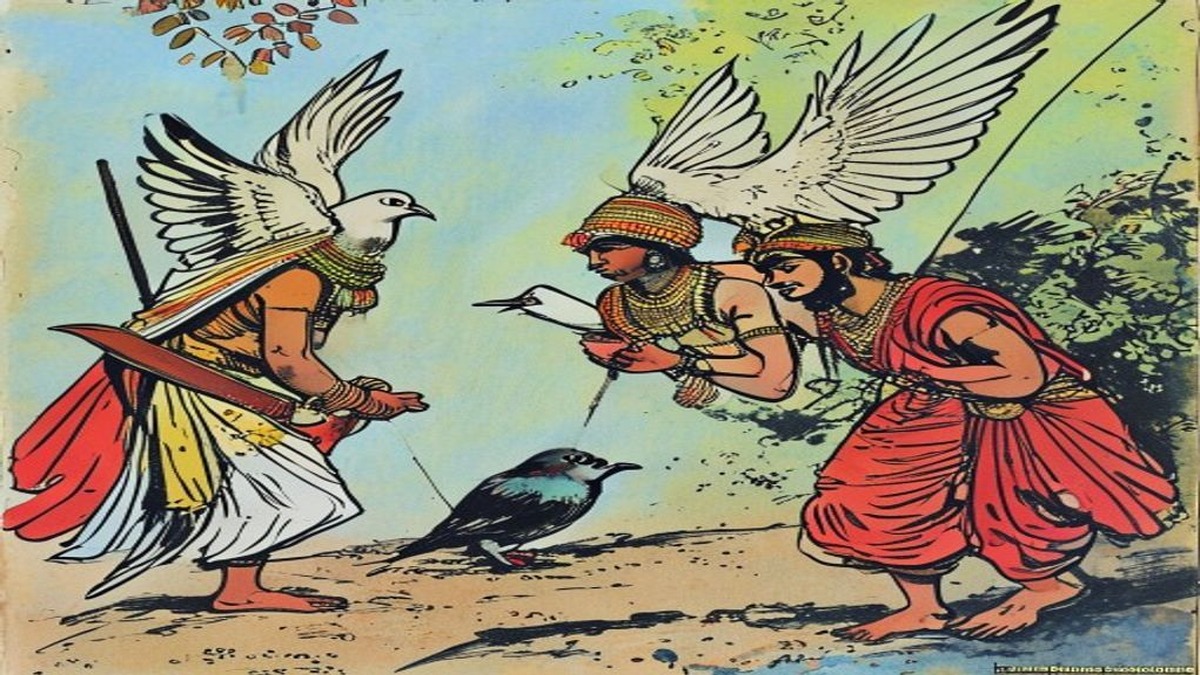
The female dove, seeing her mate dead, chose not to survive him. The hunter, confronted with both deaths, underwent a genuine conversion. He released the trapped female dove — the act was already meaningless in the way he had intended, since her mate was gone, but the release was the expression of his new understanding. He abandoned hunting. The merit generated by the dove’s extraordinary dharmic conduct had transformed the agent of the dove’s suffering into someone capable of a different kind of life.
Beat IV — What the Dove and the Hunter Teaches About Unconditional Dharma
Vishnu Sharma’s argument in this tale addresses the question that the dove’s conduct raises most sharply: can dharmic obligation be genuinely unconditional? The answer the Pancatantra gives through the dove’s action is yes, and the implications are serious. The guest-host relationship creates obligations that are independent of the guest’s character, independent of the guest’s prior conduct toward the host, and independent of the cost to the host of fulfilling them. The dove knows all three disqualifying facts about his guest: the hunter is not virtuous, he has caused the dove direct harm, and fulfilling the obligation will cost the dove his life. None of these facts discharge the obligation.
For Vishnu Sharma’s royal pupils the application is to the concept of rajadharma (the dharma of the king): the ruler’s obligations to those who present themselves as suppliants or who fall within the ruler’s protection are independent of the moral character of those persons and are not discharged by the difficulty or cost of fulfilling them. The Arthashastra is more pragmatic on this point, but the Pancatantra’s dove tale establishes the ideal standard against which pragmatic departures must be measured.
Moral and Sanskrit Wisdom Tradition
“Dharma observed without exception, even toward the enemy who has harmed you, produces merit that transforms not only the observer but the one observed.”
— Moral of The Story of the Dove and the Hunter, Pancatantra Book III (Kakolukiyam)
This moral engages the Sanskrit tradition’s most demanding formulation of atithi-dharma (the dharma of hospitality). The Mahabharata’s Shanti Parva contains extended treatment of the obligations of the host, but the dove tale represents the extreme case: atithi-dharma applied to an adversary at mortal cost to the host. The Rigvedic principle that the guest is divine (atithi devo bhava) is the origin of the obligation; the Pancatantra’s dove demonstrates what that principle looks like when taken to its absolute conclusion. The transformation of the hunter is the tale’s evidence for the claim that dharma observed under these conditions produces effects that ordinary moral instruction cannot.
Why This Story Has Lasted 2,300 Years
The Story of the Dove and the Hunter endures because it presents dharmic conduct at its most demanding and most consequential. The dove’s choice is not the easy choice, the safe choice, or the emotionally satisfying choice; it is the dharmic choice, made with clear reasoning from obligation to its only possible fulfilment. The tale endures because this standard — unconditional fulfilment of obligation regardless of the character of the one toward whom it is owed, regardless of the cost, regardless of what the one toward whom it is owed has done to you — is the standard that separates genuine moral seriousness from its comfortable approximations. The Pancatantra sets this standard not to condemn those who cannot meet it but to make visible what meeting it looks like, and what it produces in the world.
Sanskrit Tradition: Tantrakhyayika (c. 200 BCE, Kashmir)
Key Concept: Atithi-dharma (dharma of hospitality) at its absolute limit; unconditional obligation; moral transformation through witnessing extraordinary dharmic conduct
Author: Vishnu Sharma (attributed, c. 3rd century BCE)
Arthashastra Parallel: Rajadharma (king’s obligations to suppliants); the ideal standard against which pragmatic departures are measured
Frequently Asked Questions
What is the moral of the Story of the Dove and the Hunter in the Panchatantra?
The moral is that dharma observed without exception, even toward the enemy who has harmed you, produces merit that transforms not only the observer but the one observed. The dove fulfilled the obligations of hospitality toward the hunter who held his mate captive, ultimately giving his own life as food for his guest. The hunter, transformed by witnessing this extraordinary conduct, released the female dove and abandoned hunting. Unconditional dharmic conduct produces effects that ordinary moral instruction cannot achieve.
What happens in the Story of the Dove and the Hunter in the Panchatantra?
A hunter who has trapped a female dove shelters for the night under the tree where her mate lives. The male dove, recognising the hunter as a guest, fulfils all obligations of hospitality despite his grief and rage. When he cannot provide food, he offers himself — circling the fire three times in ritual preparation and flying into it. The female dove chooses not to survive her mate. The hunter, transformed by what he witnessed, releases the female dove and abandons hunting entirely.
What is atithi-dharma and how is it demonstrated in this Panchatantra story?
Atithi-dharma is the dharma of hospitality — the obligations a host owes to any guest who takes shelter with them, deriving from the Vedic principle that the guest is divine (atithi devo bhava). The dove's story demonstrates atithi-dharma at its absolute limit: the obligations hold regardless of the guest's moral character, regardless of the guest's prior harm to the host, and regardless of the cost of fulfilling them. The dove fulfils hospitality toward the agent of his own suffering at the cost of his own life.
Why does the dove help the hunter who has captured his mate?
The dove recognises the hunter as a guest who has taken shelter under his tree, and the obligations of atithi-dharma do not admit of exceptions based on the guest's character or conduct. The female dove, from inside the cage, supports this reasoning: the dharma of hospitality is not conditional, and the merit of fulfilling it under these conditions is correspondingly greater. The dove's decision is not emotional but logical: obligation + assessment that it can only be fulfilled one way + fulfilment.
How does this Panchatantra story relate to the concept of rajadharma in the Arthashastra?
Rajadharma (the dharma of the king) prescribes that the ruler's obligations to those who present themselves as suppliants or fall within the ruler's protection are independent of those persons' moral character. The Arthashastra takes a more pragmatic position, weighing costs and benefits, but the Pancatantra's dove tale establishes the ideal standard: unconditional obligation to those within one's protection, regardless of what fulfilling it costs. The tale functions as the high standard against which pragmatic departures from rajadharma must be measured and justified.
You May Also Like
 Panchatantra Stories
Ages 6-8
Panchatantra Stories
Ages 6-8
The Story of Nanda and Vararuchi
The Story of Nanda and Vararuchi: Once upon a time, there lived a king, by the nameof Nanda. He ruled the entire land surrounded by theseas and his power was
 Panchatantra Stories
Ages 6-8
Panchatantra Stories
Ages 6-8
The Brahmin, the Thief, and the Demon
The Brahmin, the Thief, and the Demon. A scholar meets a demon that was once cruel. This tale teaches us about forgiveness, understanding, and seeing good.
 Panchatantra Stories
Ages 6-8
Panchatantra Stories
Ages 6-8
The Story of the Enmity Between Crows and Owls
The Story of the Enmity Between Crows and Owls: Once upon a time, all the birds, the swans, the parrots, cranes, cuckoos, nightingales, owls, peacocks, doves