The Fall and Rise of a Merchant
The Fall and Rise of a Merchant: One should treat one and all, even the lowest, with respect.” In a city called Vardhamana, lived a very efficient and

The Fall and Rise of a Merchant
Canonical Attribution and Manuscript Tradition
This tale belongs to Pancatantra Book I, Mitra-bheda, and sits within the collection’s sustained meditation on the relationship between fortune (bhaga), effort (utsaha), and wisdom (prajna). The story survives in all major Sanskrit recensions including the Tantrakhyayika (c. 200 BCE, Kashmir) and is paralleled in the Hitopadesha. It belongs to a widely distributed tale type concerning the merchant who loses everything and recovers through a combination of patience, alliance, and correctly reading the moment of reversal. The tale’s structural relatives appear in Arabic story collections via the Pancatantra’s transmission through the Pahlavi version (c. 570 CE) and Kalila wa Dimna (c. 750 CE). Within the Pancatantra’s didactic programme the story demonstrates a principle Vishnu Sharma returns to repeatedly: that fortune moves in cycles, and the correct response to its downward phase is neither despair nor reckless action but patient preservation of capability until the moment of reversal arrives.
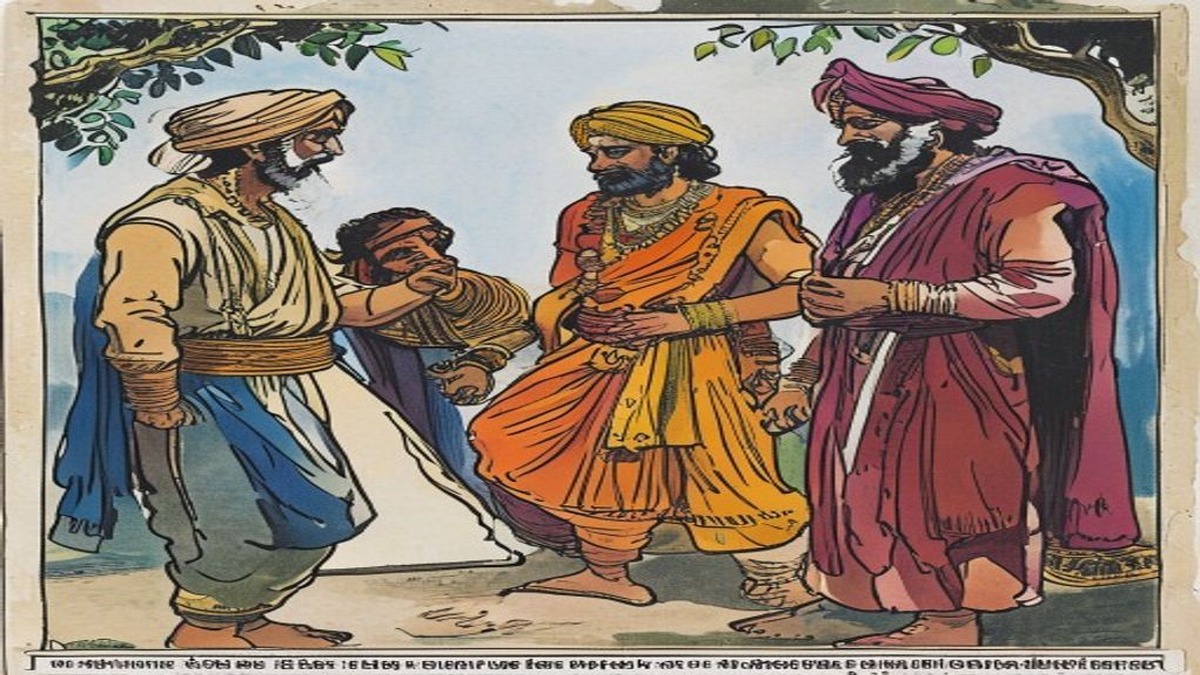
Beat I — The Fall
A merchant who had built considerable wealth through trade saw his fortune reverse. His ships were lost, his agents failed, his credit collapsed, and his goods were seized against debts. His former associates, who had eaten at his table and shared in his prosperity, quietly withdrew. His family was ashamed. He was left with nothing material and with a social position that had collapsed along with his financial one.
The Pancatantra is precise about what the merchant did not do. He did not fall into paralysis or self-reproach. He did not attempt to recover his position through borrowing beyond his means or through desperate ventures that risked compounding his losses. He accepted the phase of fortune that had arrived, understood it as a phase rather than a permanent state, and began to think carefully about what resources remained to him. The most important of these, the tale makes clear, was not money but capability: his knowledge of trade, his reputation for honesty among those who knew him well, and his patience.
Beat II — The Preservation of Capability
The merchant moved to a smaller city where he was not known by his former wealth. He took modest employment that kept him fed and allowed him to observe the trade conditions of the new place. He did not attempt to present himself as more than he was. He formed careful friendships with a few people of sound character — not the powerful, who would assess him by his current resources, but the steady, who would assess him by his conduct.
The Pancatantra’s account of this period is brief, but its implication is clear: the merchant was engaged in the patient work of capability-preservation. He was keeping his analytical abilities active by continuing to observe markets. He was maintaining his integrity by conducting himself honestly in his modest circumstances. He was building the small social capital of trustworthy relationships that would matter when the moment of reversal came. None of this was spectacular. It was the disciplined maintenance of the foundations that fortune’s downward phase had not taken from him, because they were never external in the first place.
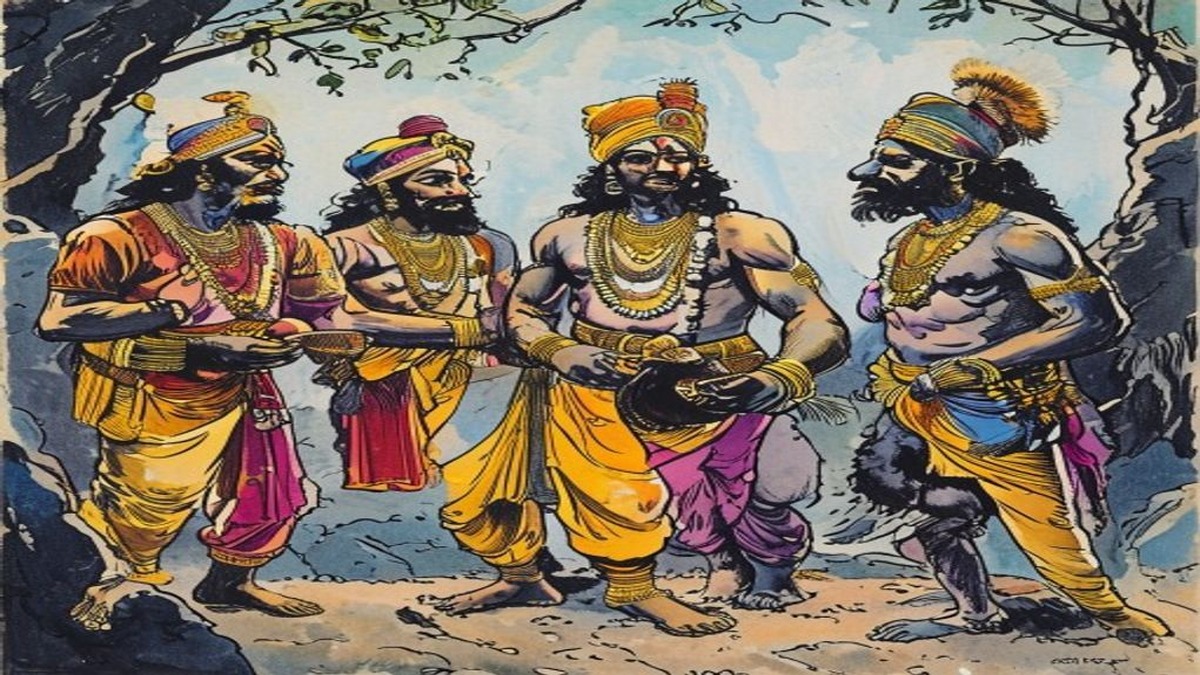
Beat III — Reading the Moment
After a period of patient waiting and careful observation, the merchant identified an opportunity that matched his preserved capabilities precisely: a trade route that others had overlooked, a commodity whose value was about to shift, a partner whose trustworthiness he had verified over time. He did not move on the first opportunity that presented itself; he moved on the right one, the one where his specific knowledge and specific relationships gave him an edge that random fortune could not account for.
The venture succeeded. Not through luck alone — the Pancatantra is careful on this point — but through the combination of the right opportunity at the right moment with the preserved capabilities that allowed him to execute it correctly. His former associates, hearing of his recovery, began to reappear. His family’s attitude reversed. The social position that had collapsed reassembled itself around the restored material foundation. The merchant received these returning associates without bitterness and without the illusion that their friendship was more reliable than it had proved to be.
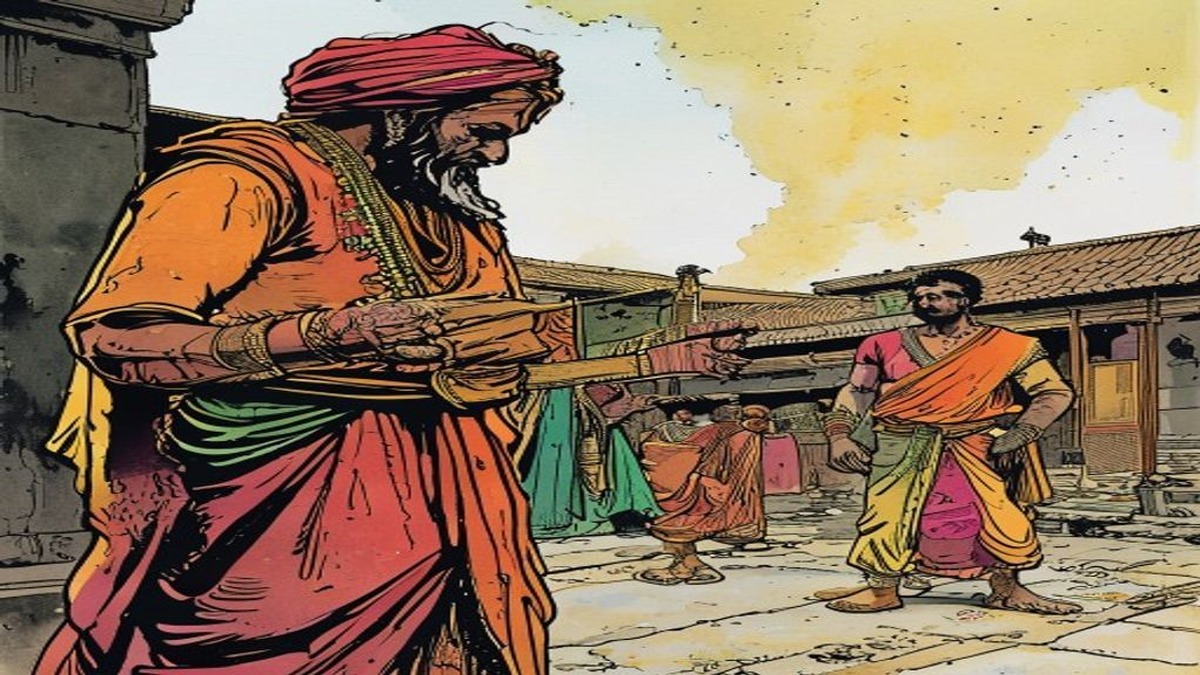
Beat IV — What the Merchant’s Journey Teaches About Fortune and Effort
Vishnu Sharma structures this tale as an explicit refutation of two opposite errors. The first error is the belief that fortune is permanent in either direction: that prosperity, once achieved, is secure, or that adversity, once arrived, is final. The merchant’s fall refutes the first; his recovery refutes the second. The second error is the belief that fortune alone determines outcomes: that patient effort during adversity is pointless because only fortune matters, or that desperate effort during adversity can substitute for waiting until conditions are right. The merchant’s behaviour during his downward phase refutes both.
The tale’s positive argument is about the relationship between utsaha (effort) and kala (the right time). Effort that is applied at the wrong time — the wrong venture, the wrong partner, the wrong market conditions — is consumed without return. Effort applied at the right time, to the right opportunity, with capabilities that have been carefully preserved through the downward phase, is the combination that produces recovery. The merchant’s wisdom is not in finding the opportunity; it is in being ready when the opportunity arrived. Vishnu Sharma presents this as the lesson his royal pupils most needed: that capability-preservation during adversity is not passive but is the most demanding and most consequential form of active effort.
Moral and Sanskrit Wisdom Tradition
“Fortune’s wheel turns; the wise preserve their capability through the downward phase and act decisively when it turns again.”
— Moral of The Fall and Rise of a Merchant, Pancatantra Book I (Mitra-bheda)
This moral encapsulates the Pancatantra’s most characteristic contribution to the Sanskrit wisdom tradition on fortune: the insistence that kala (the right time) is not something one creates but something one recognises and is ready for. The Arthashastra of Kautilya makes the same argument under its doctrine of shakti (capacity): a ruler who dissipates resources in the wrong season leaves nothing for the right one. Vishnu Sharma translates this from the political to the mercantile register: a merchant who panics at adversity and attempts to recover through reckless action destroys the preserved capabilities that would have allowed recovery at the right moment. The correct response to fortune’s downward phase is neither inaction nor desperate action but disciplined maintenance of capability combined with patient observation of conditions.
Why This Story Has Lasted 2,300 Years
The Fall and Rise of a Merchant endures because the experience it describes — the loss of accumulated position and the question of how to respond — is genuinely universal. Every generation produces individuals who must navigate adversity’s downward phase. The Pancatantra’s answer is characteristically unsentimental: do not dramatise the fall; do not attempt reckless recovery; preserve what cannot be taken from you; wait for the right moment; move decisively when it arrives. The tale’s transmission through Kalila wa Dimna and into the merchant story traditions of the medieval Islamic world suggests how widely its core insight resonated across cultures with active trading communities. The merchant is Vishnu Sharma’s figure for the royal pupil operating without allies or institutional support — and the lesson is the same: patient capability-preservation is the foundation on which all recovery is built.
Sanskrit Tradition: Tantrakhyayika (c. 200 BCE, Kashmir); Hitopadesha; Kalila wa Dimna (Arabic, c. 750 CE)
Key Concept: Utsaha (effort) applied at kala (the right time) with preserved capability
Author: Vishnu Sharma (attributed, c. 3rd century BCE)
Core Principle: Fortune moves in cycles; capability-preservation during adversity is active, not passive; the right moment must be recognised, not forced
You May Also Like
 Panchatantra Stories
Ages 6-8
Panchatantra Stories
Ages 6-8
Shandili and the Sesame Seeds
A Panchatantra tale about a poor Brahmin's wife Shandili, a suspicious trader, and why something too good to be true usually isn't. A classic lesson in caution.
 Panchatantra Stories
Ages 9-12
Panchatantra Stories
Ages 9-12
The Story of the Four Learned Fools
The Story of the Four Learned Fools: In a certain town, there lived four Brahmins whohad become great friends. They were all extremely naiveby nature. The
 Panchatantra Stories
Ages 6-8
Panchatantra Stories
Ages 6-8
The Story of the Brahmin and the Cobra
The Story of the Brahmin and the Cobra: In a certain town, there lived a Brahmin, by the nameof Haridatta. In spite of the fact that he workedextremely hard on