The Story of the Brahmin and the Cobra
The Story of the Brahmin and the Cobra: In a certain town, there lived a Brahmin, by the nameof Haridatta. In spite of the fact that he workedextremely hard on
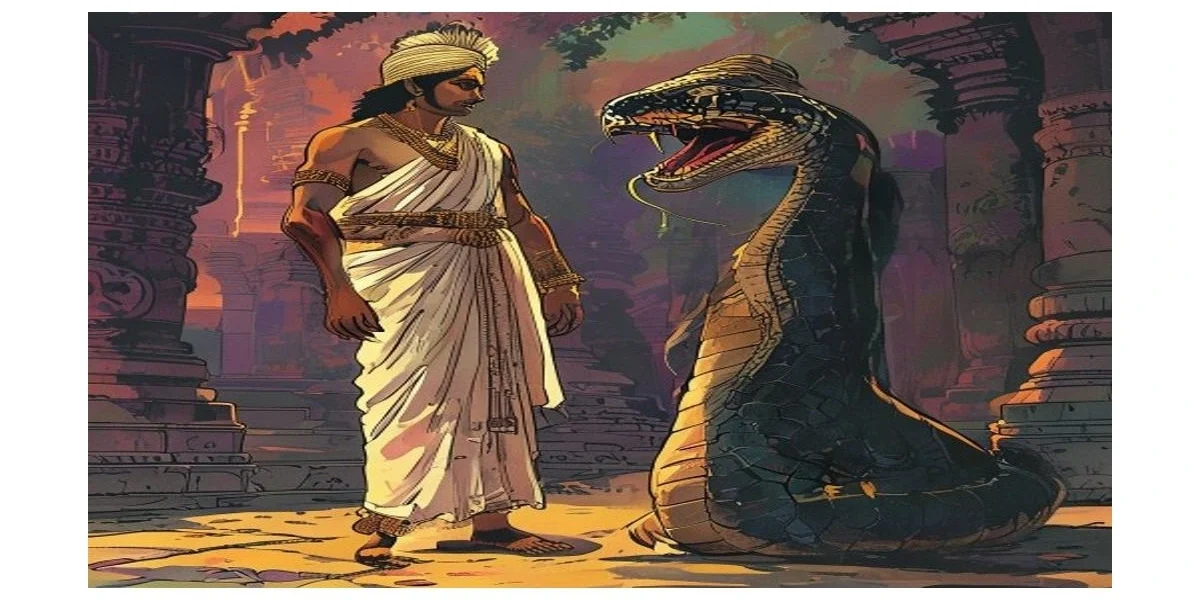
The Story of the Brahmin and the Cobra
Canonical Attribution and Manuscript Tradition
This tale is among the Pancatantra’s most powerful demonstrations of what the text calls the doctrine of the irreconcilable enemy: the being whose nature is fundamentally incompatible with the interests of the one who deals with it, and with whom no durable peace is possible. A brahmin who has been harming a cobra in his field attempts, under the instruction of a wise counsellor, to make peace with it — bringing milk, offerings, and apologies. The cobra accepts the offerings and apparently reconciles. But when the brahmin’s son is sent to continue the offerings and strikes the cobra’s anthill with a stick, the cobra kills him. The brahmin, who has been taught by the loss that his counsellor was wrong, realises the cobra will never forgive. The tale is preserved in the major Sanskrit recensions of the Pancatantra including the Tantrakhyayika (c. 200 BCE, Kashmir) and engages the Pancatantra’s central argument, developed across Book III, that some enmities cannot be resolved through conciliation and that the attempt to resolve them through inappropriate means will cost more than honest acknowledgment of their irreconcilable nature.
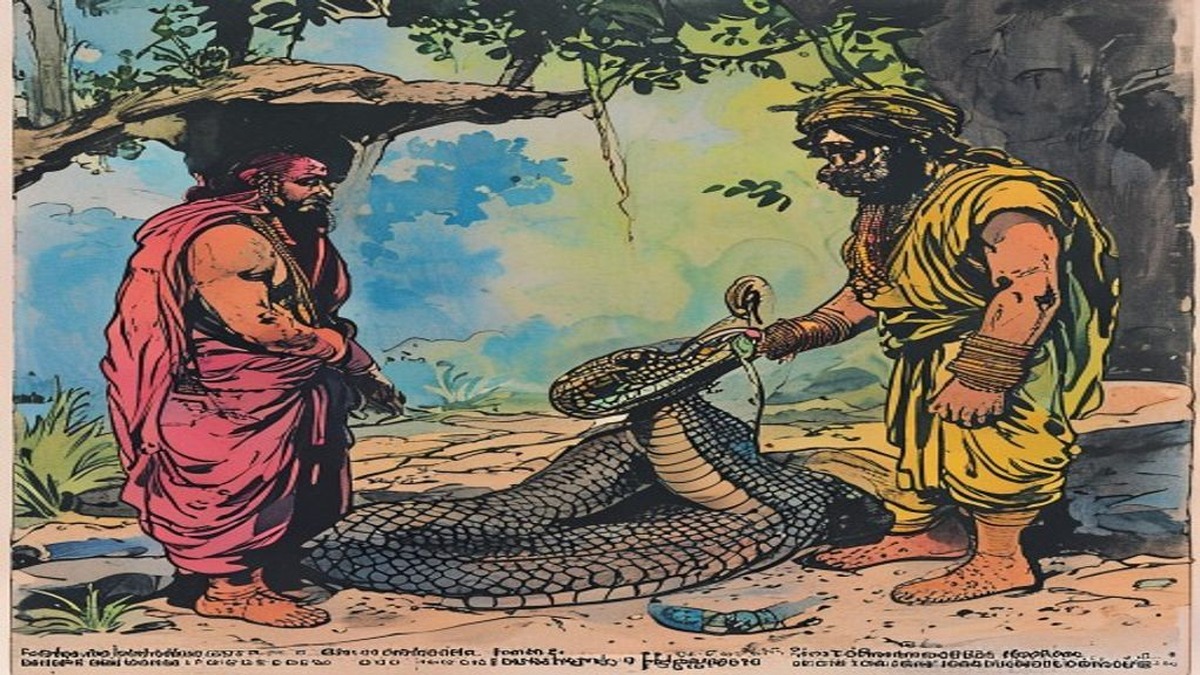
Beat I — The Enmity and the Counsel to Conciliate
A brahmin had, through the ordinary activities of his agricultural life, been disturbing a cobra that lived in his field — disrupting the anthill, damaging the cobra’s territory, creating grievances that the cobra bore with the patience of a creature whose time horizon is longer than a human’s. A counsellor, observing the situation, advised the brahmin to make peace: to bring offerings, to apologise, to attempt conciliation with the cobra. The brahmin followed this advice. He brought milk and expressed regret. The cobra, in the account’s terms, appeared to accept the reconciliation.
The Pancatantra’s framing of the counsellor’s advice is careful. The advice was not obviously wrong by the standards of ordinary conflict: conciliation is a standard tool in the political repertoire, and the Arthashastra prescribes it as appropriate in many situations. The tale’s argument is not against conciliation as such but against the failure to distinguish between enemies with whom conciliation is possible and enemies with whom it is not. The cobra is in the second category. The counsellor’s error was a category error, not a simple mistake.
Beat II — The Apparent Reconciliation
The cobra, having received the offerings, gave the brahmin a jewel — a sign, in the tale’s symbolism, that the reconciliation had been accepted and that the peace would hold. The brahmin returned home believing the enmity resolved. He sent his son to continue the daily offerings at the anthill. The daily bringing of milk and the maintenance of the gift relationship were to be the ongoing expression of the peace that had been established.
The Pancatantra notes the apparent reconciliation without endorsing it. The text’s analysis, developed elsewhere in Book III, is that the cobra’s acceptance of offerings is not evidence of genuine reconciliation but evidence that the cobra is prepared to receive gifts while the enmity remains. The structural incompatibility between the brahmin’s agricultural life and the cobra’s territorial requirements has not been resolved by the exchange of gifts; it has been suspended, temporarily, in a way that serves the cobra’s short-term interest while leaving the underlying enmity intact. The reconciliation was performed, not achieved.
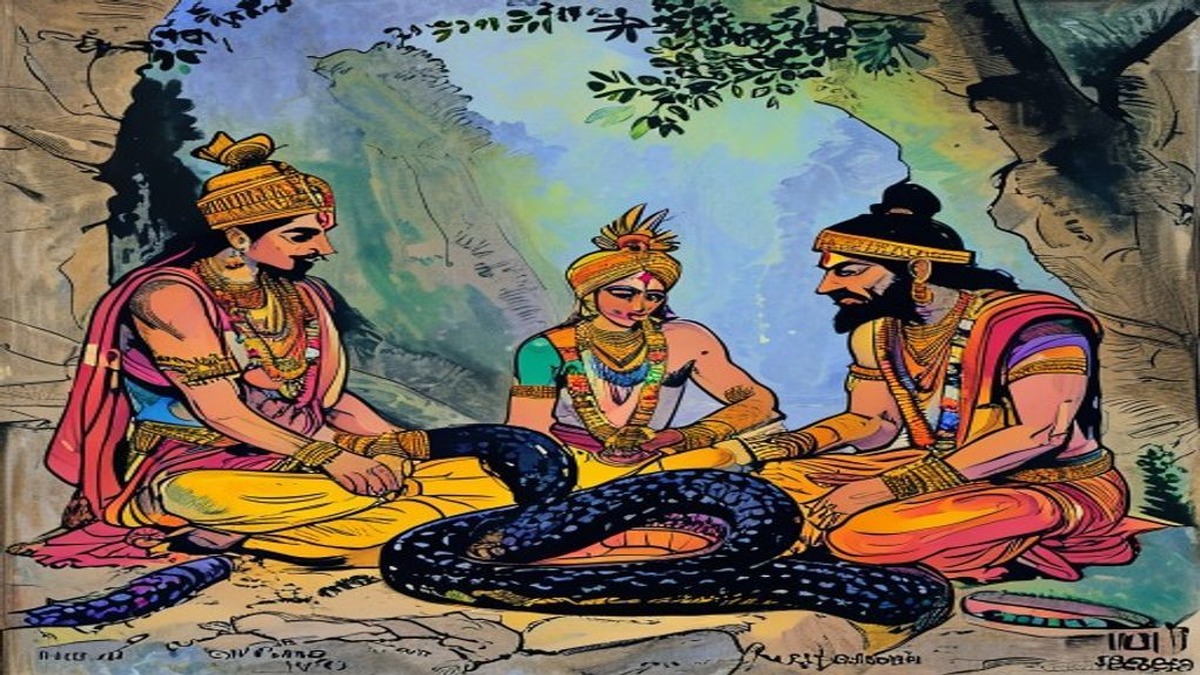
Beat III — The Strike and the Death
The brahmin’s son, bringing the daily offerings, struck the cobra’s anthill with a stick — carelessly, without malice, simply as the kind of thoughtless gesture that young people make in familiar surroundings. The cobra struck and killed him. The apparent peace had not changed what the cobra was or what the relationship between the two parties was; it had only suspended the expression of that relationship for as long as the suspension served the cobra’s interests.
The death of the brahmin’s son is the Pancatantra’s most direct demonstration of the cost of misplaced conciliation. The brahmin had been taught by his counsellor that conciliation was possible; he had acted on that teaching; and the action had not resolved the enmity but had created conditions in which his son approached the cobra’s territory with the relaxed confidence of someone who believed the peace to be genuine. The false peace was more dangerous than the acknowledged enmity it replaced.
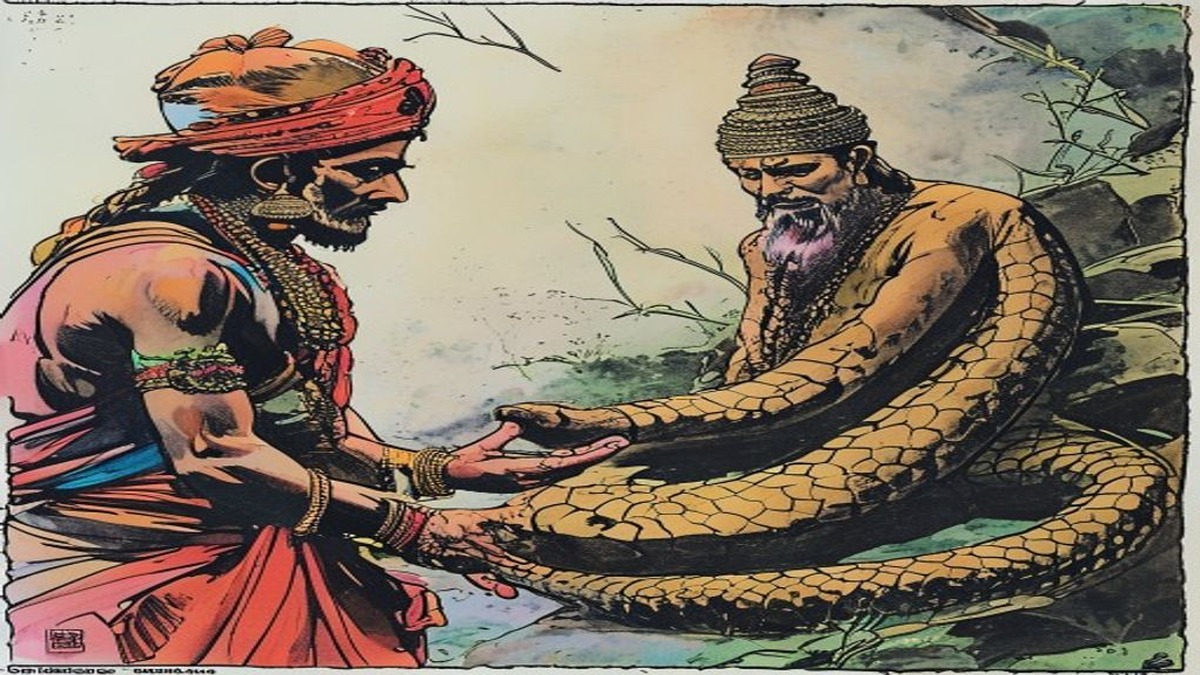
Beat IV — What the Brahmin and the Cobra Teaches About Irreconcilable Enmity
Vishnu Sharma’s argument in this tale is the Pancatantra’s most direct statement of the doctrine of irreconcilable enmity. Not all enemies can be managed through conciliation. The enemy whose nature is fundamentally incompatible with the interests of the party dealing with them — the cobra in agricultural territory, the permanent structural adversary in political life — will not be genuinely reconciled by conciliation, gifts, or expressed regret. The conciliation will be performed; the gifts will be accepted; and the enmity will remain, to be expressed when the opportunity or provocation arises. The false peace is more dangerous than the acknowledged enmity because it produces the relaxed confidence that becomes the occasion for the catastrophe.
For Vishnu Sharma’s royal pupils the application is one of the most important in the Pancatantra: the permanent enemy (nitya-shatru) cannot be converted into a genuine friend through gifts or diplomacy. The Arthashastra is explicit on this: the permanent enemy who accepts gifts is receiving them as tribute, not as the price of peace. The correct policy toward the permanent enemy is not conciliation but containment, exploitation of the enemy’s weaknesses, or elimination when the opportunity presents itself. The brahmin’s error was applying the wrong policy category to the wrong class of enemy.
Moral and Sanskrit Wisdom Tradition
“The false peace with an irreconcilable enemy is more dangerous than the acknowledged enmity it replaces; it conceals the threat while creating the confidence that makes the threat lethal.”
— Moral of The Story of the Brahmin and the Cobra, Pancatantra Book III (Kakolukiyam)
This moral engages the Sanskrit political tradition’s most sophisticated distinction between types of adversary. The Arthashastra identifies the permanent enemy (nitya-shatru) as categorically different from the contingent adversary (shatru) who can be reconciled when interests align. The Mahabharata’s treatment of the Pandava-Kaurava relationship develops the same distinction at length: the Kauravas are irreconcilable adversaries because the structural incompatibility of their claims makes genuine peace impossible. Vishnu Sharma’s cobra tale provides the concentrated narrative demonstration: the animal whose nature makes cohabitation impossible is the Pancatantra’s image of the political adversary with whom genuine reconciliation cannot be achieved.
Why This Story Has Lasted 2,300 Years
The Story of the Brahmin and the Cobra endures because the error it demonstrates — applying conciliation to an irreconcilable adversary and being destroyed by the false confidence the conciliation produces — is one of the most consequential in political life. The counsellor who advises conciliation without first asking whether the adversary is of the kind with whom genuine conciliation is possible is providing advice that can cost more than no advice at all. The Pancatantra’s contribution is the insistence on prior categorisation: before deciding how to deal with an adversary, the wise ruler asks what category of adversary this is — because the correct policy depends entirely on the answer to that question.
Sanskrit Tradition: Tantrakhyayika (c. 200 BCE, Kashmir)
Key Concept: Irreconcilable enmity (nitya-shatru); category error in policy selection; false peace as more dangerous than acknowledged enmity; conciliation applied to the wrong adversary type
Author: Vishnu Sharma (attributed, c. 3rd century BCE)
Arthashastra Parallel: Permanent enemy vs. contingent adversary; gifts accepted as tribute rather than price of peace; containment and elimination as correct policies for nitya-shatru
Frequently Asked Questions
What is the moral of the Story of the Brahmin and the Cobra in the Panchatantra?
The moral is that the false peace with an irreconcilable enemy is more dangerous than the acknowledged enmity it replaces; it conceals the threat while creating the confidence that makes the threat lethal. The brahmin's conciliation of the cobra produced apparent peace but left the structural incompatibility intact. When the brahmin's son approached the cobra's territory with the relaxed confidence of someone who believed the peace genuine, the cobra struck. The false peace cost more than the acknowledged enmity.
What happens in the Story of the Brahmin and the Cobra in the Panchatantra?
A brahmin has been disturbing a cobra living in his field. A counsellor advises him to make peace with offerings of milk. The cobra apparently accepts the reconciliation and gives the brahmin a jewel. The brahmin sends his son daily with offerings. The son carelessly strikes the anthill with a stick, and the cobra kills him. The brahmin realises the enmity was never genuinely resolved — only suspended until the cobra had an opportunity to express it.
What is the Panchatantra's doctrine of irreconcilable enmity?
The Pancatantra argues that not all adversaries can be managed through conciliation. The permanent enemy (nitya-shatru) — one whose nature is fundamentally incompatible with the interests of the party dealing with them — will not be genuinely reconciled by gifts, apologies, or expressed regret. They will accept the gifts as tribute while the enmity remains, to be expressed when provocation or opportunity arises. The correct policy toward such an adversary is not conciliation but containment, exploitation of weaknesses, or elimination.
What error does the counsellor make in this Panchatantra story?
The counsellor applies a valid policy — conciliation — to the wrong category of adversary. Conciliation is appropriate for contingent adversaries whose opposition stems from specific grievances that can be addressed. It is inappropriate for permanent enemies whose opposition is structural, arising from fundamental incompatibility of nature or interests. The counsellor's error was a category error: failing to ask what kind of adversary the cobra was before recommending the policy appropriate to a different kind of adversary.
How does this story relate to the Arthashastra's treatment of permanent enemies?
The Arthashastra explicitly distinguishes the permanent enemy (nitya-shatru) from the contingent adversary and prescribes different policies for each. For the permanent enemy, gifts accepted are tribute rather than the price of peace; genuine reconciliation is not achievable. The correct policies are containment, exploitation of the enemy's structural weaknesses, or elimination when the opportunity presents. The Pancatantra's brahmin-cobra tale demonstrates through narrative what the Arthashastra prescribes through theory: applying conciliation to the permanent enemy produces the worst possible outcome.
You May Also Like
 Panchatantra Stories
Ages 6-8
Panchatantra Stories
Ages 6-8
The Lioness and the Young Jackal
A warm Indian folk tale about a lioness who raises an orphan jackal alongside her own cubs — and the gentle lesson about who we really are.
 Panchatantra Stories
Ages 9-12
Panchatantra Stories
Ages 9-12
The Story of the Heron And’ the Crab
An ancient Panchatantra tale teaching timeless wisdom about virtue and character.
 Panchatantra Stories
Ages 6-8
Panchatantra Stories
Ages 6-8
The Elephants and the King of Mice
A thirsty elephant herd hurts a mouse kingdom, and later a tiny army of mice repays their kindness.