Tale of The Golden Droppings
Tale of The Golden Droppings: On a big tree in the lap of a mountain lived a bird named Sindhuka. His droppings used to turn into gold as soon as they hit the

Tale of the Golden Droppings
Canonical Attribution and Manuscript Tradition
The golden droppings tale appears in variant forms across the Pancatantra’s Sanskrit recensions, the Hitopadesha, and related collections — a sign of its exceptional resonance in the tradition. Where the hunter’s version focuses on the individual’s greed and its immediate consequences, this version situates the marvel at the royal court and examines the institutional logic of royal greed: how the court’s appetite for extraordinary resources systematically destroys the conditions that make those resources possible. A bird with extraordinary properties is brought before a king; the king, instead of maintaining the beneficial relationship on the bird’s terms, attempts to control and multiply the resource through captivity and examination; the extraordinary property ceases; the bird, if it survives, is released or escapes to its natural context. The tale is the Pancatantra’s concentrated argument against the extractive logic that treats all sources of value as available for unlimited exploitation.
Beat I — The Marvel and the Court’s Response
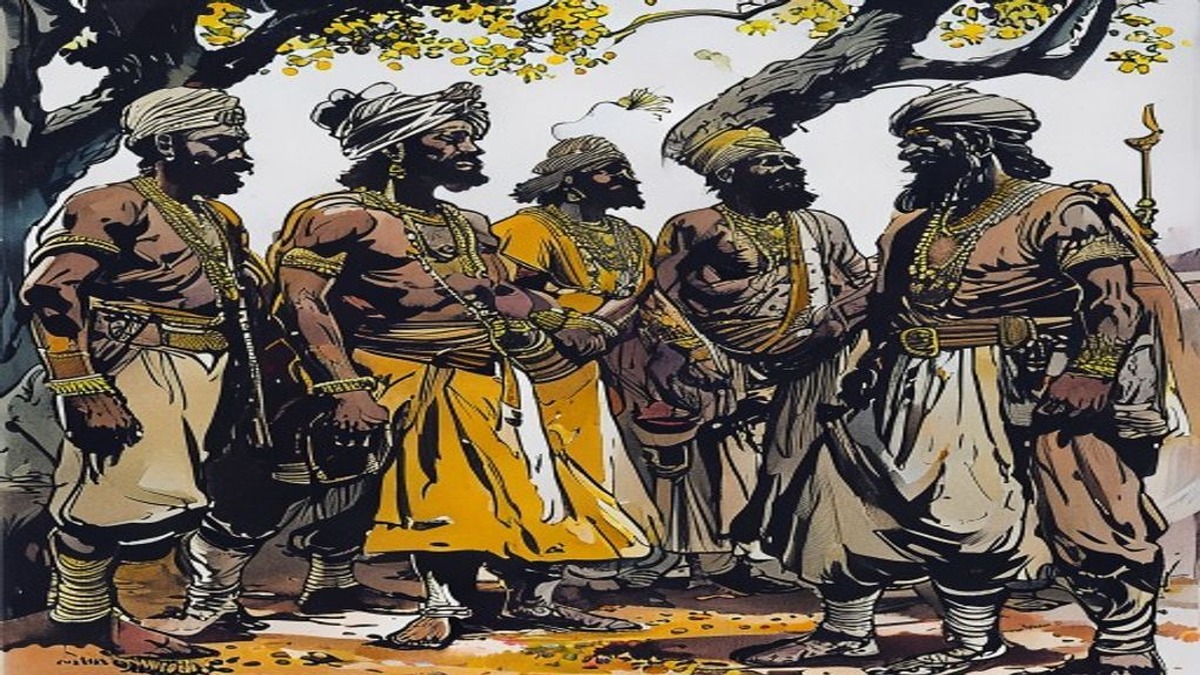
Word of the bird with golden droppings reached the king. The report was extraordinary: a bird whose ordinary biological process produced, upon contact with the ground, actual gold. The court’s response was the institutional response to reported extraordinary resources: it must be acquired, examined, and if possible multiplied. The king ordered the bird brought to court. The bird arrived — remarkable, alive, demonstrably the source of what had been reported. The king was satisfied: he had the marvel.
The Pancatantra’s account of the court’s response is precise about the institutional logic involved. The court did not ask what conditions had produced the bird’s extraordinary property, or whether those conditions were compatible with captivity. It asked only how to acquire the bird. This is the extractive logic: the value of the resource is assumed to be intrinsic to the resource itself, independent of the conditions under which it has been producing value. The question of conditions is not asked because the extractive logic does not have a category for it.
Beat II — The Captivity and the Examination
The bird was housed in the finest available accommodation at court — fed, sheltered, tended. The king and his advisers examined it, discussed it, theorised about its properties. Experts were consulted: was the golden dropping a property of the bird’s diet? Could it be replicated by feeding other birds the same food? Was it a property of the bird’s particular species, or of this individual? Could the bird be bred, producing a flock of golden-dropping birds?
None of these questions produced useful answers because none of them was the right question. The right question — what conditions, specific to the bird’s freedom and natural context, had produced the property? — was not asked. The examinations proceeded under the implicit assumption that the property was intrinsic and stable, that it would persist across changes of environment, and that understanding it would allow its multiplication. These assumptions were wrong, and the examination proceeded until the evidence of their wrongness arrived.
Beat III — The Cessation and the Reckoning
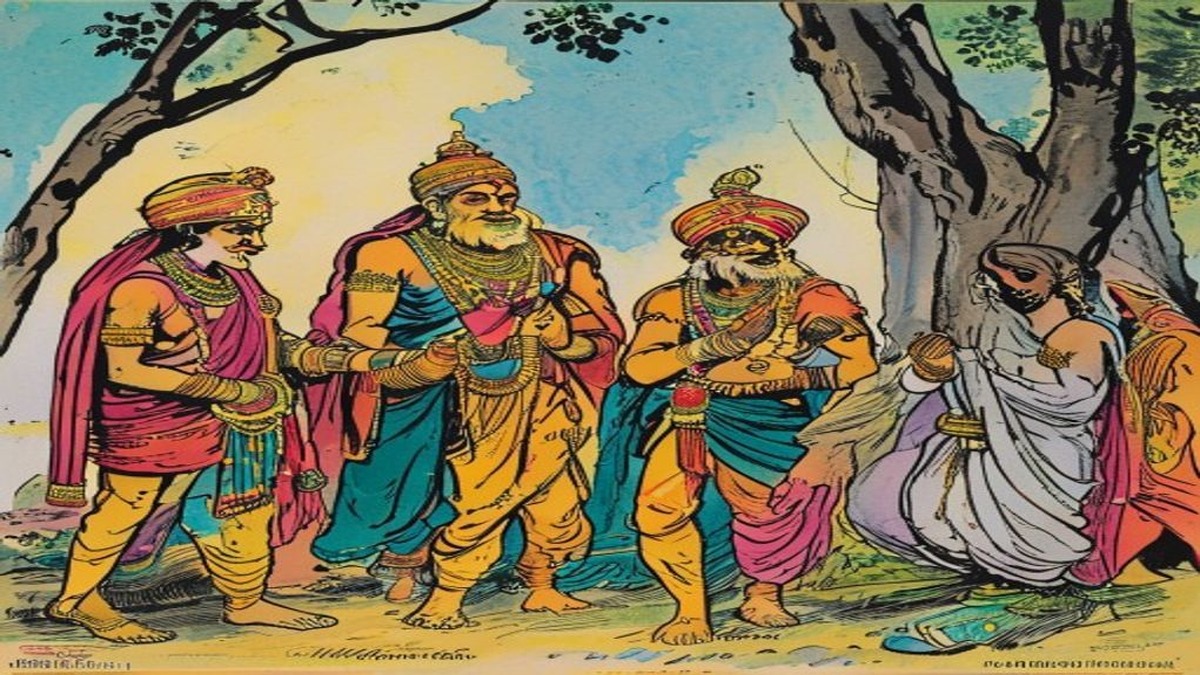
The golden droppings ceased. The bird, in captivity, in altered conditions, under examination, no longer produced what it had produced in its natural context. The court had acquired the bird and lost the property that made it worth acquiring. The experts’ analyses could not explain the cessation on their own terms — because their terms excluded the conditions question that would have provided the explanation.
The king was left with an ordinary bird and the knowledge that the extraordinary resource he had ordered acquired had been destroyed by the act of acquiring it. The advisers who had counselled acquisition could not satisfactorily explain what had gone wrong. The Pancatantra draws attention to the specific irony: the court’s institutional excellence — its ability to acquire, house, feed, and examine — was precisely what had destroyed the marvel. The bird was better cared for in captivity than it had been in the wild; the care was irrelevant to the property’s conditions; the property had required freedom, not care.
Beat IV — What the Tale of the Golden Droppings Teaches About Extractive Logic
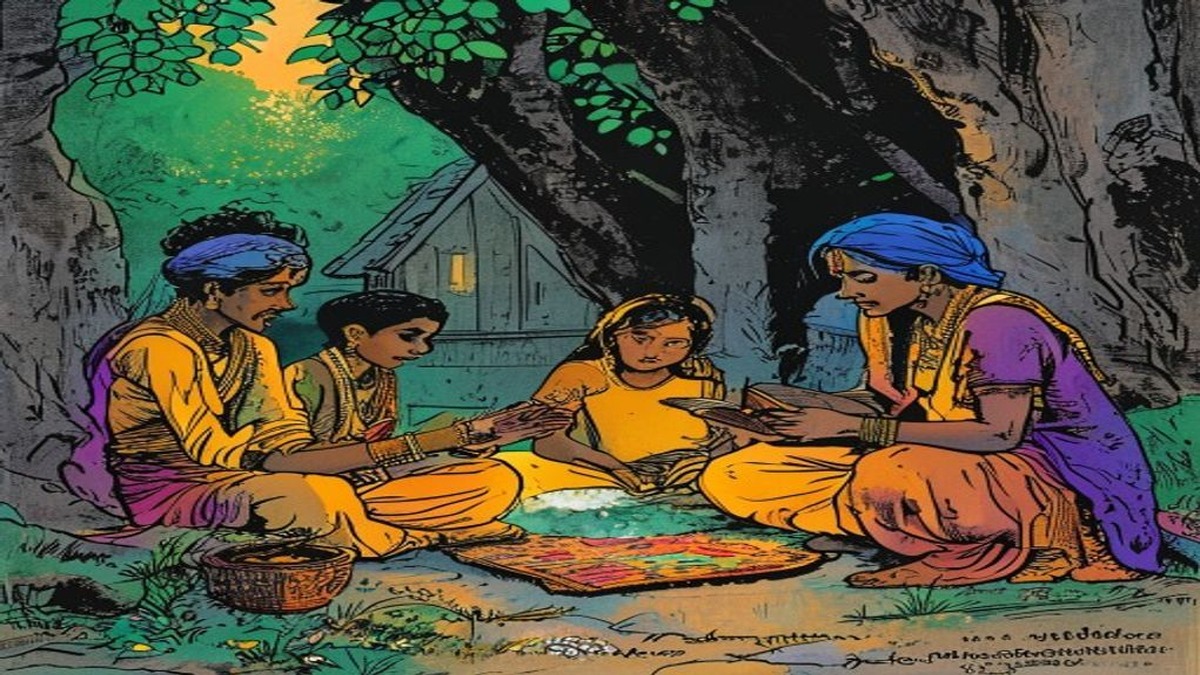
Vishnu Sharma’s argument in this version of the golden droppings tale addresses the institutional level of what the hunter’s version addresses at the individual level: extractive logic — the assumption that the value of a resource is intrinsic to the resource and independent of its conditions of production — is systematically wrong, and applying it destroys what it seeks to exploit. The court’s error was not a personal failure of greed in any individual courtier; it was the application of a standard institutional logic to a source of value whose conditions of production were incompatible with that logic.
For Vishnu Sharma’s royal pupils this is the most important version of the tale. The king who destroys the conditions of extraordinary value through the application of standard extractive logic is not behaving badly by his court’s standards; he is behaving correctly by those standards, and the standards are wrong. The Arthashastra’s treatment of artha includes extensive prescriptions for protecting productive conditions — forests, water sources, skilled artisans, trade routes — on exactly the premise that the value of these resources depends on conditions that can be destroyed by careless exploitation. The golden droppings bird is the extreme case: a resource that requires not protection but complete non-interference, and whose value is destroyed by the very act of claiming it.
Moral and Sanskrit Wisdom Tradition
“The marvel that exists only in freedom cannot be captured; the attempt destroys both the marvel and the understanding of what it was.”
— Moral of Tale of the Golden Droppings, Pancatantra Book III (Kakolukiyam)
This moral extends the Sanskrit tradition’s critique of lobha (greed) from the individual to the institutional level. The Arthashastra’s extensive attention to the protection of productive conditions reflects the same insight at the level of political economy: the king who extracts without maintaining destroys the productive capacity of his own kingdom. The forest cleared for immediate timber destroys the watershed; the artisan community displaced by court demands loses the conditions of its craft. The golden droppings bird is the Pancatantra’s concentrated image for all sources of value that require conditions incompatible with the extractive logic that royal courts systematically apply to resources they identify as valuable.
Why This Story Has Lasted 2,300 Years
The Tale of the Golden Droppings endures in its multiple forms because the extractive logic it critiques is permanent and universal. The institutional version — the court that destroys a marvel by applying its standard resource-acquisition procedures — is as relevant as the individual version. Every age produces institutions that apply standard extractive logic to sources of value whose conditions of production are incompatible with extraction: the research group disbanded when its productive dynamic was disrupted by institutional management; the ecosystem depleted by the extraction of the single resource it was producing; the creative partnership dissolved when its conditions of freedom were replaced by contractual constraint. The Pancatantra’s bird is the canonical image of all such sources, and its golden droppings are the canonical image of the value that only freedom produces.
Sanskrit Tradition: Tantrakhyayika (c. 200 BCE, Kashmir); Hitopadesha; multiple recensions
Key Concept: Extractive logic at institutional level; value requiring conditions incompatible with capture; lobha (greed) as systematic institutional error rather than individual failing
Author: Vishnu Sharma (attributed, c. 3rd century BCE)
Arthashastra Parallel: Protection of productive conditions; forests, water sources, artisan communities as resources whose value depends on conditions that extraction destroys
Frequently Asked Questions
What is the moral of the Tale of the Golden Droppings in the Panchatantra?
The moral is that the marvel which exists only in freedom cannot be captured; the attempt destroys both the marvel and the understanding of what it was. A bird with golden droppings was brought to a royal court, housed, examined, and theorised over. Its extraordinary property ceased in captivity. The court's institutional excellence — acquiring, housing, feeding, analysing — was precisely what destroyed the marvel, because the property required freedom and not care.
What happens in the Tale of the Golden Droppings in the Panchatantra?
A bird whose droppings produce gold is reported to a king. The court acquires it, houses it in excellent conditions, and brings experts to examine and understand its extraordinary property with the aim of multiplying it. None of the examinations produce answers because they apply standard extractive logic to a source of value that required conditions incompatible with captivity. The golden droppings cease. The court is left with an ordinary bird and has destroyed through acquisition the extraordinary resource it acquired.
What is extractive logic and why does it fail in this Panchatantra story?
Extractive logic is the assumption that the value of a resource is intrinsic to the resource and independent of its conditions of production. The court assumed the bird's golden property was a stable intrinsic feature that would persist across changes of environment. The right question — what conditions specific to the bird's freedom produced the property? — was never asked because extractive logic has no category for it. The court's error was not individual greed but the systematic application of a standard institutional logic to a source of value whose conditions were incompatible with that logic.
How does this version of the golden droppings story differ from the hunter's version?
The hunter's version focuses on individual greed and immediate consequences: the hunter ignores the bird's warning and loses the ongoing benefit. This institutional version examines the same error at the royal court level: how a standard institutional logic for resource acquisition systematically destroys the conditions of extraordinary value without any individual's failure of judgment. The court behaves correctly by its own standards; the standards are wrong. This makes the institutional version the more important lesson for Vishnu Sharma's royal pupils.
How does the Tale of the Golden Droppings relate to the Arthashastra's treatment of productive resources?
The Arthashastra devotes extensive attention to protecting productive conditions — forests, water sources, skilled artisan communities, trade routes — on the premise that these resources' value depends on conditions that careless exploitation can destroy. The golden droppings bird is the extreme case: a resource that requires not protection but complete non-interference, and whose value is destroyed by the act of claiming it. The Arthashastra's prescriptions for sustainable resource management rest on the same insight the tale demonstrates: extractive logic that ignores conditions of production destroys the productive capacity of the kingdom.
You May Also Like
 Panchatantra Stories
Ages 9-12
Panchatantra Stories
Ages 9-12
The Wedding of The Mouse
The Wedding of The Mouse: There was a hermitage belonging to the sage Salankayana. He went one morning to river Ganga to bathe. As he was reciting stanzas in
 Panchatantra Stories
Ages 3-5
Panchatantra Stories
Ages 3-5
The Lion Makers
The Lion Makers: Once upon a time, long ago, there were four friends who lived in a small village. All of them lived nearby and knew each other since the time
 Panchatantra Stories
Ages 3-5
Panchatantra Stories
Ages 3-5
Tale of The Three Fish
Three fish brothers face a fisherman’s net: the wisest escapes by foresight, but the dullest perishes by delay.