Popular Authors Who Have Given a New Twist To Indian Mythology
Popular Authors Who Have Given a New Twist To Indian Mythology: In the last decade Indian mythology has crossed the boundary from being limited to Modern
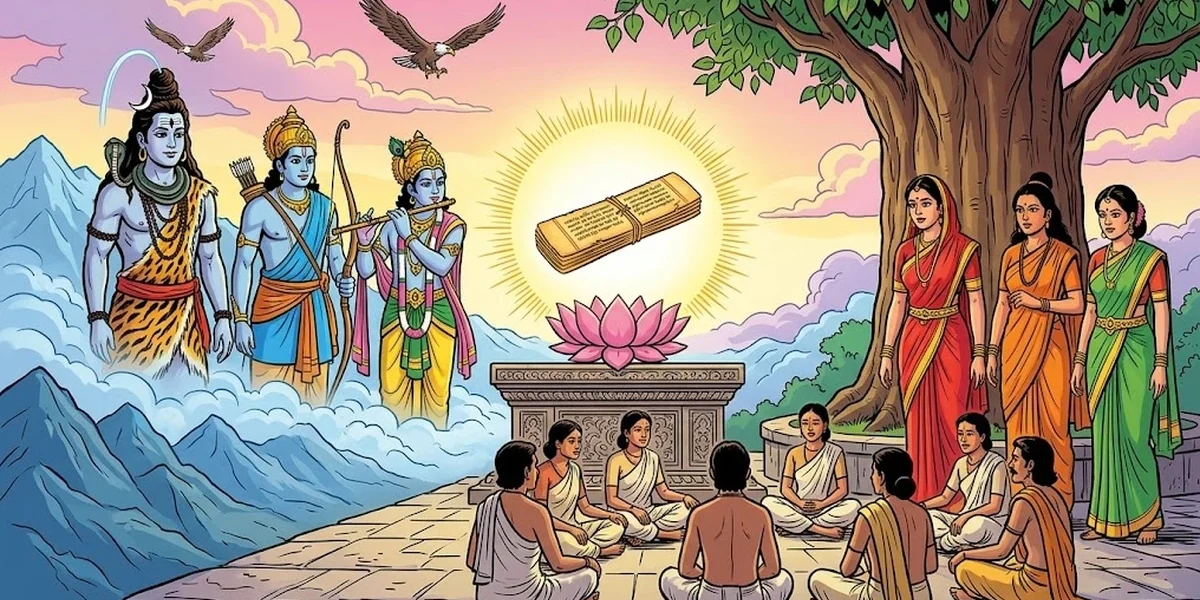
Popular Authors Who Have Given a New Twist to Indian Mythology is not, in the strict folklorist’s sense, a tale of the people. It is a meta-narrative — an essay-within-the-storybook — about the kathāvācaka tradition of India in its newest, English-language, paperback form. The piece sits comfortably in a folk-tale collection because the act it describes — the deliberate retelling of inherited story for a new audience — is exactly what every village storyteller in every Punjabi courtyard, every Bengali boitala, and every Tamil vil pāṭṭu singer has been doing without ceremony for at least three thousand years. The Sanskrit grammarians had a word for it: punaḥkathana, “the saying-again.” The medieval Tamil tradition called it pāḍal-vaḻakkam, “the song-custom.” The eleventh-century Kashmiri court poet Somadeva, who compiled the Kathāsaritsāgara (“the ocean of streams of story”) for Queen Sūryavatī between 1063 and 1081 CE, opens his collection with the disarming admission that he is only retelling tales his teacher Gunāḍhya had retold from a yet older Paiśācī source. The punaḥkathana is, in other words, not a modern fashion. It is the oldest professional skill in South Asian letters.
What is genuinely new about the post-2010 Indian English-language mythology novel is not the act of retelling but its commercial and demographic reach. For roughly two thousand years the great Sanskrit epic Mahābhārata attributed to Vyāsa, the Rāmāyaṇa attributed to Vālmīki, and the eighteen Mahāpurāṇas compiled between roughly 300 and 1000 CE were re-told in courts, temples, and villages by professional reciters — sūta, vyāsa, kathāvācaka, haridāsa, kīrtankār, vil pāṭṭu singer, burrakatha performer — in roughly thirty regional languages. The audience was the village square, the temple courtyard, the king’s assembly hall. What the wave of authors profiled in this essay has done since the publication of Amish Tripathi’s The Immortals of Meluha in 2010 is to migrate the same retelling practice to airport bookshops, to mass-market English paperback, to e-book, to audiobook, to Netflix screenplay, and to the global Indian diaspora. The voices change, the audience changes, the medium changes — the practice is the same.
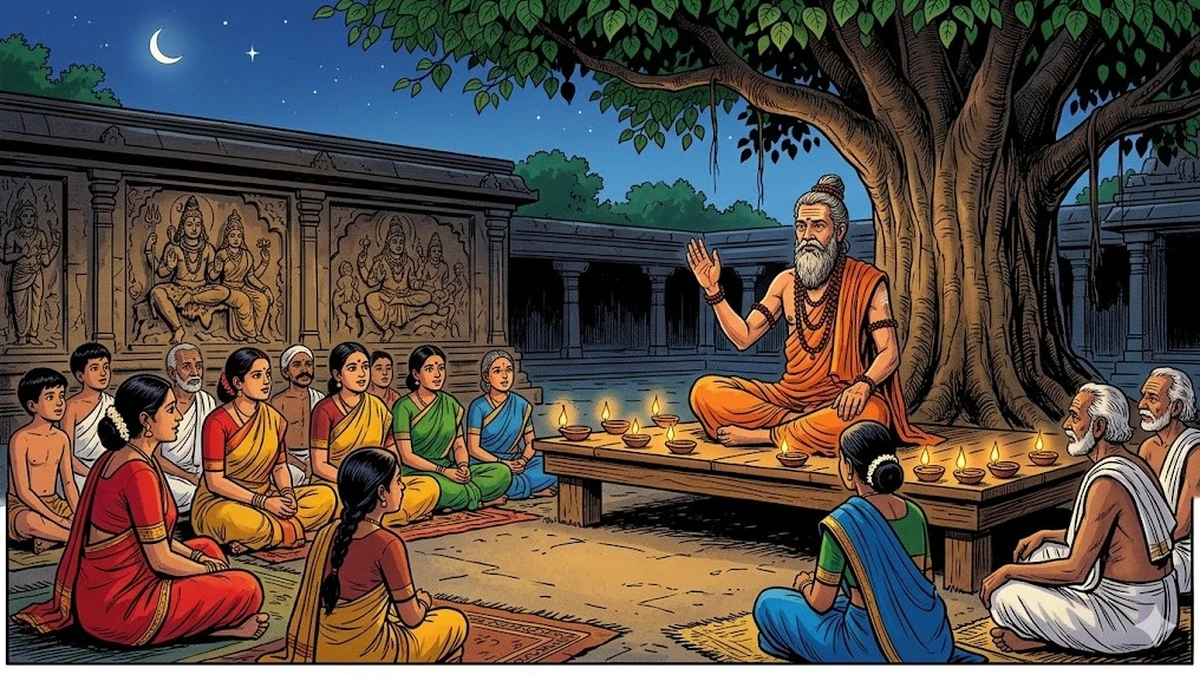
Beat I — Amish Tripathi and the Reframing of Shiva
The popular Indian mythological novel as a publishing category dates, by most reckonings, from the appearance of The Immortals of Meluha by Amish Tripathi (Westland Press, Chennai, February 2010), which opened a sequence of three novels — the second being The Secret of the Nāgas (Westland 2011) and the third The Oath of the Vāyuputras (Westland 2013) — collectively marketed as the Shiva Trilogy. Tripathi’s premise is a deliberate inversion of the orthodox Śaiva theology of the eighth-century commentator Abhinavagupta of Kashmir: in his telling, Shiva is not a god from whom mythology proceeds, but a Tibetan tribal warrior whom mythology eventually turns into a god through the slow accumulation of legend. The narrative borrows its scholarly armature from Indus Valley archaeology — the fictional city of Meluha is named after the Akkadian-Sumerian trade-name for the Harappan civilisation attested in cuneiform tablets from the reign of Sargon of Akkad (c. 2334–2279 BCE) — and from the structural anthropologist Wendy Doniger’s work on Shiva in Śiva: The Erotic Ascetic (Oxford University Press, 1973), which Tripathi has cited in interviews as a formative influence.
What makes the trilogy a literary phenomenon rather than an academic exercise is the tonal register in which it is told. Tripathi writes in a brisk, modern English that owes more to John Grisham than to R. K. Narayan; his Shiva swears, jokes, doubts, and falls in love with a self-awareness that the temple iconography has never permitted. The scholarly orthodoxy of K. M. Sembiah Pillai’s Tirumantiram commentary or A. K. Ramanujan’s Speaking of Śiva (Penguin, 1973) is replaced by the cadence of contemporary thriller fiction, and the great Liṅga Purāṇa framework is restructured as a quest narrative with the Somras — a pun on the Vedic soma drink described in the ninth book of the Ṛgveda — as its philosophical centrepiece. The trilogy sold over four million copies in its first decade, was translated into nineteen Indian and foreign languages, and made Tripathi the first Indian author to be published in English with a print run comparable to that of an American mass-market paperback. He is, in the publishing journalist Sheela Reddy’s phrase, “the first Indian writer of mythology to be read on commuter trains.”
Tripathi’s subsequent Rāmacandra series — Scion of Ikṣvāku (Westland 2015), Sītā: Warrior of Mithilā (Westland 2017), Rāvaṇa: Enemy of Āryāvarta (Westland 2019), and The War of Lankā (Westland 2022) — applies the same inversion technique to the Vālmīki Rāmāyaṇa. Each of the four books retells the same chronological events through a different protagonist, a structural device borrowed openly from Akira Kurosawa’s 1950 film Rashōmon and ultimately from the Mahābhārata’s own fondness for aneka-darśana — the doctrine that a single event has many true tellings, defended at length by the Jain logician Mallavādin in his sixth-century Dvādaśāra-naya-cakra. The Rāmacandra series is, in that sense, a deeply traditional Indian text in modern dress.
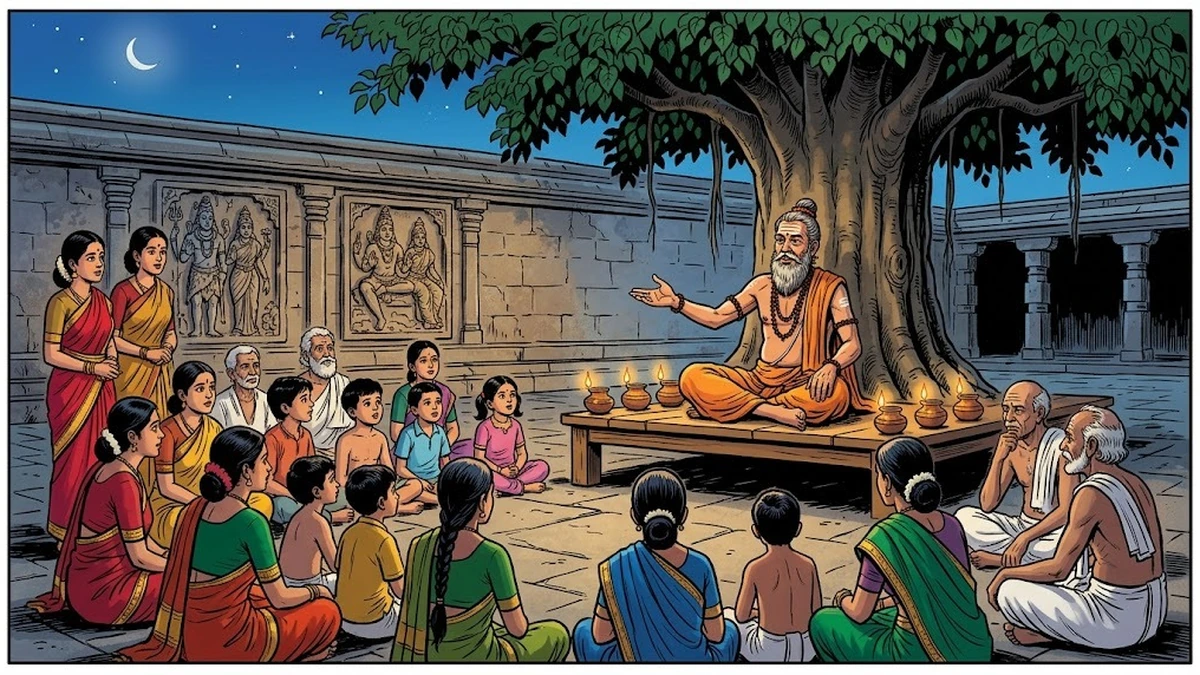
Beat II — Devdutt Pattanaik and the Mythologist as Public Scholar
If Tripathi’s contribution is the mythological thriller, Devdutt Pattanaik’s is the popular mythography — the illustrated, plain-prose retelling that hovers consciously between scholarship and storytelling. Born in Mumbai on 11 December 1970 and trained as a physician at Grant Medical College before reading comparative mythology at Bombay University, Pattanaik has authored more than fifty books, the best-known of which include Myth = Mithyā: A Handbook of Hindu Mythology (Penguin India, 2006), Jaya: An Illustrated Retelling of the Mahābhārata (Penguin India, 2010), Sītā: An Illustrated Retelling of the Rāmāyaṇa (Penguin India, 2013), The Pregnant King (Penguin India, 2008), and the seven-volume Devlok series (Penguin India, 2016–2020) drawn from his Hindi television show on Epic TV.
Pattanaik’s scholarly method draws openly on the structural anthropology of Claude Lévi-Strauss in Mythologiques (Paris, 1964–1971), the morphological folklore of Vladimir Propp in Morphology of the Folktale (Leningrad, 1928), and the comparative mythology of Mircea Eliade in The Sacred and the Profane (New York, 1957). He treats Hindu, Jain, Buddhist, and Sikh narratives as a single interlocking field — the South Asian kathā-mānasa — whose shared moral grammar can be read across origin and sect. His characteristic device is the schematic line drawing, hand-inked in the style of Odisha’s paṭachitra scroll-painting tradition and Maharashtra’s chitrakathi, that accompanies almost every page of his books. The illustrations, he has explained, are not decoration: they encode the same information as the text in a visual register, on the principle articulated by the medieval Sanskrit aesthetician Kṣemendra in his Dasāvatāra-carita (Kashmir, c. 1066 CE) that a story has “two bodies, the heard and the seen, and the listener requires both.”
Pattanaik is also a persistent translator of mythological frame into management theory. His books The Business Sutra (Aleph 2013) and Leader: 50 Insights from Mythology (Harper Collins 2017), and his television show Business Sutra on CNBC TV18 (2010–2014), translate the Yogavāsiṣṭha, the Bhagavadgītā, and the Pancatantra into a vocabulary of stakeholder management, organisational behaviour, and strategic foresight. The school of thought he represents — that India’s native epistemic resources can speak to globalised twenty-first-century management problems — has been independently developed by R. Gopalakrishnan in The Made in India Manager (Hachette 2018) and by Subhash Kak in his work on the Vedic cognitive sciences. The Pancatantra of Vishnu Sharma was, in its original c. 300 CE Kashmir court framing, a manual for the moral education of three princes who could not be taught by ordinary means; Pattanaik’s achievement has been to recover that pragmatic, instructional register and put it back into circulation in the Indian boardroom.
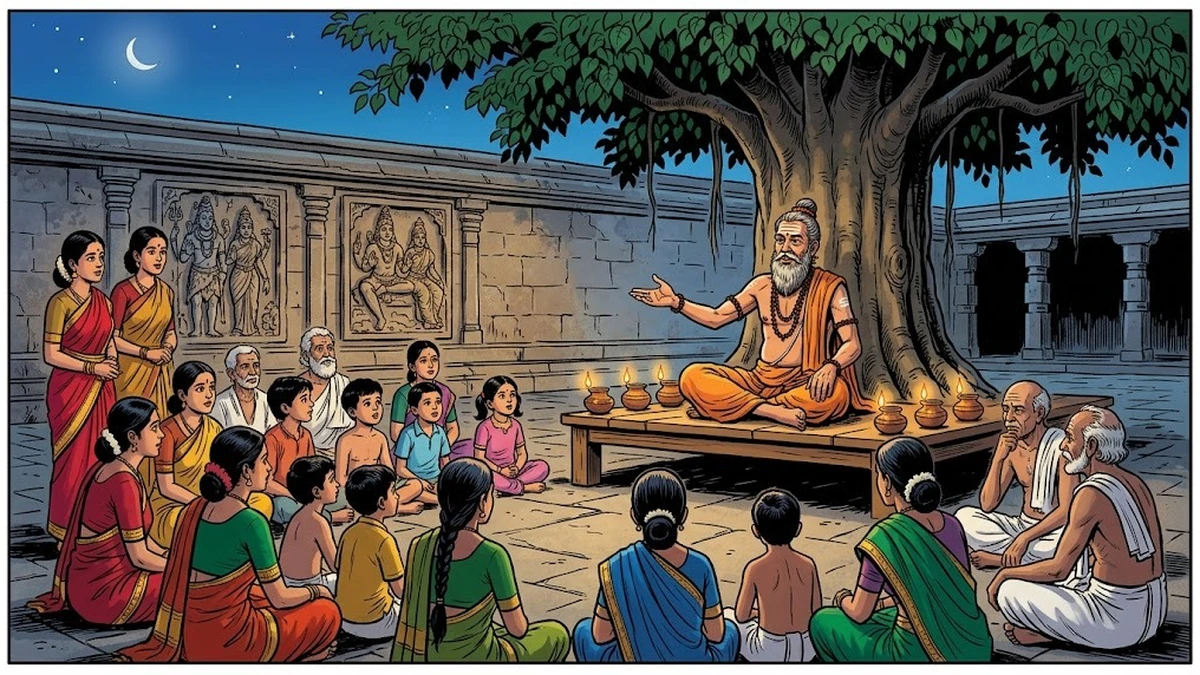
Beat III — Anand Neelakantan, Kavita Kané, and the Voices of the Vanquished
The third major movement in the post-2010 retelling wave is the antagonist novel — the deliberate restoration of the moral and dramatic interior of figures whom the orthodox itihāsa-purāṇa tradition treats as enemies of dharma. The pioneering text in this register is Asura: Tale of the Vanquished by Anand Neelakantan (Platinum Press, 2012), which retells the Vālmīki Rāmāyaṇa from the point of view of Rāvaṇa, king of Lankā, and a low-caste Asura named Bhadra. Neelakantan, born on 5 December 1973 in the temple-town of Tripunithura in Kerala and trained as a mechanical engineer at the Government Engineering College in Trichur, has subsequently written Ajaya: Roll of the Dice (Leadstart 2013) and Ajaya: Rise of Kali (Leadstart 2015), retelling the Mahābhārata from the perspective of the Kauravas; The Rise of Sivagami (Westland 2017), a prequel to the Telugu film Bāhubali directed by S. S. Rājamouli; and the Vāli-and-Sugrīva novel Vānara (Penguin India 2018).
The literary precedent for Neelakantan’s reversal is, again, Indian rather than imported. The thirteenth-century Tamil Iramavataram of Kambar already gave Rāvaṇa a degree of grandeur and theological dignity that the Sanskrit Vālmīki had refused him. The Lankāvatāra-Sūtra, a Mahāyāna Buddhist text composed in Sri Lanka before the fourth century CE, treats the same Rāvaṇa as a serious philosophical interlocutor of the Buddha. The fifteenth-century Bengali Krittivāsi Rāmāyaṇa contains entire passages of devotional sympathy for the Rākṣasa queens of Lankā that have no parallel in Sanskrit. Neelakantan’s achievement is to recover this aneka-darśana hospitality — the willingness to grant the antagonist his own internal dignity — and apply it in modern English prose.
The fourth strand is the women’s novel, of which the most consistently celebrated practitioner is Kavita Kané. Born in Mumbai on 5 August 1966 and trained at Fergusson College, Pune, in English literature and mass communication, Kané worked as a senior journalist for over twenty years before publishing Karna’s Wife: The Outcast’s Queen (Rupa Publications 2013), the first of a sequence of novels foregrounding women whom the patriarchal redactions of the epics had relegated to footnotes. Her subsequent books — Sītā’s Sister (Rupa 2014), Menaka’s Choice (Rupa 2015), Lankā’s Princess (Rupa 2017), The Fisher Queen’s Dynasty (Westland 2017), and Sarasvatī’s Gift (Westland 2021) — recover Urmilā, Menakā, Śūrpaṇakhā, Satyavatī, and Sarasvatī as full narrative subjects.
Kané’s critical reception has placed her in dialogue with Chitra Banerjee Divākaruni, whose The Palace of Illusions (Picador 2008) is the Anglophone retelling of the Mahābhārata from the perspective of Draupadī, and with Volga (P. Lalita Kumari), whose Telugu novella collection Vimukta (Hyderabad 2014) was awarded the Sahitya Akademi Award in 2015 for its feminist re-readings of the same canon. The lineage is not, however, a Western import: it is continuous with the medieval Telugu poet Mollā’s sixteenth-century devotional Mollā Rāmāyaṇa, the Andhra Strī Rāmāyaṇa oral tradition documented by V. Narayana Rao in A Rāmāyaṇa of Their Own (University of California Press, 1991), and the Kashmiri Lal Ded’s fourteenth-century vākhs. Indian women have been retelling the Indian epics from inside the household for at least seven centuries; what Kané has done is to bring that household tradition into mass-market hardback.
Beat IV — Ashwin Sanghi and the Mythological Conspiracy Novel
The fifth strand of the post-2010 retelling wave is the mythological thriller in the Dan Brown register — the conspiracy-fiction novel in which a contemporary protagonist must decode an ancient Indic mystery whose theological stakes turn out to be cosmic. The pioneering text in this strand is The Rozabal Line (Tata McGraw Hill 2007, reprinted Westland 2008), originally published under Ashwin Sanghi’s anagrammatic pseudonym “Shawn Haigins” and built around the disputed Srinagar shrine of Roza Bal, which the German Indologist Holger Kersten in Jesus Lived in India (Munich, 1983) had argued was the tomb of Yuza Asaph — a name some scholars equate with Jesus of Nazareth. Sanghi’s subsequent The Krishna Key (Westland 2012) builds on the Sarasvatī-river archaeology of B. B. Lal’s The Sarasvatī Flows On (Aryan Books International 2002); his Chānakya’s Chant (Westland 2010) was the bestselling political thriller in India for nearly two years and re-cast the Mauryan court intriguer Kauṭilya as a contemporary political fixer.
Born in Mumbai on 25 January 1969, Sanghi is an alumnus of St. Xavier’s College and the Yale School of Management, where he wrote his thesis on the family-business succession patterns of the Indian textile industry — an unusual training for a novelist, but one whose discipline is visible in the procedural exactitude of his thrillers. His Sanskrit chapter epigraphs are scrupulously sourced; his historical chronologies match the dates of the Archaeological Survey of India; and his geographies of Kashmir, Dwārkā, and Hampi are accurate enough to function as travel guides. He has co-authored, with the American novelist James Patterson, four books in Patterson’s Private series — Private India (2014), Count to Ten (2018), and The Bridge (2021) — a transatlantic collaboration that has placed Indian mythological thriller fiction in airport-bookshop shelves from Frankfurt to São Paulo for the first time.
Beat V — The Older Tradition of Retelling That Made All This Possible
The newcomers to the genre often speak as though the post-2010 wave were a sudden eruption. It is not. The Indian English-language retelling has a continuous and deeply respectable twentieth-century lineage that the modern paperback is in many ways simply continuing. C. Rājagopālācārya — the second Governor-General of independent India — published his short-prose Mahabharata with Bhāratīya Vidyā Bhavan, Bombay, in 1951 and his Ramayana with the same press in 1957, on the deliberate principle that no Indian child should grow up without these stories in their own English. R. K. Narayan’s Gods, Demons and Others (Viking 1964), The Ramayana (Viking 1972), and The Mahabharata (Viking 1978) are still in print and are still the gateway through which most English-reading Indian children meet the epics. P. Lal’s thirty-three-volume transcreation of the Mahābhārata from the Calcutta Writers Workshop (1968–2008) is a Sanskrit-line-by-line act of retelling at scholarly scale.
The current wave of retelling stands on those shoulders — and on the still older shoulders of the regional retellings whose authority is, by Indian standards, the real thing. Kambar’s twelfth-century Tamil Iramavataram, Tulsīdās’s sixteenth-century Avadhi Rāmacaritamānasa, Eknāth’s sixteenth-century Marathi Bhāvārtha Rāmāyaṇa, Kṛttivāsa’s fifteenth-century Bengali Rāmāyaṇa, the Telugu Andhra Mahābhāratamu begun by Nannayya in the eleventh century and completed by Tikkana in the thirteenth, the Malayalam Adhyātma Rāmāyaṇam of Tunchaththu Rāmānujan Eḻuthacchan in the sixteenth century, the Oriya Mahābhārata of Sāraḷādāsa in the fifteenth, and the Kannada Pampa Bhārata of Pampa in the tenth century are the foundation on which the whole edifice rests. Each one is a re-telling, in its own language, of a story already told; each one took licences with its source that the Sanskrit grammarians would have considered unthinkable; each one was nevertheless authorised by its own audience as the canonical telling for that region. The novels of Tripathi, Pattanaik, Neelakantan, Kané, and Sanghi are the most recent links of a chain that goes back, by the most cautious reckoning, more than two thousand years.
Moral
The teaching of the entire kathāsaritsāgara tradition — oral, textual, regional, and modern — is summed up in a single celebrated half-verse from the Sanskrit anthologist Bhartṛhari’s Nītiśataka (c. 5th century CE):
“Sahasrayugaparyantaṃ kathā nityā navā navā.”
— Bhartṛhari, Nītiśataka, attributed verse, oral tradition
(“For a thousand ages the story is eternal — new and ever new.”)
The same teaching is given by Vyāsa in the opening of the Mahābhārata (1.1.20 — yad ihāsti tad anyatra, yan nehāsti na tat kvacit, “what is here is found everywhere; what is not here is found nowhere”), by Vālmīki in the Rāmāyaṇa (1.2.40 — yāvat sthāsyanti girayaḥ saritaś ca mahītale, “as long as the mountains stand and the rivers flow on the earth, so long shall this poem live among men”), and by the Buddha in the Pali Cūḷavagga (V.33.1) when he advises his monks to teach the dharma sakāya niruttiyā — “in one’s own language.” The story is not the property of its tellers. The story is what passes between them. The moral, plainly stated: Honour the ancient stories by retelling them in the language and the form your own age understands. The retelling is not a betrayal of tradition. The retelling is the tradition.
Why This Movement Has Lasted — And Will
The post-2010 mythological novel is, on present evidence, going to outlast the publishing wave that produced it. Three structural reasons account for that durability. First, the source material is in copyright in no jurisdiction on earth and never will be: any Indian author who wishes to retell the Mahābhārata may do so without paying a rupee in royalty to anyone, which gives the genre a permanent supply of premium narrative material that no other modern fiction tradition possesses. Second, the audience is renewing itself: each Indian generation since the 1990s has been simultaneously more globalised and more interested in its mythological inheritance than its parents, the opposite of the secularising trend predicted by the early-twentieth-century sociologists, and that hunger is now visible in a publishing market that absorbs roughly thirty new mythological titles a year in English alone.
Third, and most importantly, the form is structurally compatible with the medium of the future. A retelling can be a novel, a graphic novel, a streaming series, a video game, a stage musical, a children’s picture-book, an audiobook for the daily commute, or a TikTok thread — and each of those reincarnations is, in the ancient Indian sense, simply another punaḥkathana. The Mahābhārata in 1985 was a fifty-three-hour Doordarshan television serial directed by B. R. Chopra; in 2026 it is a Netflix limited series, a manga adaptation by an Osaka studio, an Audible reading by Karthik Raman, and a Tripathi paperback. The story is the same. The medium is the present. The retellers are us.
Reflection & Discussion
- Why does India have an unusually rich tradition of punaḥkathana — the deliberate retelling of inherited story — compared to most other major civilisations? What about Indian literary history made it not only acceptable but expected to retell a canonical text?
- Amish Tripathi’s Shiva Trilogy presents Shiva as a Tibetan tribal warrior whom mythology eventually turned into a god. Is that a respectful framework, an irreverent one, or both? What does it tell us about the relationship between history and devotion in Hinduism?
- Anand Neelakantan’s Asura retells the Rāmāyaṇa from Rāvaṇa’s point of view. Why is it important — for moral as well as literary reasons — that the antagonist of a long-canonical story sometimes be allowed to speak in his own voice?
- Kavita Kané and Chitra Banerjee Divākaruni have brought women like Urmilā, Menakā, and Draupadī into the centre of stories that had treated them as supporting characters. What is the relationship between this work and the older household tradition of women retelling the epics in their own kitchens?
- Each of the authors profiled here writes in English, the language of the colonial encounter. Does retelling Sanskrit and regional epic in English deepen the Indian tradition, or does it dilute it? What would Tulsīdās — who controversially retold the Rāmāyaṇa in Avadhi rather than Sanskrit in the sixteenth century — have said?
Did You Know?
- Amish Tripathi’s The Immortals of Meluha (Westland Press, Chennai, February 2010) was rejected by twenty mainstream publishers before being picked up; its first print run of five thousand copies sold out in a week, and the trilogy has now sold over four million copies in nineteen languages worldwide.
- Devdutt Pattanaik trained as a physician at Mumbai’s Grant Medical College and worked in the pharmaceutical industry for fourteen years before turning to full-time mythography; he has authored more than fifty books on Hindu, Jain, Buddhist, and Sikh narrative tradition.
- Anand Neelakantan’s Asura: Tale of the Vanquished (Platinum Press 2012), which retells the Rāmāyaṇa from the perspective of Rāvaṇa and a low-caste Asura named Bhadra, was published the same year as Chitra Banerjee Divākaruni’s The Palace of Illusions, which retells the Mahābhārata from Draupadī’s — together inaugurating the Indian-English antagonist-and-women retelling subgenre.
- Kavita Kané’s Karna’s Wife: The Outcast’s Queen (Rupa 2013) is descended in spirit from a much older tradition of household women retelling the epics — the medieval Telugu Strī Rāmāyaṇa, the Kashmiri vākhs of Lal Ded (14th century), and the Tamil women’s storytelling documented by V. Narayana Rao in A Rāmāyaṇa of Their Own (UC Press 1991).
- Ashwin Sanghi initially published The Rozabal Line (2007) under the pseudonym “Shawn Haigins” — an anagram of his own name — because he was uncertain how an Indian readership would respond to a thriller exploring the Srinagar shrine of Roza Bal, which some scholars (notably the German Indologist Holger Kersten) have argued is the tomb of Jesus of Nazareth.
- The eleventh-century Kashmiri court poet Somadeva’s Kathāsaritsāgara — the “ocean of streams of story,” compiled c. 1063–1081 CE for Queen Sūryavatī of Kashmir — opens by acknowledging that it is itself a retelling of an older Paiśācī-language collection by Guṇāḍhya called the Bṛhatkathā, which has not survived; the entire 22,000-verse text is, in other words, a retelling of a retelling of a lost original, and is itself the source for hundreds of stories that subsequent Indian authors retold in their own time.
Cultural Context and Continuing Influence
The post-2010 Indian mythological novel sits at the intersection of three older South Asian narrative traditions, each of which gives the contemporary form its peculiar texture. The first is the kathāvācaka tradition of itinerant temple storytellers, whose performance was the principal medium for the transmission of the Sanskrit epics for at least two thousand years; the modern novelist’s habit of opening a scene with a brisk historical aside, a half-joke, and an assurance that “the listener has surely heard it told differently” is descended directly from the kathāvācaka’s opening invocation. The second is the vamśāvalī or genealogical chronicle tradition, of which the Pāṇḍyan, Cōḻa, Vijayanagara, and Mughal court histories are surviving examples; the contemporary novelist’s tendency to specify the year, the place, and the verifiable archaeological context of a mythological event — the rivers, the cities, the eclipses, the trade routes — comes from this register.
The third is the kathā-kāvya, the framed-story poem, which the great fourth-century Sanskrit poet Kālidāsa perfected in the Raghuvaṃśa and which Daṇḍin codified in the seventh-century Daśakumāracarita. The framed-story poem treats its narrative subject simultaneously as an emotional event and as a teaching exemplum: the reader is meant to feel and to learn, and the prosody is calibrated to produce both responses in the same line. The contemporary mythological novel inherits that double obligation. A reader of Tripathi or Kané is not only following a plot but also being inducted, line by line, into a way of seeing the world that has been negotiated and re-negotiated for fifty centuries.
Reading These Books With Children and Young Adults
Most of the authors profiled here write at adult reading-levels, but their work has reshaped the way Indian families talk to their children about mythology. Pattanaik’s illustrated retellings — The Pregnant King, Jaya, and especially the children’s series Fun in Devlok (Penguin 2012–2014) — are widely used as gentle on-ramps for ten- and eleven-year-olds. Tripathi’s collaboration with the cartoonist Rakesh Khanna on the graphic-novel Immortals of Meluha (Westland 2014) made the same material available to twelve-year-olds. Roopa Pai’s The Gita: For Children (Hachette India 2015) and Mahābhārata: Yagna and the Goose (Pratham Books 2018) have done similar work for the eight-to-twelve cohort, drawing scholarly methods from Pattanaik and tonal warmth from Narayan.
The pedagogical lesson here is simple: a child who meets the Mahābhārata in a fluent contemporary retelling at twelve will, with a much higher probability than her grandparents would have predicted, return to the original Sanskrit at twenty-two. The retelling is not a substitute for the canonical text; it is a doorway. The doorway is the gift this generation of authors has given the next.
Frequently Asked Questions
**Q: Why is this story important?**
You May Also Like
 Indian Folk Tales
Ages 6-8
Indian Folk Tales
Ages 6-8
Diamond Cut Diamond
Diamond Cut Diamond: In a village in Hindustan there once lived a merchant who, although he rose early, worked hard, and rested late, remained very poor; and
 Indian Folk Tales
Ages 3-5
Indian Folk Tales
Ages 3-5
Chandralekha And The Eight Robbers
Chandralekha And The Eight Robbers: There was an ancient city named Kaivalyam, in the Pânḍiya country, and in that city there lived a dancing girl named
 Indian Folk Tales
Ages 3-5
Indian Folk Tales
Ages 3-5
The Demon With The Matted Hair
The Demon With The Matted Hair: A Story of Cunning and Greed Long ago in ancient India, there lived a fearsome demon whose hair was matted and wild...