Dark Original Stories Behind 5 Disney Movies
Five Disney films rest on older, darker sources—Andersen’s mermaid, Grimm Rapunzel and Snow White, Barrie’s Peter Pan, and the real Pocahontas. Honest contrasts for readers 12+.
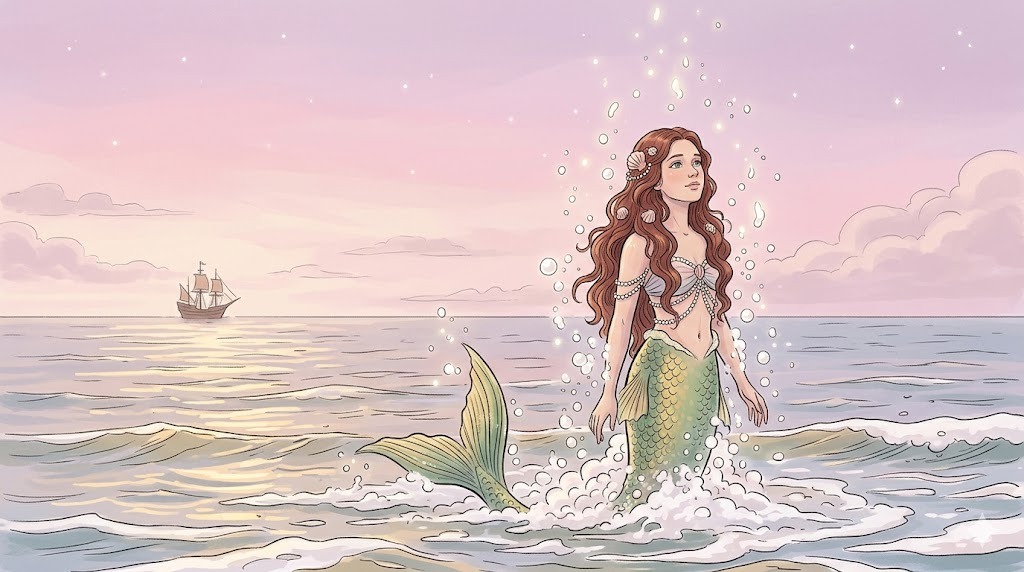
Disney films often end in reunion, romance, and song. Many of the stories they draw from do not. Older European fairy tales and one well-documented historical life carried warnings about bargains, vanity, captivity, and what happens when childhood never ends. Below: five famous films, each paired with the older material Disney softened—stated briefly, for modern readers who want the contrast without a studio plot paste.
1. The Little Mermaid — Andersen’s sea-foam ending
Film contrast. Disney’s mermaid wins a happy ending with the prince after a sea-witch bargain. The studio’s version is bright, musical, and resolved on land.
Older source. Hans Christian Andersen’s The Little Mermaid (1837) is far harsher. The mermaid gives up her voice and suffers pain with every step on land. The prince is kind but marries another. Her sisters bring a knife: kill him before sunrise and she may live as a mermaid again. She refuses. At dawn she dissolves into sea foam—then, in Andersen’s spiritual coda, rises among the “daughters of the air,” who may earn an immortal soul through centuries of good deeds. It is sacrifice and unfinished longing, not a wedding.
2. Rapunzel — Tower, exile, and a blinded prince
Film contrast. Disney’s Tangled turns the tower girl into a witty escapee and gives the romance a comic, triumphant close.
Older source. The Brothers Grimms Rapunzel (1812; revised later) is starker. A sorceress locks the girl in a tower after her parents take garden greens. A prince visits in secret. When the sorceress discovers them, she cuts Rapunzel’s hair and banishes her; the prince falls into thorns that pierce his eyes. He wanders blind for years until he finds her again; her tears restore his sight. Early printings imply a pregnancy before the exile.
3. Peter Pan — The boy who forgets (and “thins them out”)
Film contrast. Disney’s Peter is playful adventure: Neverland games, Hook, and a safe return home for the Darling children.
Older literary source. J. M. Barries novel Peter and Wendy (1911; from his earlier play) is colder. Peter is charming and callous: he forgets friends, cannot grow into lasting love, and Neverland’s rules are cruel. Barrie’s narrator notes that when Lost Boys seem to be growing up—“which is against the rules—Peter “thins them out,” a line darker than the cartoons allow. Wendy grows up; when Peter returns, she is a mother, and he does not fully understand.
4. Pocahontas — History, not a fairy-tale romance
Film contrast. Disney’s Pocahontas frames a cross-cultural love story and peacemaking between a Native woman and John Smith.
Historical record. Matoaka (known as Pocahontas), daughter of the Powhatan paramount chief, was a real person. Most historians place her around ten or eleven when English colonists arrived at Jamestown (1607)—far too young for the film’s romance. Smith’s captivity narrative includes a dramatic rescue” scene whose meaning is debated. Later, English settlers kidnapped her; during captivity she was baptized Rebecca and married the planter John Rolfe. She was taken to England and presented as a converted “civilized” Native to promote the Virginia colony. She died young in England on the planned return voyage. Her life is colonial encounter, coercion, and early death—not a fairy-tale happily-ever-after.
5. Snow White — Red-hot iron shoes at the wedding
Film contrast. Disneys Snow White and the Seven Dwarfs ends with a waking kiss and the queen’s defeat offstage in a storm—family-safe closure.
Older source. In the Grimms Snow White (Schneewittchen), the stepmother’s attempts multiply (laces, poisoned comb, then the apple). When Snow White marries the prince, the queen is invited to the feast. Iron shoes heated until red-hot are forced onto her feet; she must dance until she dies. The Grimms’ justice is public, corporal, and meant to shock—aligned with older European Mrchen morality, not modern children’s animation.
Why endings were softened
Twentieth-century family animation sold to mixed-age audiences and international markets. Studios cut sexual frankness, prolonged suffering, and spectacular punishment; they favored clear heroes, songs, and romantic closure. Softening was a commercial and cultural choice—not proof that older tellers were “wrong, or that every dark detail must be restored for children.
Traces of the older material still peek through (bargains, curses, woods, vanity)—but the endings Disney sells are usually the ones that test well with parents.
How these stories travel
Andersen wrote literary fairy tales; the Grimms collected and repeatedly edited oral-derived Märchen for print; Barrie built a modern myth of childhood; Pocahontass story was reshaped by colonial propaganda and later by Hollywood. Print, stage, and film each pick an audience. Indian storytelling traditions (for example, Panchatantra and other framed collections) likewise show tales crossing languages and morals as they move—living stories, not fixed scripts.
What these contrasts teach (morals)
- Overarching: Stories change with their audience. Darker sources restore warnings—about bargains, vanity, captivity, and refusing to grow—that soft endings can hide.
- Mermaid: A bargain that costs your voice may not buy the love you imagined; sacrifice is not the same as a wedding.
- Rapunzel: Secrecy and captivity exact a price; reunion, if it comes, can follow real harm.
- Peter Pan: Endless childhood can mean forgetting others; growing up is loss and responsibility.
- Pocahontas: Real lives are not fairy tales; romance pasted onto history can erase coercion and age.
- Snow White: Older Märchen often punish envy in public, brutal ways—useful to know, not to copy as parenting advice.
Frequently Asked Questions
Why did Disney change these endings?
Is Andersen’s Mermaid sadder than the film?
What happens to the Grimm queen in Snow White?
Is Pocahontas a fairy tale or a real person?
Is Barrie’s Peter Pan darker than Disney’s?
Is this page appropriate for kids?
Where are these public-domain texts?
How is this different from a single-tale page?
You May Also Like
 Indian Folk Tales
Ages 3-5
Indian Folk Tales
Ages 3-5
Mr. Bunny’s Carrot Soup
Mr. Bunny’s Carrot Soup: Once upon a time Mr. Bunny picked four carrots. I will make carrot soup, he thought. Rat asked, “May I have a carrot please?” Mr.
 Indian Folk Tales
Ages 12+ / YA
Indian Folk Tales
Ages 12+ / YA
The Disconnect | Modern Indian Wedding Satire Poem (12+)
A modern satire on lavish weddings, debt, and the quiet rebellion of simple marriages — Kabir’s wisdom in a new key.
 Indian Folk Tales
Ages 9+
Indian Folk Tales
Ages 9+
If Only Fairy Tales Could Be Like This
A modern Cinderella story-poem and short essay for ages 9+: what real beauty means, why kindness matters more than looks, plus a clear moral and FAQ.