The Story of Vajradaunstra the Lion and Chaturaka the Jackal
The Story of Vajradaunstra the Lion and Chaturaka the Jackal: In a jungle, there lived a lion by the name of Vajradaunstra. A jackal called Chaturaka and a

The Story of Vajradaunstra the Lion and Chaturaka the Jackal
Origin and Manuscript Tradition
This tale of the jackal who serves the lion and rises by cleverness only to fall by overreaching belongs to the Panchatantra’s richest vein: the dynamics of power, proximity, and the exact moment when an advisor’s self-interest diverges fatally from his patron’s welfare. The names are precise: Vajradaunstra means “diamond-tooth” — the lion’s identity defined entirely by his instrument of destruction; Chaturaka means “the clever one” — the jackal’s identity defined entirely by his cognitive gift. Vishnu Sharma constructed this opposition to ask a single question: when cleverness is deployed entirely in the service of the clever one’s self-interest, at what point does it become self-destructive? The tale survives in all major Sanskrit manuscript families and was transmitted faithfully through Persian and Arabic Kalila wa Dimna tradition as a classic study in the dynamics of court life and the advisor who mistakes proximity to power for security.
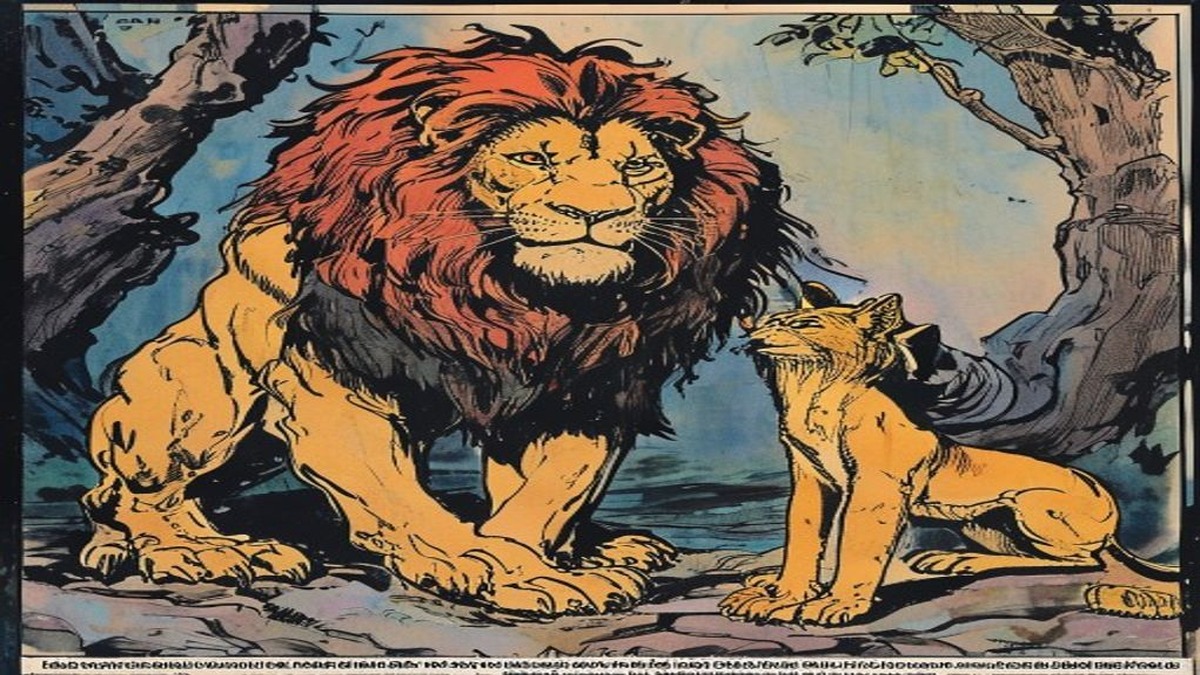
The Jackal Seeks a Position
Vajradaunstra the lion was powerful, solitary, and periodically inconvenienced by the fact that power and solitude do not provide intelligence. He could kill anything in the forest, but he could not know in advance where the largest herds were grazing, which routes the prey favoured in dry season versus wet season, or what the other predators were doing at the edges of his territory. Information of this kind required the mobility and unnoticed presence of a smaller animal.
Chaturaka the jackal had noticed this gap for some time and had calculated that filling it would secure him a position near the lion’s kills that was considerably more comfortable than scavenging what the lion left. He approached the lion with a formal greeting, noted his own smallness and the lion’s greatness, and offered his services as scout, intelligence-gatherer, and advisor. He made his case efficiently: he knew every animal in the forest by sight and habit, he could travel without being noticed, and his interests and the lion’s were, he suggested, largely aligned — both needed a regular food supply, and cooperation would serve them both better than competition.
Vajradaunstra accepted. He was too intelligent to give Chaturaka complete trust — a lion who fully trusts a jackal is a lion who will eventually be surprised by a jackal — but the arrangement was practical. Chaturaka ate from the lion’s kills. In return he supplied information, served as an advance scout for hunts, and provided the kind of social intelligence about the forest’s population that a lone lion could not acquire. For a considerable period, both parties were satisfied.

The Ambition That Could Not Stay Small
Proximity to power is a particular kind of intoxicant. Chaturaka had begun as a practical creature whose ambitions were calibrated to his situation: he wanted to eat well and be safe. Both were now secured. A less complex creature might have stopped there. Chaturaka was a jackal, and jackals in the Panchatantra are rarely content with sufficiency when excess seems plausible.
He began to think about what he could do if the lion owed him something larger than the current arrangement. He began to manufacture situations that would make the lion feel grateful in ways that exceeded the ordinary gratitude one feels toward a useful servant. He arranged for the lion to receive warning of a hunter’s presence that Chaturaka himself had detected far earlier, delaying the warning so that the delivery appeared more dramatic and the danger more averted. He presented intelligence that made his own role seem indispensable rather than useful.
He also began to think about which animals in the forest were threats to his position — which creatures had the lion’s ear in ways he did not control. He began to manage information selectively, ensuring that what reached the lion through him was shaped in ways that served Chaturaka’s interests. Animals whose competing advice might diminish his standing were subtly discredited. He was still serving the lion, but the service had been reoriented: it now served Chaturaka first and the lion as a consequence.
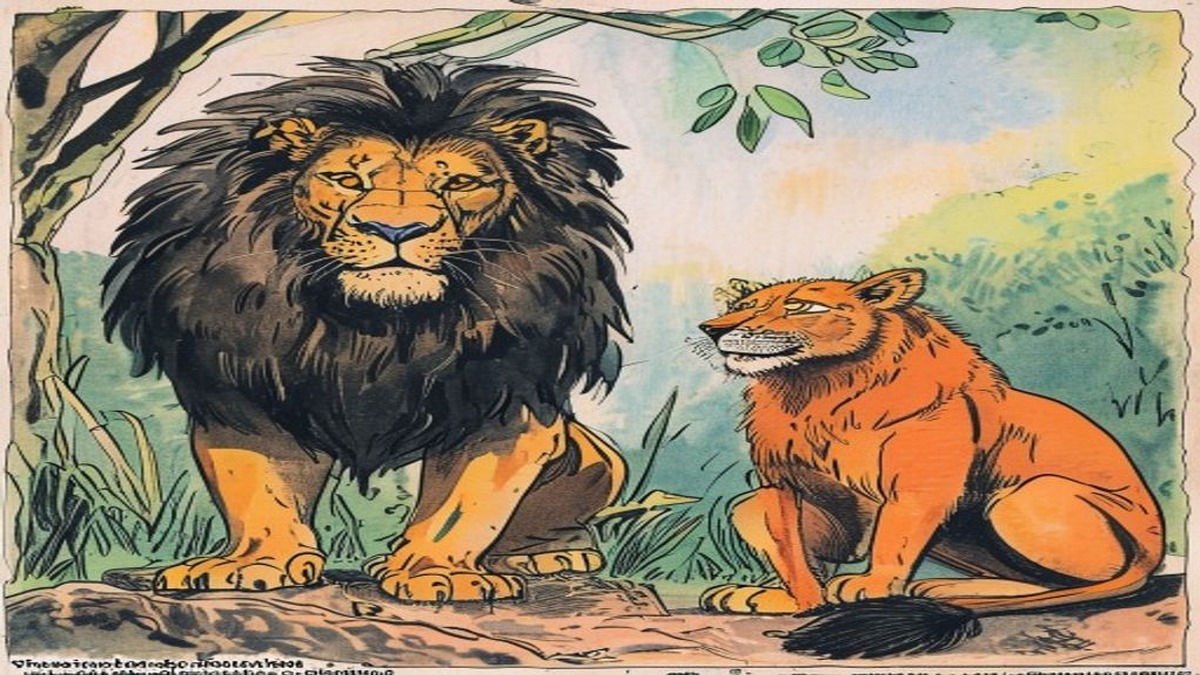
The Exposure and Its Lesson
A lion who has ruled a forest for some years has, in most cases, developed at least a minimal ability to detect when information is being managed rather than delivered. Vajradaunstra was not subtle, but he was not a fool; and a series of decisions made on Chaturaka’s intelligence that produced unexpected results eventually prompted him to verify what he was being told through independent means. What he found was that Chaturaka’s intelligence was accurate in its facts and consistently shaped in its framing — shaped to make Chaturaka seem indispensable, to discredit competitors for the lion’s attention, and to produce outcomes that served Chaturaka’s interests at the margin.
The lion did not kill Chaturaka. The Panchatantra’s resolution of this story is instructive: Vajradaunstra expelled the jackal from his territory and replaced him with a more straightforward arrangement. Chaturaka left with his life, which was more than many jackals in his position had retained, but without the comfortable position he had built. He had been too clever for his own safety at exactly the moment when straightforward usefulness would have been enough.
Vishnu Sharma’s observation is addressed specifically to advisors in positions of power: the advisor who begins serving his patron and ends serving himself through his patron has made a transition that the patron will eventually detect. The longer the transition takes to detect, the more completely the advisor has been serving himself, and the worse the response when it comes. Chaturaka’s error was not that he had interests of his own; every advisor has interests of his own. The error was in allowing those interests to reshape the service rather than accepting that the service was the price of the position.

Moral and Sanskrit Wisdom
स्वार्थं स्वामिनः लाभाय न नेयं मंत्री
Svaartham svaminah laabhaaya na neyam mantree — “The minister should not be led by self-interest at the master’s expense.”
— Sanskrit political tradition, Panchatantra I
The Panchatantra’s political ethics are relentlessly practical rather than moralistic. Vishnu Sharma does not argue that Chaturaka was wrong to have interests of his own; he argues that Chaturaka was wrong to allow those interests to compromise the quality of the service he was providing, because the compromise would inevitably be detected and the detection would end the position. The argument is not ethical but strategic: aligned service is the only stable service. Self-serving service, however cunningly disguised, degrades over time and eventually becomes visible.
Why This Story Has Lasted 2,300 Years
The story of Vajradaunstra and Chaturaka endures because it describes the most common failure mode of talented advisors in every institutional context: the transition from serving the institution to serving oneself through the institution, accomplished so gradually that the advisor often does not notice when the transition has happened. Chaturaka did not decide one day to stop serving the lion and start serving himself. The reorientation happened incrementally — one withheld piece of information, one shaped report, one managed impression — until the cumulative effect was a service that was nominally directed at the lion and actually directed at Chaturaka.
This is the failure Vishnu Sharma most wanted princes to understand, because it is the failure of advisors that most directly damages rulers. An advisor who is incompetent is visible and replaceable. An advisor who is corrupt is dangerous but also visible, eventually. An advisor who is competent, loyal in appearance, and subtly self-serving is the most dangerous kind, because his service produces real value — enough to justify his position — while the margin of that value is systematically redirected toward his own interests. The lion received genuine intelligence from Chaturaka; he simply also received intelligence shaped in ways he could not easily detect.
The name Chaturaka — the clever one — carries its own irony. Chaturaka’s cleverness was sufficient to build the position and insufficient to preserve it; the same faculty that created the opportunity created the overreach that ended it. This is a recurring pattern in the Panchatantra: the very quality that makes a character capable of achieving something is also the quality, deployed one step too far, that destroys what it built. Vishnu Sharma’s curriculum for princes includes not just the lesson of what advisors do but the lesson of how to detect when they have begun doing it.
Frequently Asked Questions
What do the names Vajradaunstra and Chaturaka mean?
Vajradaunstra means 'diamond-tooth' in Sanskrit — the lion defined by his instrument of destruction. Chaturaka means 'the clever one' — the jackal defined by his cognitive gift. Vishnu Sharma constructed this opposition deliberately to ask when cleverness deployed entirely in self-service becomes self-destructive.
What is the moral of the story?
The advisor who begins serving his patron and gradually reorients to serving himself through his patron has made a transition that the patron will eventually detect. Aligned service is the only stable service; self-serving service degrades over time and becomes visible, ending the position it was meant to secure.
Why didn't the lion kill Chaturaka?
The Panchatantra's resolution is instructive: expulsion rather than death reflects that Chaturaka's service, while compromised, had genuine value. Vajradaunstra recognised a useful tool that had been misapplied rather than an enemy. Chaturaka's life was the limit of what cleverness in service of self could preserve.
How did Chaturaka's self-serving service differ from ordinary corruption?
Chaturaka was not straightforwardly corrupt — he provided real intelligence that benefited the lion. The problem was that the margin of his service was systematically redirected toward his own interests: shaped reports, delayed warnings delivered dramatically, and discredited competitors. The service looked identical from the outside until the accumulation became detectable.
Which Panchatantra book is this story from?
The tale belongs to Panchatantra Book I (Mitra-bheda, The Separation of Friends), compiled by Vishnu Sharma around the 3rd century BCE as part of a royal education in governance, the management of advisors, and the detection of misaligned counsel.
You May Also Like
 Panchatantra Stories
Ages 9-12
Panchatantra Stories
Ages 9-12
The Story of the Potter Called Yudhisthira
The Story of the Potter Called Yudhisthira: In a certain town, there lived a potter, by the nameof Yudhisthira. One day he was drunk, and, stumbling. on the
 Panchatantra Stories
Ages 6-8
Panchatantra Stories
Ages 6-8
Story of The Merchant’s Son
Story of The Merchant's Son: Sagargupta was a merchant living in one of the country’s big cities. He had a son, who, one day purchased a book whose only
 Panchatantra Stories
Ages 9-12
Panchatantra Stories
Ages 9-12
The Story of the Hares and the Elephants
The Story of the Hares and the Elephants: In a certain place, there lived an elephant king andwith him, his retinue. The king’s name was Chatura danta. The