The Story of the Monkey and a Bird Called Suchimukha
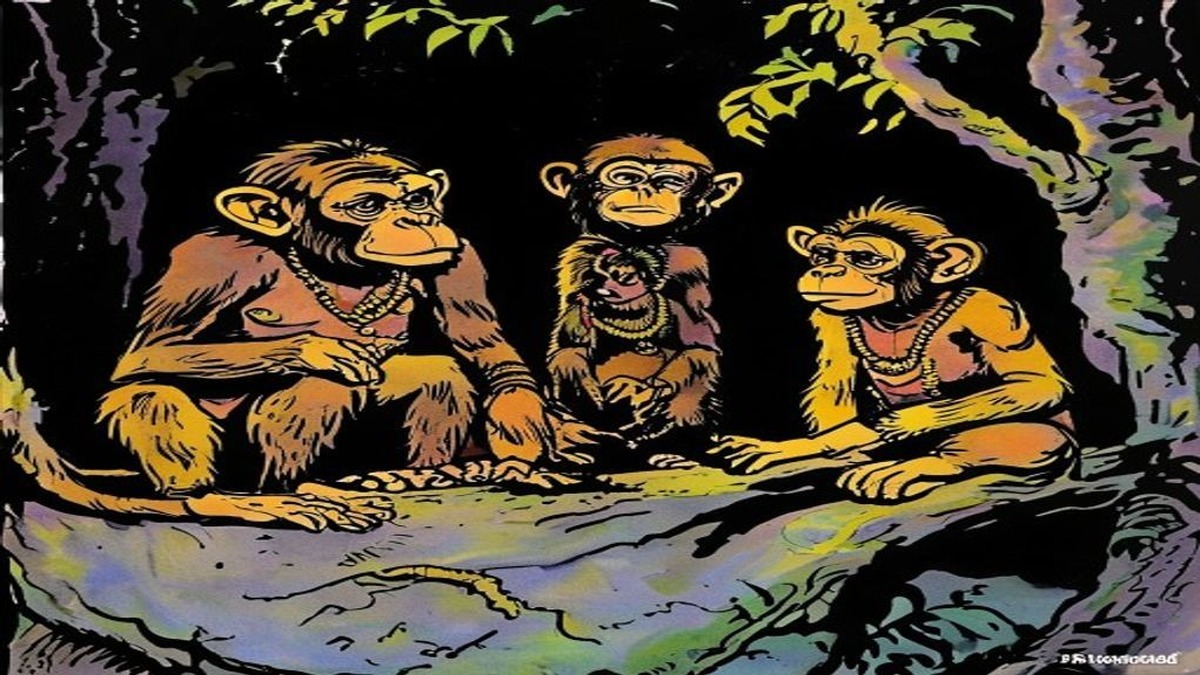
The Story of the Monkey and a Bird Called Suchimukha: A troupe of monkeys was tiving somewhere in themountains. The rain, accompanied by astrong wind, drenched
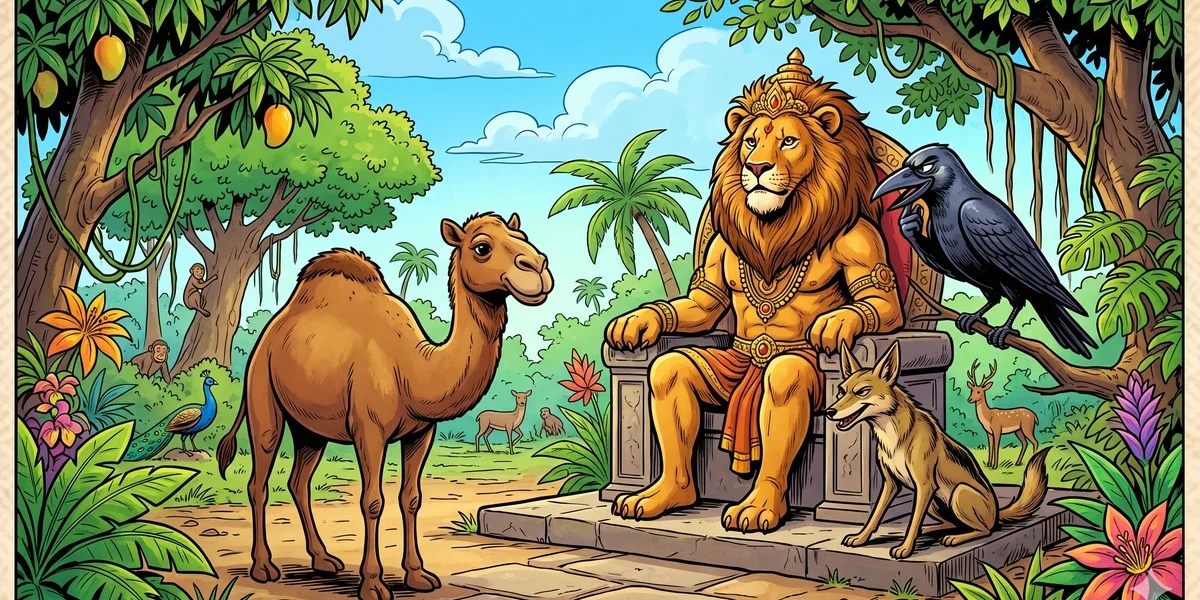
The Story of the Monkey and a Bird Called Suchimukha
Origin and Manuscript Tradition
This brief, sharp tale is one of the Panchatantra’s most concentrated lessons, requiring fewer than two scenes to deliver a principle that the collection returns to repeatedly: wisdom offered to those who have not requested it, and are not in a condition to receive it, does not help the recipient — it harms the advisor. The story appears in all major Sanskrit recensions and was transmitted faithfully through the Persian and Arabic Kalila wa Dimna lineage. The bird’s name, Suchimukha, means “needle-face” in Sanskrit — a name that evokes both the precision of the bird’s beak and the pointed, unwelcome accuracy of the advice it attempts to give. Vishnu Sharma uses the name to signal from the outset that the bird’s virtue, like the needle’s, can wound as easily as it can mend, depending on who holds it and who receives it.
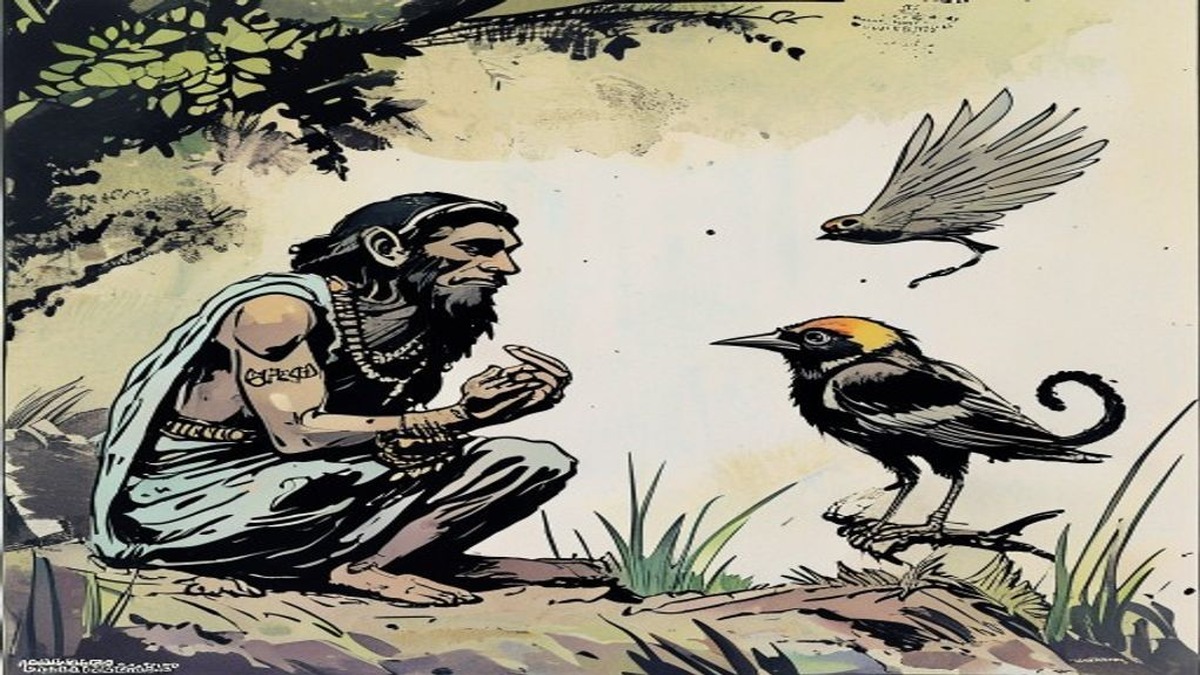
The Fire That Was Not a Fire
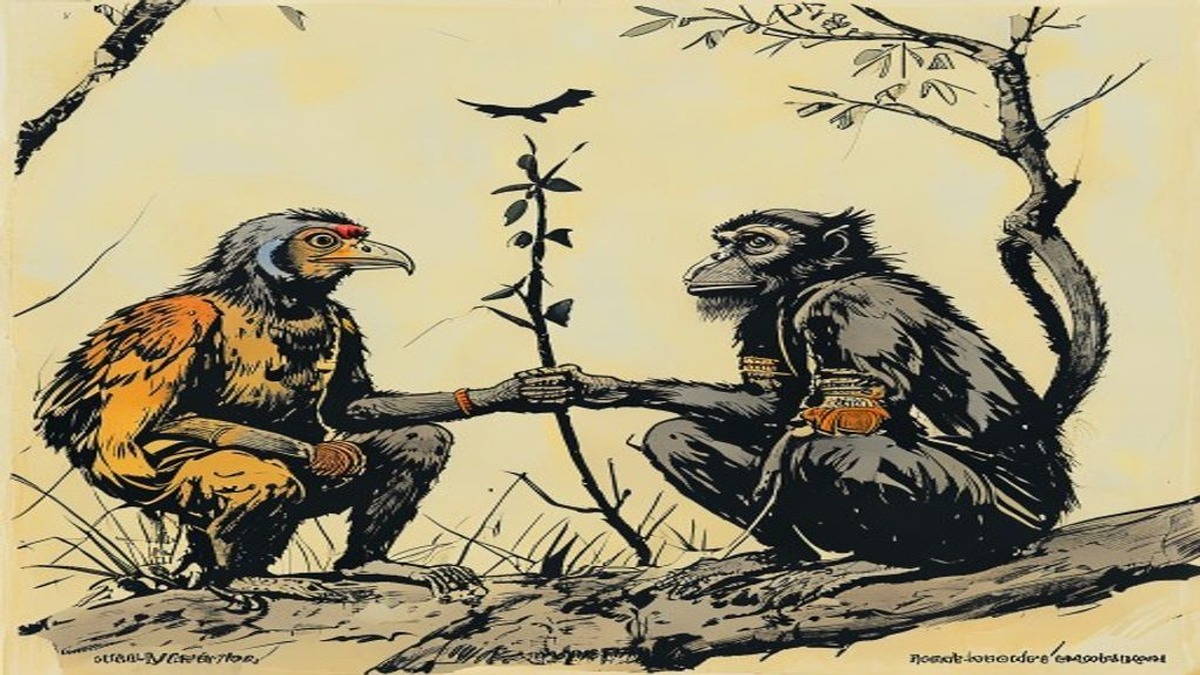
A troop of monkeys lived in a forest where the winters were sharp and the trees offered little shelter. One cold evening, several of the younger monkeys found what appeared to be a glowing ember: a large firefly resting on a dark stone, pulsing with orange light in the failing dusk. The monkeys had seen fire before — from lightning strikes and human campsites — and they recognised the colour and the glow. They gathered around it, blew on it, brought dry leaves and small twigs to feed it. The firefly continued to pulse. The monkeys continued to blow. The wind was cold. The firefly offered no warmth.
An older monkey began to cup his hands around the firefly and hold them there, waiting for the heat that fire always produced. He felt nothing. He reasoned that the fire needed more fuel. More leaves were brought. The firefly pulsed on, indifferent to the leaves arranged around it. The monkeys debated: perhaps the wood was wet, perhaps the wind was defeating the flame, perhaps if they could find a sheltered spot and carry the fire there, it would burn more strongly. They prepared to move.
A bird named Suchimukha had been watching from a branch overhead. He knew what a firefly was. He could see that the monkeys were going to spend the entire cold night around an insect that would give them nothing. He felt the impulse — which was genuinely kind in its origin — to tell them what they were looking at and save them from their misery.
The Advice That Was Not Wanted
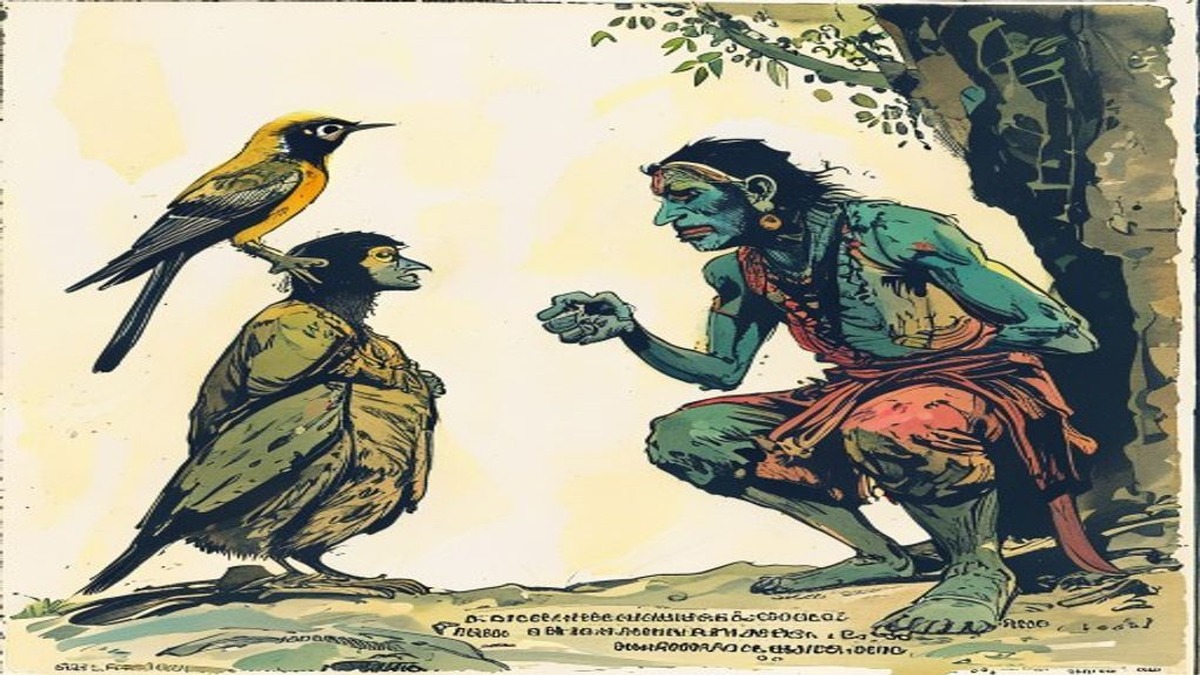
“Friends,” said Suchimukha, dropping to a lower branch and addressing the troop with what he intended as gentle helpfulness, “that is not a fire. It is a firefly. No matter how long you blow on it or how many leaves you give it, you will be cold all night. There is a hollow tree to the east where several of you could shelter together and stay warm until morning.”
The monkeys looked at him. Several of them went back to blowing on the firefly. The older monkey said: “It glows. Fire glows. If you blow on a fire it burns brighter. We are blowing and it continues to glow. This is a fire.” Suchimukha pointed out that fire also produces heat, and that if the monkey held his hand near this fire for some time, he would observe no heat. The monkey held his hand near the firefly. He felt nothing. He concluded that the fire was very young and needed more encouragement.
Suchimukha tried again, more explicitly. He described the firefly’s biology, its light-producing mechanism, the fact that it was an insect and not a combustion event. The monkeys found this irritating. They had not asked for instruction. They were cold and focused on a task they believed they understood. The bird was interrupting their work with complicated information they had no framework to evaluate. A large monkey reached up, caught Suchimukha by the wing, and dashed him against the branch.
The Principle the Bird Forgot
The monkeys stayed cold all night. The firefly eventually flew away. In the morning they were stiff and miserable, and some of them dimly wondered whether the bird had perhaps been correct, but this thought did not sustain itself long enough to produce any useful reflection. They went about their day. Suchimukha was gone.
Vishnu Sharma’s closing observation is addressed not to the monkeys but to the advisor: a wise person, seeing the monkeys’ mistake, does not intervene. The monkeys were not in a state to receive correction — they were cold, committed to a course of action, and emotionally invested in being right. In that state, accurate information is not experienced as helpful; it is experienced as hostile. The advisor who persists in correcting someone in this state is not practising wisdom; he is practising a form of self-indulgence disguised as virtue, satisfying his own need to be right and helpful at the expense of the recipient’s agitation and his own safety.
The correct response, in the Panchatantra’s framework, was to note the situation, assess whether intervention was likely to be effective, find the answer to be no, and leave the monkeys to their firefly. The hollow tree to the east would still be there in the morning if any of them came looking. Wisdom offered without being asked, to recipients incapable of receiving it, is not wisdom; it is noise.
Moral and Sanskrit Wisdom
न देयं बालिशे बुद्धिं विना पृष्ट्यं
Na deyam balishe buddhim vina prishtyam — “Wisdom should not be given to the foolish unless it is asked for.”
— Panchatantra I, Sanskrit proverbial tradition
The Sanskrit tradition is careful to distinguish between the foolishness of the monkeys and the error of the bird. The monkeys are balishan — foolish, but not wicked; they are operating with the tools they have, which do not include the capacity to distinguish a firefly from a fire on first principles. Suchimukha is not foolish; he is an advisor who mistakes the presence of correct information for the presence of conditions under which correct information can be received. The distinction matters because it locates the error in a different place: not in the character of the recipient but in the judgment of the advisor.
Why This Story Has Lasted 2,300 Years
The Monkey and Suchimukha endures because it names and legitimises a form of restraint that is socially difficult to practise: the withholding of accurate, helpful advice from someone who is not in a condition to receive it. Every culture that values helpfulness struggles with this. The person who sees a friend making a clear mistake and says nothing feels like a bad friend. But Vishnu Sharma’s argument is that the feeling of unhelpfulness is preferable to the outcome of a poorly timed intervention — which is, at minimum, ineffective, and can, as Suchimukha demonstrates, be fatal.
The story is cited in Sanskrit treatises on pedagogy and on the management of courtiers, where the advisor’s problem is particularly acute: the advisor has information the king needs but may not want, and the question of when and how to deliver that information is a matter of survival. An advisor who delivers correct, needed information at the wrong moment, to a king in the wrong emotional state, will be heard not as a wise counsellor but as an enemy. The information’s accuracy provides no protection. Suchimukha’s accuracy provided no protection. The monkeys could not hear the truth; they could only feel the irritation of being corrected.
The modern reader finds in this story a precise description of what psychologists call reactance — the motivational state in which unwanted advice increases resistance to the advised behaviour rather than reducing it. The monkeys’ commitment to the firefly-as-fire hypothesis became stronger, not weaker, each time Suchimukha challenged it, because the challenge was experienced as a threat to their autonomy and judgment rather than as useful information. Vishnu Sharma did not have the term reactance, but he had the observation it describes, and he encoded it in a story so compact and vivid that it has been transmitting the observation across civilisations for two and a half millennia.
Frequently Asked Questions
What is the moral of the Monkey and Suchimukha story?
Accurate advice given to someone who has not asked for it, and is not in a condition to receive it, helps no one and can harm the advisor. Wisdom withheld is often wiser than wisdom forced upon an unwilling recipient.
What does the name Suchimukha mean?
Suchimukha means 'needle-face' or 'needle-beak' in Sanskrit — evoking both the precision of the bird's sharp beak and the pointed, accurate quality of the advice it tries to give. Vishnu Sharma chose the name to signal that the bird's virtue, like a needle, can wound as easily as it can help depending on where and when it is applied.
What is psychological reactance, and how does this story illustrate it?
Reactance is the motivational state in which unwanted advice increases resistance to the advised behaviour rather than reducing it. Each time Suchimukha challenged the monkeys' belief, their commitment to the firefly-as-fire hypothesis grew stronger, because the challenge felt like a threat to their autonomy rather than useful information.
Which Panchatantra book is this story from?
The tale appears in Panchatantra Book I (Mitra-bheda, The Separation of Friends), compiled by Vishnu Sharma around the 3rd century BCE as part of a royal education in practical wisdom.
What is the Sanskrit distinction this story draws between the monkeys and the bird?
The monkeys are balishan — foolish but not wicked, operating with limited cognitive tools. Suchimukha is not foolish; he is an advisor who mistakes the presence of correct information for the presence of conditions under which that information can be received. The error belongs to the advisor, not merely to the audience.
You May Also Like
 Panchatantra Stories
Ages 6-8
Panchatantra Stories
Ages 6-8
The Lion and The Foolish Donkey
The Lion and The Foolish Donkey: A lion named Karalakesara was living in a forest, loyally served by Dhoosaraka, a jackal that used to accompany the lion
 Panchatantra Stories
Ages 3-5
Panchatantra Stories
Ages 3-5
Union Is Strength
Union Is Strength: Long ago, there lived a flock of pigeons in a dense forest. In the flock, there was an old pigeon who was very wise. All the pigeons
 Panchatantra Stories
Ages 9-12
Panchatantra Stories
Ages 9-12
The Story of the Lion and the Donkey
The Story of the Lion and the Donkey: In a certain jungle, there lived a lion, by the nameof Karalakesara. He had a servant, a jackal named Dhusaraka, who was