Shandili and Sesame Seeds
Shandili's endless greed for sesame seeds transforms a magical gift into the agent of her doom.
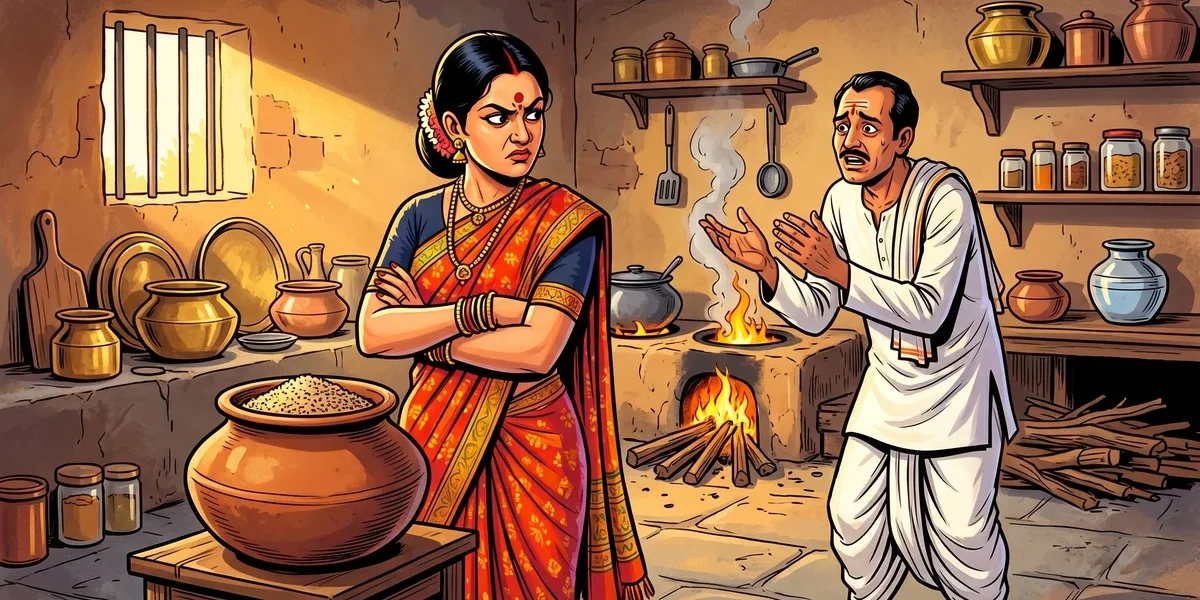
Shandili and Sesame Seeds
Canonical Attribution and Manuscript Tradition
This tale belongs to Pancatantra Book I, Mitra-bheda, and is among the collection’s most nuanced explorations of the relationship between generosity, hospitality, and practical judgment. The story is preserved in all major Sanskrit recensions including the Tantrakhyayika (c. 200 BCE, Kashmir) and appears in parallel in the Hitopadesha. Within the Pancatantra’s didactic programme the tale occupies a specific position: it does not condemn generosity but examines the point at which the social obligation of hospitality, pushed beyond what the host can sustain without significant harm, requires the host to make an honest accounting of what is possible. The protagonist Shandili is a Brahmin woman whose combination of genuine generosity, social pride, and limited means creates the tale’s central tension. Vishnu Sharma presents her resolution of that tension — the decision to serve sesame seeds honestly rather than to pretend greater capacity than she has — as an act of practical wisdom rather than a failure of hospitality.
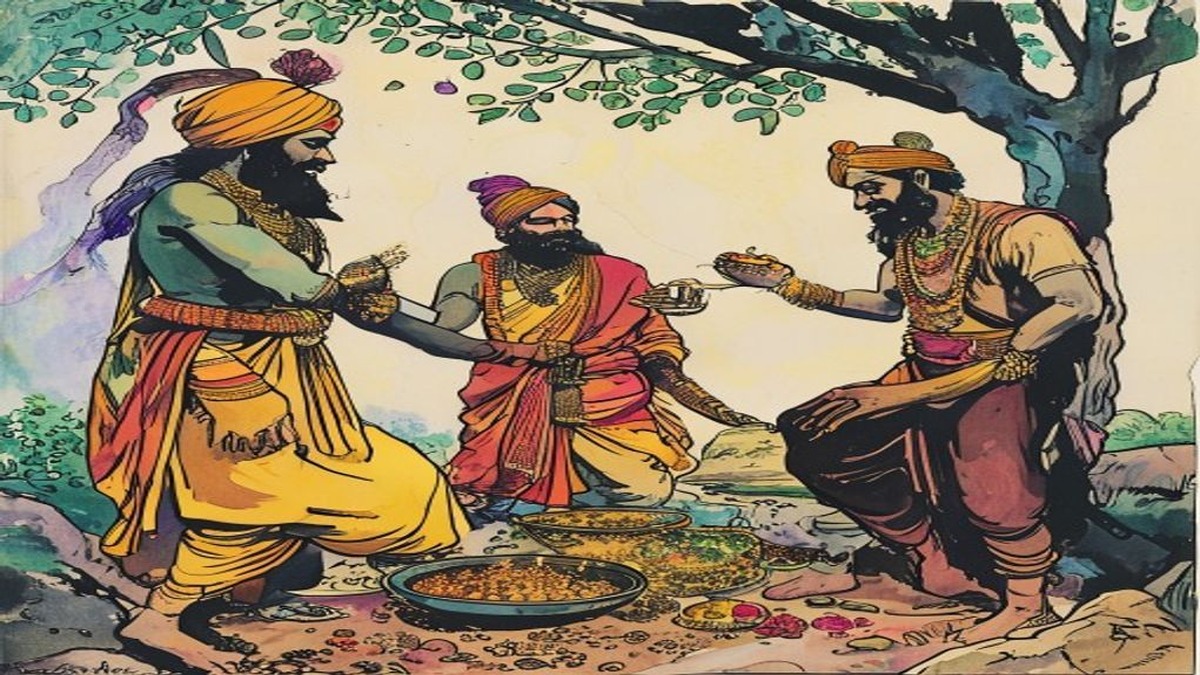
Beat I — Shandili’s Situation
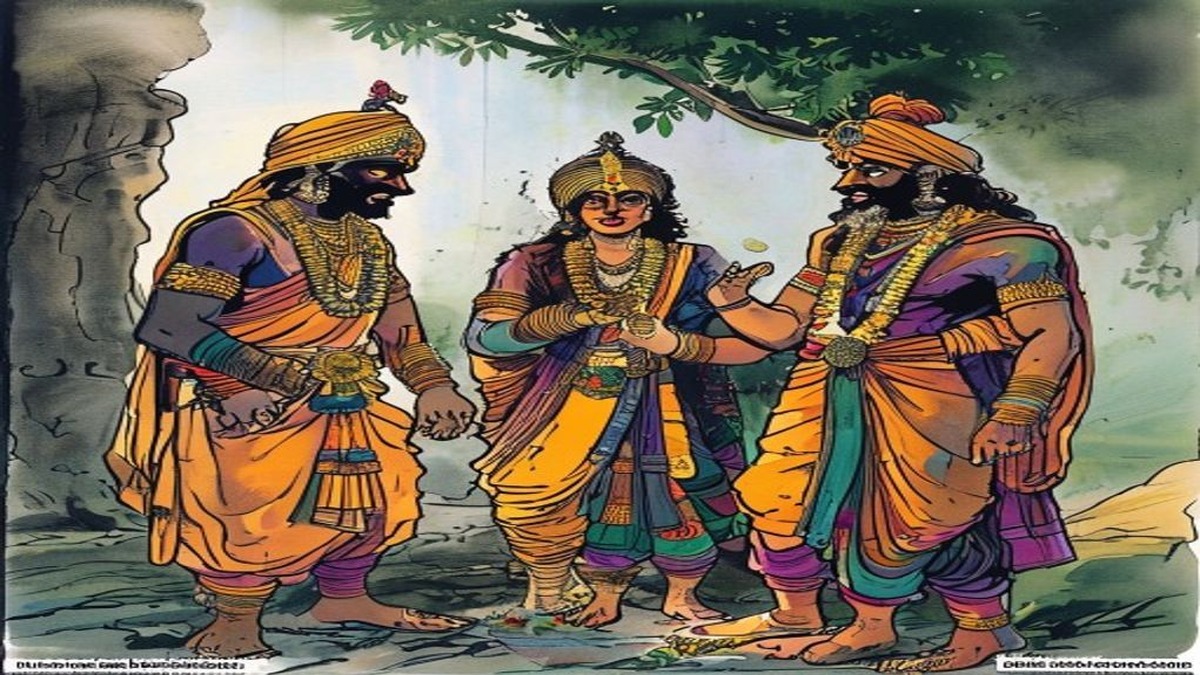
Shandili was the wife of a Brahmin scholar of modest means. Brahmins in the Pancatantra’s world observe strict obligations of hospitality: a guest, especially a learned guest or a pilgrim, must be fed and cared for. These obligations were not merely conventional courtesy; they had specific scriptural weight and social significance. To fail in hospitality was a form of dishonour that a Brahmin household took seriously.
Shandili faced a guest — in several recensions, another Brahmin scholar — at a time when the household’s provisions were severely limited. What was available was sesame seeds. Not a feast, not a proper meal for a honoured guest, but sesame seeds. Shandili’s social instinct was to manage the situation so that the limitation would not be visible: to serve what she had in a manner that concealed its insufficiency. Her pride and her generosity pulled in the same direction, toward the performance of adequate hospitality even when the reality was inadequate.
Beat II — The Decision
Shandili made a different choice. She served the sesame seeds honestly, without concealment and without apology that falsified the situation. She told the guest what she had. The guest, a person of genuine learning and genuine social understanding, accepted the hospitality exactly as it was offered — understanding that the offer of what was genuinely available was a truer form of hospitality than the performance of greater capacity than existed.
The Pancatantra’s account of this exchange makes a specific distinction: between the hospitality that performs generosity and the hospitality that is generosity. The performance requires concealment, sometimes deception, and always the subordination of honesty to the social image being projected. The reality requires honesty about what is available, confidence that genuine welcome counts for more than abundant provision, and the willingness to risk the guest’s negative judgment of the household’s means. Shandili chose the second. The tale presents this choice as wise rather than shameful.
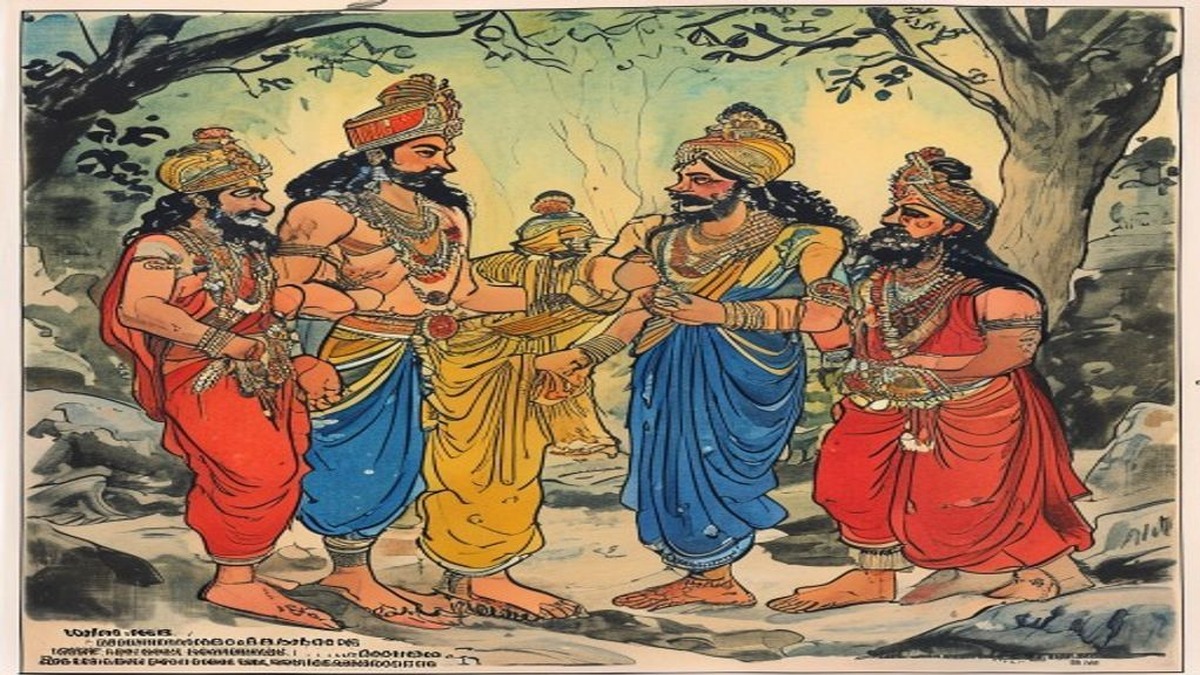
Beat III — The Pancatantra’s Analysis of Honest Hospitality
Vishnu Sharma’s lesson operates on the boundary between social obligation and practical wisdom. The social obligation of hospitality is real and the Pancatantra does not dismiss it; Shandili’s concern about what she can offer is not misplaced. The lesson is about what hospitality actually consists of at its foundation. The Sanskrit concept of atithi devo bhava — the guest is as the divine — is not, in Vishnu Sharma’s reading, a command to perform wealth one does not have. It is a command to give the guest one’s genuine welcome and one’s genuine best. Shandili’s genuine best, on the day in question, was sesame seeds offered with a full heart. This satisfies the command; the performance of greater provision than exists would have violated it, by substituting image for substance.
The structural parallel with the Pancatantra’s other tales of performance versus reality is deliberate. The foolish sage and the jackal describes a performance of devotion that conceals theft; The Thief and the Brahmins describes performance of reformed character that conceals continued criminality. Shandili’s story describes the opposite movement: the choice of honesty over performance, in a context where performance would have been socially easier. The Pancatantra consistently rewards the choice of substance over image, and Shandili’s story is the collection’s clearest expression of this preference in the domain of domestic social life.
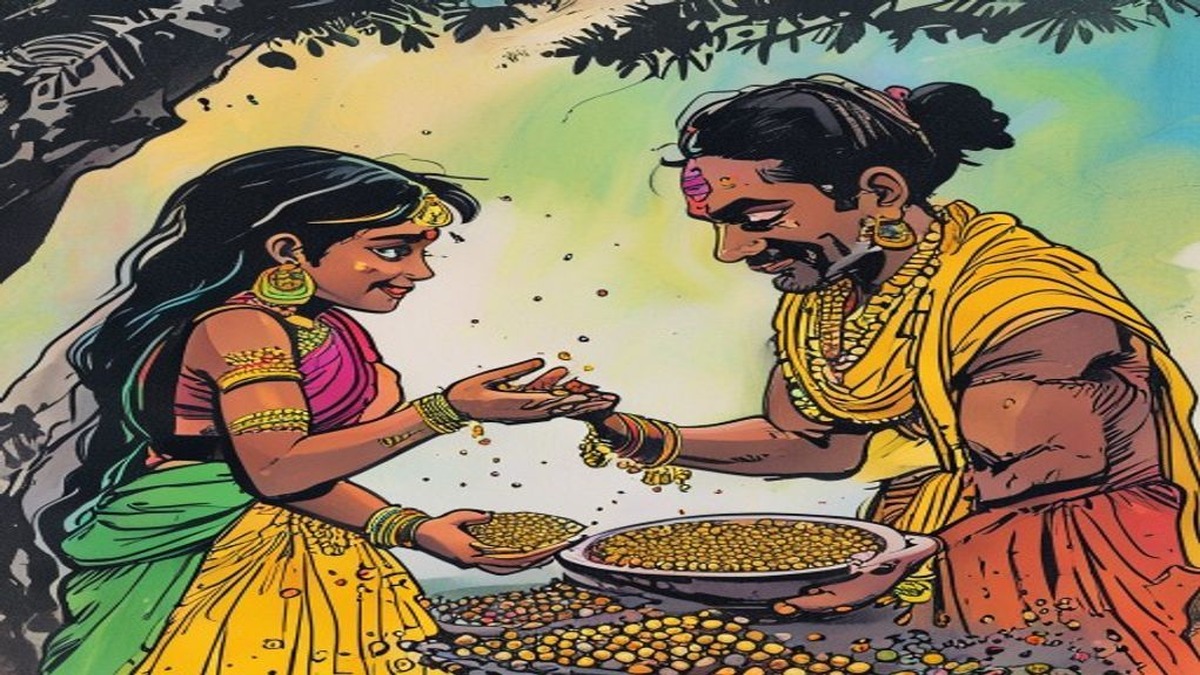
Beat IV — What Shandili Teaches About Generosity and Truth
For Vishnu Sharma’s royal pupils the application of Shandili’s lesson extends well beyond domestic hospitality. Courts and councils present constant pressure to perform capacity, certainty, and resource that may not exist. The minister who represents the state’s military strength as greater than it is, in order to maintain the image of adequacy in diplomatic negotiations, is performing hospitality. The ruler who promises allies resources that cannot be delivered is performing generosity. The Pancatantra’s consistent teaching is that performance of capacity beyond reality is a form of deception that compounds over time: the gap between what was performed and what can be delivered must eventually be accounted for, and the accounting is always more costly than honest representation would have been.
Shandili’s wisdom is therefore not merely domestic; it is a model for the relationship between honest representation and sustainable action in any domain. The sesame seeds served honestly are the foundation of a genuine relationship; the performed feast would have been the foundation of a false one. In political life, as in hospitality, the relationships built on honest representation of actual capacity — even limited capacity — are more durable and more trustworthy than those built on performed abundance that cannot be sustained.
Moral and Sanskrit Wisdom Tradition
“Offer what you genuinely have with a full heart; the performance of greater capacity than exists is not generosity but deception.”
— Moral of Shandili and Sesame Seeds, Pancatantra Book I (Mitra-bheda)
This moral engages with the Sanskrit tradition’s treatment of dana (giving) and its relationship to satya (truth). The Mahabharata’s discussion of dana consistently distinguishes genuine giving — giving from what one actually has, with the genuine intention to benefit the recipient — from the performance of giving that is motivated by social image. Vishnu Sharma’s formulation is among the most direct: the performance of generosity beyond one’s actual means is not a generous act but a deceptive one, because it represents as fact something that is not fact. The guest’s receipt of honest sesame seeds is a receipt of truth; the guest’s receipt of performed abundance would have been a receipt of fiction. The Sanskrit wisdom tradition consistently prefers truth, even when truth is modest, to the fiction that flatters the image of the giver.
Why This Story Has Lasted 2,300 Years
Shandili and Sesame Seeds endures because the tension it describes — between the social pressure to perform capacity one does not have and the wisdom of honest representation of what actually exists — is genuinely permanent. Every generation produces situations in which social obligation, pride, or the desire to maintain a particular image pulls toward performance of greater capacity than is available. The Pancatantra’s answer, in Shandili’s story, is that the honest offer of what genuinely exists is not a failure of the relevant obligation but its truest fulfillment. The sesame seeds, offered honestly, are the right gift. The performed feast would have been the wrong one, because it would have substituted image for substance in a domain where substance is what matters.
Sanskrit Tradition: Tantrakhyayika (c. 200 BCE, Kashmir); Hitopadesha
Key Distinction: Performed generosity vs. genuine giving; atithi devo bhava as a command to genuine welcome, not performed abundance
Author: Vishnu Sharma (attributed, c. 3rd century BCE)
Vedic Parallel: Dana (giving) must be grounded in satya (truth); giving beyond actual means is deception, not generosity
You May Also Like
 Panchatantra Stories
Ages 3-5
Panchatantra Stories
Ages 3-5
Light Makes Prosperity
Light Makes Prosperity: There is a Tamil proverb dîpam lakshmîkaram, meaning, “light makes prosperity,” and the following story is related to explain it: The
 Panchatantra Stories
Ages 6-8
Panchatantra Stories
Ages 6-8
The Story of Nanda and Vararuchi
The Story of Nanda and Vararuchi: Once upon a time, there lived a king, by the nameof Nanda. He ruled the entire land surrounded by theseas and his power was
 Panchatantra Stories
Ages 9-12
Panchatantra Stories
Ages 9-12
The Lion and the Clever Jackal
The Lion and the Clever Jackal: In a great forest of India, where the sal trees grew tall and ancient and the undergrowth was dense with life, there dwelt a