The Price of Indiscretion
Read 'The Price of Indiscretion' — a classic Panchatantra story about moral lessons about greed. The Price of Indiscretion is a beloved Panchatantra tal...

The Price of Indiscretion
Source: Panchatantra, Book III — Kakolukiyam (Of Crows and Owls), attributed to the sage Vishnu Sharma, composed c. 300 BCE–300 CE; this redaction follows the Sanskrit critical text and Chandra Rajan’s annotated translation (Penguin Classics, 1993).
रहस्यं येन प्रकाशितं, तस्य नाशः न संशयःः
A minister who has served his king faithfully for decades makes a single error: he shares a secret plan of the court with his wife in a moment of domestic intimacy, believing pillow talk to be walled off from the world. The secret travels — as secrets do — through one relay, then two, until it reaches the king’s ear in the form the minister spoke it but attributed to the minister himself. The tale is the Panchatantra’s most unsparing examination of the way private speech becomes public fact, and of why statecraft has always demanded that its practitioners treat the boundary between private and professional as absolute.
Part I: The Trusted Chamber
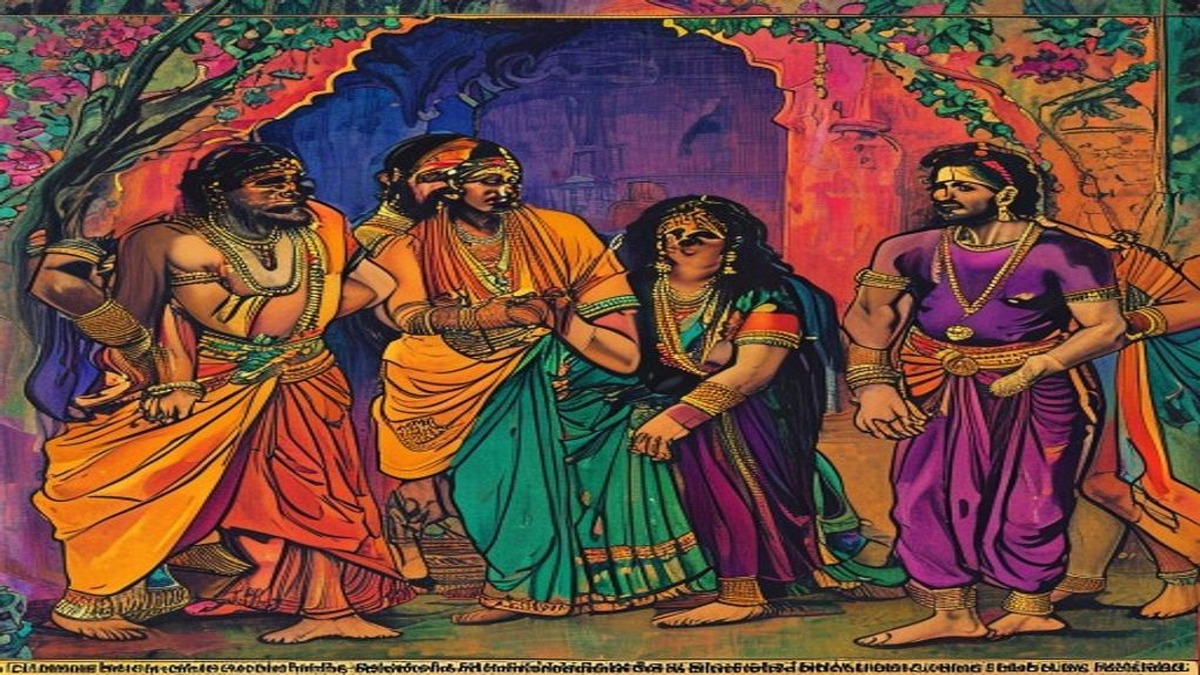
The minister Sumantra had served King Vikramasena for thirty-one years. He had managed three wars, two succession crises, and one famine with the quiet competence that makes good advisors invisible — the kind of man whose work only becomes visible when he stops doing it. He knew where every secret of the court was kept because he had placed most of them there himself.
His wife, Priyavada, was intelligent and discreet in the way of women who have been married to powerful men long enough to understand the value of what passes through their households. She never repeated what she heard in the minister’s chambers, had maintained this discipline across three decades, and was, by any honest assessment, as trustworthy a keeper of secrets as the minister himself.
This is what made the error so characteristic and so instructive. It was not carelessness or malice that undid Sumantra. It was the precisely located vulnerability in the most disciplined people: the moment of intimacy between two individuals who have built enough trust to believe that no one exists outside their circle of confidence.
The secret the king had shared with his minister was this: within a fortnight, Vikramasena intended to remove his senior general — a man named Durdanta — from command, having received reliable information that Durdanta was in communication with a neighbouring rival kingdom. The replacement was planned, the timing fixed, the method chosen. No one was to know until the moment of the removal.
That evening, Sumantra told his wife. He told her not to unburden himself but to share, in the particular way of long marriages, the weight of what he carried: “I hold something I cannot tell you, but I can tell you it is heavy.” Priyavada, who had heard this formulation before and knew it was an invitation, asked what she already knew she should not ask. He told her. She held the secret for six days.
Part II: The Journey of the Secret
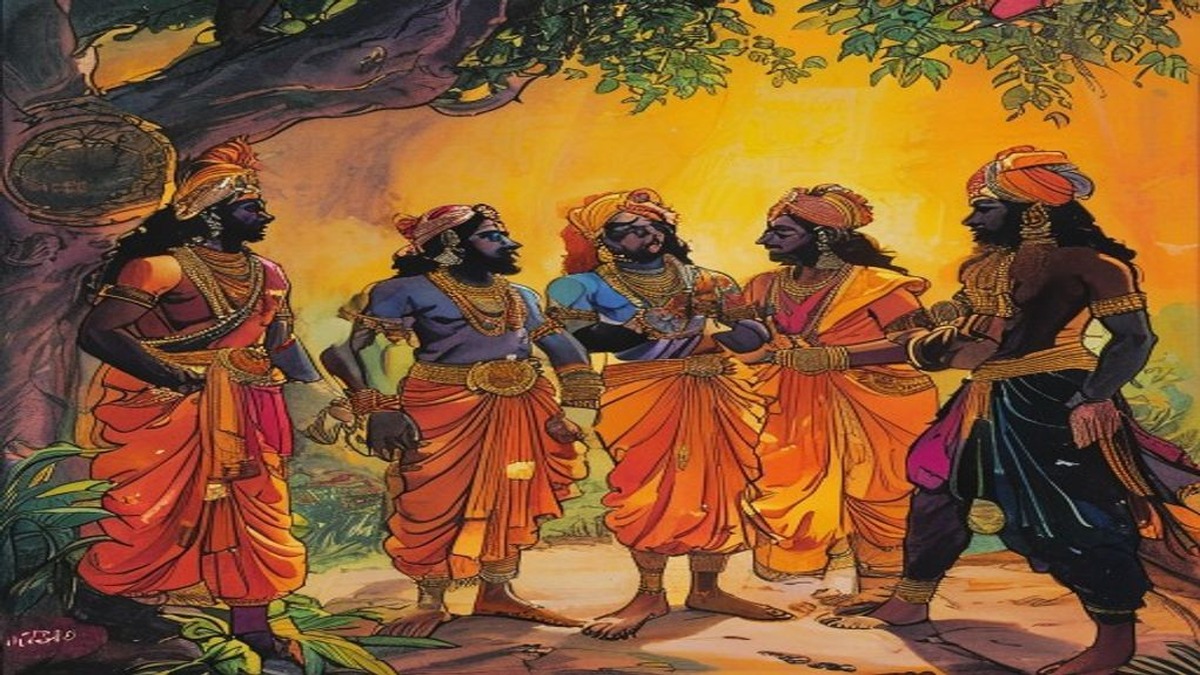
The mechanics of how the secret travelled are recorded by Vishnu Sharma with unusual precision, as if to document for the reader’s education exactly how these things work.
Priyavada told her closest friend, a woman named Hemalata, under oath of absolute confidence. The formulation she used was: “I am going to tell you something and you must never repeat it, especially not to your husband, who knows the general.” This formulation, as any experienced analyst of human communication could have predicted, guaranteed that Hemalata would repeat it to her husband and that “especially not to your husband, who knows the general” would be the first part she communicated.
Hemalata’s husband worked in the court stables. He mentioned the general’s impending removal to a colleague while grooming horses the following morning — not as gossip but as professional intelligence, since the general’s removal would affect the stable assignments for the campaign season. The stable colleague mentioned it to a groom who served in the general’s own household. The general heard it at midday.
Durdanta was not a subtle man but he was a fast one. He had an audience with the king that same afternoon on a pretext of military supply requisitions. During the audience he made a remark that contained, embedded in otherwise routine reportage, a detail that could only have come from the king’s private conversation with Sumantra. Vikramasena was a king who noticed things. He noted the detail, said nothing, and summoned Sumantra that evening.
The interview was brief. The king described what the general had said. He asked the minister to account for how information known only to the two of them had reached the general’s ear within eight days. Sumantra, who was a truthful man and knew that a false answer would be found out, told the king what had happened. The king listened without expression. Then he said, very quietly, that the minister’s services would no longer be required.
Part III: The Accounting
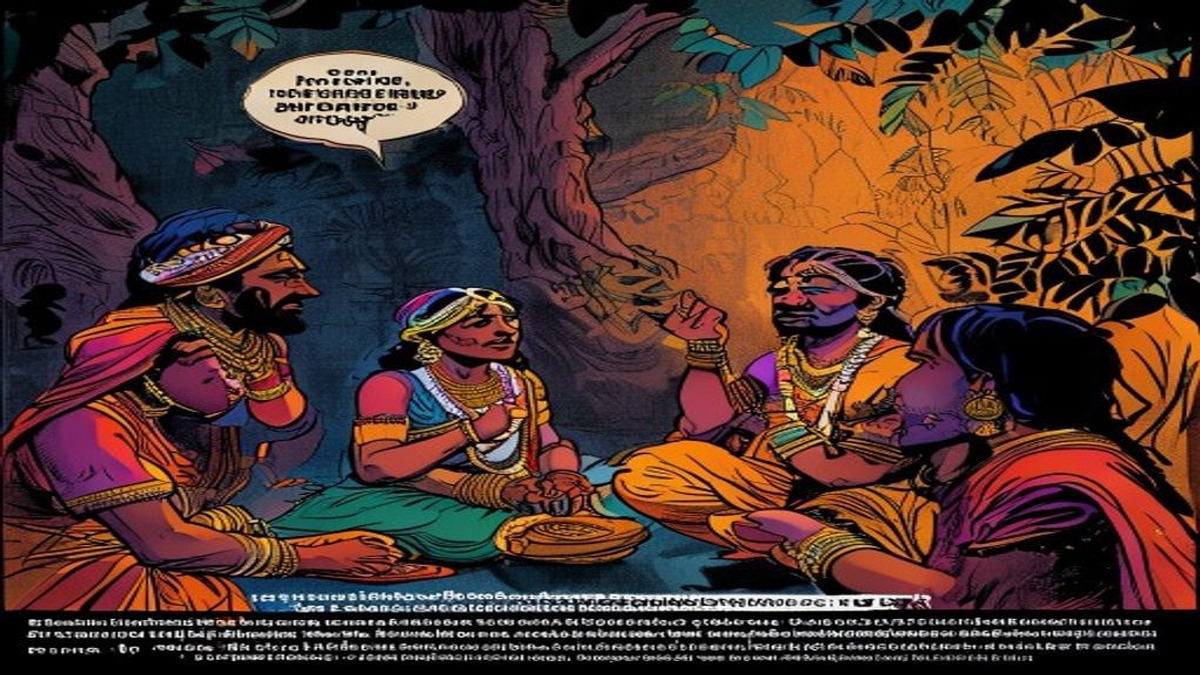
Sumantra did not beg. He understood the king’s position precisely because he had helped the king construct it across three decades: a court in which the minister cannot keep a state secret is a court in which no state secret is safe. The king had no choice, and the minister understood this. His dismissal was, from the perspective of good governance, the correct decision. The fact that it destroyed a thirty-one-year career was not a contradiction of its correctness; it was simply its cost.
What the minister did, in the days after his dismissal, was examine the sequence of events with the same analytical rigour he had applied to everything else in his professional life. He was looking for the point of failure, and he found it exactly where Vishnu Sharma places it: not in Priyavada’s choice to tell Hemalata, not in Hemalata’s choice to tell her husband, not in the stable groom’s professional calculation. All of those were predictable consequences of a single initial act: the minister’s choice to speak at all.
“I told her I carried something heavy,” he said, in the account that Vishnu Sharma gives him the grace to speak aloud. “That was already the error. I did not share the secret; I created the conditions in which sharing it was the natural continuation of what I had begun. Every step after that was simply gravity.”
The Sanskrit tradition calls this rahasya-bhedana — the breaching of confidentiality — and treats it as one of the cardinal failures of ministerial conduct. What makes this story unusual is its insistence that the breach need not be dramatic or intentional to be catastrophic. Sumantra was not careless. He was intimate. In statecraft, the text suggests, these are not always different things.
Part IV: What the Story Teaches
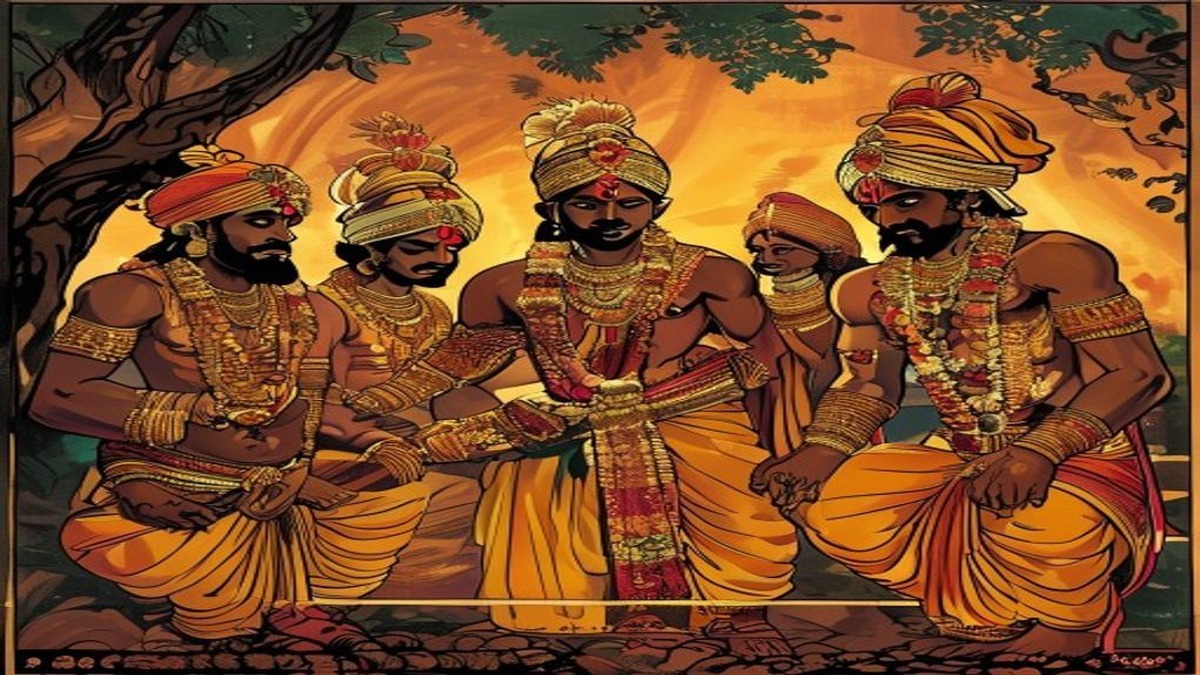
Vishnu Sharma closes with an observation that is simultaneously about statecraft and about the nature of speech: “A secret shared with one person is no longer a secret; it is a message in transit. The only question is how long the transit takes and where it arrives.”
The tale is not primarily about trust between spouses or the untrustworthiness of women — a reading that some later commentators imposed on it. Priyavada is not the villain. She told one person under oath of confidence, which is exactly what her husband did when he told her. The story’s analysis is structural, not moral: once a secret leaves one mind, its trajectory is determined by the social graph through which it travels, and that graph is never fully knowable in advance.
The Panchatantra’s position is severe and practical: there are things that should not be said, and the correct discipline is not saying them. Not to anyone. Not even in the trusted intimacy of a long and loving marriage. The cost of this discipline — the silence that must be kept even when silence is lonely — is the price of the responsibility that statecraft places on those who hold it.
Why This Story Has Lasted Three Thousand Years
“The Price of Indiscretion” endures because it describes a mechanism that has not changed across three millennia: the social propagation of information through networks of trust, each node of which believes itself to be the terminal point. The minister’s wife did not intend to betray her husband. Her friend did not intend to cause damage. The stable hand was simply doing his job. No one in the chain from minister to general was acting with malice, and the result was catastrophic anyway. This is the story’s deepest insight: that harm does not require intention, only the release of information into a system that will carry it where intention never directed.
The story entered Arabic Kalila wa Dimna as a fable used by Islamic advisors to counsel rulers and ministers about the absolute discipline required of those who hold state secrets. Medieval Persian political literature cites it frequently in discussions of what the Arabic tradition calls kitman — the obligation of concealment in those who serve power. In European political theory it appeared in discussions of counsel and confidentiality, from Machiavelli’s warnings about advisors who cannot keep counsel to Francis Bacon’s essays on secrecy in public life.
For modern readers the story maps with uncomfortable precision onto the contemporary experience of information in networked systems: a message sent in confidence to one person enters a network whose subsequent propagation cannot be controlled. The minister’s error has a technical name in modern security theory — the single point of disclosure — and it produces exactly the same outcome across three thousand years and every medium of communication that humanity has invented to connect itself.
Frequently Asked Questions
What is the moral of The Price of Indiscretion?
The story teaches that a secret shared even once — even in the most trusted relationship, even under oath of confidence — enters a social network that will carry it beyond any person's control. The minister's error was not carelessness or malice but intimacy: he created the conditions for disclosure by signaling that he carried something important. True discretion requires not speaking at all, not simply choosing the right confidant.
Which book of the Panchatantra does this story come from?
The story appears in Book III, Kakolukiyam (Of Crows and Owls), the book focused on statecraft, intelligence, and the management of enemies. It is one of several stories in the book that examine the disciplines required of those who serve in positions of political or administrative power.
Is the minister's wife portrayed as villainous in this story?
No. The Panchatantra's analysis is structural rather than moral. Priyavada tells one person under oath of confidence — exactly what her husband did when he told her. The story argues that no individual in the chain of disclosure acted with malice; each simply behaved as people in trusting relationships normally behave. The fault lies entirely in the initial act of speaking, not in the subsequent propagation.
What is rahasya-bhedana and how does it apply here?
Rahasya-bhedana is the Sanskrit term for the breaching of confidentiality, treated in the Panchatantra and related political literature as one of the cardinal failures of ministerial conduct. The story is unusual in its analysis because it locates the breach not in the dramatic moment of disclosure but in the preparatory signal: the minister saying 'I carry something heavy' created the invitation that led to the disclosure. The breach began before he spoke the secret.
How did this story influence later political thought?
The story entered Arabic Kalila wa Dimna and became a standard reference in medieval Islamic political literature on the duty of concealment — kitman — for those who serve power. In European political writing it appears in discussions of counsel and confidentiality in Machiavelli and Francis Bacon. Its core mechanism — a single disclosure propagating through a trust network to reach exactly the wrong ears — anticipates modern information security theory's concept of the single point of disclosure.
You May Also Like
 Panchatantra Stories
Ages 9-12
Panchatantra Stories
Ages 9-12
The Crane and the Crab
The Crane and the Crab: When things go wrong, use your wit to overcome the situation.” A heron lived near a big lake, which was full of fishes and other water
 Panchatantra Stories
Ages 6-8
Panchatantra Stories
Ages 6-8
The Foolish Sage
The Foolish Sage: Do not be taken in by the sweet words of a swindler.” Once upon a time, there was a sage called Deva Sharma who lived in a temple in the
 Panchatantra Stories
Ages 6-8
Panchatantra Stories
Ages 6-8
The Brahmin, the Thief, and the Demon
The Brahmin, the Thief, and the Demon. A scholar meets a demon that was once cruel. This tale teaches us about forgiveness, understanding, and seeing good.