The Story of the Potter
Read 'The Story of the Potter' — a classic Panchatantra story about courage. of the Potter is a beloved Panchatantra tale featuring a ant. This ancient ...
The Story of the Potter
Source: Panchatantra, Book III — Kakolukiyam (Of Crows and Owls), attributed to the sage Vishnu Sharma, composed c. 300 BCE–300 CE; this redaction follows the Sanskrit Tantrakhyayika recension and Patrick Olivelle’s critical translation (Oxford University Press, 2006).
या विद्या नास्ति सा शक्तिर् नास्तिः, यश्च नास्ति न नाम किंचित्ःः
A potter with a facial scar earned in a drunken fall manages, through a combination of luck and silence, to be taken for a great warrior by a king who needs one. Appointed to high military command, he succeeds for a time through bluster and the genuine competence of the men beneath him — until the campaign reaches the moment that requires exactly the skill he never had. The tale is the Panchatantra’s most pointed examination of imposture: not its morality, but its mechanics, and the precise point at which a false identity encounters the test it cannot pass.
Part I: The Useful Misunderstanding
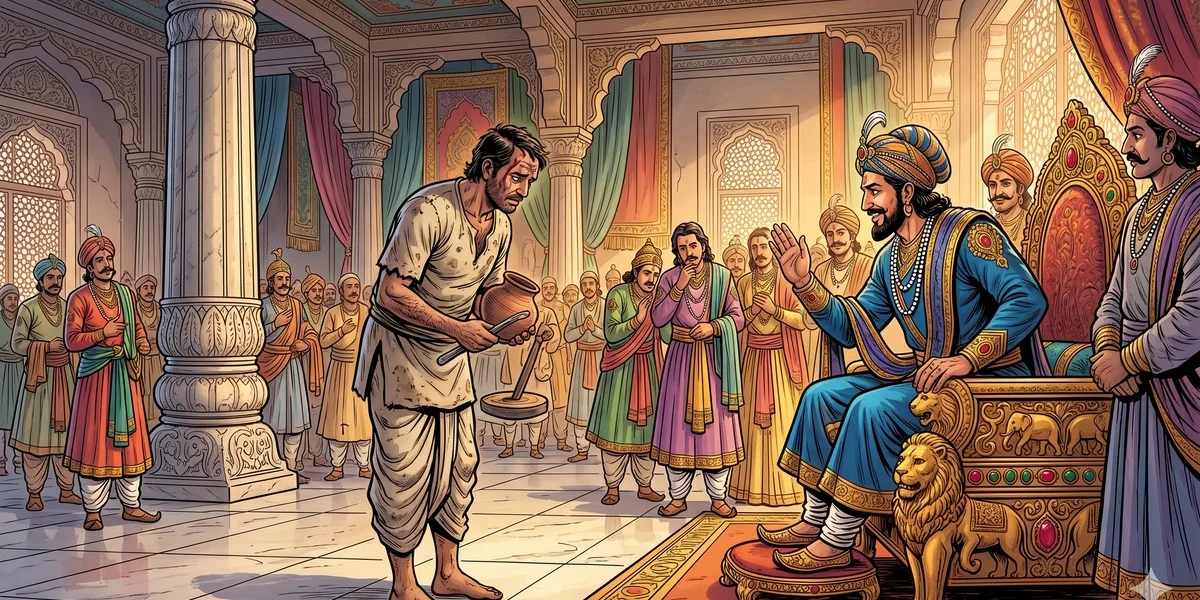
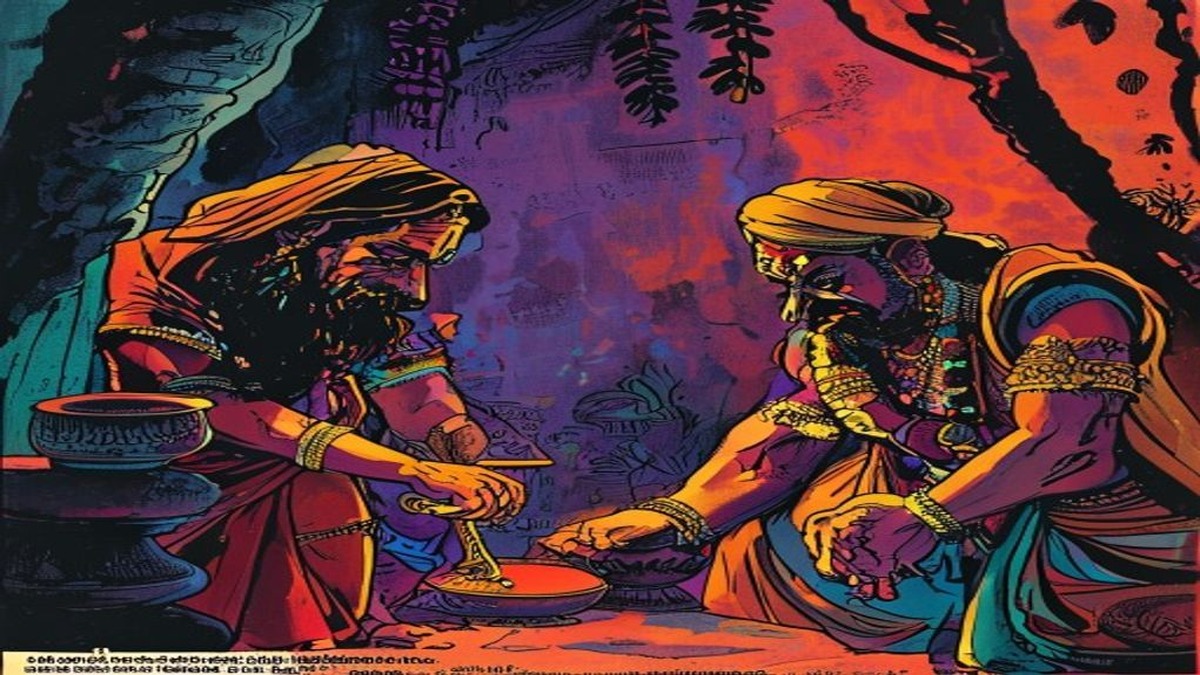
In a town near the kingdom of Ayodhya there lived a potter named Yuddhapingala — a name meaning, with the Panchatantra’s characteristic irony, “yellowish from battle.” He was a competent maker of pots. He was not a warrior. He had never been in a battle. The scar that ran from his left temple to his jaw was the product of a fall during a feast three years earlier, when he had struck his face against the lip of one of his own clay jars.
The scar looked nothing like the result of a drunken fall. It looked exactly like a sword-cut taken in close combat. This is because faces do not wear footnotes explaining how their marks were acquired.
When a drought year drove Yuddhapingala from his failing pottery to seek work in the capital, he arrived at court looking for any employment available to a man of no particular skills. The king, Mahendravarma, was at that moment in urgent need of military commanders for a campaign against a neighbouring state. His eye caught the potter’s scar. His chamberlain asked the question. Yuddhapingala, who was hungry and sensible enough to recognize opportunity when it introduced itself, did not correct the assumption. He allowed the court to believe he was an experienced warrior who had taken his scar in the service of a previous king.
He was appointed to command a regiment. He accepted with the outward composure of a man who has been given something he has always deserved, and spent his first evening as a military officer in a state of private terror that he was careful not to share with anyone.
Part II: The Imposture Sustained
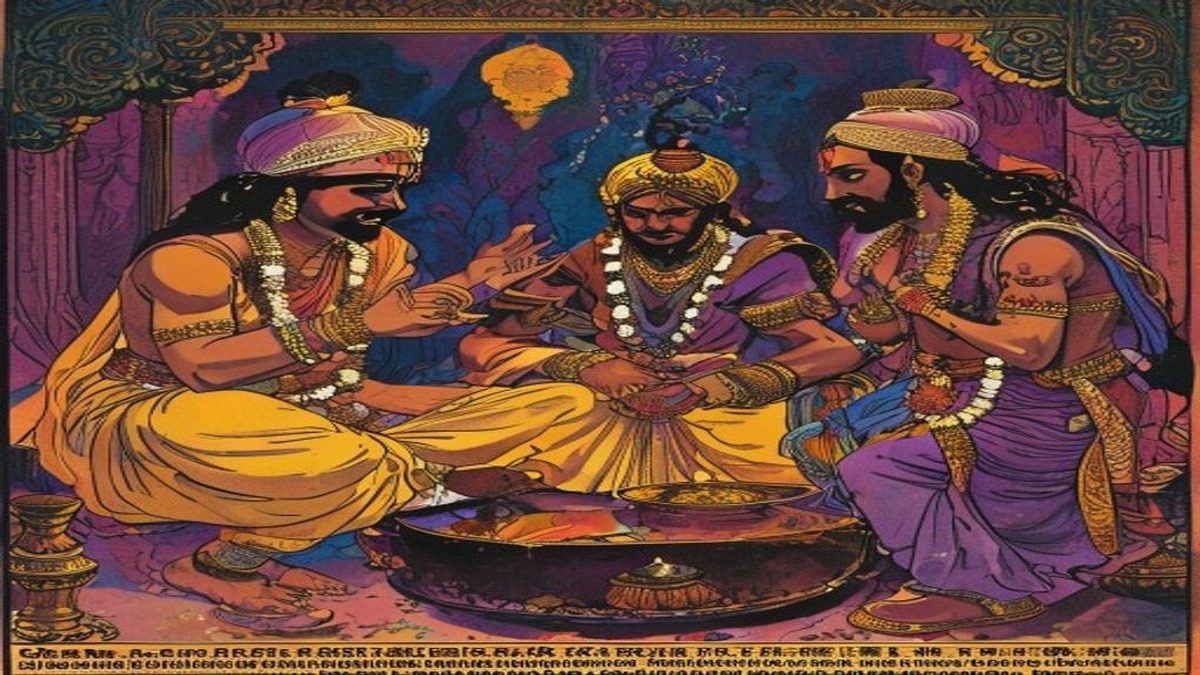
For the early part of the campaign Yuddhapingala’s imposture held, for a reason the Panchatantra records without admiration: good soldiers do not need good officers to do good soldiering. His regiment was composed of experienced men who had served under multiple commanders and had developed the professional capacity to function almost independently of their officer’s competence, provided that officer did not actively impede them. Yuddhapingala mostly did not impede them. He issued broad instructions, listened to his senior sergeants’ detailed proposals, and approved them. He appeared, from the outside, to be the kind of commander who trusted his men.
His scar continued to do much of the work. In councils of war, other officers treated him with the deference they extended to a man who had clearly bled for his position. When he was uncertain — which was frequently — he said less, and silence in experienced company is often mistaken for the confidence of a man who has already calculated what others are still working through.
He was not a coward. The text is careful to record this: Yuddhapingala rode in the advance on two occasions and was not conspicuously afraid under fire. What he lacked was not nerve but knowledge: the accumulated tactical understanding that comes from years of study and experience and cannot be acquired by observation in a single campaign. So long as the campaign remained within parameters his sergeants could navigate, this gap was invisible. The campaign then moved outside those parameters.
Part III: The Test That Cannot Be Passed
The enemy had taken a position at a river ford that could be crossed only by a specific formation that counteracted the flanking fire from the opposite bank. There were three possible approaches; two of them would result in catastrophic losses; one was correct. The decision required the kind of judgment that is built from precisely the knowledge Yuddhapingala did not have.
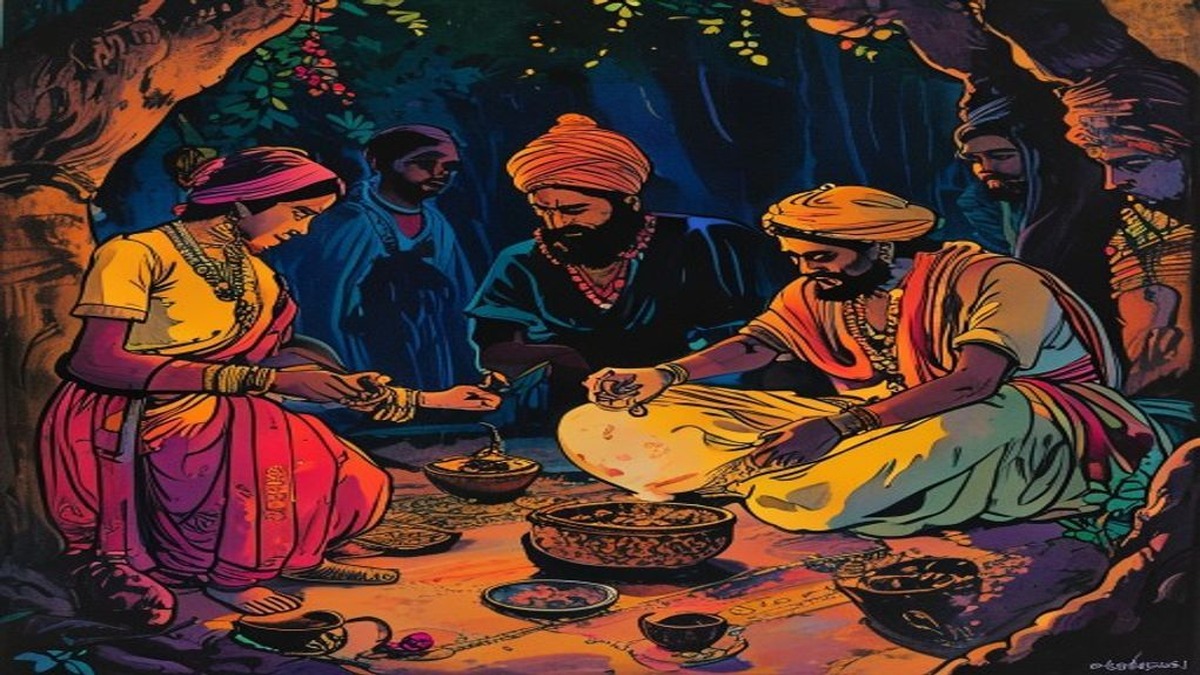
His senior sergeant presented the options. The other regimental commanders waited. Yuddhapingala looked at the river, at the enemy position, at the three options his sergeant had drawn in the dirt. He understood the words. He did not understand the decision. For the first time in the campaign, his silence was not read as confidence. It was read, by men who knew what the decision looked like, as the silence of a man who could not make it.
He made a choice. It was not the correct one. The regiment crossed at the wrong point and took heavy losses before the senior sergeant took de facto command and extracted them. No one died who might not have in any crossing — the sergeant was very good — but the cost was higher than it should have been, and the discrepancy was visible to everyone who knew how to read it.
That evening, his sergeant came to his tent. The conversation was brief. The sergeant was a man who valued his soldiers above the protocols of rank. He told the officer, without accusation but without softening, what had happened and what it meant. Yuddhapingala listened. Then he told the sergeant what he was: a potter from a town near Ayodhya who had come to the capital looking for work and had not corrected a misunderstanding.
The sergeant was silent for a long time. Then he said: “You should tell the king.”
Part IV: The Confession and Its Lesson
Yuddhapingala went to the king. He told him everything: the pottery, the feast, the jar’s lip, the scar, the misunderstanding he had chosen not to correct, the campaign, the river, the wrong decision. The king heard him out. His response was not what the potter had expected.
“The scar is not the error,” Mahendravarma said. “My chamberlain’s assumption is not your error. Your silence in the moment of misunderstanding was an error. Your silence at the ford was the price of the first error. One is recoverable; the other was paid by men who did not know they were financing your pretense.”
He discharged Yuddhapingala from the army without punishment beyond the discharge itself — the Panchatantra notes that the king was as interested in the lesson as in the penalty — and made his sergeant a commander.
Vishnu Sharma’s closing observation is directed at those who assign as much as those who accept: “A king who chooses his commanders by the evidence of scars, without inquiry into the history of those scars, has created the condition for this outcome. Yuddhapingala is guilty of silence; Mahendravarma is guilty of insufficient question. The river paid for both.”
Why This Story Has Lasted Three Thousand Years
“The Story of the Potter” endures because it maps a pattern that recurs in every institutional context: the person who allows a misidentification to stand, succeeds in the margins of their false role longer than they should, and eventually meets the test that the false role cannot pass. Every era has its version of Yuddhapingala — the manager hired for credentials they overstated, the expert whose bluster sustains them until the specific crisis that exposes the gap between claimed and actual knowledge.
The story’s most instructive element is not the imposture itself but its sustainability: Yuddhapingala does not fail immediately, because a false identity in a well-functioning institution can coast on the competence of the institution for a surprisingly long time. It is only the exceptional demand — the river crossing that requires genuine expertise — that breaks the surface. This too is a recognisable pattern: the crisis is almost never the moment the imposture began, and the cost is almost never paid by the person who assumed the false identity.
The tale entered Arabic Kalila wa Dimna and was cited in medieval Islamic discussions of how rulers should verify the claims of those who seek positions of trust. In European traditions it became a fable about the danger of judging qualification by appearance rather than evidence, cited in discussions of military appointment reform. Its central argument — that selection systems which rely on signals rather than substance create the conditions for the impostor’s success — remains as applicable to modern institutions as it was to Mahendravarma’s court.
Frequently Asked Questions
What is the moral of The Story of the Potter?
The story teaches two related lessons. First, a false identity can be sustained in a well-functioning institution for a long time — but only until the exceptional demand that requires genuine expertise arrives. Second, the cost of the imposture is paid not by the impostor but by those who depend on the position being filled by someone genuinely qualified. The Panchatantra also distributes blame to the selection system: a king who appoints commanders based on the appearance of scars rather than verified experience has created the conditions for the outcome.
Which book of the Panchatantra is this story from?
The story comes from Book III, Kakolukiyam (Of Crows and Owls), which addresses statecraft, the verification of claims, and the management of those who seek power. The book is concerned broadly with how rulers and institutions can be deceived by those who present false credentials, and what structural safeguards prevent this.
Is Yuddhapingala a villain in this story?
The Panchatantra does not frame him as simply villainous. He is not actively malicious — he takes his position seriously and is not a coward under fire. His error is the initial failure to correct a misunderstanding, and all subsequent failures flow from that single silence. The text distributes guilt explicitly: the potter is guilty of silence, but the king is guilty of failing to ask the right questions when making the appointment.
How does the story handle the idea that institutions can mask incompetence?
The story is unusually sophisticated in noting that good soldiers do not need good officers to do good soldiering, and that an incompetent commander can appear capable as long as the institution around him functions well. Yuddhapingala succeeds not through deception of his soldiers but because they compensate for him professionally. The story argues that this masking effect is a feature of any well-run institution — and it means that incompetence is often only revealed when the institution faces a demand outside its normal parameters.
How did this story spread across cultures?
The story entered Arabic Kalila wa Dimna and was used in medieval Islamic political discussions about the verification of claims made by those seeking positions of military or administrative trust. In European traditions it appeared in discussions of military appointment reform, arguing against the practice of awarding rank based on appearance or family rather than demonstrated ability. The story's central mechanism — an unverified credential sustained by institutional competence until a specific test exposes the gap — has been cited in modern organizational behavior literature as a description of what is now called the impostor dynamic.
You May Also Like
 Panchatantra Stories
Ages 6-8
Panchatantra Stories
Ages 6-8
The Elephants and the King of Mice
A thirsty elephant herd hurts a mouse kingdom, and later a tiny army of mice repays their kindness.
 Panchatantra Stories
Ages 3-5
Panchatantra Stories
Ages 3-5
The Donkey and the Washerman
The Donkey and the Washerman: A lion's skin gives a donkey false courage until one cry reveals his true nature A classic Indian folk tale retold for young...
 Panchatantra Stories
Ages 3-5
Panchatantra Stories
Ages 3-5
The Merchant and the Bullock
A bullock left behind in the forest befriends a mighty lion - until a jealous jackal whispers lies.