The Journey – A Short Story About Love and Longing
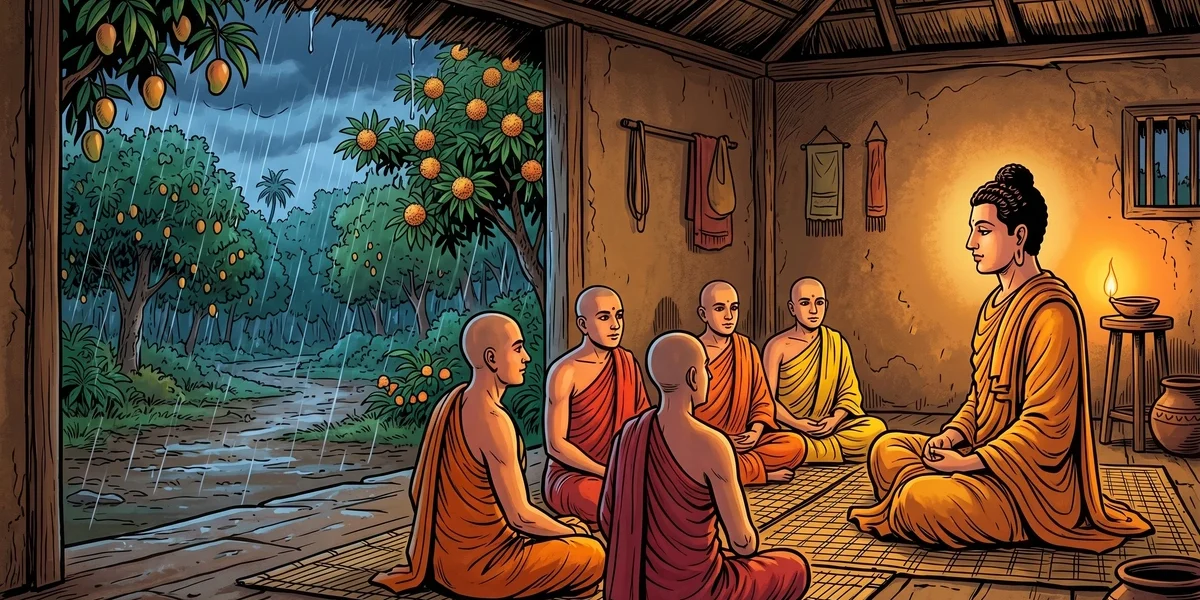
The Journey – A Short Story About Love and Longing: It was an evening of pluvial delicacy. The monsoon had set in. In the month of Sravan the sky was overcast
The Journey: Viraha and the Poetics of Longing
The Departure: When Distance Becomes the Story
Every love story of any depth is, at its structural core, a story about distance — the distance that exists before two people meet, the distance they cross to find each other, and most poignantly, the distance that opens again when one must leave. It is this last distance — the journey away — that generates the richest narrative and emotional territory in storytelling traditions across the world. The title “The Journey” is almost too simple, too bare, and yet that very bareness signals something important: the journey is not incidental to the love story. It is the love story.
In the South Asian aesthetic tradition, this territory has a name: viraha. The Sanskrit word designates the state of love-in-separation — not the absence of love, but love’s presence intensified by physical distance. The Natyashastra, Bharata’s foundational treatise on drama and aesthetics, enumerates the sthayibhavas (permanent emotional states) that great art can evoke, and shringara — the rasa of love — is understood to have two modes: sambhoga, the love of union, and vipralambha, the love of separation. Of these two, the poets and theorists of the classical tradition generally held that vipralambha is the richer, the more fertile, the more artistically productive.
Why? Because union, as narrative and as feeling, tends toward completion and silence. The lovers meet; the story ends. Separation, by contrast, is generative: it produces letters, poems, memories, imagination, longing, beauty. The beloved becomes more vivid in absence than in presence. The details of the last meeting become precious and inexhaustible. A single gesture — the way they turned at the door, the weight of a hand on a shoulder — is replayed and elaborated until it grows into a world. This is the poetics of the journey: departure as a form of artistic creation.
The Road and the Inner Landscape
When one figure in a love story sets out on a journey, the external landscape and the internal landscape begin to mirror and speak to each other. This is one of the oldest conventions of lyric poetry in every tradition — the pathika poem in Sanskrit literature (the poem of the traveller), the Persian ghazal in which the beloved’s absence haunts every line, the Provençal alba (dawn song) in which the lovers lament the light that forces them to part, the Japanese michiyuki (travel scenes) in Noh and Bunraku, in which the physical journey enacts an interior transformation.
In all these traditions, the road is not merely geography. Each landmark on the journey corresponds to a stage of feeling: the outskirts of the city still hold the warmth of the beloved’s presence; the open countryside is the first true encounter with loneliness; the distant mountains signal how far one has already come and how much farther one must go. The traveller carries the beloved with them as a kind of interior weather — sunny when a memory is pleasant, overcast when the absence is acute, stormy when doubt or grief arrives.
This is why love stories built around journeys so often focus not on the destination but on the quality of attention the journey produces. The traveller notices things they would not otherwise notice — the colour of late afternoon light, the particular sound of a river at dusk, the shape of a bird in flight — because love has heightened their perceptual sensitivity. Everything becomes a message from or about the beloved. The world becomes a love letter.
“Separation is not the opposite of love. It is love given a different form — love that must travel, love that must wait, love that must find its way home through memory and imagination when the road between two hearts is too long to walk.”
Longing as Attention: What Absence Teaches
The great paradox of viraha — and of all genuine love-in-separation — is that absence can teach the lover things that presence never could. When the beloved is present, there is something passive in the act of loving: one is bathed in the warmth of the relationship; the feeling is ambient and unexamined. Separation forces examination. One must articulate to oneself — or to paper, or to a friend — exactly what one loves and why, what makes this particular person irreplaceable, what the texture of their presence was and is.
This is what the great literary love letters demonstrate: the letter written in separation is often more eloquent about the beloved than anything the writer might have said face to face. Héloïse to Abelard, separated by monastery walls, writes with a precision and depth about the nature of love that the physical relationship itself could not have produced. Keats writing to Fanny Brawne from his sickbed achieves a clarity of longing that his actual courtship, constrained by social convention, could not reach. The journey forces the lover into language — and language, for better or worse, is where we come to understand what we feel.
In Indian devotional poetry, the viraha tradition reached its highest expression in the Vaishnava bhakti poets — Mirabai, Surdas, Jayadeva — who used the separation of the devotee from the divine as the primary vehicle for expressing the depth of spiritual love. In these traditions, the soul is always on a journey; the divine beloved is always slightly out of reach; and the longing itself is the spiritual practice. The ache of separation is not an obstacle to divine love — it is the form that divine love takes in the world of time and embodiment.
Homecoming and Transformation: The Journey’s True End
Every journey story implies a return — or at least the possibility of return. And in love stories built around separation, the homecoming is rarely a simple restoration. The traveller who returns has been changed by the road; the one who waited has been changed by the waiting. The reunion, if it comes, is between two slightly different people than those who parted. This is not a problem; it is the journey’s deepest gift.
The Indian concept of paripakva — ripening, maturation — captures something of this: the experiences of the road, including the hard ones, ripen both lovers in ways that make their eventual reunion richer than their initial union could have been. The journey is not a detour; it is the main road, the road along which the deeper knowing is built.
For children hearing a story about love and longing, what resonates most immediately is the emotional truth of missing someone — a parent who travels, a friend who moves away, a grandparent at a distance. The sophistication of the story lies in its implicit message: that the missing is not merely suffering. It is also a form of devotion, a proof of love, a testament to how much another person has come to matter. What we long for, we know we value. The journey, in this sense, is not just the story of two people separated. It is the story of how we come to understand the shape and depth of our own love — often for the first time — only when the beloved is gone.
Why This Story Lasted
Stories of love and longing have lasted precisely because they speak to the most universal of human experiences: the gap between where we are and where we want to be, between who we have and who we miss. The journey narrative in love stories has been told in every culture and every era because every culture and every era has known the particular pain and beauty of separation. What gives the best of these stories their longevity is the insistence that the longing is not merely painful — that it is also productive, generative, aesthetically rich. Viraha is not a wound to be healed; it is a form of knowledge to be carried. Stories that honour this complexity endure.
Frequently Asked Questions
What is viraha in Indian literary tradition?
Viraha (विरह) is a Sanskrit term designating the state of love-in-separation — the longing that arises when lovers are physically apart. In classical Indian aesthetics, it is understood as a sub-mode of the shringara rasa (the aesthetic emotion of love), specifically the vipralambha (separation) aspect as opposed to sambhoga (union). Indian devotional poetry, particularly the bhakti tradition, elevated viraha to a central spiritual concept, in which the soul’s longing for the divine is expressed through the imagery of separated lovers. Mirabai, Jayadeva, and Surdas are among the most celebrated poets of the viraha tradition.
Why do love stories so often feature journeys and separations?
Separation creates narrative tension and emotional depth in ways that union alone cannot sustain. Classical theorists of Indian aesthetics noted that vipralambha (love-in-separation) is often more artistically productive than sambhoga (love-in-union) because absence generates longing, longing generates language and imagination, and language is the medium of storytelling. When lovers are apart, the story must continue through memory, anticipation, and the quality of attention each brings to the other’s absence. This is why the great love letters, poems, and tales so often arise from separation rather than presence.
How is the journey used as a metaphor for love in world literature?
The journey appears as a love metaphor in virtually every literary tradition: the Sanskrit pathika (traveller’s poem), the Persian ghazal (in which the beloved is always slightly out of reach), the Provençal alba (dawn song lamenting forced separation), the Japanese michiyuki (travel scenes that enact interior transformation), and the European courtly romance (in which the knight’s quest is inseparable from the love that motivates it). In all these traditions, the external landscape of the journey reflects the inner landscape of feeling — distance, obstacle, and arrival each carry emotional meaning alongside their geographical meaning.
What do bhakti poets like Mirabai reveal about longing and devotion?
The bhakti (devotional) poets of medieval India, including Mirabai (16th century), Surdas, and Jayadeva (12th century, Gita Govinda), used the imagery of human romantic longing — specifically viraha, the ache of separation — as the vehicle for expressing the soul’s longing for divine union. In this tradition, the devotee is always the beloved waiting for the divine, and the apparent absence of God is not a theological problem but a form of intense spiritual practice. The longing itself is the spiritual state; the grief of separation is the proof of love. This inversion — suffering as sign of grace — gives bhakti poetry its distinctive emotional intensity.
How can children understand the concept of longing in a healthy way?
Children experience longing naturally — missing a parent at school, a friend who has moved, a grandparent they rarely see. Stories about love and longing can help children understand that missing someone is not merely painful but is also evidence of care and attachment: we miss what we love. Stories can also convey that separation is temporary in most cases, that the people we love continue to exist and care for us even when apart, and that the feelings of longing can be expressed and shared rather than suppressed. Framing longing as a form of love — rather than only as loss — helps children develop emotional resilience and a richer vocabulary for their inner lives.
Frequently Asked Questions
**Q: Why is this story important?**
You May Also Like
 Aesop's Fables
Ages 3-5
Aesop's Fables
Ages 3-5
The Gold-Giving Serpent
The Gold-Giving Serpent: A poor Brahmin farmer named Haridatta once rested in the shade after working in his field and saw a hooded serpent emerge from a
 Aesop's Fables
Ages 3-5
Aesop's Fables
Ages 3-5
The Sparrow And The Crow
A delightful Indian folk tale about a tidy sparrow, a dirty crow, and a meal of khichri. Learn why small habits and truthful friendship matter.
 Aesop's Fables
Ages 3-5
Aesop's Fables
Ages 3-5
The Three Calamities
The Three Calamities: From that time these four young men became the confidential advisers of king Alakesa in all important affairs of state, and, as night is