The Magic Pitcher
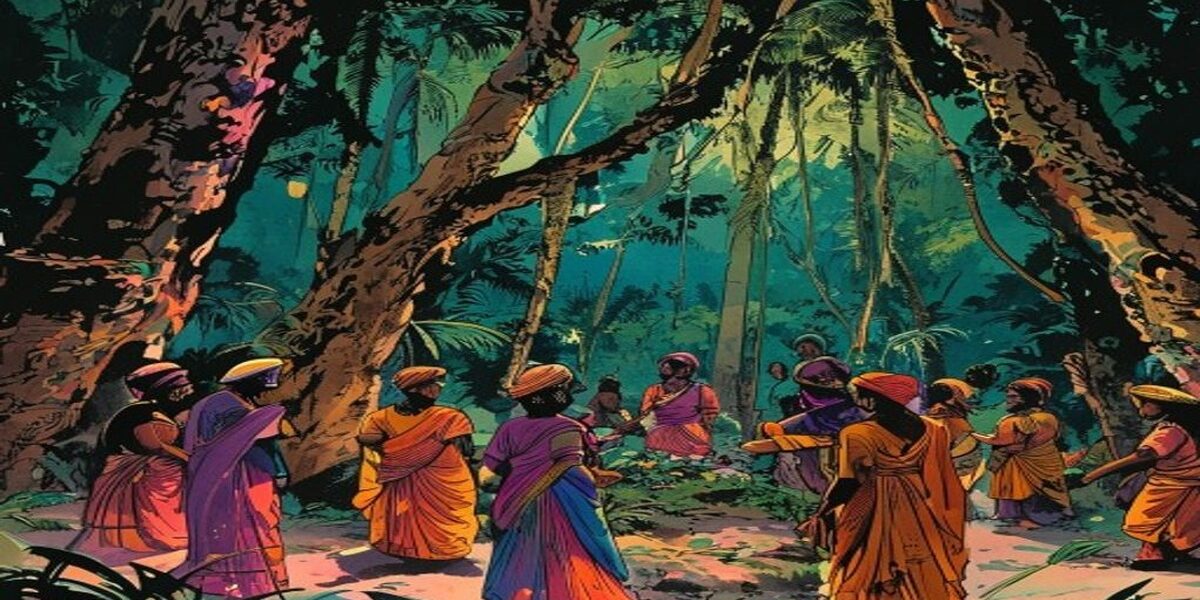
The Magic Pitcher: Long, long ago there lived far away in India a woodcutter called Subha Datta and his family, who were all very happy together. The father
The pitcher never empties. You pour from it, and it remains full. You feed a village, and it remains full. You feed an army, and it remains full. The magic pitcher — the inexhaustible vessel — is one of the most ancient and most deeply desired objects in the Indian mythological and folk imagination, and one of the most philosophically rich: for the pitcher in Indian tradition is not merely a source of abundance but a moral instrument. It flows for the righteous and refuses the greedy. It is the materialisation of a specific theological claim: that genuine abundance is not extracted from a finite world but generated by right conduct toward an infinite source.
I. Akshaya Patra: The Inexhaustible Vessel in Indian Tradition
The concept of the akshaya patra (literally “inexhaustible vessel” — akshaya: undecaying, inexhaustible; patra: vessel, bowl) appears across Indian literature and folk tradition as one of the paradigmatic magical gifts. In the Mahabharata, the akshaya patra is given to Draupadi by the sun god Surya during the Pandavas’ forest exile: the vessel produces unlimited food daily until Draupadi has herself eaten, after which it produces no more for the day. The condition — that Draupadi eat last — encodes a precise moral logic: the vessel’s generosity is activated by the hostess’s own sacrifice, by the willingness to feed others before oneself.
This moral conditioning of the magic vessel is the motif’s most important feature. The inexhaustible pitcher in folk tales does not flow for everyone equally; it flows in accordance with the moral state of the one who holds it or who has received it. The honest woman who receives the pitcher from a forest spirit or a divine figure finds it endlessly full; her dishonest neighbour who tries to steal or replicate the gift finds the vessel empty or the replication cursed. The vessel reads its holder — and its reading is the folk tale’s most economical way of rendering moral judgment visible and material.
The akshaya patra connects to the broader Indian theological understanding of plenitude as consequence: abundance in the world is not a fixed resource to be competed over but a dynamic that expands or contracts in response to the moral conduct of those who draw from it. The Vedic concept of rta (cosmic order, right conduct) held that the world’s abundant production — rainfall, harvests, animals, human fertility — was sustained by the maintenance of right conduct and the proper performance of sacrifice. Conduct that violates rta does not merely harm the individual; it disrupts the abundance that flows from the cosmos to the world.
II. The Pitcher’s Logic: Why Inexhaustibility Is a Moral Claim
The inexhaustible vessel is not simply a wish-fulfillment fantasy about having enough. It is a theological claim about the nature of genuine enough-ness. In a world of finite resources, any single person’s abundance comes at another’s expense: my full granary means your empty one, in a zero-sum world. The magic pitcher breaks this zero-sum logic by positing a source of abundance that is not finite — that does not diminish when drawn from, that does not deprive the neighbour when it feeds the household.
This break from zero-sum logic is the deepest wish encoded in the pitcher motif: not the wish for more than others (the fantasy of superiority) but the wish for enough without others having less (the fantasy of non-competitive sufficiency). The person who has the akshaya patra does not become rich at the expense of the village; she feeds the village from her inexhaustible vessel and remains no poorer for doing so. The pitcher’s magic is specifically the magic of abundance that does not diminish through sharing — a vision of sufficiency that is simultaneously personal and communal, in which giving and having are not in tension.
The moral conditioning of the vessel reinforces this non-competitive logic. The pitcher flows for those who are willing to share — who understand abundance as something to be distributed rather than hoarded. For the greedy person who wants the pitcher precisely in order to have more than others, it is empty. The vessel knows what the holder wants to do with its contents, and it responds accordingly. This is the folk tradition’s most precise statement of the theological principle that genuine abundance comes to those who are already oriented toward abundance’s proper use.
III. The Vessel and the Guest: Hospitality as the Pitcher’s Condition
Indian folk tales about magic pitchers are frequently framed around the virtue of hospitality (atithi-devo-bhava — the guest is God). The pitcher is given to the person who has offered hospitality in conditions of scarcity — who fed the unexpected guest when there was barely enough for the household — and the vessel’s inexhaustibility is the cosmic response to that hospitality. The guest who was fed in scarcity brings abundance; the abundance takes the form of a vessel that ensures the giver never faces scarcity again.
This hospitality-frame has deep roots in Vedic ritual. The atithi (unexpected guest) in Vedic culture was understood to be potentially divine — a test of the household’s capacity for genuine hospitality. The family that turned away the unexpected guest failed a cosmic test; the family that fed even the stranger from their last stores passed it and could expect cosmically supported abundance. The magic pitcher is the folk tale’s narrative mechanism for representing this cosmic response: the verse of the Taittiriya Upanishad that mandates feeding guests without anxiety (annam na parichakshita — do not reject food as your responsibility) is enacted in narrative form when the pitcher appears as the reward of scarcity-hospitality.
The guest who brings the pitcher is often a disguised deity — Shiva as a wandering ascetic, Vishnu as a Brahmin, Lakshmi as a poor woman — whose identity is revealed in the giving of the gift. The identification of guest-as-deity is not merely a narrative device; it is the tradition’s claim about what hospitality actually encounters: the divine, moving through the world in the guise of the unexpected visitor, testing and rewarding those who understand that the guest comes first.
“The vessel that feeds the guest before the host is the vessel that never empties.”
— Teaching from the Indian hospitality tradition
Why This Story Lasted
The Magic Pitcher lasted because the desire it embodies — for a source of abundance that does not diminish through sharing, that makes giving and having compatible rather than competing — is among the most persistent and most philosophically serious of human wishes. It is not the wish for dominance (I want more than you) but the wish for genuine sufficiency (I want enough so that sharing costs me nothing). This is a wish that the market economy, which is built on scarcity and competition, cannot satisfy — and the folk tale’s magic pitcher remains a standing image of the alternative.
The tale also lasted because its moral logic is correct about something real: the orientation toward abundance — the willingness to share before you are certain you have enough — does tend to generate more abundance than the hoarding orientation does, in communities where such generosity creates trust, cooperation, and mutual support. The magic is partly real, and the folk tale knew this before social science demonstrated it.
What is the akshaya patra in Indian mythology?
The akshaya patra (inexhaustible vessel) is a recurring magical object in Indian literature and folk tradition — a bowl or pitcher that produces unlimited food without ever emptying. Its most famous appearance is in the Mahabharata, where it is given to Draupadi by the sun god Surya during the Pandavas’ forest exile, producing food for all until Draupadi herself has eaten. The vessel embodies the theological concept that genuine abundance is generated by right conduct and the willingness to feed others before oneself, not by hoarding from a finite store.
Why does the magic pitcher only flow for righteous holders?
The moral conditioning of the magic vessel reflects the Indian theological principle that abundance is a consequence of right conduct. The pitcher that flows for the generous and stops for the greedy embodies the folk tradition’s claim that genuine abundance comes to those already oriented toward sharing it. For someone who wants the pitcher in order to have more than others — to hoard rather than distribute — the vessel is empty, because its abundance is specifically the abundance that does not diminish through sharing, and hoarding is antithetical to that logic.
What is atithi-devo-bhava and how does it relate to the magic pitcher?
Atithi-devo-bhava (the guest is God) is the foundational principle of Indian hospitality culture, derived from the Taittiriya Upanishad’s injunction to feed guests without anxiety. In the Vedic understanding, the unexpected guest (atithi) is potentially divine — a test of the household’s genuine hospitality. Magic pitcher tales typically feature households that offered hospitality in scarcity and received the vessel as cosmic reward. The guest who brings the pitcher is often a disguised deity (Shiva, Vishnu, or Lakshmi) revealing the divine dimension of the hospitality encounter.
What is the theological claim behind inexhaustible abundance?
The inexhaustible vessel makes the claim that genuine abundance is not extracted from a finite world (zero-sum) but generated by right conduct toward an infinite source. The Vedic concept of rta (cosmic order) held that the world’s productive abundance — rainfall, harvests, human fertility — was sustained by right conduct and proper sacrifice; violations of rta disrupted this abundance. The magic pitcher is the folk narrative form of this theological claim: abundance flows from right relationship with the cosmos, and right relationship is demonstrated by the willingness to give before being certain one has enough.
Is there a real-world basis for the magic pitcher’s moral logic?
Yes — the folk tale’s claim that the orientation toward sharing generates more abundance than hoarding does reflect something real about community dynamics. In communities where generous giving creates trust, cooperation, and mutual support networks, the generous household tends to receive more support in times of need than the hoarding one, and the reputation for generosity generates ongoing social capital. The folk tale’s magic is partly the folk wisdom’s insight into the practical dynamics of gift economies and reciprocal community relations, expressed in the dramatic form of a vessel that never empties.
Frequently Asked Questions
**Q: Why is this story important?**
You May Also Like
 Aesop's Fables
Ages 3-5
Aesop's Fables
Ages 3-5
The Mother In Law Became An Ass
The Mother In Law Became An Ass: Little by little the mother-in-law became an ass - vara vara mâmi kaludai pôl ânâl̤, is a proverb among the Tamil̤s, applied
 Aesop's Fables
Ages 6-8
Aesop's Fables
Ages 6-8
Mr Mighty Of His Mouth
Mr Mighty Of His Mouth: In two adjoining villages there lived two famous men. The one was called Mr. Mighty-of-his-mouth - one that could accomplish wonders
 Aesop's Fables
Ages 3-5
Aesop's Fables
Ages 3-5
Monkey Crocodile
A monkey's friendship with a crocodile ends in tragedy when greed enters their happy life.