The Farmer and the Money-Lender
The Farmer and the Money-Lender: A poor farmer suffered constantly under a money-lender who grew rich while the farmer remained trapped in hardship. With
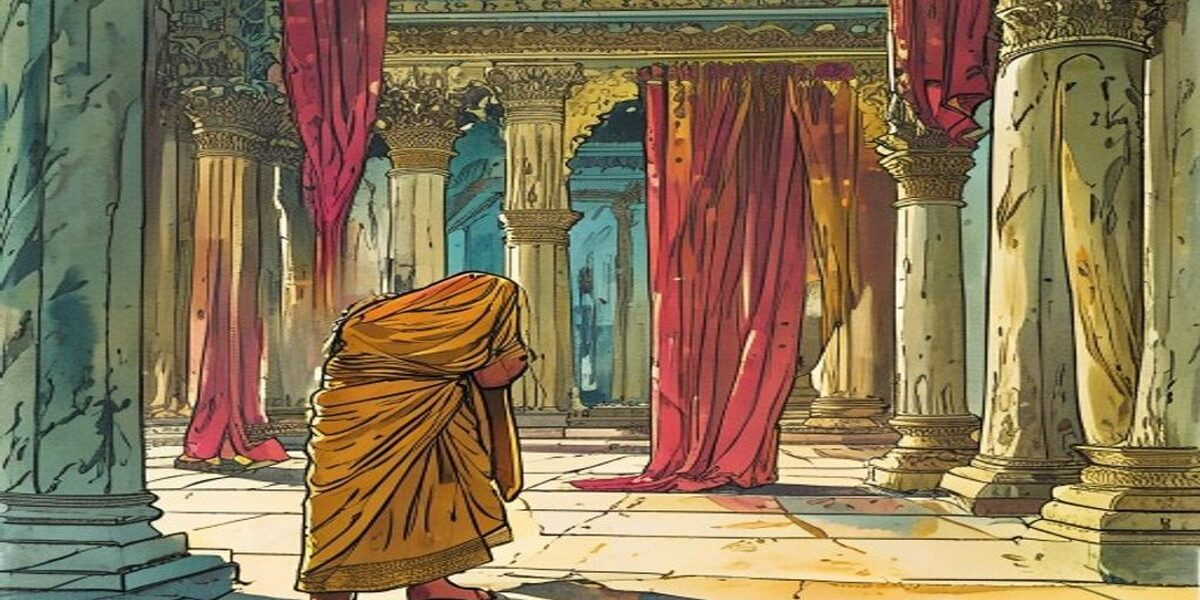
The farmer and the money-lender. In the vast corpus of Indian folk narrative, few pairings are as charged, as repetitive, or as historically rooted as this one. For millennia, the Indian countryside was structured around a relationship of radical asymmetry: the farmer who needed credit before the rains came and the merchant or Bania who held the credit, the ledger, and often, eventually, the land. This story does not merely tell of one transaction; it maps a structural condition that shaped hundreds of millions of Indian lives.
I. The Agrarian Credit Trap: Structure Before Story
Before the colonial period formalised it through revenue demands, before the Green Revolution changed its terms, the Indian agrarian credit relationship had a logic that folk narrative recognised with precision. The farmer needed credit at planting time, when his stores were lowest and the harvest months away. The money-lender provided it — at interest rates that reflected both genuine risk (drought, flood, pest) and the money-lender’s monopoly power in the village. When the harvest came in good, the farmer repaid principal and interest and was free — until next season. When the harvest failed, the interest accrued, the principal was rolled over, and the farmer’s debt grew.
The colonial administrator and social reformer Dadabhai Naoroji documented in the nineteenth century what folk storytellers had known for centuries: the compound interest structure of village credit meant that a single bad harvest could bind a farmer family to debt for a generation. The money-lender’s accounts — which the farmer often could not read — became the authoritative record of a relationship whose terms the farmer was structurally unable to verify. Folk tales about farmers and money-lenders frequently turn on this epistemic asymmetry: the ledger versus the farmer’s memory of what was actually paid.
The folk tale tradition is not innocent about the money-lender’s perspective. Some versions acknowledge that money-lending in the village was a genuine service, that without credit the farmer could not plant, and that the lender bore real risk of non-recovery in bad years. But the structural sympathy lies with the farmer — because the farmer’s vulnerability is existential (lose the land, lose the livelihood, lose the family’s future) while the money-lender’s risk, though real, is financial and cushioned by the accumulated capital of prior transactions.
II. The Tricks and Turns: Wit Against Power
Indian folk tales about the farmer-money-lender relationship rarely end in straightforward tragedy. The folk narrative tradition — particularly in its South Indian and Rajasthani variants — tends to give the farmer a resource the money-lender cannot account for: native wit. The farmer’s escape from the debt trap typically comes not through honest repayment (the structural logic makes this nearly impossible) but through a clever manoeuvre that outsmarts the money-lender on his own terms, or reveals the money-lender’s dishonesty in a way that shames him publicly.
This structural preference for wit over raw justice reflects the realistic folk assessment that formal legal recourse was unavailable to most indebted farmers. The zamindar, the police, the court were all, in the village imagination, on the money-lender’s side — or at least available to the money-lender’s purse. The clever farmer who outwits the Bania through a verbal trick, a strategic misunderstanding, or a theatrical demonstration of the money-lender’s own trickery achieves a justice that the formal system would not provide.
The tricks vary: the farmer who repays in kind (paying with the shadow of his coins, with the smell of his food, with the sound of his coins counted loudly); the farmer who catches the money-lender in a false entry in the ledger by producing a witness; the farmer’s wife or daughter who outsmarts the money-lender when the farmer himself cannot. Each variant explores a different mode of resistance within an asymmetric power relationship, and each suggests that asymmetric relationships are not invulnerable — that the powerful can be caught by their own cleverness, their own greed, their own violations of the social norms they formally espouse.
III. The Moral Economy of Credit: What Is Owed and to Whom
Behind the individual story lies a larger question about the moral economy of credit — the set of norms and expectations about what fair lending looks like, what the lender’s obligations to the borrower are, and what the community owes to both. The anthropologist James Scott’s concept of the “moral economy of the peasant” is directly relevant here: peasant communities operate according to a set of subsistence-first norms in which the creditor’s right to profit is acknowledged but bounded by the debtor’s right to survival. A money-lender who takes the last cow, who drives a family off their land in a bad year, who charges interest that no harvest could cover — this money-lender has violated not just the farmer but the community’s sense of what credit is for.
Indian folk tales about the farmer-money-lender relationship are, in this sense, moral economy documents. They record and transmit the community’s sense of where the line is between legitimate profit and exploitation, between acceptable risk management and predatory practice. The money-lender who is shamed or defeated in these tales is almost always one who has crossed that line — whose greed has exceeded the community’s tolerance, whose ledger entries are fraudulent, or whose terms were never survivable from the beginning.
The tales also transmit, implicitly, the community’s judgement about what the farmer owes: honesty about his situation, good-faith effort at repayment, and the kind of steady agricultural labour that keeps the land productive. The farmer-hero of these tales is not a defaulter by character; he is a victim of structural conditions, of weather, of asymmetric information, and of an interest-rate regime that makes good-faith repayment nearly impossible in bad years. The folk tradition’s sympathy is calibrated accordingly.
“The money-lender’s pen is mightier than the farmer’s plough — unless the farmer is mightier than the pen.”
— Proverb from the agrarian folk tradition of North India
Why This Story Lasted
The Farmer and the Money-Lender lasted because the structural condition it describes — the asymmetric credit relationship between the food-producer and the capital-holder — has never been fully resolved. In the colonial period, British revenue demands intensified it; in the independence era, the Green Revolution reshaped it but did not eliminate it; in the present, microfinance and agricultural credit schemes address its symptoms but not always its root. Farmer indebtedness remains among the most persistent and tragic features of Indian rural life, evidenced in decades of farmer suicides concentrated in the cotton-belt and other high-input, price-volatile agricultural zones.
The folk tale provides, at minimum, a mirror: this is what the relationship looks like, this is how the trap is set, and — in its most hopeful versions — this is how cleverness and community solidarity can sometimes spring the trap. That minimum is not nothing. For communities that experienced the farmer-money-lender relationship as a permanent feature of their world, the tale of the farmer who outsmarted the Bania was a story about the possibility of agency in a structure designed to preclude it.
What is the historical context of farmer-money-lender tales in India?
Farmer-money-lender tales reflect the agrarian credit structure that dominated Indian village economy for centuries. Farmers needed credit at planting time when stores were lowest; money-lenders (often Banias or Sahukars) provided it at high interest rates reflecting both genuine harvest risk and their monopoly position. Compound interest, harvest volatility, and the farmer’s inability to verify ledger entries created a debt trap that could bind families for generations. These structural conditions, documented by reformers like Dadabhai Naoroji, are the historical reality behind the folk tales.
Why do Indian folk tales give the farmer wit rather than formal justice?
The folk narrative preference for wit over formal legal recourse reflects the realistic peasant assessment that formal institutions — courts, zamindars, police — were generally accessible to the money-lender’s purse, not the farmer’s need. The clever trick that outwits the creditor represents the only form of justice actually available to most indebted farmers. The trickster-farmer is not an escapist fantasy but a realist figure: he uses the only resources available to him — intelligence, local knowledge, and the money-lender’s own greed — to achieve an outcome the formal system would not provide.
What is the moral economy of the peasant and how does it relate to this tale?
The “moral economy of the peasant,” as theorised by anthropologist James Scott, describes the subsistence-first ethical norms of peasant communities: the creditor’s right to profit is acknowledged but bounded by the debtor’s right to survival. A money-lender who drives a family off their land in a bad year, or charges interest that no harvest could cover, has violated not just a contract but the community’s moral norms about what credit is for. Indian farmer-money-lender tales are moral economy documents that record these norms and the community’s judgement about where legitimate profit ends and predatory practice begins.
What tricks do farmers use to escape debt in Indian folk tales?
Indian folk tales feature a range of farmer tricks against money-lenders: repaying with the shadow of coins (echoing the Donkey and Shadow legal comedy), repaying with the smell of food rather than food itself, producing witnesses to contradict false ledger entries, staging public confrontations that shame the money-lender before the community, or setting traps that expose the money-lender’s own fraudulent practices. The farmer’s wife or daughter is often the clever agent when the farmer himself is too indebted to act. Each trick reflects a different mode of resistance within a structurally asymmetric relationship.
How does farmer indebtedness remain relevant in contemporary India?
Farmer indebtedness remains one of the most persistent crises in Indian rural life. Despite Green Revolution productivity gains, microfinance initiatives, and government agricultural credit schemes, the structural asymmetry between the farmer’s price-volatile, weather-dependent income and the fixed obligations of debt (whether to informal money-lenders or to banks) continues to produce crises. Farmer suicides in debt-distressed agricultural zones — particularly in cotton-belt states — have been documented for decades. The folk tale’s structural diagnosis of the credit trap remains, in these communities, a live description rather than a historical curiosity.
Frequently Asked Questions
**Q: Why is this story important?**
You May Also Like
 Aesop's Fables
Ages 9-12
Aesop's Fables
Ages 9-12
The Town Mouse and the Country Mouse
The Town Mouse and the Country Mouse: In an age when mice still ventured freely between wild and cultivated lands, there existed two cousins as different as
 Aesop's Fables
Ages 3-5
Aesop's Fables
Ages 3-5
The Fate of the Turtle
A Panchatantra tale where a talkative turtle breaks his promise to stay silent and pays with his life.
 Aesop's Fables
Ages 3-5
Aesop's Fables
Ages 3-5
The Hare and the Tortoise
The Hare and the Tortoise: Original Story from Aesop’s fables, told with a twist. Age group: 1 – 100 years. There was once a Hare who always bragged about how