The Blank Canvas – A Short Story About Life –
The Blank Canvas: A Tale About Life's Empty and Full Moments In a busy modern city, where tall buildings touched the clouds and millions of people rushed from

<
h2>The Blank Canvas: A Tale About Life’s Empty and Full Moments
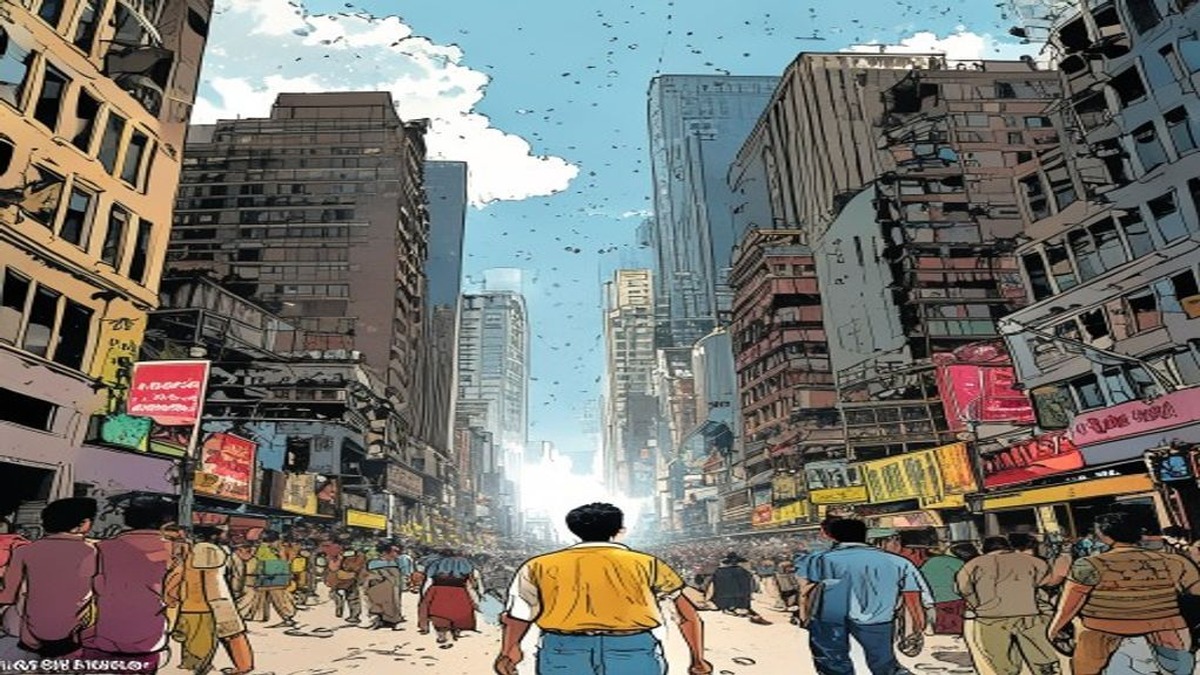
In a busy modern city, where tall buildings touched the clouds and millions of people rushed from place to place, there lived a man who felt empty inside. His name was Rahul, and on the surface, his life looked good. He had a job, a home, and people who cared about him. But inside, he felt like something was missing. His days felt hollow, like pages in a book with no words written on them.
Rahul worked in an office building, sitting at a desk with a computer. Every day was the same. He would wake up, go to work, stare at screens, come home, and fall asleep. He did not truly enjoy any of these things. He was simply going through the motions of life like a robot.
Depression as a Rising Sickness
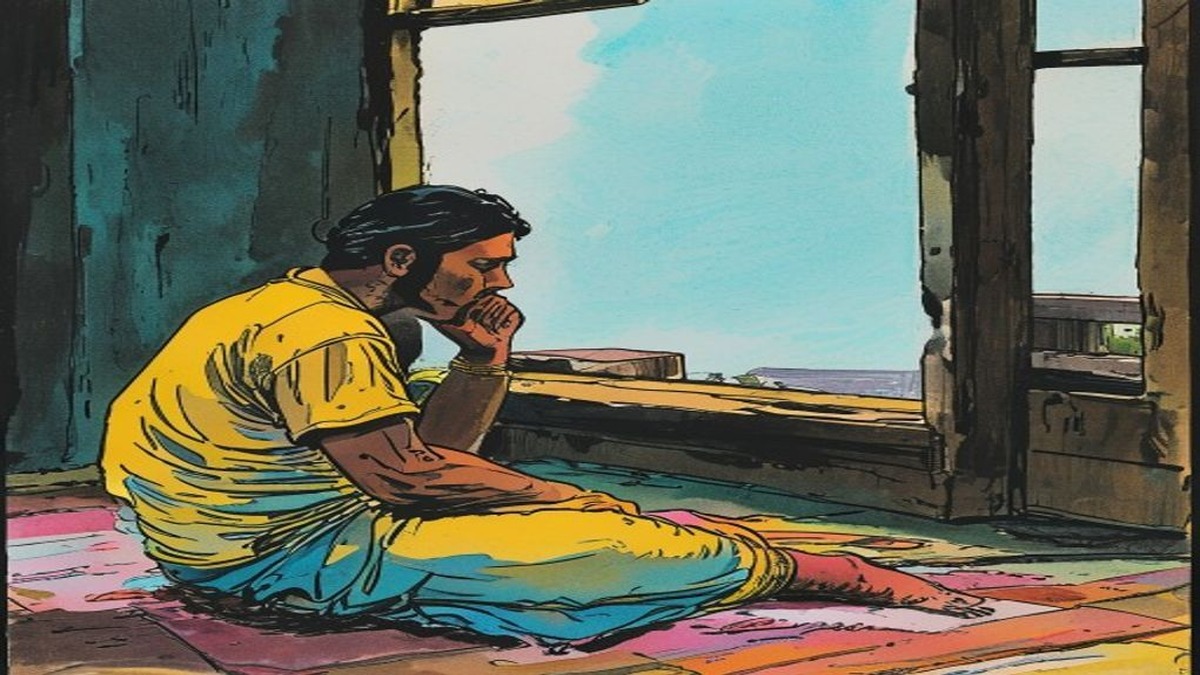
Rahul was suffering from something that doctors call depression. Depression is like a heavy fog that covers your mind. Everything seems dark and pointless. Things that should make you happy do not. Food does not taste good. Friends do not make you smile. Beautiful things do not look beautiful. It is a sickness of the mind and heart.
Depression is a modern disease, doctors say. More and more people are getting depressed because life has become very fast and complicated. Families are smaller now, with less connection between relatives. Cities are crowded and noisy. People work long hours. There is not enough time for rest and happiness. Many people, like Rahul, do not even realize they are depressed. They just feel tired and empty.
Sometimes people do recognize depression in others but do not know what to do about it. They might be uncomfortable or afraid. Sometimes they even push away the depressed person instead of helping them. This makes the depression worse.
Seeking Help
One day, Rahul finally recognized that something was very wrong. He went to a doctor who told him he had clinical depression. The doctor said that depression was an illness, just like catching a cold or breaking a bone. It was not something to be ashamed of. It was something that needed care and treatment.
The doctor suggested medicine to help balance his brain chemistry. The doctor also suggested counseling, where Rahul could talk to someone trained to help him understand his feelings. Importantly, the doctor said Rahul needed rest, good food, exercise, and time with people who loved him.
But Rahul’s family did not understand. They thought depression was just sadness that would go away. They thought Rahul was being weak or lazy. His mother said, “Just think positive thoughts. You will feel better.” His father said, “Stop feeling sorry for yourself and get to work.” These words, meant to help, actually made Rahul feel worse because he felt misunderstood and alone.
The Blank Canvas Appears
During this time, Rahul discovered an old painting in his grandmother’s house. It was a large canvas, blank and white, with no picture painted on it. His grandmother had started to paint something on it many years ago, but she had never finished. She had painted nothing

at all. The canvas had just sat there, empty, for decades.
Looking at this blank canvas, Rahul had a thought. He realized that the whiteness of the canvas was not something sad. The blank canvas was not a failure. Instead, it represented infinite possibility. A blank canvas could become anything. It could be a landscape, a portrait, an abstract painting, anything the artist could imagine.
His life, Rahul thought, was like a blank canvas. He had been thinking of it as a failure, as a sign that he had wasted his time and accomplished nothing. But now he realized that his blank canvas was actually full of potential. He was still young. He had not yet painted his story. Everything was still possible.
Understanding the Empty Days
The discovery of his grandmother’s blank canvas changed how Rahul thought about his depression and his life. He understood that his empty days were not proof that he was a failure. They were spaces where he could start fresh and create something new and beautiful.
He started therapy and took medicine to help his brain work better. As his mind became clearer, like fog lifting off a landscape, he began to think about what he wanted to paint onto his blank canvas.
Rahul remembered that as a child, he had loved to draw and paint. He had loved to read stories. He had loved to explore nature and watch birds. But as he grew up, he had stopped doing these things. Work and responsibility had taken over his life. He had forgotten about the things that made him happy.
Filling the Canvas with Joy
Slowly, Rahul began to add colors to his blank canvas. He set aside time to paint again. He joined a book club. He started taking walks in the park. He called his friends and made plans. He told his family about his depression and how he needed their support, not their judgment.
As he did these things, something wonderful happened. The depression did not disappear all at once. But it became lighter. The days became less empty. Colors started appearing in his life, like paint spreading across a blank canvas.
Rahul’s art began to improve. His first paintings were simple, just like a child’s drawings. But as he continued, his paintings became more complex and beautiful. Some of them were sad, because sometimes sadness is a part of art. But some were joyful and bright. His paintings reflected his life as he painted his way out of depression.
The Power of Creating Something
This story teaches us that life, like a blank canvas, is full of possibility. It teaches us that depression is a real illness that deserves care and treatment, not judgment. It teaches us that sometimes what seems like failure or emptiness is actually a new beginning.
The story shows us that creative expression is healing. When you create something, whether it is a painting, a song, a story, or even a meal, you are adding meaning to your life. You are saying, “I was here. I made something. I matter.”
Most importantly, the story teaches us about compassion. If someone you know is struggling with depr

ession or sadness, they need support, understanding, and patience. They need people to believe that they will get better. They need to know that their blank canvas is not a sign of failure, but a sign of possibility.
Why This Story Matters Today
In our modern world, more people than ever are struggling with depression and sadness. Young people are especially affected. Doctors and counselors say this is because of social media, which makes people compare their lives to others. It is because of pressure to succeed in school and work. It is because families are busy and scattered. It is because we do not spend enough time in nature or with people we love.
The story of the blank canvas reminds us that even when life feels empty and pointless, there is still hope. There is still possibility. Every day is a chance to add something new and beautiful to your canvas. Every day is a chance to choose joy, even when sadness is also present.
If you or someone you know is struggling with depression, remember Rahul’s story. Remember that help is available. Remember that talking about your feelings is brave and important. Remember that your blank canvas is not finished yet. The most beautiful pictures are still waiting to be painted on it.
Understanding Depression in Modern Times
Depression is a very real illness that affects millions of people around the world. Doctors have studied it for many years and understand what causes it and how to treat it. Depression is not something you choose. It is not a sign of weakness or laziness. It is not something that positive thinking alone can cure, though positive thinking can help as part of treatment.
When someone has depression, their brain chemistry is not working properly. The brain uses chemicals called neurotransmitters to send signals between different parts. In depression, these chemical messengers are not working well. This leads to feelings of sadness, emptiness, hopelessness, and loss of interest in things. These are not character flaws. They are physical symptoms of a physical illness.
The modern world has created conditions that make depression more common. People work longer hours than their parents did. Families are spread out far from each other. Social media makes people compare their lives to others and feel bad about themselves. There is less time for rest and less connection to nature. There are more worries about money, safety, and the future. All of these factors can contribute to depression.
The Importance of Understanding and Support
One of the saddest parts of Rahul’s story is how his family responded to his depression. When someone you love is struggling, it is important to understand that they are not being difficult or lazy. They are not trying to get attention. They are genuinely suffering from an illness.
The most helpful response to someone with depression is to listen without judgment, to express belief that they will get better, and to encourage them to seek professional help. Professional help might include medicine, therapy,
or both. It might also include lifestyle changes like more exercise, better food, more sleep, and spending time with loved ones.
Sometimes, people are uncomfortable around depression because they do not know what to say or do. But the depressed person does not need you to fix their problem. They just need you to care, to listen, and to be present. Your support and understanding can be a powerful part of their healing.
The Metaphor of the Blank Canvas
A blank canvas is a powerful metaphor for life, especially for people struggling with depression. When everything feels empty and pointless, it is hard to see any possibility or hope. But a blank canvas is not a failure. A blank canvas is a beginning.
Think about an artist facing a blank canvas. The artist might feel nervous or uncertain. But the blank canvas represents unlimited possibility. The artist could paint a landscape, a portrait, an abstract design, or something completely original. The canvas has no limitations except the artist’s imagination.
Your life is like that too. Even if you feel like you have not accomplished anything, even if you feel empty and lost, you still have unlimited potential for the future. You are not a failure. You are just at the beginning. The blank parts of your canvas are not sad. They are waiting for you to create something beautiful on them.
Creating Your Masterpiece
Rahul’s journey teaches us that recovery from depression involves taking small steps to add color and meaning to your life. It might involve returning to hobbies you enjoyed. It might involve spending time with people you love. It might involve creating something, whether that is art, music, writing, cooking, or building something with your hands.
The act of creation is healing. When you make something, you are saying that your life has value and meaning. You are adding something to the world that was not there before. This is powerful medicine for depression, especially when combined with professional treatment like therapy and medicine.
If you or someone you know is struggling with depression, remember that help is available and that recovery is possible. Remember that the blank canvas of your life is not a sign of failure. It is a sign of possibility. The most beautiful paintings are still waiting to be created on that canvas. With help, with support, and with the courage to take small steps forward, your blank canvas can become a masterpiece that brings joy to yourself and to everyone around you.
Related Folk Tales You Might Enjoy
Frequently Asked Questions
**Q: Why is this story important?**
You May Also Like
 Indian Folk Tales
Ages 6-8
Indian Folk Tales
Ages 6-8
The Loyal Mongoose: A Heart-Breaking Tale of Misunderstanding
The Loyal Mongoose: A Heart-Breaking Tale of Misunderstanding: The Faithfulness That Could Not Be Spoken Long ago, in a small village nestled between two
 Indian Folk Tales
All Ages
Indian Folk Tales
All Ages
The Brahmi ‘s Girl That Married A Tiger
The Brahmi 's Girl That Married A Tiger: In a small village nestled between the rolling hills of Tamil Nadu, there lived a learned Brahmin who had a beautiful
 Indian Folk Tales
All Ages
Indian Folk Tales
All Ages
Brahma’s Wife and the Mongoose
Brahma's Wife and the Mongoose: Long ago, there lived a Brahman and his wife who had a pet mongoose. The mongoose was loyal and gentle, and the couple treated