The Bird and the Monkey
The Bird and the Monkey: Never give advice unless you are asked for it.” There lived a group of monkeys in the mountains. During one winter, there were heavy

The Bird and the Monkey
Canonical Attribution and Manuscript Tradition
This tale belongs to Pancatantra Book I, Mitra-bheda (“The Separation of Friends”), compiled by the legendary Brahmin scholar Vishnu Sharma as a nitishastra — a treatise on practical wisdom — for three recalcitrant princes of King Amarashakti. The story circulates as one of the shorter illustrative tales inserted by Damanaka within the frame narrative. The same tale appears, with minor variation, in the Hitopadesha, compiled in Bengal by Narayana Pandita around the 8th century CE, where it is deployed as the primary exemplar of the aphorism ekavaranam hitamuktam na khalu na dvitiyah — “sound advice may be offered once; certainly not a second time.” The earliest surviving Sanskrit recension derives from the Tantrakhyayika, the oldest Kashmiri version (c. 200 BCE). The tale shares thematic ground with ATU 75 (The Help of the Weak) inverted, though it has no specific ATU number in the international folklore index.
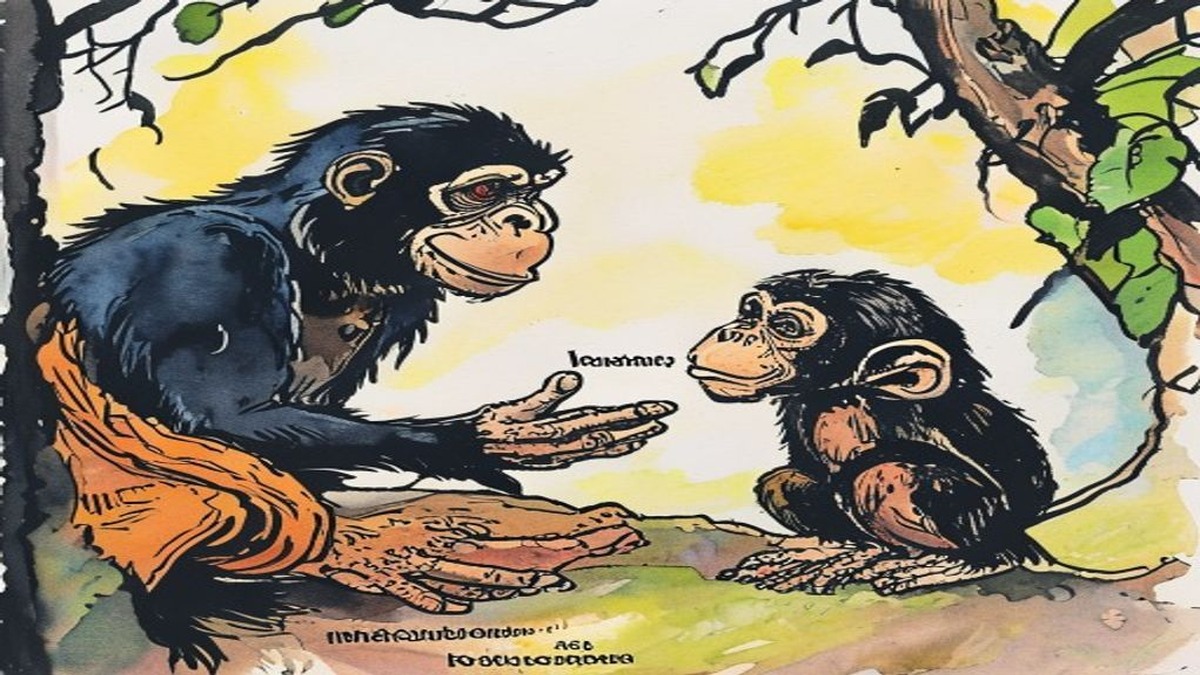
Beat I — The First Counsel: Good Intention, Poor Timing
A baya weaver bird had constructed its nest in the manner of its kind: a long, pendulous, grass-woven structure hanging from a branch over a forest stream, its entrance tunnel angled downward to exclude rain and snakes. A monkey had taken shelter in the same tree from a monsoon downpour, soaked entirely through, shivering visibly. The bird returned from foraging to find this large, wet, unhappy animal on its branch. What it interpreted as compassion moved it to speak: “Friend, you have hands far more capable than my beak. If I could build this nest, you could build something far superior. Why do you sit in the rain when the means to shelter yourself are all around you?”
The monkey looked at the bird. It looked at the rain. It said nothing. The bird interpreted this silence as receptiveness. The monkey was not receptive; it was cold, irritated, and evaluating whether the distance between itself and the bird was worth the energy of movement. It was not. The Pancatantra’s treatment is notably neutral: the bird’s advice is not wrong; the monkey could, in principle, construct rudimentary shelter. What is examined is the structure of the situation: a creature who possesses a skill offering unsolicited instruction in that skill to a creature who has not asked for it, under conditions that make instruction practically impossible to receive.
Beat II — The Second Counsel: The Error That Compounds
The rain continued. The monkey remained wet. The bird, watching from inside its dry nest, found the situation intolerable: here was a creature suffering unnecessarily when the solution was demonstrably available. It spoke again: “Friend, the grass stems on that bank are exactly the right length. The technique is not complicated once you understand the first interlocking knot. Let me explain the basic pattern.” And it began to explain the weaving method — the angle of approach for the first stem, the direction of the second — to a monkey that had neither the instinct nor the inclination to develop this skill and had not asked for the explanation.
This second intervention is the tale’s true subject, and the Pancatantra is precise about what it represents. The first advice could be attributed to social reflex — the well-meaning impulse that produces assistance whether or not it has been invited. The second advice, delivered after the monkey’s silence had established beyond reasonable doubt that the first had not been received, represents something different: the advisor’s refusal to accept that the advice has failed. The bird is no longer acting primarily in the monkey’s interest — the monkey’s interest has already indicated it cannot be served by this advice. The bird is now acting in its own interest: its need to be useful, to be heard, to have its expertise acknowledged.
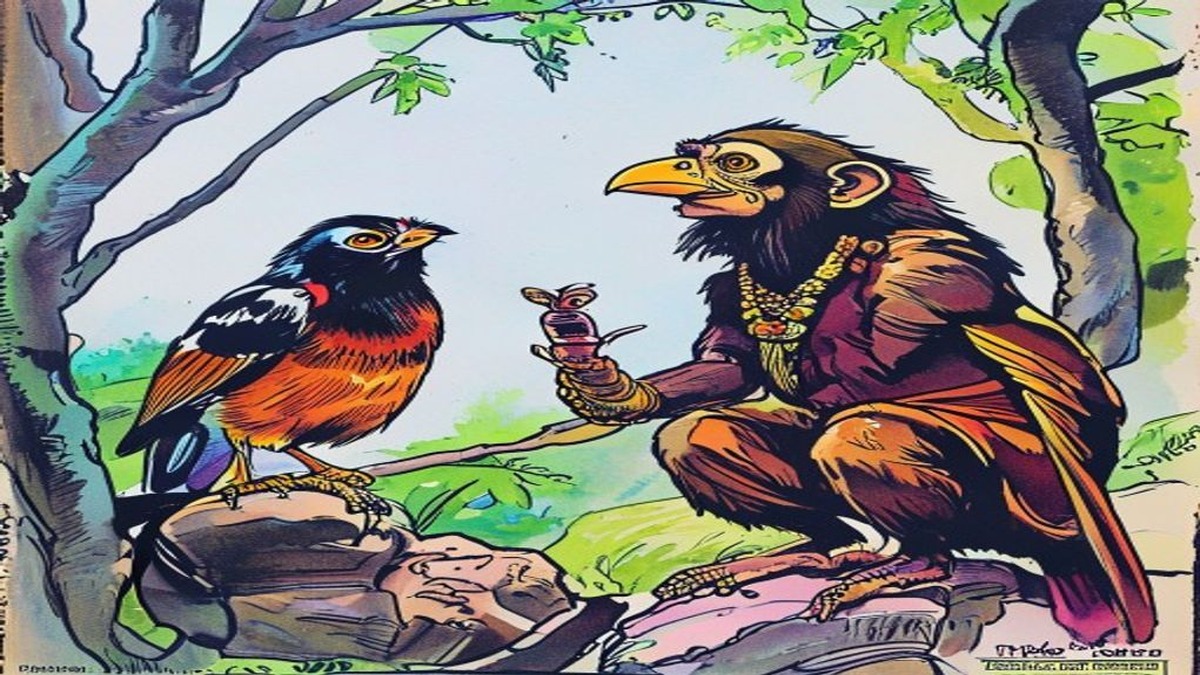
Beat III — The Destruction of the Nest
The monkey reached up and seized the nest by its attachment point. The carefully constructed structure — days of patient, skilled labour — came apart in seconds. Grass stems scattered into the rain. The monkey, still wet, returned to its branch. The bird, now homeless as well as wet, escaped to a high branch and watched the wreckage. Nothing had improved for anyone.
The Pancatantra makes no editorial comment here. It does not call the monkey wrong, because the monkey’s action is presented as the natural and predictable consequence of a sequence of events. The bird’s intentions remained good throughout. What the tale presents is a situation in which good intentions, poor social reading, and misattributed persistence combined to produce an outcome that served no one. Vishnu Sharma’s instruction to his royal pupils is direct: once is advice; twice is imposition; more is arrogance dressed as helpfulness. The bird knew how to build nests. It did not know when to stop talking about building nests. That distance cost it everything it had built.
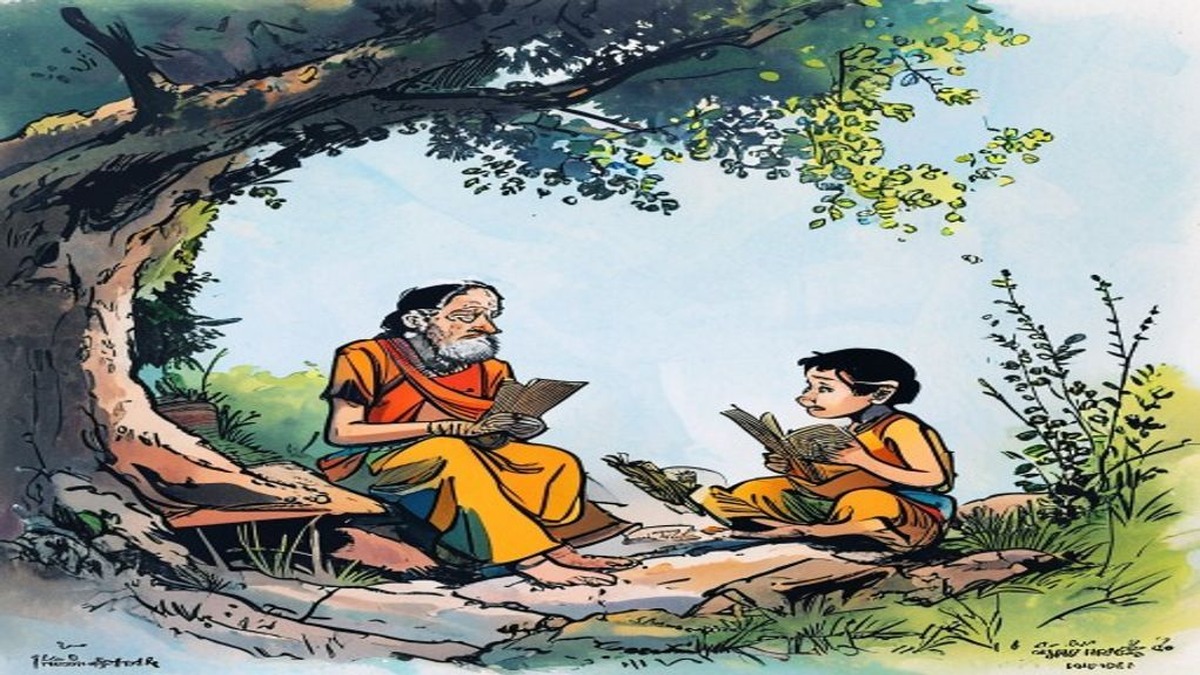
Beat IV — After the Rain: What the Tale Asks of the Reader
The Pancatantra does not describe what happened after the nest was destroyed. This is intentional. The tale is not interested in recoveries; it is interested in what should have been done differently and at which exact point the trajectory became irrecoverable. The decision tree available to the bird after the first silence had two branches: the branch on which it concluded it had done what it could and the monkey would have to solve its own problem; and the branch on which it concluded it had not yet explained clearly enough and should try again. The first branch was available, costless, and safe. The bird chose the second, and the second branch led directly to the bare branch on which it sat, homeless, in the rain, watching its work dissolve into the mud.
For Vishnu Sharma’s royal pupils, the tale was a lesson in the management of counsel in statecraft: when advice is offered to a king or general and not taken, the advisor who returns to advise again is not displaying superior commitment to the kingdom’s welfare — he is displaying an inability to read power, tolerance, and the social temperature of the room. The advisor who survives is the one who offers counsel once, with precision and at the right moment, and then withdraws into useful silence until conditions change.
Moral and Sanskrit Wisdom Tradition
Ekavaranam hitamuktam na khalu na dvitiyah
“Sound advice may be offered once; certainly not a second time.”
— Hitopadesha of Narayana Pandita (c. 8th century CE), drawing on Pancatantra tradition
This aphorism distils the tale’s lesson with mathematical economy. Once is the advisor’s legitimate offering — the discharge of the duty that knowledge creates when it sees suffering it might alleviate. The second time is the advisor’s failure — the point at which the advisor’s need to be heard has replaced the recipient’s need to be helped as the governing motive. The temptation to interpret non-reception as a request for better explanation is very strong, especially when the advisor is genuinely expert and the recipient’s situation is genuinely bad. The discipline required to resist that temptation — to say “I have offered what I have, and I will not offer it again until asked” — is the practical virtue the tale trains. A related Sanskrit formulation appears in the Mahabharata’s Shantiparvan: one who enters without being invited and speaks at length without being asked is the paradigmatic fool. Vishnu Sharma’s tale dramatises exactly this profile, with the additional precision that the fool in question is well-intentioned — which makes the lesson harder and more important.
Why This Story Has Lasted 2,300 Years
The Bird and the Monkey endures because it describes a failure pattern of near-universal occurrence: the expert who has failed to be heard once and concludes that the problem is insufficient clarity rather than unreceptive conditions, and who therefore tries again. The second attempt — more detailed, more insistent, more elaborately reasoned — produces the response that the first attempt merely threatened. Modern cognitive research on advice-giving maps precisely onto the Pancatantra’s analysis: recipients consistently rate an advisor’s competence lower after unsolicited advice than after equivalent solicited advice, regardless of actual quality. The advice, however good, is experienced as an implied criticism of the recipient’s current behaviour; the more insistently it is offered, the more humiliating that criticism becomes. The bird’s repeated insistence is experienced by the monkey not as encouragement but as a running commentary on its inadequacy, delivered by a creature warm and dry inside proof of its own superiority.
The tale’s longevity also owes something to its remarkable economy: exactly two characters, one setting, one skill, one downpour, two pieces of advice. Everything superfluous has been removed by twenty-three centuries of oral retelling. What remains is a clean, almost diagrammatic demonstration of a single principle: the moment at which advice crosses from service into imposition is the moment at which it has been offered once and not received. Everything after that moment is the advisor’s problem, not the recipient’s. The bird’s nest is destroyed not by the monkey’s violence but by the bird’s refusal to accept where its responsibility ended.
Sanskrit Tradition: Tantrakhyayika recension (c. 200 BCE, Kashmir); Hitopadesha parallel by Narayana Pandita (c. 8th century CE, Bengal)
Author: Vishnu Sharma (attributed, c. 3rd century BCE)
Core Aphorism: Ekavaranam hitamuktam na khalu na dvitiyah — Sound advice may be offered once; certainly not a second time
You May Also Like
 Panchatantra Stories
Ages 3-5
Panchatantra Stories
Ages 3-5
The Old Man, his Young Wife, and the Thief
The Old Man, his Young Wife, and the Thief: In India, long ago, there lived a wealthy merchant in a small village near the banks of a sacred river. The houses
 Panchatantra Stories
All Ages
Panchatantra Stories
All Ages
The Story of Mother Shandili
The Story of Mother Shandili: Once, during the monsoon season, I requested a Brahmin to allow me to stay with Qim, so that I couldfast and pray undisturbed.
 Panchatantra Stories
Ages 3-5
Panchatantra Stories
Ages 3-5
The Intelligent Merchant – Hindi Folktales from India
The Intelligent Merchant – Hindi Folktales from India: Long ago, there was a king who was very unjust and cunning. He used to look for opportunities to tax his