The Turtle that fell off the Stick
The Turtle that fell off the Stick: Never fail to listen to the advice of your friends.” There lived a turtle called Kambugriva in a lake, who had two swans as
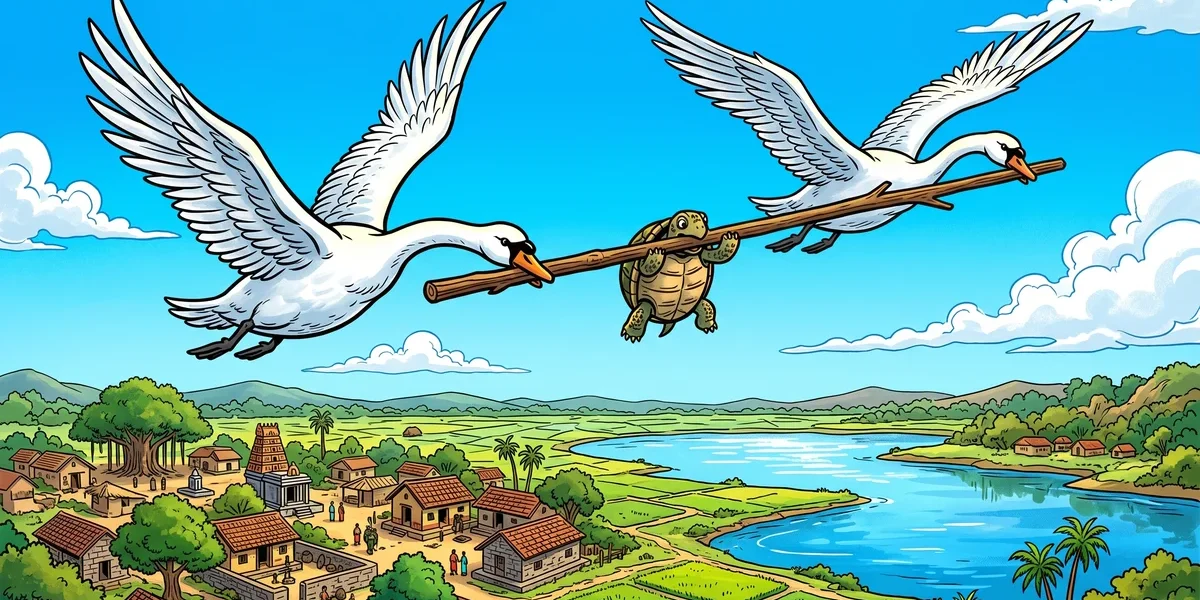
The Turtle That Fell Off the Stick
Canonical Attribution and Manuscript Tradition
This tale belongs to Pancatantra Book I, Mitra-bheda, and is among the collection’s most economical demonstrations of the relationship between self-control, a single critical instruction, and survival. The story is preserved in all major Sanskrit recensions including the Tantrakhyayika (c. 200 BCE, Kashmir) and appears in parallel in the Hitopadesha. Its structural relatives are widespread in world fable literature, and it entered Arabic culture through Kalila wa Dimna (c. 750 CE), from which it spread into Persian and European collections. The tale belongs to the widespread type of the creature who is saved by a friend’s ingenuity, given one instruction that must be followed for the rescue to work, and destroyed by the failure to follow it at the critical moment. Within the Pancatantra’s didactic programme the tale is addressed to the problem of self-control under provocation: the turtle’s destruction is not caused by ignorance of what it should do but by the failure to maintain the required behaviour at the one moment when provocation made it hardest.
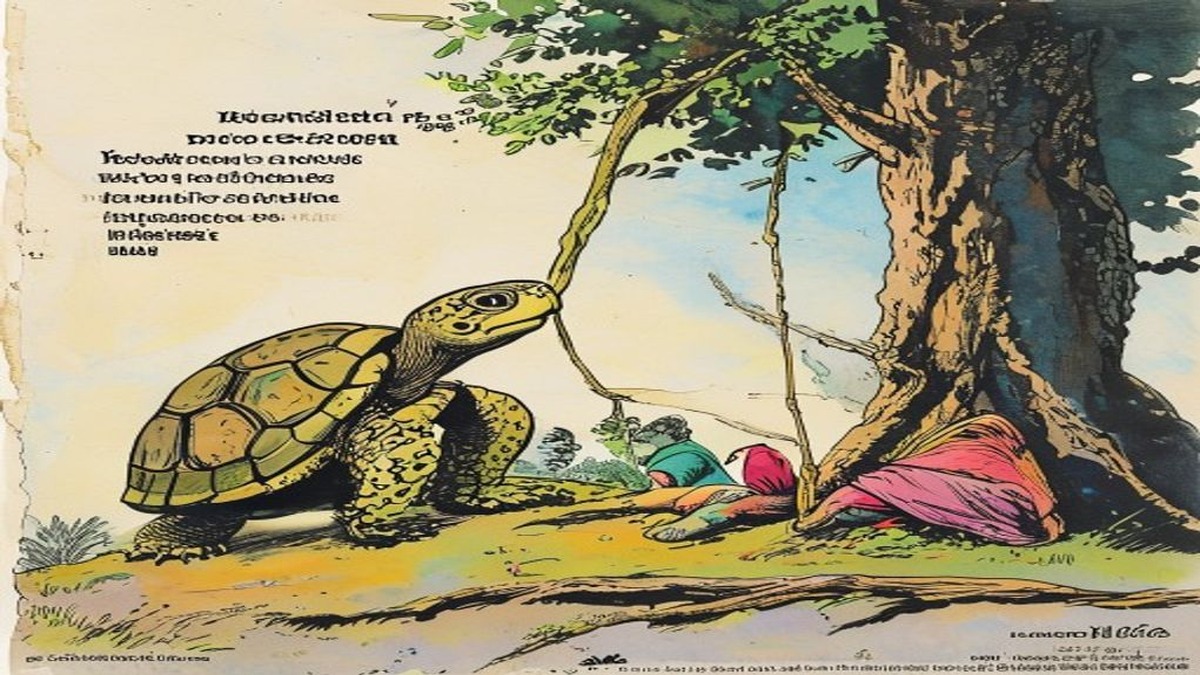
Beat I — The Drought and the Plan
A turtle lived in a lake with two geese who were its friends. A severe drought dried the lake. The geese could fly to find water elsewhere; the turtle could not. Without water, the turtle would die. The geese, unwilling to leave their friend behind, devised a plan: they would carry the turtle to a new lake. They would hold a stick between them in their beaks, one goose at each end; the turtle would bite the middle of the stick and hold on; they would fly together to water.
The plan was sound and required only one thing of the turtle: it must keep its mouth shut. Not because silence was required for flight dynamics, but because opening its mouth to speak — for any reason — would cause it to release its grip on the stick and fall. The geese explained this explicitly before they took off. The turtle understood, agreed, and bit down on the stick. They flew.
Beat II — The Provocation and the Fall
As the three flew over a village, people below looked up and saw the remarkable sight: two birds carrying a turtle on a stick through the air. They began to shout comments — in some recensions marvelling, in others mocking. The turtle heard the comments about itself. The provocation was real: people were saying things about the turtle that the turtle found intolerable to leave unanswered. The turtle opened its mouth to respond.
It fell. The single action it had been instructed not to take, the one action whose avoidance was the entire mechanism of its survival, was the action provocation produced. The geese could not catch it; the fall was fatal. The rescue that had worked perfectly up to that point — sound plan, correctly executed, almost complete — was destroyed in the moment the turtle chose response over restraint. The Pancatantra’s account is blunt: the turtle knew the instruction, the turtle had followed it through the entire flight, and the turtle failed it at the last moment because it could not tolerate being spoken of without reply.
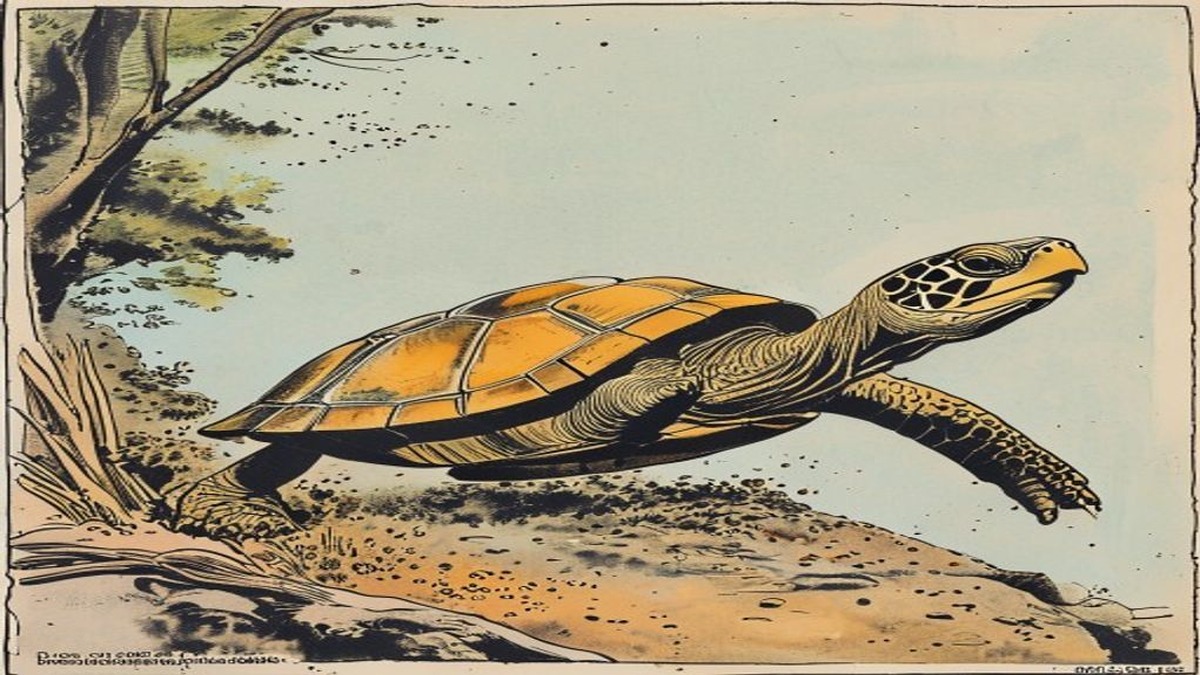
Beat III — The Pancatantra’s Analysis of Provocation and Self-Control
Vishnu Sharma’s lesson is not about the importance of following instructions in general; it is about the specific failure mode of self-control under provocation. The turtle was not ignorant of the instruction; it had demonstrated the capacity to follow it by doing so successfully throughout the flight. The failure was not intellectual but volitional: at the moment of maximum provocation, the desire to respond overcame the knowledge that responding would be fatal. The turtle knew perfectly well that opening its mouth would cause it to fall. It opened its mouth anyway because the provocation was intolerable.
This specific failure — the failure of self-control specifically under the condition of provocation, specifically in an individual who knows what the correct behaviour is — is the Pancatantra’s target. It is a different failure from ignorance (the turtle was not ignorant), from appetite (no material reward was involved), and from fear (the turtle was not frightened into speaking). It is a failure of the capacity that Sanskrit philosophical tradition calls dama (self-restraint) or kshama (patience): the capacity to maintain the chosen behaviour in the face of a stimulus that activates the impulse to abandon it.
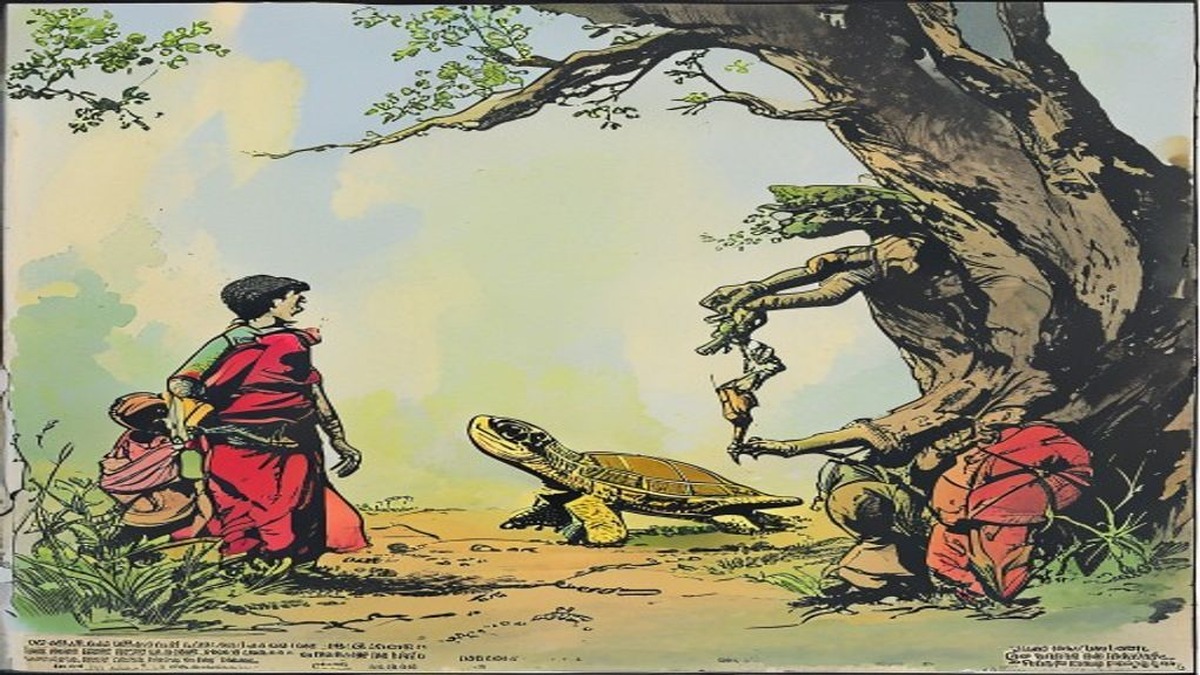
Beat IV — What the Turtle Teaches About the Costs of Speaking
For Vishnu Sharma’s royal pupils the tale operates on multiple levels. At the most direct level it is about the control of speech: what is said, when it is said, and the situations in which saying anything at all is the act that forfeits survival. The Arthashastra of Kautilya addresses the discipline of speech in advisors extensively: the advisor who cannot maintain required silence under provocation in a court context is as dangerous to the ruler as the turtle is to itself. At the deeper level it is about the relationship between knowledge and self-control: the turtle’s failure demonstrates that knowing the right action is not sufficient; the capacity to perform the right action under the conditions that make it hardest must also be developed and maintained.
The Pancatantra’s teaching on dama is not that provocation should be suppressed or denied; it is that the response to provocation must be chosen rather than automatic. The turtle’s response was automatic: provocation arrived; mouth opened. The required response was chosen: maintain grip regardless of what is said. The gap between automatic response and chosen response is the gap the tale is asking Vishnu Sharma’s pupils to close in themselves — through the recognition that the cost of automatic response can, in the right circumstances, be fatal.
Moral and Sanskrit Wisdom Tradition
“Knowing the right action is not enough; one must maintain it precisely when provocation makes it hardest.”
— Moral of The Turtle That Fell Off the Stick, Pancatantra Book I (Mitra-bheda)
This moral belongs to the Pancatantra’s teaching on dama (self-restraint) and the relationship between intellectual understanding and volitional capacity. The Bhagavad Gita’s treatment of indriya-nigraha (control of the senses) addresses the same distinction: knowing that sense-objects should not control behaviour is not sufficient; the capacity to prevent them from doing so when they present themselves must be cultivated separately. Vishnu Sharma makes the same point through the turtle: the creature knew the instruction and had the capacity to follow it; what it lacked was the maintained capacity to follow it when the conditions that made it hardest arrived. The developed capacity for chosen rather than automatic response is what the Pancatantra, the Gita, and the Arthashastra identify as the foundation of sound action.
Why This Story Has Lasted 2,300 Years
The Turtle That Fell Off the Stick endures because the failure it describes — knowing what to do, doing it correctly through the entire trial, and then failing at the single moment of maximum provocation — is among the most universally recognisable human experiences. The turtle’s situation is the situation of anyone who has maintained a difficult commitment through sustained effort and then abandoned it in response to something that felt intolerable to ignore. The physical image — the stick, the geese, the flight, the fall — is immediately comprehensible and persistently memorable. Vishnu Sharma needed only this image to make the argument that self-control is not a static achievement but a capacity that must be maintained specifically under the conditions that most powerfully activate the impulse to abandon it.
Sanskrit Tradition: Tantrakhyayika (c. 200 BCE, Kashmir); Hitopadesha; Kalila wa Dimna (Arabic, c. 750 CE)
Key Concept: Dama (self-restraint) / kshama (patience) — chosen rather than automatic response under provocation
Author: Vishnu Sharma (attributed, c. 3rd century BCE)
Bhagavad Gita Parallel: Indriya-nigraha (sense-control): knowing and doing are distinct capacities, both of which must be developed
You May Also Like
 Panchatantra Stories
Ages 9-12
Panchatantra Stories
Ages 9-12
The Story of the Merchant’s Son
The Story of the Merchant's Son: Do your best but leave it to destiny.” Sagardatta was a merchant who had a handsome young son. One day, he observed that his
 Panchatantra Stories
Ages 6-8
Panchatantra Stories
Ages 6-8
The Story of Nanda and Vararuchi
The Story of Nanda and Vararuchi: Once upon a time, there lived a king, by the nameof Nanda. He ruled the entire land surrounded by theseas and his power was
 Panchatantra Stories
Ages 3-5
Panchatantra Stories
Ages 3-5
The Dog who went Abroad
Read 'The Dog who went Abroad' — a classic Panchatantra story about nature and animals. The Dog who went Abroad is a beloved Panchatantra tale featuring...