The Foolish Sage
The Foolish Sage: Do not be taken in by the sweet words of a swindler.” Once upon a time, there was a sage called Deva Sharma who lived in a temple in the

The Foolish Sage
Canonical Attribution and Manuscript Tradition
This tale belongs to Pancatantra Book I, Mitra-bheda, and represents one of the collection’s most pointed critiques of a specific intellectual failure: the possession of technical knowledge without the judgment to know when and whether to apply it. The story survives in all major Sanskrit recensions including the Tantrakhyayika (c. 200 BCE, Kashmir) and appears in parallel in the Hitopadesha. Within the Pancatantra’s didactic programme it serves as a counterweight to the collection’s consistent celebration of intelligence and learning: Vishnu Sharma is not arguing that knowledge is valuable in itself but that knowledge without viveka (discriminating wisdom) is dangerous. The tale’s transmission into Arabic tradition through Kalila wa Dimna (c. 750 CE) and subsequently into Persian and European collections suggests how universally its central insight has been recognised: that the scholar who applies expertise without asking whether application is appropriate is not a wise person who happens to be learned, but a fool with a sophisticated tool.
Beat I — The Scholars and Their Learning
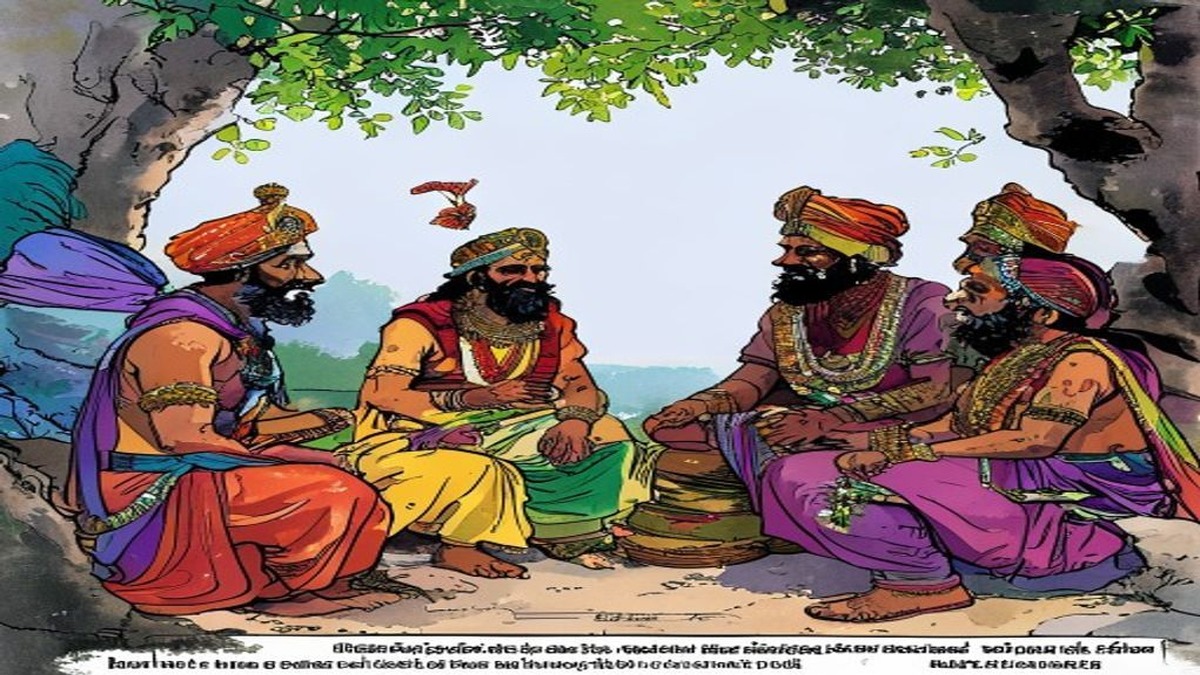
Four scholars, all deeply learned in different branches of classical knowledge, were travelling together. Three of them had mastered specific technical arts: one knew how to reconstruct a complete organism from bones alone; one knew how to add flesh, blood, and skin to bones; one knew how to breathe life into a completed but inanimate body. The fourth scholar had no such technical mastery. His skill was the more general but less impressive capacity called common sense or practical judgment. The other three regarded him with some condescension: what use was general wisdom compared to the specific powers they possessed?
They came upon a set of bones in the forest. The three scholars, wishing to demonstrate their arts, proposed to use their skills to bring the dead creature back to life. This is the tale’s first critical moment: the proposal was technically interesting but the question of whether it was wise to bring the dead creature back to life was not asked. The fourth scholar asked it. He pointed out that they did not know what creature these bones had belonged to. He suggested they identify the animal before proceeding. The others dismissed the concern as the timidity of someone who lacked real knowledge.
Beat II — The Warning Ignored
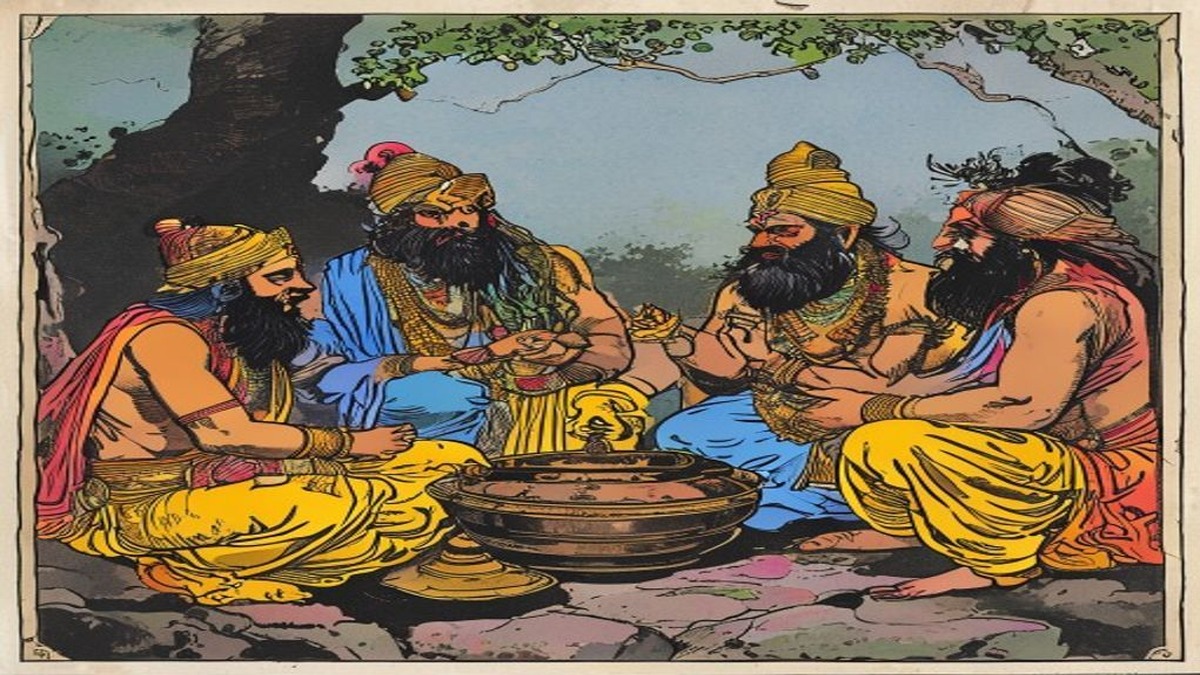
The fourth scholar, overruled, asked for a moment before the final step — the breathing of life — was taken. He climbed a nearby tree. From the tree he watched the three scholars complete their work. The first reconstructed the skeleton. The second added flesh, skin, and blood. The body lay on the ground, complete and inanimate, waiting for the breath of life. The fourth scholar called down from the tree: he had identified the bones. They belonged to a lion. He strongly advised against the final step.
The three scholars below were now fully committed to demonstrating their powers. They had invested their effort and their pride in the exercise. The fourth scholar’s warning was heard as an expression of his general limitation — his inability to appreciate the magnificence of what they were about to accomplish — rather than as relevant information that should modify their decision. The third scholar administered the breath of life. The lion was complete and alive. It rose, looked at the four scholars, and killed the three who had restored it. The fourth scholar, in the tree, was unharmed.
Beat III — The Pancatantra’s Analysis of the Failure
The three scholars’ failure is not a failure of knowledge. Their knowledge was real: they genuinely knew how to reconstruct and reanimate a body. The failure is a failure of the question that should precede the application of any knowledge: should this knowledge be applied here, now, in this situation? The three scholars never asked it. They asked only whether they could do what they knew how to do. The answer was yes, so they did it.
The Pancatantra’s framing is deliberate: the scholars are not presented as evil or malicious. They are presented as people who have mastered a craft and are eager to demonstrate it. This eagerness — the craftsperson’s pleasure in applying skill — is itself the cognitive mechanism that suppresses the should-question. When the can-question has been settled by years of training and the eagerness to demonstrate is present, the should-question tends not to arise unless some external check introduces it. The fourth scholar is that external check. The three scholars’ error was not in lacking his wisdom but in dismissing it when it was offered.
Beat IV — What the Foolish Sage Teaches About Knowledge and Viveka
Vishnu Sharma’s choice of title is significant: the scholars are not called villains or the simply ignorant; they are called foolish sages. They are fools precisely because they are sages — their foolishness is constituted by their learning, not despite it. The mastery of a technical art produces confidence that the art works; it does not automatically produce the wisdom to ask when it should be deployed. These are two different capacities, and the Pancatantra insists that the second is more important than the first.
The concept of viveka — discriminating wisdom, the capacity to distinguish between what is and what ought to be done — occupies a central position in the Sanskrit philosophical tradition. The Bhagavad Gita returns to it repeatedly; the Arthashastra identifies its absence in advisors as a primary source of royal error. Vishnu Sharma’s contribution is to make the point narratively rather than doctrinally: the three scholars had everything except viveka, and the absence of viveka negated everything they had. The fourth scholar had only viveka, and it was sufficient. This is the Pancatantra’s clearest statement of a principle it embeds throughout its tales: that practical wisdom — knowing when not to apply what you know — is the master faculty, the one that determines whether all other faculties serve or destroy their possessor.
Moral and Sanskrit Wisdom Tradition
“Knowledge without judgment is more dangerous than ignorance; the wise person asks not only can but should.”
— Moral of The Foolish Sage, Pancatantra Book I (Mitra-bheda)
This moral stands in deliberate tension with much of the Pancatantra’s own celebration of cleverness and learning. Vishnu Sharma is not anti-intellectual; the collection is among the most intellectually demanding texts in world literature. But his instruction to royal pupils is clear: the scholar’s confidence in technical mastery is a cognitive trap unless it is accompanied by viveka. The three scholars knew more than the fourth and died; the fourth knew less and lived. This is the Pancatantra’s most direct statement that the mastery of any art, including the art of statecraft, is a means and not an end; the end is always the question of what it is wise to do in the specific situation one is actually in.
Why This Story Has Lasted 2,300 Years
The Foolish Sage endures because the failure it describes — applying expertise without asking whether the application is appropriate — is genuinely permanent. Every generation produces specialists who can do remarkable things and who apply those things without adequate consideration of whether doing so is wise. The tale’s transmission through Kalila wa Dimna and into European and Persian collections suggests how broadly this problem has been recognised. The fourth scholar’s specific capacity — to identify danger and insist on caution even when outvoted by expertise — is the capacity that most consistently prevents the expertise of the others from becoming fatal. Vishnu Sharma presents this not as a counsel of timidity but as the precondition of all sound action: know what you know; know when to use it; these are two different things, and only the second is wisdom.
Sanskrit Tradition: Tantrakhyayika (c. 200 BCE, Kashmir); Hitopadesha; Kalila wa Dimna (Arabic, c. 750 CE)
Key Concept: Viveka — discriminating wisdom; knowing when not to apply what you know
Author: Vishnu Sharma (attributed, c. 3rd century BCE)
Core Distinction: Can versus should — the master faculty that determines whether all other faculties serve or destroy their possessor
You May Also Like
 Panchatantra Stories
Ages 3-5
Panchatantra Stories
Ages 3-5
The King’s Choice
The King's Choice: Long ago a lion lived in a dense forest. He was big, fierce and strong and thus all the other animals accepted him as their king. He was
 Panchatantra Stories
Ages 9-12
Panchatantra Stories
Ages 9-12
The Cunning Hare and the Witless Lion
The Cunning Hare and the Witless Lion: Deceive the wicked and destroy them without mercy.” There was once a powerful lion called Bhasuraka who ruled the jungle.
 Panchatantra Stories
Ages 3-5
Panchatantra Stories
Ages 3-5
The Fighting Goats and the Jackal
The Fighting Goats and the Jackal: One day while a sage was going through a jungle, he saw two golden rams (billy goats) fighting each other. Even though both