Jorinda And Jorindel
Jorinda And Jorindel: There was once an old castle, that stood in the middle of a deep gloomy wood, and in the castle lived an old fairy. Now this fairy could
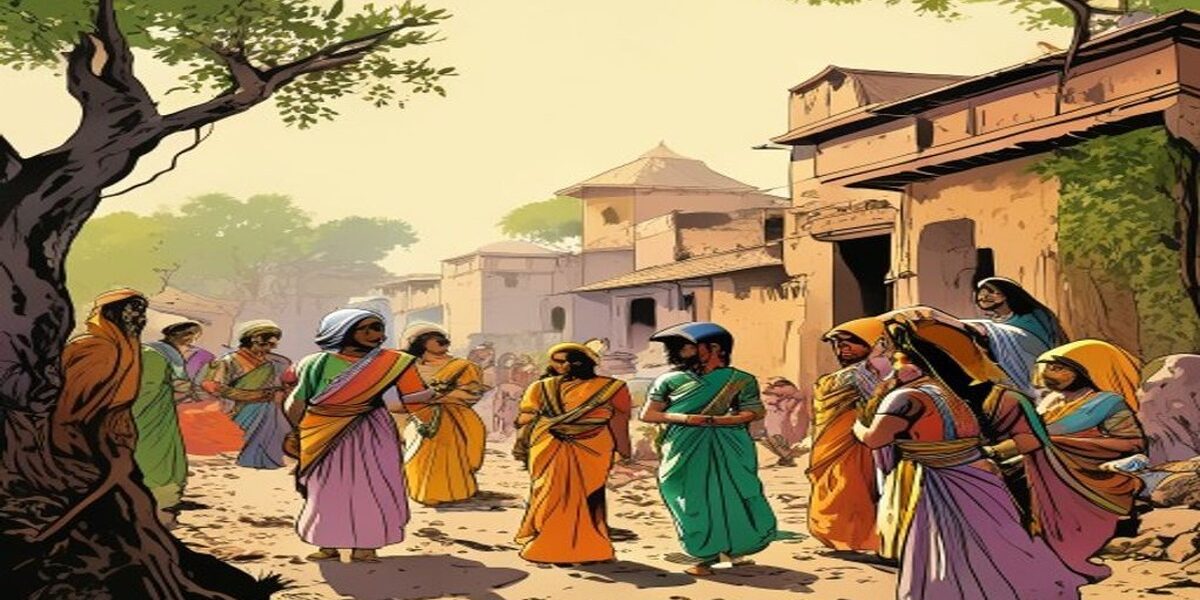
Jorinda and Jorindel is among the Grimm collection’s most poetically intense tales — a story of enchantment, separation, and rescue enacted through the power of a visionary dream and a magical flower. A witch transforms the beloved Jorinda into a nightingale and imprisons her among thousands of captive birds; Jorindel, guided by a prophetic dream of a blood-red flower, recovers her through precise ritual action. The tale is a meditation on svapna-dṛṣṭi (dream-vision as revelation) and the ancient concept of jñāna-śakti — the power of knowledge as the liberating force that dissolves the witch’s binding spell.
The Tradition: The Enchanted Bird and Captive Soul
The motif of a human soul imprisoned in bird form — and the subsequent quest to restore it — belongs to one of folklore’s most ancient and widespread narrative complexes. In Indian tradition, the bird (pakṣī) is consistently associated with the liberated or potentially liberated soul: the haṃsa (swan/goose) represents the ātman journeying between planes of existence in the Upaniṣads; the śuka (parrot) in the Śukasaptati is the vehicle of narrative wisdom itself. When the soul is trapped in bird form, it represents a consciousness that has been reduced from its full expressive range to a single register — beautiful but imprisoned, capable of song but not of speech, feeling but not of agency.
The witch of Jorinda and Jorindel is a specific folkloric type: a bhairavī-dāsī figure, a sorceress who collects and imprisons rather than destroys, her power expressed through containment rather than annihilation. In the Nāṭyaśāstra’s taxonomy of antagonists, she belongs to the prati-nāyikā (female antagonist) category whose weapon is mohana (enchantment) rather than physical force. Jorindel’s paralysis when he enters her domain — frozen in place, capable only of watching — is precisely the effect of mohana: the paralysis of will without the destruction of awareness.
Plot and Philosophical Analysis: Svapna-Dṛṣṭi and the Blood-Red Flower
After nine days of weeping at the edge of the witch’s domain, Jorindel receives his liberating vision: a dream of himself finding a blood-red flower (rakta-puṣpa) with a pearl at its center, touching Jorinda with it, and restoring her. He wakes, spends nine days searching, finds the flower, returns to the witch’s castle, and the flower’s touch dissolves the enchantment — both paralyzing the witch and restoring Jorinda.
The Sanskrit tradition of svapna-śāstra — the science of dreams — holds that certain dreams are sūcaka (indicative, prophetic) rather than merely reflective of waking experience. The Bṛhadāraṇyaka Upaniṣad teaches that in the dream state, the self (prajñātman) creates its own reality free from external constraint, and that this creative freedom can sometimes pierce through to genuine insight unavailable to waking consciousness. Jorindel’s dream is paradigmatically sūcaka: it does not reflect his current state of helplessness but provides the precise operational instructions — find the blood-red flower — for dissolving it.
The blood-red flower with a pearl center is one of folklore’s most concentrated symbols: red for the śakti of transformation (associated with the Goddess in Her active, liberating aspect), pearl for the concentrated essence of purity emerging from within darkness (the pearl grows inside the oyster, hidden from light). Together they form a yantra of sorts — a concentrated symbolic form that encodes a transformative power. Jorindel does not intellectually deduce his way to liberation; he is given the symbol, searches for it physically, and acts when it is found. This is karma-yoga in its most literal sense: faithful action guided by revealed knowledge, without anxiety about outcome.
Scholarly Synthesis: Premā-Śakti as the Counterforce to Mohana
The witch’s enchantment is powerful — thousands of birds attest to her centuries of success — but Jorindel’s love for Jorinda is the specific quality that makes him, and not the other captives’ mourners, capable of receiving the liberating dream. The Nārada Bhakti Sūtras identify premā (love) as the highest form of bhakti, distinguished from ordinary attachment by its selflessness and its orientation toward the beloved’s liberation rather than possession. Jorindel wants Jorinda free, not merely returned to him; this distinction is precisely what makes his grief spiritually productive rather than merely emotionally consuming.
The Yoga Vāsiṣṭha‘s teaching on bhāvanā (concentrated visualization as transformative practice) is relevant here: Jorindel’s nine days of faithful searching after his dream is a form of bhāvanā — holding the vision of the flower with such consistency that it aligns his actions, guiding him to the object that exists in the dream-world and therefore must exist in the physical world. He treats the dream’s authority as equal to or greater than waking sensory evidence, which is precisely the Yoga Vāsiṣṭha’s instruction for the practitioner who receives a liberating vision.
“The beloved imprisoned in song cannot speak her own liberation — but love, if it is selfless enough, will receive the vision that shows exactly where to search and what to carry, and will search nine days without doubting the dream.”
Why This Story Lasted
Jorinda and Jorindel endures because it speaks to the experience of watching someone you love become unreachable — transformed by circumstance, illness, enchantment, or distance into a version of themselves that cannot respond. Jorindel’s nine days of searching after a dream represent something universally recognizable: the willingness to act on inadequate evidence because love does not wait for certainty. The tale tells us that such love, if patient and precise and finally guided by something beyond rational calculation, can break even the oldest enchantments.
Frequently Asked Questions
What is the meaning of Jorinda and Jorindel?
The tale explores the power of svapna-dṛṣṭi (prophetic dream-vision) and premā-śakti (the power of selfless love) as forces capable of dissolving even ancient enchantment. Jorinda’s transformation into a bird represents consciousness reduced to a single, beautiful but imprisoned register; Jorindel’s dream provides the precise ritual knowledge needed to restore her full being.
What does the blood-red flower symbolize in Jorinda and Jorindel?
The blood-red flower with a pearl center functions as a yantra — a concentrated symbolic form encoding transformative power. Red represents the Goddess’s active, liberating śakti; the pearl represents purity emerging from darkness. Together they encode the precise energy required to dissolve the witch’s mohana (enchantment) and restore Jorinda’s full consciousness and agency.
Are there Indian parallels to the enchanted bird motif in Jorinda and Jorindel?
Yes — the haṃsa as liberated soul in the Upaniṣads, the śuka (parrot) as wisdom-vehicle in the Śukasaptati, and numerous Purāṇic narratives where divine beings are imprisoned in animal form and freed by devoted human action all parallel the tale. The bird-soul motif appears widely in tribal traditions across India as well, always encoding the theme of consciousness temporarily reduced and ultimately restored.
Why does Jorindel receive a dream rather than direct instruction in this Grimm tale?
The Bṛhadāraṇyaka Upaniṣad teaches that in dream-consciousness, the prajñātman (awakened self) creates freely from constraint — making dream the appropriate channel for revelations unavailable to waking, socially-conditioned mind. Jorindel’s nine days of grief at the witch’s boundary constituted a purification of his ordinary cognition, making him receptive to the sūcaka (prophetic) dream that waking cleverness could never have provided.
What is the role of the witch in Jorinda and Jorindel?
The witch represents the prati-nāyikā (feminine antagonist) whose weapon is mohana (enchantment/paralysis) rather than physical destruction. She collects and imprisons beauty rather than destroying it — a subtler form of violation than murder, representing the reduction of living beings to aesthetic objects for her private collection. Her thousands of bird-captives represent the accumulated cost of unchallenged possessive power over the centuries.
You May Also Like
 Grimm's Fairy Tales
Ages 9-12
Grimm's Fairy Tales
Ages 9-12
The Little Peasant
The Little Peasant: There was a certain village wherein no one lived but really rich peasants, and just one poor one, whom they called the little peasant. The
 Grimm's Fairy Tales
Ages 9-12
Grimm's Fairy Tales
Ages 9-12
The Golden Goose
The Golden Goose: There was a man who had three sons, the youngest of whom was called Dummling,[*] and was despised, mocked, and sneered at on every occasion.
 Grimm's Fairy Tales
Ages 6-8
Grimm's Fairy Tales
Ages 6-8
The Frog Prince: A Promise Kept, A Curse Broken
The Frog Prince: A Promise Kept, A Curse Broken: In a kingdom where crystal towers caught the sunlight and turned it into rainbows, there lived a princess