Her Childhood Short Story
Her Childhood Short Story: Once upon a time in a small, quiet village, there lived a girl. She was obsessed with blue. Her room was blue, every dress she had
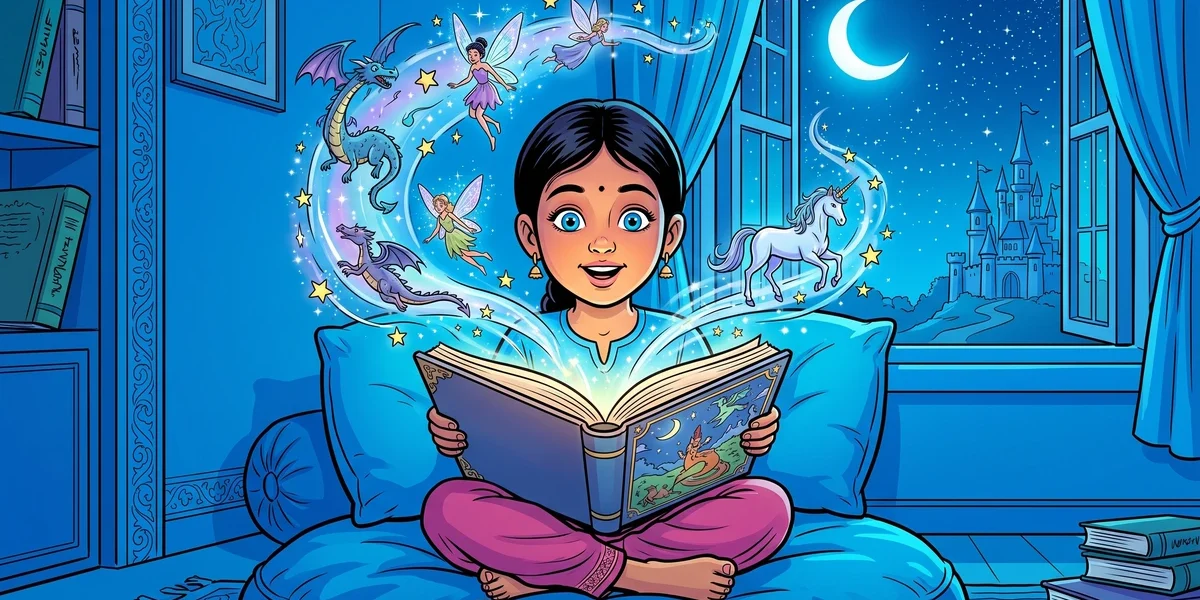
Her Childhood: The Story That Lives in the Body and Never Quite Leaves
Childhood is not the past. This is the first thing any serious engagement with the subject of childhood — in literature, in psychology, in folk narrative — must acknowledge. The experiences of childhood, and particularly the stories absorbed in childhood, do not recede into the past when the child becomes an adult; they migrate into the body, into the reflexes, into the patterns of response that operate below the level of conscious reflection. A woman looking at a particular quality of afternoon light, or smelling a specific combination of rain and earth, or hearing the first notes of a song her grandmother sang — she does not remember childhood so much as she re-enters it, briefly, before the adult world reasserts itself.
The short story as a form is peculiarly suited to this kind of experience: the sudden access to the past through a specific sensory trigger, the compression of decades into a moment, the discovery that what one thought one had moved beyond has simply been waiting quietly for the right door to open. “Her Childhood” as a story type — the brief, precise narrative of a woman (or man) revisiting the formative experience that shaped who they became — appears across contemporary literary fiction, and its roots run into the folk tradition’s long engagement with the idea that origin is not superseded by development but is carried within it. The governing concept is smṛti no bār — the return of memory — the way the past is not behind us but embedded in us.
“She was forty-three years old, and then she was seven. The smell of the rain on the courtyard stone had done it in under a second.”
Beat I — The Woman and the Trigger
The short story about her childhood typically begins in the adult present: a woman in her ordinary life, going about ordinary business, when something specific and sensory triggers the return. The trigger is never abstract; it is always particular — a smell, a sound, a texture, a quality of light at a specific hour. The particularity matters because it is the nature of childhood memory to be stored not as narrative summary but as lived experience — the memory does not say “this is what my grandmother’s kitchen was like” but takes the adult woman back into the specific smell of the specific kitchen at the specific age she was then. Involuntary memory, as Proust spent seven volumes demonstrating, is triggered by the body before the mind can prepare.
Beat II — What She Returns To
The memory that surfaces is not random. It is, consistently, the memory that contains something unresolved — a moment of particular happiness that retrospect has coloured with loss; a moment of fear or confusion whose meaning the child could not access but the adult can; a moment of love between herself and someone who is now dead, stored against the day when it would be needed. The short story format earns its compression here: it can hold one of these moments with precision, allowing the reader access to both the child’s experience of the moment and the adult’s retrospective understanding of it simultaneously.
Beat III — The Stories She Was Given
Childhood is also the time when stories are absorbed — folk tales, family myths, the stories adults tell to explain the world and the stories children construct to make sense of the adults. “Her Childhood” as a narrative often includes, within its brief compass, the story she was told that she is now telling or living — the grandmother’s folk tale that explained something the adult woman is now experiencing; the father’s warning that she dismissed and now understands; the mother’s silence about something that the adult woman has had to construct her own narrative around. The stories absorbed in childhood become the interpretive frames through which adult experience is processed, whether or not the adult is aware of this.
Story type: The involuntary memory narrative; the woman’s bildungsroman in compressed form
Literary parallels: Proust’s involuntary memory, Alice Munro’s compressed childhood narratives, Mahasweta Devi’s stories of women’s lives
Themes: Smṛti no bār (the return of memory), the past embedded in the present, stories absorbed in childhood as interpretive frames, the body as archive
Beat IV — What She Takes Forward
The short story about her childhood typically ends not in the past but in the present, with the adult woman carrying something forward from the re-encounter. She understands something she did not understand before the trigger opened the door; or she has re-experienced a loss that retrospect had dulled back to its original sharpness; or she has found, in the returned memory, a resource for the present difficulty she is navigating. The past, once revisited, is not simply past — it becomes available again as experience that the adult can now integrate rather than merely remember. This is the folk-tale structure of the hidden resource: the thing you thought you had left behind turns out to be exactly what you needed for the current challenge.
Why This Story Lasted
Stories about the return of childhood — about the moment when the adult is briefly, completely, the child they once were — have lasted because this experience is universal and yet feels utterly private when it happens. The smell of that kitchen, that rain on that stone, that particular song: each reader has their own version, their own trigger, their own moment of sudden return. The story that captures this experience precisely enough for the reader to feel recognised is doing something that only the best short fiction can do: making the private universal, and the universal feel specifically, privately true. “Her Childhood” works because it is also yours, even though it is hers.
Frequently Asked Questions
What is involuntary memory and how does it work?
Involuntary memory (most famously theorised by Marcel Proust) is the sudden, unprompted return of a past experience triggered by a specific sensory stimulus — a smell, a taste, a sound. Unlike voluntary memory (deliberately trying to recall something), involuntary memory bypasses the conscious mind and produces a vivid re-experience of the past rather than a factual recall of it. Neuroscience has confirmed that smell, in particular, has privileged access to emotional memory because the olfactory system connects directly to the limbic system.
Why are childhood stories so powerful in folk traditions?
Stories absorbed in childhood are absorbed at the stage when the interpretive frameworks for understanding the world are being formed. They enter before the adult critical apparatus is in place to filter them. Folk traditions have always understood this — they are very careful about which stories children are told, recognising that these stories will shape the adult’s fundamental orientation toward trust, danger, gender, authority, and the supernatural. The grandmother’s story is not entertainment; it is a frame for the world.
What is the difference between remembering childhood and re-entering it?
Remembering childhood is a cognitive act — retrieving information about the past, organising it into narrative, knowing that you are in the present looking back. Re-entering childhood, as the trigger-memory produces, is something else: a momentary collapse of temporal distance in which the adult is genuinely back in the experience, feeling what the child felt, at the child’s age. The distinction is between knowing about the past and briefly inhabiting it.
Why is the short story format particularly suited to childhood narratives?
The short story’s compression suits the compression of involuntary memory: both deliver their content whole, in a concentrated burst, without the preamble and development that novels require. Alice Munro’s short fiction, widely regarded as the finest in the form, is largely structured around exactly these compressions — the sudden access to the past, the reverberating meaning that takes years to understand. The short story can hold the child’s experience and the adult’s understanding simultaneously in a way that the novel’s sequential logic struggles to achieve.
How do folk tales shape the adult woman’s life in this story type?
The folk tales absorbed in childhood function as interpretive templates: when the adult woman encounters a difficult relationship, she may find herself reaching unconsciously for the grammar of the Crane Wife or the grain of salt tale or the story of the stepmother and the patient daughter. She is not consciously applying folk-tale logic; it has become part of how she processes experience. The return to childhood through the sensory trigger often includes a return to the story that the childhood experience was filtered through, allowing the adult to examine both the story and its application with new eyes.
Frequently Asked Questions
**Q: Why is this story important?**
You May Also Like
 Aesop's Fables
Ages 6-8
Aesop's Fables
Ages 6-8
Mr Wont Give And Mr Wont Leave
Mr Wont Give And Mr Wont Leave: In a certain town there lived a clever old Brâhmaṇ, named Won’t-Give(Vidâmundan). He used to go out daily and to beg in all the
 Aesop's Fables
Ages 3-5
Aesop's Fables
Ages 3-5
A Long Bow Story
A Long Bow Story: One day a bunniah, [1] or banker, was walking along a country road when he over took a farmer going in the same direction. Now the bunniah
 Aesop's Fables
Ages 9-12
Aesop's Fables
Ages 9-12
The Bundle of Sticks
The Bundle of Sticks: There was an old man who lived to see his five sons grow into manhood, yet their constant quarreling troubled him more deeply than any