Hansel And Gretel
Hansel And Gretel: Hard by a great forest dwelt a poor wood-cutter with his wife and his two children. The boy was called Hansel and the girl Gretel. He had
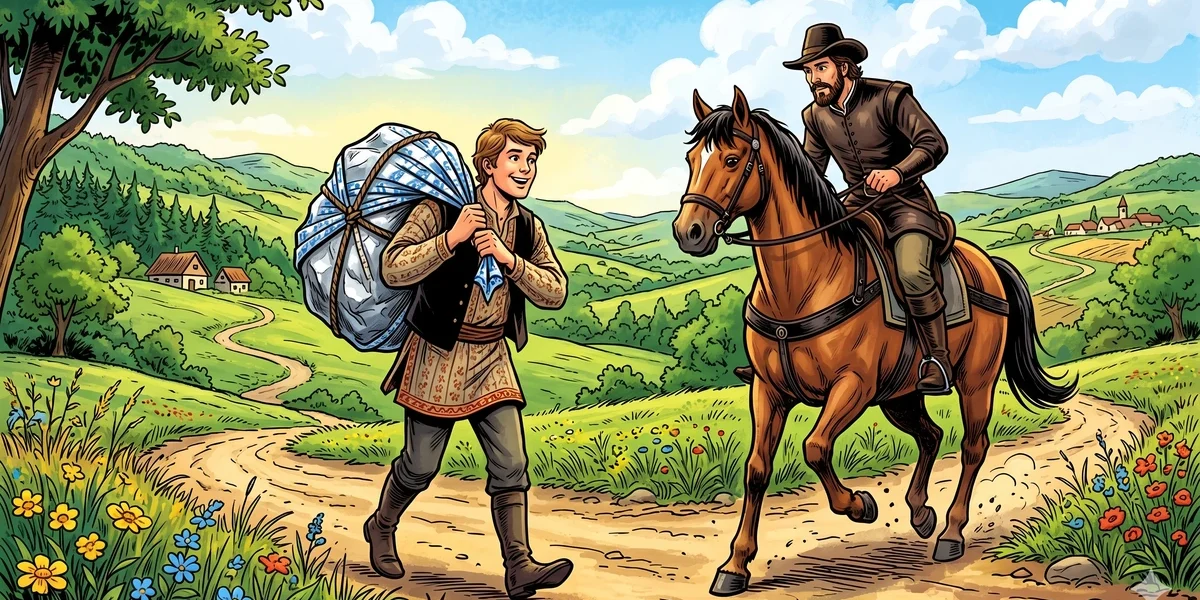
Hansel and Gretel is the Grimm collection’s most psychologically layered tale — a narrative that operates simultaneously as survival story, initiation rite, and exorcism of the primal fear of abandonment. Two children are cast out by their parents into a forest dominated by a cannibalistic witch, and must outwit her to return home. Through the lens of Indian philosophical and mythological frameworks, the tale maps onto the vana-pravāsa (forest exile) initiatory archetype, the māyā-devouring nature of deceptive abundance, and the Śākta understanding of the feminine as both destructive and creative force.
The Tradition: Vana-Pravāsa and the Forest as Crucible
In Indian epic tradition, the forest (vana) is never merely geography — it is a transformational space where ordinary social identity dissolves and a deeper, tested self emerges. The Pāṇḍavas’ twelve-year forest exile in the Mahābhārata, Rāma and Sītā’s vana-vāsa in the Rāmāyaṇa, and the countless hermitage narratives of the Purāṇas all use the forest as the crucible of character. To enter the vana unprepared is to face annihilation; to survive it transformed is to claim a sovereignty unavailable to those who never left safety.
Hansel and Gretel’s abandonment in the forest is, structurally, a forced vana-pravāsa — exile imposed by scarcity and parental failure rather than chosen as spiritual discipline. Yet the initiatory logic is identical: the children must survive without the social infrastructure that normally sustains them, relying on wit, sibling solidarity, and an emerging capacity for strategic deception that their parents never required of them. They enter the forest as dependent children and emerge as the family’s liberators.
Plot and Philosophical Analysis: Māyā as Gingerbread and the Dissolution of Greed
The witch’s house — constructed of bread, cake, and sugar — is the tale’s central symbol, and it maps precisely onto the Advaita Vedānta concept of māyā as pleasing illusion that conceals a devouring reality beneath. The Upaniṣads repeatedly use the metaphor of honey concealing poison, or beauty concealing death, to describe māyā’s operation. The witch’s house is palatially edible — every surface offers immediate gratification — but its purpose is to fatten children for consumption. Greed (lobha), one of the six inner enemies (ṣaḍ-ripu) in Indian moral psychology, is precisely the faculty the house exploits. Gretel’s initial excitement at the edible house, and Hansel’s systematic consumption of its roof, demonstrate how lobha operates: it engages sensory pleasure in a way that bypasses discriminative judgment (viveka).
The witch herself embodies what the Śākta tradition calls the Kālikā aspect of the Goddess — the devouring, time-destroying feminine that annihilates what it encounters. But unlike Kālī’s destruction, which serves ultimate liberation, the witch’s destruction is purely self-serving. She is asura-śakti: power without wisdom, appetite without purpose. Gretel’s final act — pushing the witch into her own oven — is structurally identical to the mythological pattern where a demon is destroyed by the very force it sought to wield against the innocent. The oven that was to cook children cooks the witch; the death intended for others is consumed by the one who intended it.
The Jātaka parallel is precise: in the “Bāla-Paṇḍita Jātaka” and related tales, the Buddha’s past-life protagonists survive encounters with devouring forces through upāya-kauśalya — skillful means, adaptive wisdom. Gretel’s strategic deception of the witch — feigning ignorance of how to test the oven — is precisely upāya: she uses the witch’s own assumption of superior knowledge against her. The intelligent use of apparent weakness as strategic resource is among the most consistently celebrated virtues in Indian folk wisdom.
Scholarly Synthesis: Sibling Solidarity as Dharmic Bond
The Mahābhārata‘s most profound relationships are sibling bonds: the Pāṇḍava brothers, Kunti’s protective maternity, Draupadi’s relationship with the five brothers. These bonds are consistently presented as the primary network through which dharma operates in human society. Hansel and Gretel’s sibling solidarity — neither abandons the other, each uses their distinct strengths for the other’s survival — mirrors this framework exactly. Hansel’s practical ingenuity (breadcrumb trails, bone-as-finger) complements Gretel’s emotional intelligence and final physical courage; together they form a complete dharmic agent where either alone would fail.
The tale’s ending — the children return home to find their stepmother dead and their father transformed by grief and relief — is theologically complex. The stepmother’s death at the precise moment of the children’s liberation suggests a karmic linkage: her malevolence was the force that sent them into danger, and her destruction is simultaneous with their triumph. The Karma-mīmāṃsā would read this as sañcita-karma (accumulated karma) ripening at its appointed hour, with the children’s success and the stepmother’s death as two faces of the same karmic resolution.
“The house made of sweetness that hides a devouring heart teaches us what all wisdom traditions have known: that the most dangerous traps are built to look like gifts, and the first defense against them is the love of those beside us who will not let us forget who we are.”
Why This Story Lasted
Hansel and Gretel endures because it addresses the deepest fear of childhood: abandonment by those who should protect you, in a world that wants to consume you. Its survival across centuries and cultures reflects how universally children experience the vulnerability of dependence and how urgently they need stories that show the small and powerless outwitting the large and predatory. The tale also survives because it does not offer false comfort — the parents are genuinely culpable, the forest is genuinely dangerous, the witch is genuinely lethal — and yet the children prevail through solidarity and wit. It tells children that the world is sometimes as frightening as it feels, and that they have more resources than they know.
Frequently Asked Questions
What is the deeper meaning of Hansel and Gretel?
The tale enacts the vana-pravāsa (forest exile) initiatory archetype: two children forced into a transformational wilderness space where their ordinary dependencies dissolve and a tested, sovereign self emerges. The witch’s gingerbread house represents māyā — pleasing illusion concealing a devouring reality — and the children survive by developing viveka (discriminative wisdom) and upāya-kauśalya (skillful adaptive intelligence).
What does the witch’s house represent in Hansel and Gretel?
The edible house embodies māyā — Advaita Vedānta’s concept of pleasing illusion that conceals a destructive reality. It exploits lobha (greed), one of the six inner enemies in Indian moral psychology, engaging sensory pleasure in a way that bypasses discriminative judgment. Every surface offers gratification, but its purpose is to fatten children for the witch’s consumption.
Are there Indian parallels to Hansel and Gretel?
Yes — the Rāmāyaṇa’s vana-vāsa (forest exile), numerous Jātaka tales involving children outwitting cannibalistic demons through upāya-kauśalya (skillful means), and Purāṇic narratives where youthful protagonists destroy asura-śakti (power without wisdom) all parallel the tale’s structure. The motif of a trap that destroys its own creator appears repeatedly in the Mahābhārata.
Why does the stepmother die when the witch dies in Hansel and Gretel?
Karma-mīmāṃsā (the analysis of karmic causation) offers the cleanest reading: the stepmother’s sañcita-karma (accumulated karma) from engineering the children’s abandonment ripens at the moment of their liberation. Her destruction and their triumph are two faces of the same karmic resolution — the malevolent intention returns to its source precisely when it achieves its own defeat.
What role does sibling solidarity play in Hansel and Gretel?
Sibling solidarity is the tale’s primary dharmic force. Like the Pāṇḍava brothers in the Mahābhārata, Hansel and Gretel form a complete moral agent where each compensates for the other’s limitations: Hansel’s practical ingenuity and Gretel’s emotional intelligence and physical courage together constitute a wholeness that neither could achieve alone. Their bond is the true magic that defeats the witch.
You May Also Like
 Grimm's Fairy Tales
Ages 9-12
Grimm's Fairy Tales
Ages 9-12
The Raven
The Raven: There was once a queen who had a little daughter, still too young to run alone. One day the child was very troublesome, and the mother could not
 Grimm's Fairy Tales
Ages 9-12
Grimm's Fairy Tales
Ages 9-12
Cat and Mouse in Partnership
A cat and a mouse hide a pot of fat for winter, but not every friend keeps a promise.
 Grimm's Fairy Tales
Ages 9-12
Grimm's Fairy Tales
Ages 9-12
Sleeping Beauty (Briar Rose)
Sleeping Beauty (Briar Rose): On the morning that the princess was christened, the entire kingdom gathered in the grand cathedral of the castle to celebrate