General Hong Gil-dong
General Hong Gil-dong: In the realm of Joseon Korea, during a time when the hierarchical order of society seemed immutable and written into the very fabric of
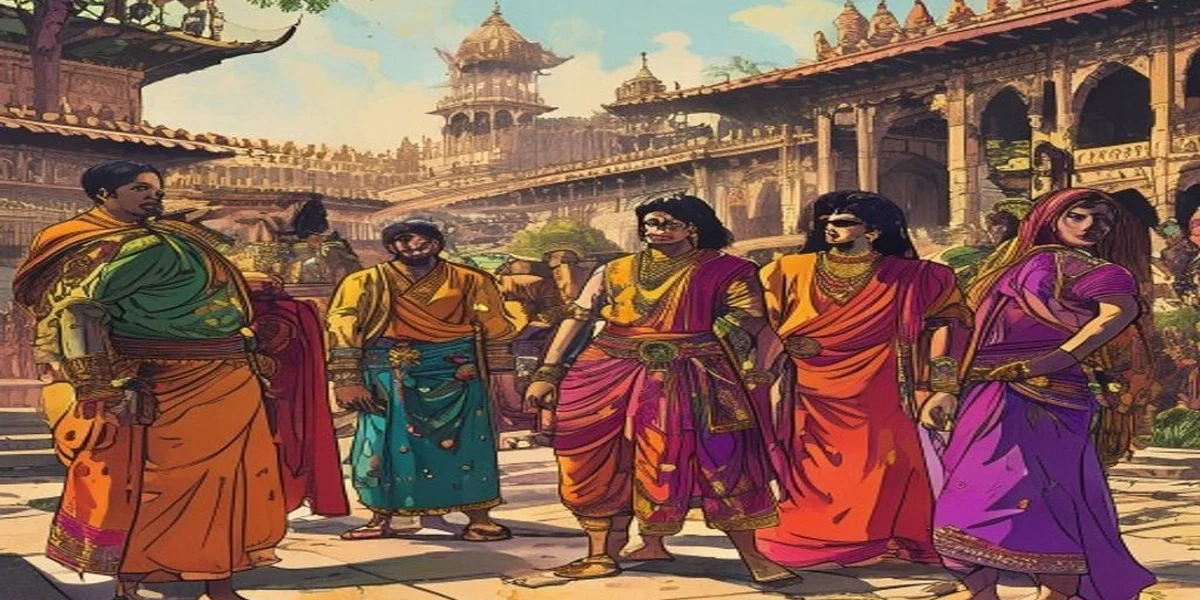
Origin & Tradition
Hong Gil-dong (Hong Gildong-jeon, 홍길동전) is the first novel written in the Korean vernacular script hangeul rather than classical Chinese, attributed to the scholar-official Heo Gyun (허균, 1569–1618) and dated to the early seventeenth century. Its publication in hangeul was itself a political act — it made the story accessible to the full population rather than the literate elite — and the story it tells is equally political: the tale of a man whose exceptional ability is made permanently illegitimate by his birth, and who responds by building outside the system what the system refuses to give him within it. Hong Gil-dong has been Korea’s definitive folk-hero and Robin Hood figure for four centuries, and his name is so culturally embedded that Korean bureaucratic forms use it as the default placeholder name — the Korean equivalent of John Doe.
Beat I — The Son Who Cannot Call His Father Father
Hong Gil-dong is the illegitimate son of a court minister — born of a concubine, which in Joseon Korea meant he was barred by law from taking the civil service examinations, from holding government rank, and from addressing his own father as abeoji (아버지, father) in formal contexts. He is instead required to call him daegam (대감, lord). He is brilliant, physically extraordinary, and trained in both martial arts and the magical arts by a mountain hermit. He has every quality required for official service and no legal path to it.
In the household he is resented by the legitimate branch of the family, who arrange to have him killed. He escapes — using magical arts that allow him to create multiple simulacra of himself, confuse pursuers, and move between places instantaneously — and disappears into the mountains. There he finds a band of bandits, defeats their leader in combat, and takes command. He renames the group Hwalbindang (활빈당, the “Save-the-Poor Party”).
Beat II — The Hwalbindang’s Campaign
Under Gil-dong’s leadership, the Hwalbindang raids the storehouses of corrupt officials and wealthy landlords who have accumulated their wealth through exploitation of the peasantry — illegally collected taxes, seized land, bribed appointments. The stolen goods are redistributed to the villages from which they were originally extracted. Gil-dong’s multiple-simulacra magic makes him impossible to capture: when the government sends soldiers, Gil-dong appears in eight places simultaneously, surrenders in seven of them (releasing seven identical copies of himself), and escapes in the eighth.
Eventually captured through the intervention of his own family — summoned by his father’s plea — Gil-dong is brought before the king. He does not plead for mercy. He makes a political argument: that his crime is the system’s crime, that a man of his abilities was made into an outlaw by a law that served the interests of the already-privileged at the expense of every other consideration of merit or justice. He asks to be made Minister of Defence — not as a reward but as the position appropriate to his demonstrated capabilities. The king, in most versions of the story, exiles him rather than appoints him.
Beat III — Hogeok as Institutional Corrector
Joseon Neo-Confucian political philosophy held that officials had a duty called cheongil (청일) — clarity of official purpose, the faithful discharge of the responsibilities of one’s position for the benefit of those one governed. When officials failed cheongil — collecting taxes they pocketed, distributing favours instead of justice, protecting privilege instead of order — they were not merely personally corrupt; they had vacated the moral justification for their rank.
Hong Gil-dong’s Hwalbindang does not simply steal from the rich. It corrects specific failures of cheongil by specific officials, redistributing goods to the specific communities from which they were illegally extracted. This is not random redistribution; it is targeted institutional correction. Gil-dong keeps meticulous records of where goods came from and where they should go. His multiple-simulacra magic — the ability to appear everywhere and nowhere simultaneously — is the folk-tale expression of what an effective inspector of corrupted institutions would need: the capacity to bypass the shields that rank and wealth normally provide against accountability.
Heo Gyun’s own biography illuminates the political stakes. He was a high-ranking official who was executed in 1618 for alleged involvement in a plot to overthrow the government — specifically, a plot that would have replaced the hereditary aristocracy with a system based on merit rather than birth. Whether Hong Gil-dong was written before or after his execution is disputed, but the novel reads as Heo’s intellectual manifesto: a sustained argument that the Joseon system of hereditary privilege was incompatible with the Confucian principles it claimed to embody.
Beat IV — The Kingdom Built Elsewhere
Exiled, Gil-dong does not disappear — he sails to the island of Yuldo (율도, an imagined realm, sometimes identified with a real island) and conquers it, establishing a kingdom based on merit rather than birth, where every person’s station is determined by their demonstrated ability and virtue rather than their parentage. He becomes king of Yuldo and governs it according to the principles he could not implement in Joseon.
This ending is the novel’s most radical gesture: it does not argue for reforming the existing system but for building a better one somewhere else. Gil-dong does not win in Joseon; he wins by leaving Joseon and creating the conditions he needed. Korean readers have debated for four centuries whether this represents defeat or the purest form of victory — the refusal to define success by a system whose premises you reject.
“When the institutions that should distribute justice refuse to do so, the person with both the ability and the clarity to see the injustice faces a choice between complicity and outlawry — and the outlaw who takes from those who took illegitimately is not simply a criminal but a correction the system failed to make itself.”
Why This Story Lasted
Hong Gil-dong has lasted because the injustice he represents — ability blocked by birth, merit denied by privilege — has never stopped being current. Each generation of Korean readers has found in him the mirror of its own experience of institutional closure, and in the Hwalbindang a fantasy of precise, targeted correction. His name as a bureaucratic placeholder (Korean John Doe) is the final irony: the man who could not take the civil service examination became the default citizen that all official forms imagine.
Heo Gyun and the Political Novel
Heo Gyun’s authorship of Hong Gildong-jeon is debated by some scholars, but the attribution has been consistent since the Joseon period. The novel’s composition in hangeul — accessible to women, commoners, and the non-classically educated — was understood as a political choice. It has been adapted into film, television, and comics across the twentieth and twenty-first centuries, with versions ranging from straightforward adventure to experimental political allegory. A 2008 television drama reimagined Gil-dong in a modern setting; a 2024 film adaptation updated the social critique for contemporary Korean audiences.
Frequently Asked Questions
What is the moral of Hong Gil-dong?
When institutions that should distribute justice systematically refuse to, the person with the ability to see and correct the injustice may be forced outside the law to do what the law should have done. The story argues that the legitimacy of an action cannot be evaluated independently of the legitimacy of the system it operates within — or outside of.
Why was Hong Gil-dong written in hangeul?
Classical Chinese — the literary language of the Joseon educated class — was inaccessible to women, commoners, and those without extensive formal education. Writing the novel in hangeul made it readable by the full population, which was itself a political statement consistent with the novel’s argument: that merit and access to knowledge should not be restricted by birth or class.
Why can’t Hong Gil-dong call his father “father”?
Joseon law required illegitimate sons — children born of concubines — to address their fathers with formal titles of respect (daegam, lord) rather than the familial term abeoji (father). This was one expression of a systematic exclusion of illegitimate sons from civil examinations, government rank, and social recognition, regardless of their abilities or their fathers’ affection for them.
What is the Hwalbindang and what does it do?
The Hwalbindang (활빈당, Save-the-Poor Party) is Gil-dong’s outlaw band, which raids the storehouses of corrupt officials and wealthy landlords who have accumulated wealth through illegal means, and redistributes the goods to the communities from which they were extracted. It is not random theft but targeted institutional correction — an operation that does what the government’s own inspection systems should have done but failed to.
Does Hong Gil-dong win in the end?
Not within Joseon. He is exiled rather than vindicated by the king. His victory — establishing the kingdom of Yuldo based on merit rather than birth — happens outside the system that wronged him. Korean readers have debated whether this represents defeat (he could not reform Joseon) or the most radical possible victory (he refused to define success by Joseon’s terms and built something better elsewhere).
You May Also Like
 Korean Folk Tales
All Ages
Korean Folk Tales
All Ages
Hyung Bo And Nahl Bo
Hyung Bo And Nahl Bo: OR, THE SWALLOW-KING’S REWARDS. In the province of Chullado, in Southern Korea, lived two brothers. One was very rich, the other very
 Korean Folk Tales
All Ages
Korean Folk Tales
All Ages
The Fortunes Of Yoo
The Fortunes Of Yoo: There was a man of Yong-nam, named Yoo, who lived in the days of Se-jong. He had studied the classics, had passed his examinations, and
 Korean Folk Tales
All Ages
Korean Folk Tales
All Ages
The Woodman And The Mountain Fairies
The Woodman And The Mountain Fairies: Over a half thousand years ago there lived in a northern village, near Ping Yang, a wood-cutter named Keel Wee. He owned