Celebrating Shakespeare Shakespeare Pays A Visit To Globe Theatre
Celebrating Shakespeare Shakespeare Pays A Visit To Globe Theatre: It had been four hundred and fifty years or was it more? Shakespeare had for gotten. Living
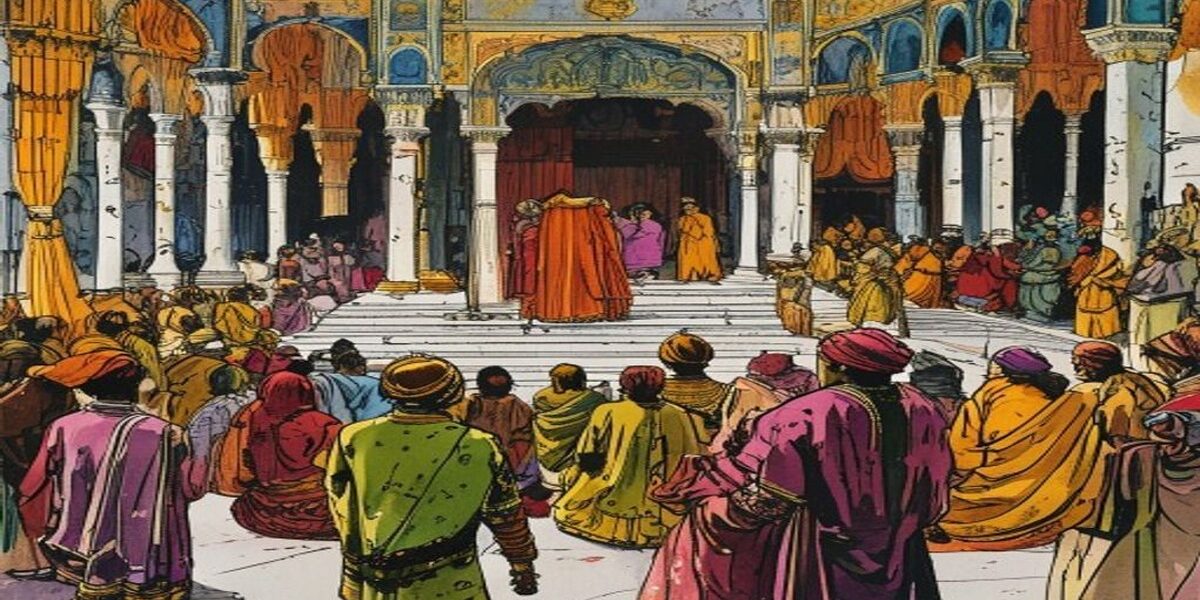
Shakespeare at the Globe: The Author, the Stage, and the Immortality of Stories Well-Told
What would it mean for William Shakespeare to visit the Globe Theatre today — to walk into the reconstructed version of the wooden O where his plays first took shape, and to see what his words have become? The imaginative exercise is not mere whimsy; it is a way of asking what stories do over long time, what the relationship is between the original act of creation and the centuries of performance, interpretation, and transformation that follow. The Globe Theatre, rebuilt on Bankside in London in 1997, is itself an act of story: a reconstruction of a physical space in order to recover something of how drama felt when it was new.
Shakespeare stands at the intersection of the Aesopic and the literary — he knew his Aesop, used fable structures throughout his work, and shared with Aesop the genius of making moral complexity accessible through story. His plays are, among other things, sophisticated elaborations of fable logic: the wolf and the lamb become Iago and Othello; the crow and its borrowed feathers become Malvolio; the ant and the grasshopper echo through every contrast between the provident and the improvident that runs through the canon. To celebrate Shakespeare is to celebrate the tradition he extended and transformed: the conviction that story is the most durable vehicle for truth.
“All the world’s a stage,” he wrote, “and all the men and women merely players.” He knew this because he had watched them play, in the wooden O, for years — and found the metaphor still insufficient to contain what he had seen.”
Beat I — The Globe and Its Original Genius
The Globe Theatre of Shakespeare’s time (built 1599, burned 1613, rebuilt 1614) was an extraordinary social instrument: a circular open-air amphitheatre in which groundlings (standing spectators) shared the theatrical experience with gallery-seated aristocrats, where the same words addressed everyone simultaneously, and where the plays moved between comedy and tragedy, between prose and verse, with the ease of a mind comfortable in multiple registers at once. This democratisation of the theatrical encounter — this insistence that Hamlet’s meditation on mortality and Falstaff’s comic cowardice were available to the same audience in the same afternoon — is one of Shakespeare’s greatest achievements, and it is encoded in the physical design of the Globe itself.
Beat II — What Shakespeare Might Make of the Reconstruction
The reconstructed Globe, opened in 1997 under the artistic directorship of Mark Rylance, is faithful to the original in form and material — oak, thatch, lime plaster — but exists in a transformed world. Its audience comes from all over the globe (the irony of the name has deepened); its plays are experienced by people who know the plays already, often very well, rather than by first-time audiences encountering drama as a new technology of public entertainment. The stories have become so familiar that the surprise they once generated is now a surprise of recognition — the pleasure of meeting something already known rather than the pleasure of the first encounter. Shakespeare, one imagines, would find this fascinating and perhaps troubling in equal measure.
Beat III — The Fable Structure in the Plays
What Shakespeare took from the fable tradition — and the Aesopic strain runs deep in Elizabethan culture, through numerous popular collections — is the principle of compression: the ability to put a complete moral world into a small space, to make complex ethical situations legible through the collision of clearly-drawn figures. The difference is that Shakespeare refused the fable’s closure. His plays end, but their questions do not. Is Shylock a villain or a victim? Is Hamlet acting rightly or failing to act at all? Is the shrewish Kate transformed or merely performing transformation? These are fable-scale questions given novelistic complexity, and the irresolution is the point.
Original Globe: Built 1599, Bankside, Southwark; capacity c. 3,000
Reconstructed Globe: Opened 1997, 230 metres from original site; Shakespeare’s Globe Theatre
Themes: The immortality of story, theatre as democratic art, the fable tradition in Shakespeare, the relationship between original creation and living performance
Beat IV — What the Visit Would Confirm
If Shakespeare could visit the reconstructed Globe today, he would find that the plays have outlasted every context that produced them — the Tudor political anxieties, the Elizabethan cosmology, the specific theatrical conventions of his time — and continue to speak in contexts he could not have imagined. This is what the greatest stories do: they exceed their occasion. They are written for one moment and speak to many moments, because the human situations they address — jealousy, ambition, love, grief, the corruptions of power, the struggle for dignity — are not historically bounded. Shakespeare understood this, which is why he set his plays in Denmark, Venice, Rome, the enchanted forest — everywhere except the specific England of his moment. The universality was deliberate and it has worked.
Why This Story Matters
Celebrating Shakespeare at the Globe is celebrating the thing that folk tales and fables and plays share: the conviction that story is not ornament but infrastructure — one of the primary ways human communities think together about what matters. Shakespeare went to the Globe to make stories for the widest possible audience, including the groundlings standing in the rain. The folk-tale tradition gathered around fires for the same reason. The storyteller and the playwright are doing the same work in different registers, and the Globe — that perfect wooden circle — is a monument to the belief that this work is worth doing with the greatest possible care and skill.
Frequently Asked Questions
When was Shakespeare born and when did he die?
William Shakespeare was baptised on 26 April 1564 in Stratford-upon-Avon and died on 23 April 1616, also in Stratford. He is traditionally celebrated on 23 April — which is also St George’s Day — making his birthday and death-day occasions for national celebration in England.
What happened to the original Globe Theatre?
The original Globe Theatre burned to the ground on 29 June 1613 during a performance of Henry VIII, when a cannon used for a theatrical effect set the thatched roof on fire. It was rebuilt in 1614 but demolished in 1644, two years after the Puritans closed the theatres. Its site was excavated by archaeologists in 1989, revealing the original foundations.
How accurate is the reconstructed Globe?
Shakespeare’s Globe (opened 1997) is based on careful historical research, using materials and construction methods consistent with the late Elizabethan period — green oak, thatch, lime plaster. It is the first thatched building permitted in London since the Great Fire of 1666. The original’s exact dimensions are uncertain (only partial foundations have been excavated), so some aspects are informed conjecture.
What is the connection between Aesop and Shakespeare?
Aesop’s Fables were widely available in Elizabethan England through numerous translations and collections, and Shakespeare’s works contain multiple direct references and structural debts to fable tradition. The fable of the belly and the members (from Plutarch’s Moralia, itself Aesopic) is dramatised directly in Coriolanus. The structures of the trickster, the mismatch between appearance and reality, and the animal-nature allegory run throughout the plays.
Why do Shakespeare’s plays continue to be performed worldwide?
Shakespeare’s plays address situations and emotions that are not historically bounded — the experience of jealousy, ambition, grief, political corruption, the desire for recognition, and the struggle for dignity are not sixteenth-century phenomena. His language, while archaic, is also extraordinarily rhythmically alive and continues to resonate even for audiences who do not fully understand every word. And the theatrical form itself — live actors in real time sharing space with an audience — remains, despite every technological alternative, a uniquely powerful mode of shared experience.
Frequently Asked Questions
**Q: Why is this story important?**
You May Also Like
 Aesop's Fables
Ages 3-5
Aesop's Fables
Ages 3-5
The Lion and the Mouse: Friendship Across Worlds
The Lion and the Mouse: Friendship Across Worlds: The savanna stretched endlessly beneath the African sun, a landscape of golden grasses and scattered acacia
 Aesop's Fables
Ages 3-5
Aesop's Fables
Ages 3-5
The Ant and the Grasshopper: Work, Play, and the Seasons of Life
The Ant and the Grasshopper: Work, Play, and the Seasons of Life: The garden existed in a state of abundant chaos. It was a wild place, neither fully Life
 Aesop's Fables
Ages 3-5
Aesop's Fables
Ages 3-5
The Bowman And The Lion | Aesop’s Fables
The Bowman And The Lion | Aesop’s Fables: A skilled bowman once decided to go hunting deep in the forest. He was known for his accurate aim and all the animals