Valiant Vicky The Brave Warrior
Valiant Vicky The Brave Warrior: Once upon a time there lived a little weaver, by name Victor Prince, but because his head was big, his legs thin, and he was
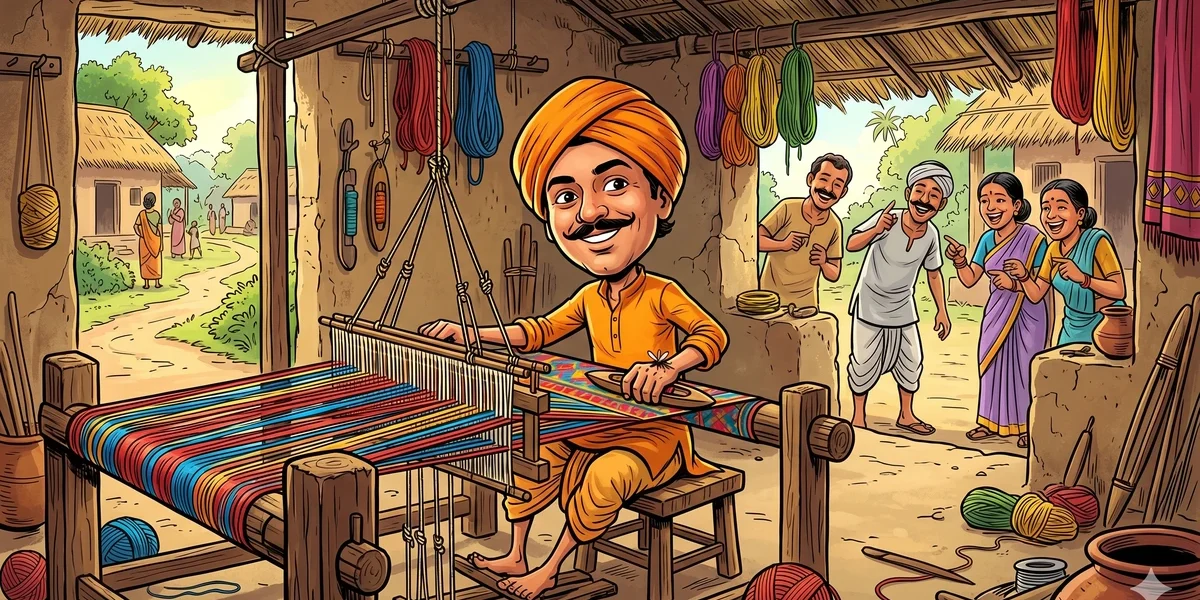
The Unlikely Hero: When Fortune Mistakes Cowardice for Courage
Among the most beloved comic archetypes of world folk narrative is the accidental hero — the timid, ordinary person whom circumstances conspire to present as a champion, and who must then either grow into the reputation circumstances have gifted them or find increasingly elaborate ways to sustain the fiction. Valiant Vicky belongs to this lineage, which in Indian tradition connects to the classical figure of bhiru-vira (the coward-hero): a character whose external deeds look heroic but whose internal experience is pure terror. The tale generates its comedy from the gap between reputation and reality, and its wisdom from the question of whether that gap matters — and whether, if sustained long enough, it eventually closes.
The Indian folk narrative tradition has a rich vocabulary for this comic type. The Panchatantra contains multiple stories of animals and humans who acquire formidable reputations through accidents they neither sought nor controlled. The cat who accidentally kills a large rat is afterward feared by all rodents; the cowardly merchant who stumbles into a bandit camp in the dark and causes the bandits to flee is celebrated as a lion of courage. These tales are not cynical about reputation — they are exploring the genuinely interesting philosophical question of the relationship between performance and character over time.
Vikrama and Vikramaditya: The Heroic Name as Aspiration
The name “Vicky” — diminutive of Vikram or Vikram, from Sanskrit Vikrama — is charged with heroic resonance in Indian culture. Vikrama means “valor” or “heroic stride”; the legendary king Vikramaditya (Emperor of Valor) is India’s preeminent folk hero-king, protagonist of the Baital Pachisi, the Singhasan Battisi, and dozens of regional tale-cycles. A folk tale hero named Vicky thus carries an ironic burden: his name already contains the heroic archetype he must either live up to or comically fail to embody.
This name-destiny tension is a specifically Indian narrative device. Sanskrit poets frequently named their protagonists to signal their essential nature — the name is the soul’s program, which the life must either fulfill or invert. A hero named Vikrama who is actually timid must either realize the potential encoded in his name through the story’s events, or the tale must reveal that vikrama (valor) is more available than the coward suspected. Either way, the name creates a narrative trajectory: the distance between Vicky-as-he-is and Vikrama-as-he-could-be is the story’s engine.
Accidental Heroism and the Question of True Courage
The tale’s philosophical core — which elevates it from mere comedy to genuine wisdom literature — is the question it eventually poses: is there a meaningful difference between accidental heroism and intentional heroism if the outcomes are identical? The classical Indian philosophical tradition offers a nuanced answer. The Bhagavad Gita distinguishes between action driven by ahamkara (ego/personal agenda) and action arising from dharmic necessity — and suggests that the former is always compromised by attachment to outcomes, while the latter can arise spontaneously, without calculation, in any person at any moment.
Vicky’s accidental heroism might be read as a form of spontaneous dharmic action — courage arising not from deliberate cultivation but from circumstance stripping away the option of careful retreat. This reading is available in the tale: the coward who is placed in a situation where only action is possible and who acts effectively has, in that moment, been genuinely brave regardless of his internal experience. The Gita’s teaching that the warrior who fights from necessity rather than ego may be spiritually superior to the warrior who fights from deliberately cultivated courage applies here in comic register: Vicky’s terror-driven action may be more authentically selfless than the deliberate hero’s glory-seeking bravery.
The Reputation Trap and Its Unexpected Resolution
The tale’s middle movement typically involves Vicky’s increasing entrapment in his heroic reputation: having been celebrated for one “feat,” he is called upon for others, each more impossible than the last. This escalation is the tale’s comic engine, but it is also a precise sociological observation: reputation systems, once activated, generate their own momentum independent of the underlying reality. Once the community has invested in Vicky as their champion, they have also invested their own identity and security in his success — which means they have strong incentives to interpret his every action heroically, even when the evidence is ambiguous.
The resolution typically involves either genuine growth (Vicky discovers actual courage through the experience of being treated as courageous) or a spectacular accident that resolves the final crisis and permanently cements his reputation. Either resolution carries a version of the same wisdom: the person we are treated as becomes, over time, a significant influence on the person we actually are. Indian narrative — like modern social psychology — understands that identity is not fixed but is substantially constituted through the feedback loops of social recognition. Vicky is, in the end, shaped by being Valiant Vicky — and the valor the name promised eventually arrives, by whatever route the story takes it there.
“He set out to run away and somehow kept arriving at exactly the right place. Eventually, he realized that perhaps ‘bravery’ was simply showing up — even when, especially when, you were terrified.”
Why This Story Lasted
Valiant Vicky endures because most people have experienced the gap between who they present themselves to be and who they actually feel themselves to be — and because the tale’s implicit promise is that this gap, far from being shameful, may actually be the space in which genuine growth occurs. The accidental hero who grows into their reputation is not a fraud; they are a person discovering that they were capable of more than they knew, precisely because circumstances did not permit them the luxury of declining the challenge. Every listener who has ever found themselves performing a competence they weren’t sure they actually had has found their story in Valiant Vicky.
Frequently Asked Questions
What is the bhiru-vira archetype in Indian folk narrative?
Bhiru-vira (coward-hero) is the character whose external deeds appear heroic but whose internal experience is pure terror. The Panchatantra contains multiple examples — the cat feared by rodents after an accidental kill, the merchant celebrated for “driving away” bandits he stumbled into in the dark. These tales explore whether the gap between reputation and reality matters, and whether sustained performance eventually becomes genuine character.
What does the name Vikrama/Vicky signify in this story?
Vikrama means “valor” or “heroic stride” in Sanskrit — the name of India’s legendary folk hero-king Vikramaditya. A character named Vicky (diminutive of Vikram) carries ironic heroic resonance: his name encodes the archetype he must either grow into or comically fail to embody. Sanskrit narrative tradition uses names as soul-programs, creating a trajectory from Vicky-as-he-is toward Vikrama-as-he-could-be.
How does the Bhagavad Gita’s teaching apply to accidental heroism?
The Gita distinguishes action driven by ahamkara (ego/personal agenda) from action arising from dharmic necessity. Vicky’s terror-driven action — courage arising when retreat is not an option — may be more authentically selfless than the deliberate hero’s glory-seeking bravery. The coward who acts effectively from necessity may embody nishkama karma (action without attachment to outcomes) more fully than the self-consciously brave warrior.
Why does Vicky’s heroic reputation escalate even when it’s undeserved?
Once the community has invested in Vicky as their champion, they have also invested their own identity and security in his success — creating strong incentives to interpret ambiguous evidence heroically. This is a precise sociological observation: reputation systems generate their own momentum independent of underlying reality, and communities that need a champion tend to produce one through the force of collective expectation.
Does Vicky ever become genuinely brave, or remain accidentally heroic?
The tale typically offers one of two resolutions: genuine growth (Vicky discovers actual courage through being consistently treated as courageous — identity constituted through social recognition), or a final spectacular accident that permanently cements his reputation. Either resolution carries the same wisdom: the person we are treated as becomes, over time, a significant influence on who we actually are. The valor encoded in his name eventually arrives, by whatever route.
Frequently Asked Questions
**Q: Why is this story important?**
You May Also Like
 Aesop's Fables
Ages 3-5
Aesop's Fables
Ages 3-5
The Close Alliance A Tale Of Woe
A farmer’s bullocks lead him into a crocodile-infested river—a parable of how bad companions drag the virtuous toward ruin.
 Aesop's Fables
Ages 6-8
Aesop's Fables
Ages 6-8
The Farmer and the Money-Lender
The Farmer and the Money-Lender: A poor farmer suffered constantly under a money-lender who grew rich while the farmer remained trapped in hardship. With
 Aesop's Fables
Ages 3-5
Aesop's Fables
Ages 3-5
The Three Deaf Men
The Three Deaf Men: When any awkward blunder occurs from a person acting under a mistaken notion, there is a common proverb in Tamil to the effect that the