The Three Calamities
The Three Calamities: From that time these four young men became the confidential advisers of king Alakesa in all important affairs of state, and, as night is
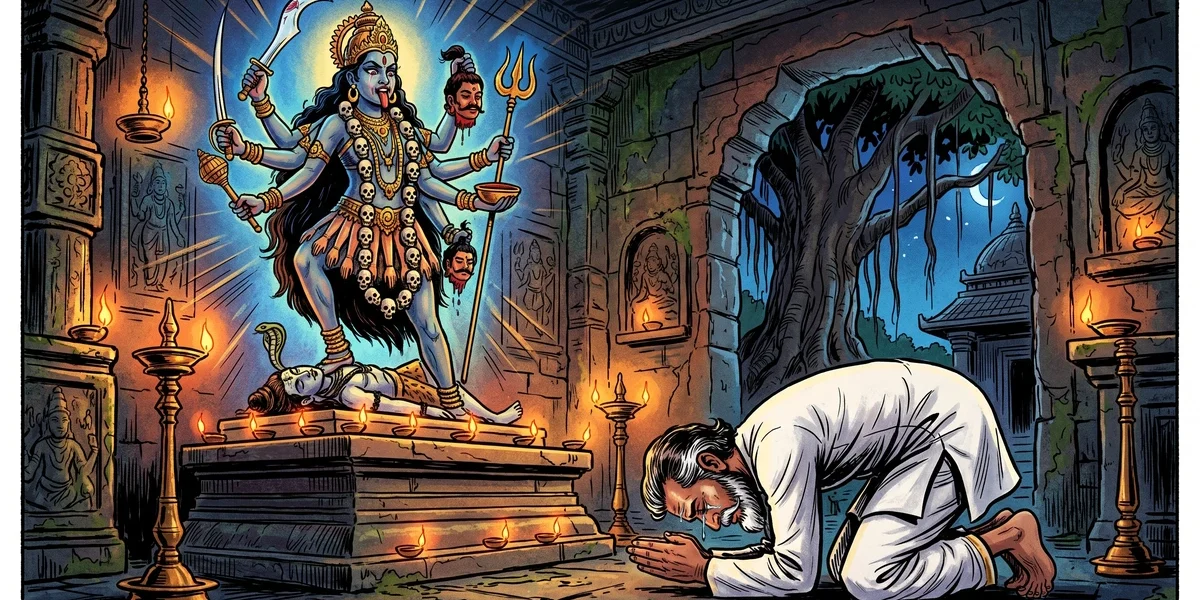
Three Is the Number of Testing: The Structure of Triple Calamity
In narrative across cultures, three is the canonical number of trials. One misfortune is accident; two is pattern; three is fate — and the hero or heroine who survives all three has demonstrated a sufficiency of character that single or double trials cannot establish. The Three Calamities belongs to the pan-Indian tradition of tri-pariksha — the triple examination — in which a protagonist faces three escalating catastrophes that test, in sequence, their material resilience, their social relationships, and their inner character. What makes the Indian version of this universal structure distinctive is the philosophical grammar that underlies it: the three calamities are not random but cosmologically structured, representing the three registers of human suffering identified in Sanskrit philosophical literature.
The Sankhya Karika of Ishvarakrishna (c. 4th century CE) classifies all suffering under three headings: adhyatmika (self-caused, arising from body or mind), adhibhautika (caused by other beings — human, animal, or demonic), and adhidaivika (caused by cosmic forces — weather, fate, divine decree). A tale of three calamities that maps to this tripartite classification is not merely a story of bad luck but a complete survey of the human condition: the protagonist who survives all three has demonstrated mastery across every category of adversity that existence can produce.
Calamity as Teacher: The Pedagogical Function of Repeated Disaster
Indian didactic narrative — from the Panchatantra to the Hitopadesha to the Jataka tales — consistently treats suffering as a teaching instrument rather than a punishment. The hero of The Three Calamities is not being punished; he is being educated. Each calamity strips away a layer of false security — material wealth, social status, personal certainty — until the protagonist is reduced to their essential self, which turns out to be the only self capable of genuine response to the world. This progressive stripping is structurally identical to the Sufi concept of fana (annihilation of the ego-self) and the Vedantic concept of neti neti (not this, not this) — the systematic elimination of what one is not until only what one truly is remains.
The tale thus performs a function simultaneously therapeutic and philosophical: it walks the audience through the experience of losing everything — vicariously, safely — and demonstrates that the core of the protagonist’s identity survives the loss. This is not a comfortable lesson, but it is a necessary one, and folk narrative has always understood that discomfort is the price of genuine wisdom. Each calamity is a compression of the kind of loss that real human lives experience across decades; the tale condenses this education into a single narrative arc, making it available for processing and integration.
Social Resilience Under Triple Pressure: Community and Isolation
One of the structural tests embedded in the three-calamity pattern is the test of social bonds. The first calamity often reveals who among the protagonist’s apparent supporters actually provides real support; the second calamity reveals who flees when support becomes costly; the third calamity arrives when the protagonist is most isolated — stripped of material resources and fair-weather allies — and must navigate it through their own inner resources alone. This graduated revelation of social reality is one of the tale’s most acute observations about human community: abundance produces apparent friendship; adversity reveals genuine solidarity.
The Sanskrit concept of mitra-pariksha (friend-testing) appears throughout the Panchatantra and Hitopadesha — the idea that genuine friendship can only be verified under conditions of adversity, never under conditions of mutual prosperity. The Three Calamities puts this principle through its most rigorous narrative test: by the third calamity, only those friendships that are genuinely constituted by love rather than advantage have survived the filtering process. The protagonist’s isolation at the crisis point is thus also a clarification — they now know who they truly have, and the tale’s resolution often involves the loyal remaining friends providing the decisive assistance that turns the tide.
Triumph Through Reduced Means: The Paradox of Productive Adversity
The tale’s resolution — typically some form of triumph, restoration, or moral vindication — arrives not in spite of the three calamities but because of them. The protagonist who has been stripped of wealth, social support, and certainty has also been stripped of the habits of mind that prevented clear action: the paralysis of too many options, the distraction of maintaining status, the complacency of comfortable circumstances. In the reduced, clarified state that the three calamities have produced, the protagonist can see and act with a directness unavailable to them in their original condition.
This is the tale’s deepest and most counterintuitive teaching: the calamities were not obstacles to the protagonist’s fullest expression but prerequisites for it. Indian narrative theory identifies this as the reversal of pratibandha (obstruction) — the apparent obstacles turn out to have been the very conditions that made the resolution possible. The cosmic irony is that the protagonist’s greatest power emerged only after everything they thought constituted their power had been removed.
“After the first blow, he counted his losses. After the second, he counted his remaining friends. After the third, he counted only himself — and discovered that this was enough.”
Why This Story Lasted
The Three Calamities endures because every human life contains its own version of the triple trial — the year when everything seems to go wrong at once, the period when loss compounds on loss until what remains is only the irreducible core of the self. The tale does not promise that three calamities are the maximum life will produce, nor that surviving them is without cost. What it promises is that the self which survives is more genuinely itself than the self that existed before the trials — more honest, more solidly founded, more capable of the kind of action that matters. This is a promise generations of listeners have needed, and it has never become false with repetition.
Frequently Asked Questions
What are the three types of suffering in Sankhya philosophy?
Sankhya Karika classifies suffering as: adhyatmika (self-caused, from body or mind), adhibhautika (caused by other beings — human, animal, or demonic), and adhidaivika (caused by cosmic forces — weather, fate, divine decree). A tale of three calamities mapping to these categories constitutes a complete survey of human adversity rather than mere bad luck.
Why does Indian narrative treat suffering as a teaching instrument?
The Panchatantra, Hitopadesha, and Jataka tales consistently frame adversity as education rather than punishment. Calamity strips away false security (material wealth, social status, certainty) until the protagonist’s essential self is revealed. This mirrors the Sufi concept of fana (ego annihilation) and the Vedantic neti neti (systematic elimination of what one is not).
What is mitra-pariksha and how does it operate in this tale?
Mitra-pariksha (friend-testing) is a Panchatantra principle: genuine friendship can only be verified under adversity, never under mutual prosperity. The three calamities put this through maximum test — each calamity filters the protagonist’s apparent supporters until only those constituted by genuine love rather than advantage remain, clarifying who they truly have when it matters most.
How do the calamities enable rather than prevent the resolution?
The calamities strip away the habits of mind that prevented clear action: paralysis of too many options, distraction of maintaining status, complacency of comfort. In the reduced, clarified state they produce, the protagonist can see and act with directness previously unavailable. The pratibandha (obstacles) turn out to have been prerequisites for the fullest expression of the protagonist’s capacity.
Is the three-trial structure unique to Indian folk narrative?
No — three is the canonical trial number across cultures (European fairy tales, Norse mythology, biblical narratives). What distinguishes the Indian version is its cosmological grounding in Sankhya’s tripartite suffering classification, its philosophical interpretation of adversity as education rather than punishment, and its structural embedding of mitra-pariksha (friend-testing) as a subplot within the larger triple trial.
Frequently Asked Questions
**Q: Why is this story important?**
You May Also Like
 Aesop's Fables
Ages 9-12
Aesop's Fables
Ages 9-12
The Death And Burial Of Poor Sparrow
The Death And Burial Of Poor Sparrow: Once upon a time there lived a cock-sparrow and his wife, who were both growing old. But despite his years the All living
 Aesop's Fables
Ages 3-5
Aesop's Fables
Ages 3-5
Meet Arthi Anand of “Arts Tales with Arthi Anand”
Meet Arthi Anand of “Arts Tales with Arthi Anand”: Every once in a while, I come across a storyteller where one can feel the love for storytelling radiating
 Aesop's Fables
Ages 3-5
Aesop's Fables
Ages 3-5
Network of Hope
Network of Hope: Nidhi peered closely for a blinking green light on the Wi-Fi modem, hoping there was a connection. She reloaded the Internet browser and