The Tale of Three Fishes
Three fishes face danger differently: one dies unprepared, one escapes through wisdom, one through swift action.

The Tale of Three Fishes
Canonical Attribution and Manuscript Tradition
This tale belongs to Pancatantra Book I, Mitra-bheda, and is one of the collection’s most analytically precise demonstrations of the three possible responses to foreseeable danger: act before the danger arrives, act the moment it arrives, or fail to act at all. The story is preserved in all major Sanskrit recensions including the Tantrakhyayika (c. 200 BCE, Kashmir) and appears in parallel in the Hitopadesha. Structural relatives appear in Buddhist Jataka literature and in Aesopic tradition. The tale’s particular contribution to the Pancatantra’s didactic programme is its use of three characters of identical species and environment who nonetheless differ in their response to the same information — thereby isolating the variable of judgment from the variables of capability and circumstance. All three fish heard the same warning; all three were in the same pond; all three had the same physical capacities. Their different outcomes are attributed entirely to differences in their response to foreseeable threat.
Beat I — The Warning and the Three Responses
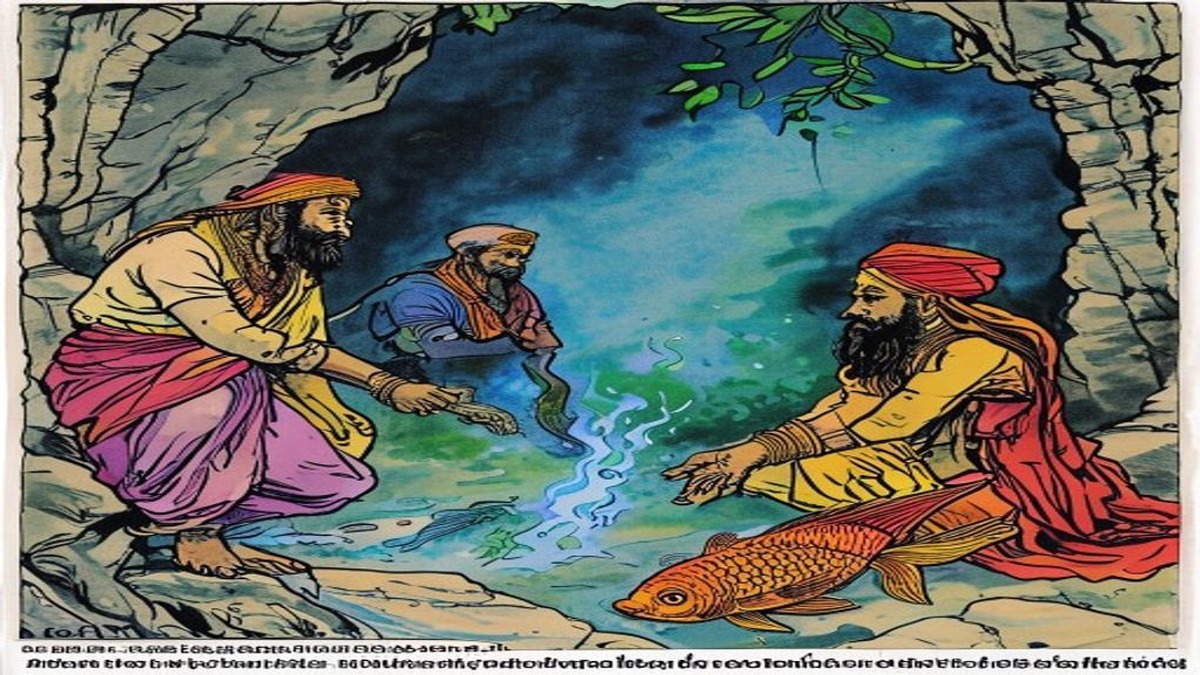
Three fish lived in a pond. A bird perched on the bank overheard fishermen planning to come and net the pond the following morning. The bird, friendly with the fish, warned them. All three fish heard the warning. The first fish, named Anagatavidhata (“one who acts before the danger arrives”), left the pond immediately, that same evening, and moved to another body of water. The second fish, named Pratyutpannamati (“one whose intelligence operates in the present moment”), did not leave but resolved to be ready to act the instant the danger appeared. The third fish, named Yadbhavishya (“whatever will be, will be”), neither left nor prepared any response; it simply continued as before, trusting to fate.
The Pancatantra encodes its lesson in the names themselves, which is unusual even within the collection. Vishnu Sharma is not presenting three characters with personalities to be discovered; he is presenting three analytical categories with names that announce their category in Sanskrit. The tale is not a story about fish; it is a philosophical argument about responses to foreseeable danger, illustrated by three fish.
Beat II — The Morning and Its Outcomes
The fishermen came in the morning with their nets. They found Anagatavidhata gone — the pond held only two fish now. Pratyutpannamati, watching the nets enter the water, feigned death immediately: it floated limp on the surface, belly up. The fishermen, finding what appeared to be a dead fish, threw it to the bank. Pratyutpannamati, on the bank, flipped and flopped its way to the water’s edge and returned to the pond before the fishermen noticed. Yadbhavishya made no particular response when the nets arrived, was caught, and was taken by the fishermen.
Three fish, same pond, same warning, same morning. Three different outcomes determined entirely by three different responses to foreseeable danger. The first survived by acting before the danger was present. The second survived by acting at the precise moment of danger with the most effective available response. The third was caught because it made no response at all. The Pancatantra’s account is stark in its symmetry and does not soften the fate of Yadbhavishya with any mitigating circumstance.
Beat III — The Pancatantra’s Analysis of the Three Responses
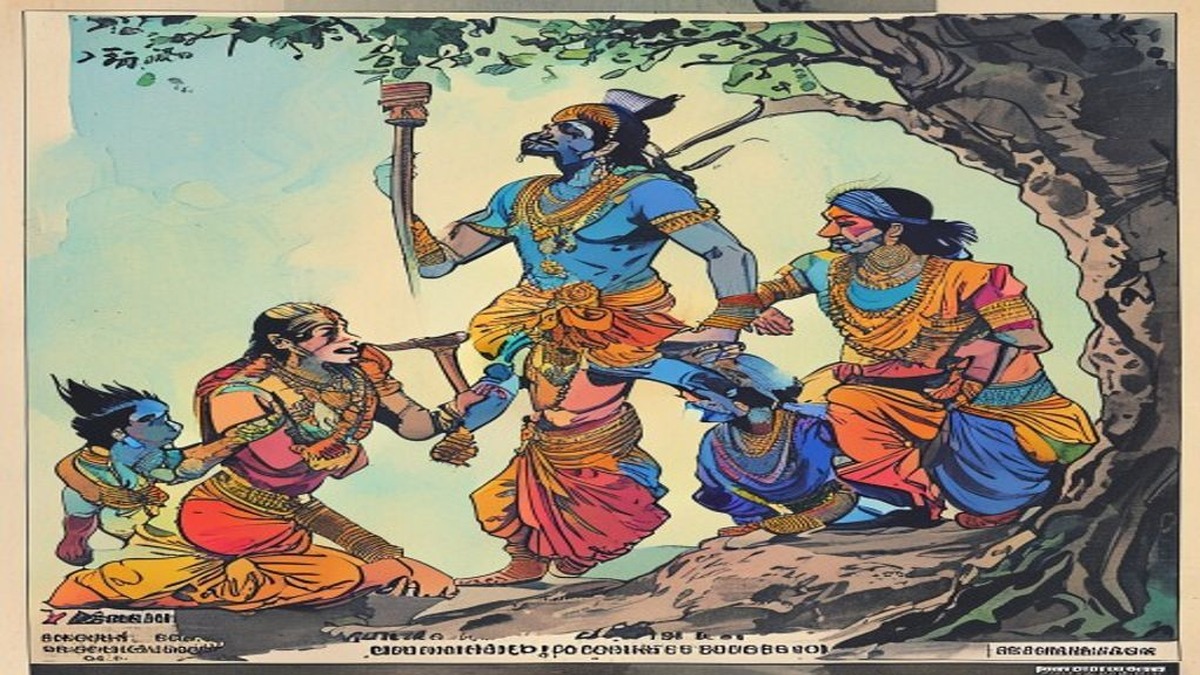
Vishnu Sharma structures the tale to demonstrate a specific hierarchy of responses to foreseeable danger. Anagatavidhata’s response — acting before the danger is present, when the cost of action is lowest and the certainty of success is highest — is the ideal. It requires the least ingenuity and produces the most certain outcome: the danger arrives and the fish is not there. The disadvantage, which the tale does not conceal, is that it required leaving the familiar environment on the basis of a warning rather than on the basis of the danger’s arrival. This requires both the disposition to take warnings seriously and the willingness to act on them at cost before the cost of not acting becomes apparent.
Pratyutpannamati’s response — staying but being fully prepared to act at the moment of danger — is the second-best option and is presented as genuinely admirable: it required real intelligence and real courage. The feigning of death was a non-obvious response to a net; it required Pratyutpannamati to identify, in the moment of immediate danger, the specific action most likely to produce survival. This is the response available to those who did not act in advance but who brought to the moment of danger both the readiness and the intelligence to use it.

Beat IV — What the Three Fishes Teach About Foreseeable Danger
Yadbhavishya’s failure is the Pancatantra’s primary target. The fish that trusts to fate — yadbhavishya, whatever will be will be — is not being presented as an alternative philosophical position that Vishnu Sharma respects but disagrees with. It is being presented as a failure of the will to respond, dressed in the language of philosophical acceptance. The fish was warned. It had time. It had the same options the other two fish had. It chose none of them, and the framing of this choice as acceptance of fate is the Pancatantra’s specific target: the fatalistic framing is not a philosophy; it is an excuse for inaction.
For Vishnu Sharma’s royal pupils the three fish represent three types of minister or ally. The first type acts before the crisis, when the cost of action is still low. The second type acts at the crisis with full intelligence and full commitment. The third type waits for the crisis to resolve itself through fate — and is consumed by it. The Arthashastra of Kautilya addresses the same typology in its treatment of ministers: those who act in advance of problems are the most valuable; those who respond effectively in the moment are the second most valuable; those who wait on events are liabilities. The Pancatantra teaches the same classification through the memory of three fish and one morning.
Moral and Sanskrit Wisdom Tradition
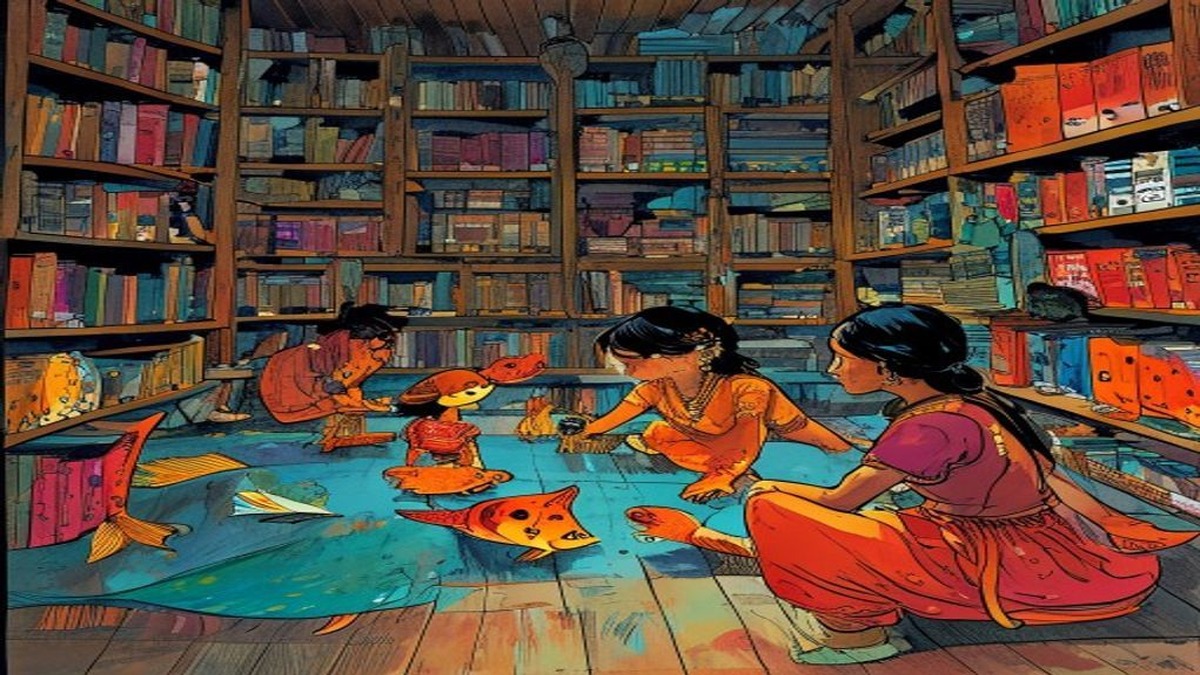
“Act before the danger arrives if you can; act at the moment of danger if you must; but do not dress inaction in the language of fate.”
— Moral of The Tale of Three Fishes, Pancatantra Book I (Mitra-bheda)
This moral engages directly with one of the most persistent debates in Sanskrit philosophical tradition: the relationship between purushakara (human effort) and daiva (fate or destiny). The Mahabharata’s Shanti Parva addresses this debate at length, as does the Bhagavad Gita’s treatment of action without attachment to outcomes. Vishnu Sharma is not denying the existence of fate; he is arguing that fate is not a reason to withhold effort. The third fish’s name — Yadbhavishya, whatever will be will be — precisely mimics the fatalistic philosophical position. The tale demonstrates that this position, when it is used to justify inaction in the face of foreseeable and avoidable danger, produces the outcome that fate would have been blamed for but that was, in fact, entirely avoidable.
Why This Story Has Lasted 2,300 Years
The Tale of Three Fishes endures because the three categories it identifies are genuinely universal and genuinely distinguishable in every generation: those who act on warnings before the danger arrives; those who act at the moment of danger with intelligence and presence of mind; and those who do neither, framing their inaction as philosophical acceptance of whatever comes. The Pancatantra’s refusal to validate the third position as a legitimate philosophy, while encoding it in a name that sounds like a philosophical position, is among Vishnu Sharma’s most rhetorically elegant moves. The fish named Yadbhavishya does not have a philosophy; it has an excuse for inaction, and the excuse costs it its life. This is an uncomfortable observation, and its discomfort is part of why the tale has been preserved and retold across two and a half millennia.
Sanskrit Tradition: Tantrakhyayika (c. 200 BCE, Kashmir); Hitopadesha; Buddhist Jataka parallels; Aesopic structural relatives
Three Fish Names: Anagatavidhata (acts before danger), Pratyutpannamati (acts in the present moment), Yadbhavishya (whatever will be)
Author: Vishnu Sharma (attributed, c. 3rd century BCE)
Core Distinction: Purushakara (human effort) vs. daiva (fate) — the fatalistic excuse for inaction as the Pancatantra’s explicit target
You May Also Like
 Panchatantra Stories
Ages 9-12
Panchatantra Stories
Ages 9-12
The Camel, The Jackal And The Crow
The Camel, The Jackal And The Crow: In a far off forest, there lived a lion named Madotkata served by a leopard, a jackal and a crow. One day they sighted
 Panchatantra Stories
Ages 9-12
Panchatantra Stories
Ages 9-12
Foolish Lion Clever Rabbit
The Panchatantra's most famous Book I fable. A lazy, tyrannical lion named Bhasuraka devours the forest until a small clever hare named Lambakarna walks him to an old stone well — and lets the lion meet the one opponent pride cannot defeat: his own reflection. Full origin, Sanskrit names, age-agnostic retelling, and lessons for today.
 Panchatantra Stories
Ages 9-12
Panchatantra Stories
Ages 9-12
Frogs That Rode a Snake
The framing tale of pride and slow-motion ruin from Book III of the Panchatantra — an old cobra named Mandavishya pretends weakness, and the proud frog king Gangadatta rides him to the doom of his entire kingdom. A two-thousand-year-old story about flattery, deception, and the most dangerous kind of enemy: the one who appears to surrender first.