The Story of the Thief and the Brahmins
The Story of the Thief and the Brahmins: In a certain town, there lived a very learned Brahminwho, as a result of his actions i, n his previous life, had. The

The Story of the Thief and the Brahmins
Origin and Manuscript Tradition
This tale belongs to Panchatantra Book V, Aparikshitakaraka (Acting Without Thinking), the book Vishnu Sharma devoted entirely to the catastrophic consequences of deploying the wrong kind of knowledge in practical situations. Scholarship without worldly intelligence is a recurring theme of the fifth book, and the Brahmins of this story represent its most concentrated expression: men of genuine learning who cannot recognise a predator even when walking directly toward one, because their education has given them every skill except the skill of reading the world in front of them. The tale survives in all major Sanskrit recensions and was noted in Persian and Arabic transmission for its unsentimental treatment of scholarly overconfidence. Vishnu Sharma does not mock learning; he insists that learning without practical discernment is incomplete.
The Scholars on the Road
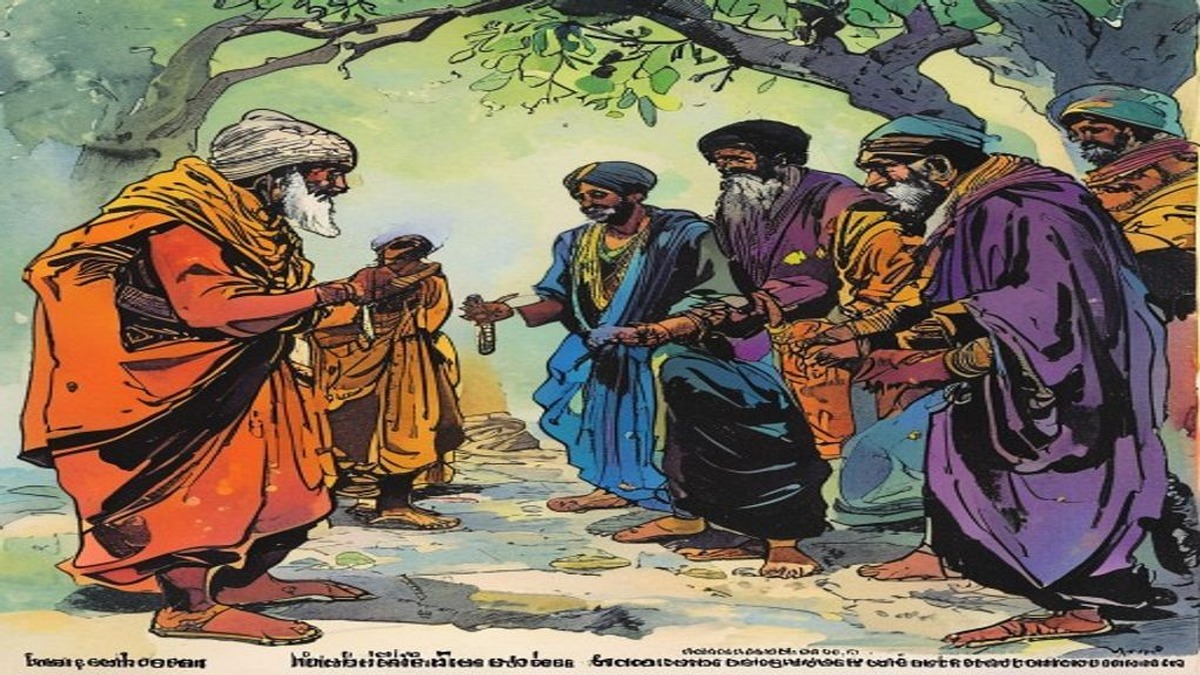
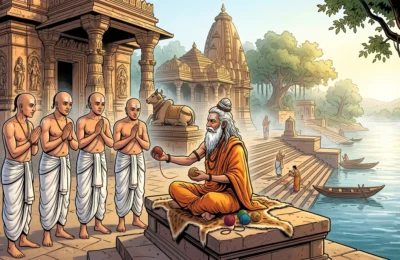
Three Brahmin scholars were travelling from their teacher’s house to their home village, carrying with them the knowledge they had spent years acquiring and the modest gifts their teacher had given them for the journey. They were men of unquestionable learning: they could recite lengthy passages of the Vedas from memory, debate the finer points of ritual procedure without reference to texts, and solve complex grammatical puzzles in Sanskrit that would baffle most educated men. They had, between them, approximately no experience of the world beyond the teacher’s hermitage.
A thief named Ashadabhuti had been watching the road for several days. He was an experienced reader of travellers: their gait, their clothing, the way they held their bundles and scanned their surroundings told him, within a few moments of observation, who had something worth taking and who was alert enough to protect it. The three Brahmins were instantly legible to him. They walked with the unhurried confidence of men accustomed to being respected, they carried their bundles as though no one would dare take them, and they were so absorbed in their discussion — which was, at the moment of his first observation, about the correct pronunciation of a particular Vedic syllable — that they had not noticed him watching from the trees.
Ashadabhuti made a quick assessment and devised his approach. He would not rob them directly; direct robbery was risky and the Brahmins were three. He would insinuate himself into their company, appear to be a fellow traveller in difficulty, win their trust, and find the right moment to take what he needed. The key, he had learned, with this type of traveller, was to approach through their self-image rather than their circumstances.
The Thief’s Performance
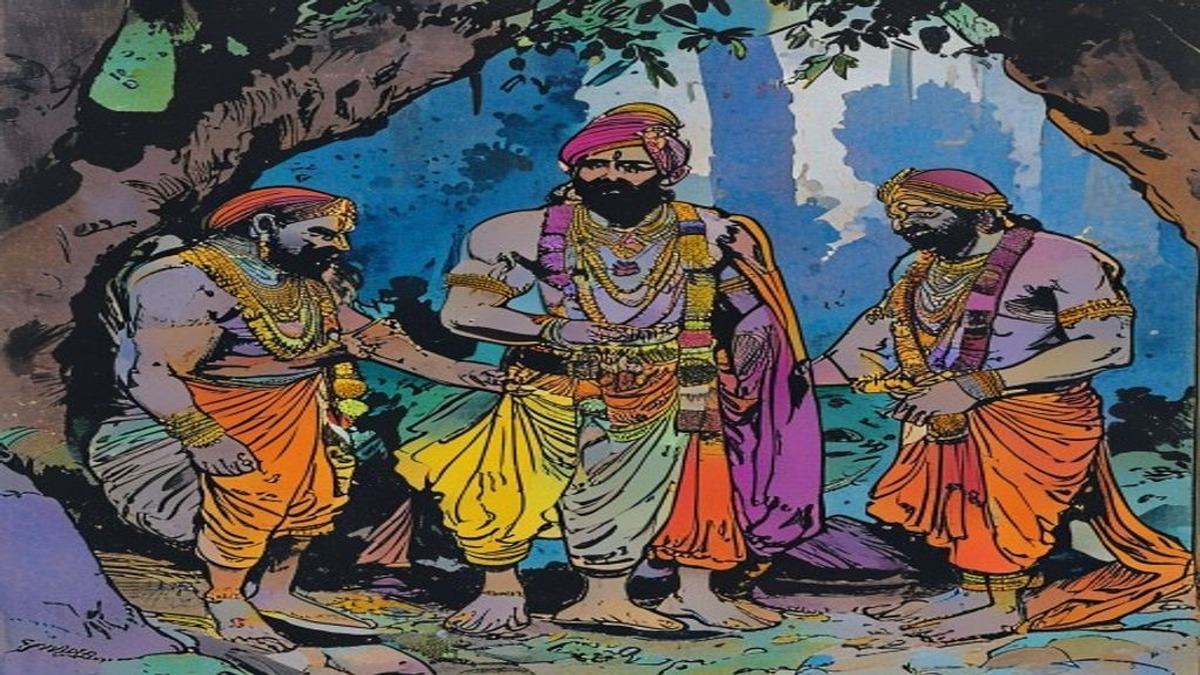
Ashadabhuti stepped onto the road ahead of them, folded his hands in the respectful greeting due to senior scholars, and introduced himself as a student who had been robbed of everything on the previous night. He was alone, without money or food, trying to reach the nearest town. He dropped several technical Sanskrit references into his introduction that confirmed, to the Brahmins’ ears, that he was educated. He asked for their guidance and, perhaps, their company for the road, since travelling alone after being robbed had made him nervous.
The Brahmins were pleased. A respectful student was exactly the kind of company that appealed to them, and his distress gave them the opportunity to demonstrate both their scholarship and their generosity. They invited him to walk with them. He walked with them, listened carefully, asked intelligent questions about the matters they were discussing, and directed the conversation toward topics where their pride in their own knowledge led them to speak freely about where they were going, what they carried, and whom they knew.
At a resting place that evening, the Brahmins shared their food with Ashadabhuti. They were proud of having helped a deserving student, he was grateful and deferential, and the arrangement seemed pleasant to all parties. In the night, while the three scholars slept the untroubled sleep of men who do not suspect danger, Ashadabhuti removed the bundles from beside them with the practiced efficiency of his profession, replaced them with bundles of similar weight filled with stones and sand, and was a considerable distance away before morning.
The Discovery and the Lesson
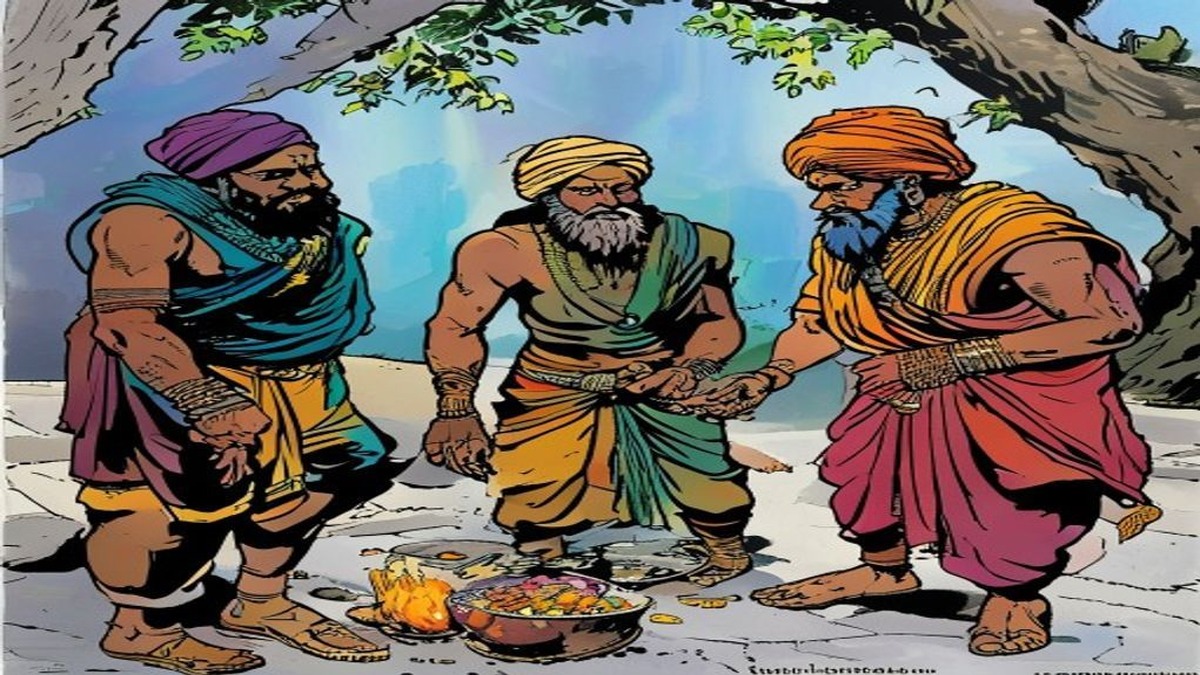
The Brahmins discovered the substitution when they arrived at the next town and opened their bundles to find stones and sand. They were outraged, and then, slowly, embarrassed. They had examined the man’s Sanskrit and found it acceptable. They had tested his knowledge of grammar and found it adequate. They had evaluated his distress and found it convincing. They had not evaluated his honesty or his intentions by any means that would have actually revealed those things, because none of their training had given them tools for that particular kind of assessment.
The oldest Brahmin said, after a long silence: “We know the Vedas. We do not know men. We were robbed not by a thief but by our own incompleteness.” The second Brahmin replied: “We could recite one thousand shlokas about the qualities of a virtuous man and still not recognise one when we needed to distinguish him from the opposite.” The third said nothing, which was perhaps the most accurate response of the three.
Vishnu Sharma offers no comfort in the tale’s resolution: the bundles are gone, the thief is gone, and the knowledge that would have prevented the loss was not Vedic knowledge but worldly alertness — the ability to observe a stranger’s actual behaviour rather than his performance of familiar markers. Ashadabhuti had given them the markers they recognised as signs of trustworthiness. He had denied them nothing they checked for, because they checked for the wrong things.
Moral and Sanskrit Wisdom
विद्या विना विवेकं न भवेत्
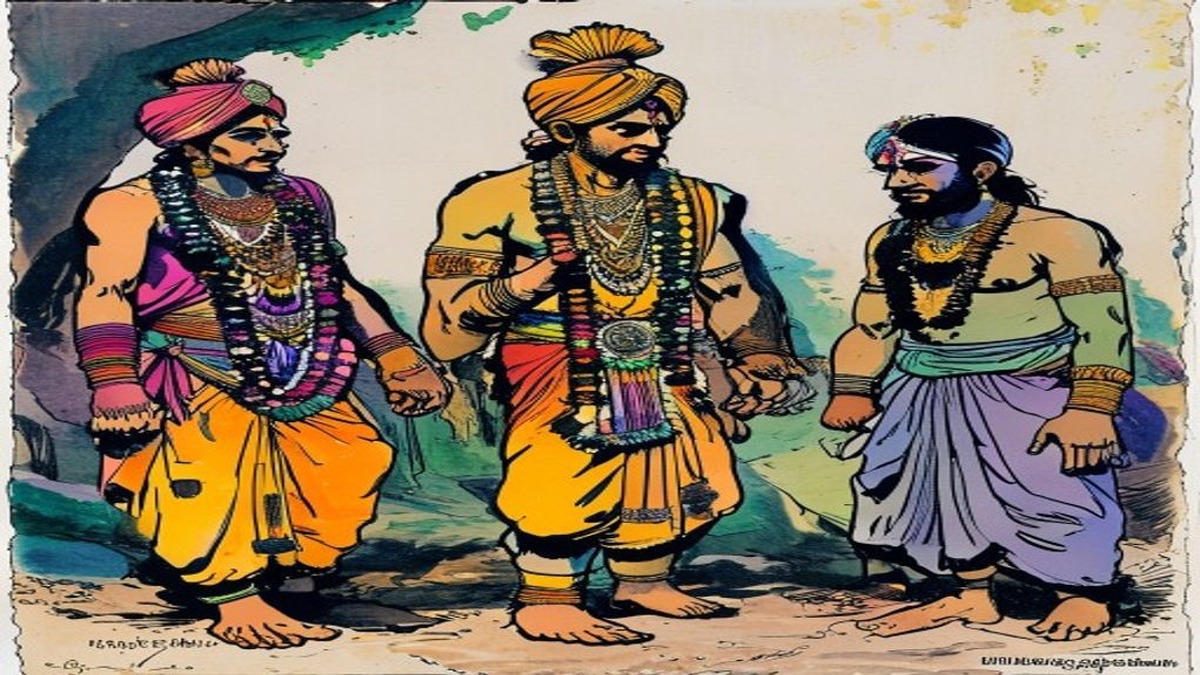
Vidya vina vivekam na bhavet — “Learning without discernment does not become wisdom.”
— Sanskrit proverbial tradition, Panchatantra V
The Panchatantra’s recurring warning about scholars who lack worldly sense is not anti-intellectual; it is a demand for a second kind of knowledge that formal education in Vishnu Sharma’s time did not supply. The Brahmins are not criticised for knowing the Vedas; they are criticised for believing that Vedic knowledge was sufficient equipment for navigating a road on which thieves also walked. Viveka — discernment, the ability to distinguish one thing from another in the world as it actually is — requires direct observation of people and situations, not texts.
Why This Story Has Lasted 2,300 Years
The Thief and the Brahmins endures because the failure it describes is not archaic. The mismatch between formal expertise and practical judgment recurs in every era and institution. The Brahmins verified the thief’s knowledge of Sanskrit grammar when they should have been watching how he moved his eyes when he asked about the contents of their bundles. They checked for credentials rather than behaviour. This is the same error made by any system that assesses qualifications rather than judgment: the credential can be fabricated, performed, or simply irrelevant to the actual situation at hand. Ashadabhuti had enough grammar to pass a cursory examination. He needed no grammar to steal.
Vishnu Sharma is making a point that has direct political application: a king who selects advisors by examining their learning and their deference, without examining their actual judgment under pressure and their alignment of interest with the king’s, is selecting by the wrong criteria. An educated minister who is also corrupt is worse than an uneducated one who is loyal, because the educated corrupt minister can conceal his corruption in learned language that the king cannot easily interrogate. The Brahmins tested for learning and got a thief. A king who tests advisors only for learning may get the same.
The story also contains an implicit criticism of intellectual pride. The Brahmins were pleased by Ashadabhuti’s respectful questions. Their pleasure in his deference made them less vigilant, not more. This is the specific vulnerability of those who identify strongly with their expertise: flattery directed at the expertise disarms them in ways that flattery directed at their appearance or their wealth would not. Ashadabhuti knew his audience. He offered them the one thing that reliably reduced their alertness: a student who seemed to appreciate what they knew.
Frequently Asked Questions
What is the moral of the Thief and the Brahmins?
Learning without worldly discernment is incomplete. The Brahmins verified the thief's Sanskrit grammar but not his intentions — they checked for the wrong evidence and paid the price. Credentials can be performed; behaviour and interest alignment require different observation skills.
What made the Brahmins vulnerable to the thief?
Their intellectual pride. The thief approached them through their self-image as learned men by performing the role of a respectful student. Their pleasure in his deference reduced their alertness — flattery directed at the expertise disarms experts in ways that other flattery does not.
Which Panchatantra book contains this story?
The tale belongs to Panchatantra Book V (Aparikshitakaraka — Acting Without Thinking), compiled by Vishnu Sharma around the 3rd century BCE, which focuses on catastrophes following from unexamined action and incomplete knowledge.
What is the Sanskrit concept of viveka in this context?
Viveka means discernment — the ability to distinguish one thing from another in the world as it actually is. The Brahmins had vast textual knowledge but no viveka about human behaviour. Viveka requires direct observation of people and situations, not study of texts.
What political lesson does this story carry?
A ruler who selects advisors by examining their learning and deference, rather than their actual judgment and alignment of interests, risks selecting educated fraudsters. An educated corrupt minister is more dangerous than an uneducated loyal one, because the learning conceals the corruption in language that is hard to interrogate.
You May Also Like
 Panchatantra Stories
Ages 3-5
Panchatantra Stories
Ages 3-5
The Fighting Goats and the Jackal
The Fighting Goats and the Jackal: One day while a sage was going through a jungle, he saw two golden rams (billy goats) fighting each other. Even though both
 Panchatantra Stories
Ages 9-12
Panchatantra Stories
Ages 9-12
The Four Treasure-Seekers
Read 'The Four Treasure-Seekers' — a classic Panchatantra story about moral lessons about greed. The Four Treasure-Seekers is a beloved Panchatantra tal...
 Panchatantra Stories
Ages 9-12
Panchatantra Stories
Ages 9-12
The Story of the Lion and the Donkey
The Story of the Lion and the Donkey: In a certain jungle, there lived a lion, by the nameof Karalakesara. He had a servant, a jackal named Dhusaraka, who was