The Bird Pair and the Sea
The Bird Pair and the Sea: Do not underestimate the power of the timid.” A pair of Tittibha birds, husband and wife lived on seashore. The female Tittibha bird

The Bird Pair and the Sea
Origin and Manuscript Tradition
This tale belongs to the cluster of Panchatantra stories in Book III, Kakolukiyam (On Crows and Owls), that examine how the weak can prevail against the overwhelmingly powerful by forming coalitions, appealing to righteous authority, and refusing to accept injustice as permanent. The bird pair of this tale — the chakravaka, or ruddy shelduck, beloved in Sanskrit poetry for their extraordinary devotion to each other — are chosen deliberately. The chakravaka pair represent in classical Sanskrit the ideal of mutual loyalty; the sea’s violation of their nest is therefore not merely an act of power but a violation of something the tradition holds sacred. The story survives in the Tantrakhyayika and Purnabhadra recensions and was transmitted through the Persian and Arabic Kalila wa Dimna tradition. Its central argument — that devotion and persistence together constitute a force that power alone cannot permanently overcome — is the complementary lesson to the story of the Tittibha birds, approached from the angle of conjugal loyalty rather than individual defiance.
The Nest Taken and the Vow Made
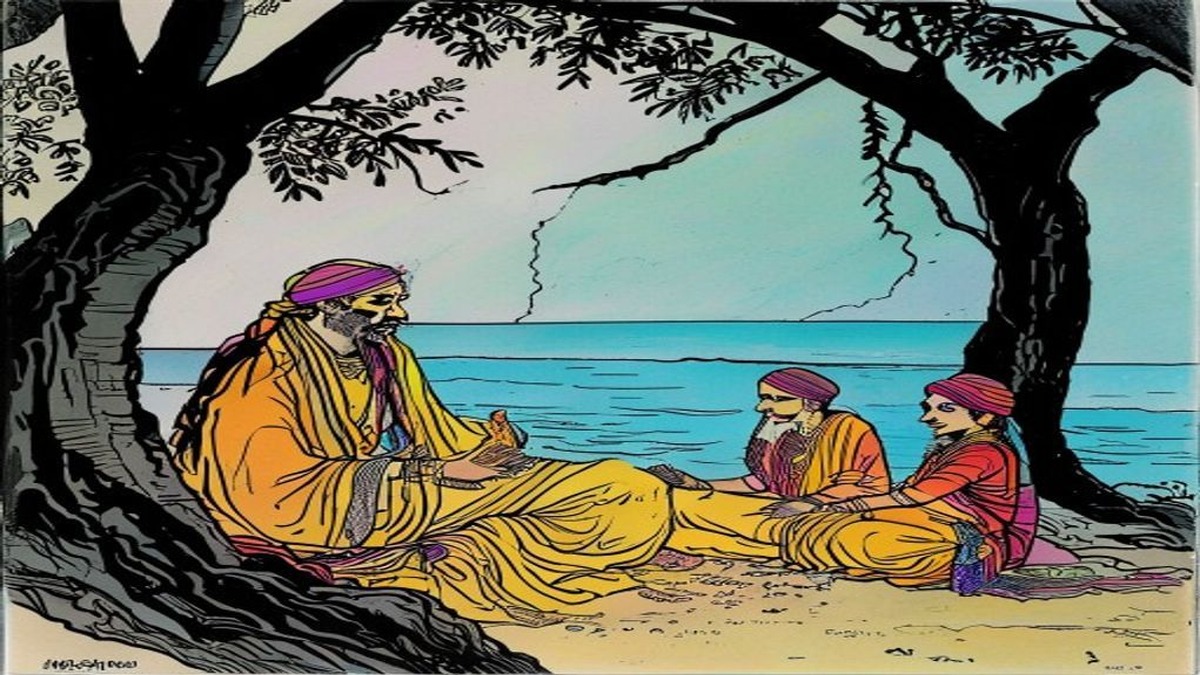
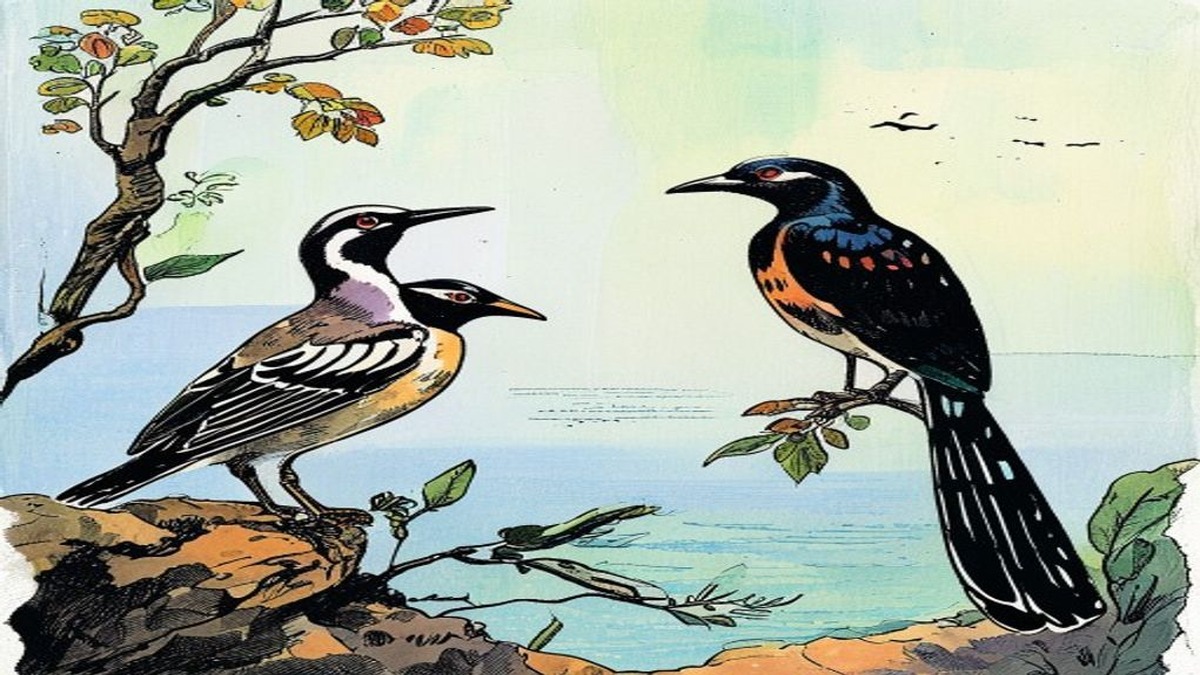
A pair of chakravaka birds had nested on a wide sandy shore, choosing the site for its warmth and its distance from the tree-line where predators lurked. The female had laid three eggs in the hollow she had scraped from the sand, and the pair kept watch over them in the alternating shifts of devoted parents. The female watched by day; the male by night; and in the early morning and late evening they called to each other across the shore in the melodious exchange that has made the chakravaka a symbol of conjugal love in Sanskrit poetry since antiquity.
The ocean, which does not ask permission before it moves, sent a high tide that swept across the beach one night and carried the eggs into the water. The male, who had been watching, cried out and flew low over the retreating water, but the eggs were gone. The female arrived at dawn to an empty hollow. The two birds stood side by side at the waterline and the female wept, if birds can be said to weep, with the particular sustained grief of a creature whose devoted effort has been erased without cause or warning.
The male did not weep. He made a declaration, which the female heard and which the other birds nearby heard: he would take the ocean to account for what it had done. He did not specify how. He did not pretend to know how a small bird takes an ocean to account. He simply declared that the matter was not settled and that he intended to pursue it until it was. The female, who had less confidence in declarations and more experience of the ocean’s indifference to them, asked him what he proposed to do. He replied: “I will find who has authority over the sea. And I will take my case there.”
The Council of Birds and the Appeal to Garuda
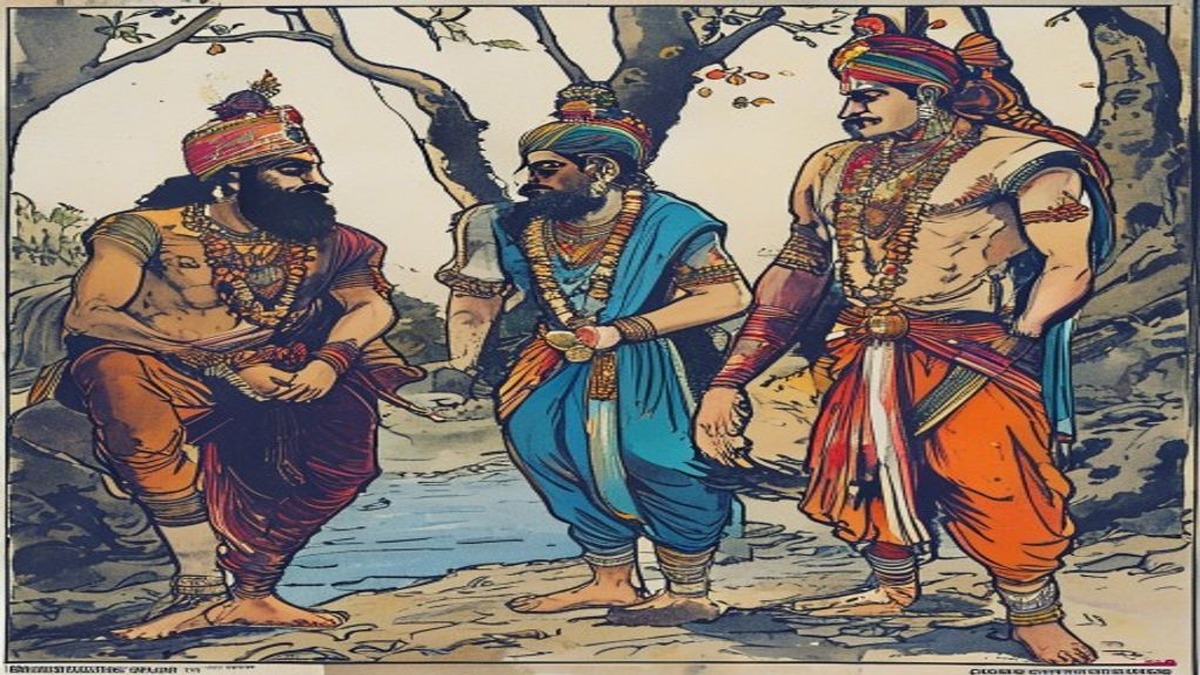
The male chakravaka flew through the forest, calling the birds together. He knew that his individual grievance would be dismissed; what he needed was for the grievance to be understood as collective, because a collective grievance of sufficient weight could reach ears that an individual complaint could not. He spoke at the council with precision: the ocean had taken his eggs without cause; the eggs of any bird nesting near the sea were equally vulnerable; and if the birds permitted this to pass without response, they were accepting a principle — that the sea could take what it wanted from those who nested near it — that would govern every future dispute on the same terms.
The birds recognised the logic. They agreed to carry the complaint to Garuda, the king of all birds, who had the authority and the relationship with divine power necessary to compel the ocean’s attention. Garuda heard the complaint. He was not moved merely by sympathy, though the chakravaka pair’s story was moving; he was moved by the jurisdictional point. The ocean had taken the eggs of birds under his protection. This was a violation of the order of things that fell within his authority to correct. He took the matter to Vishnu.
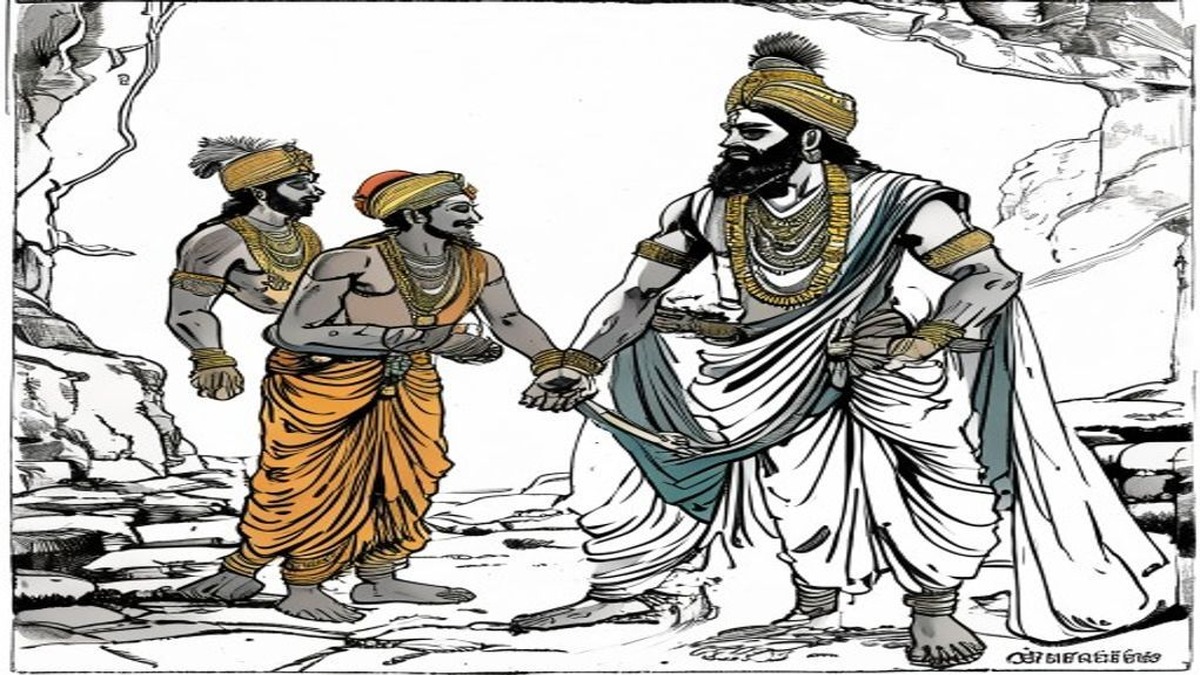
Vishnu, who had created the ocean and whose vehicle was Garuda, understood the situation in its full dimensions. He directed the ocean to return what it had taken. The ocean, which could not refuse the command of the one who had created it, complied. The three eggs were carried in on the next tide, intact, placed in the hollow as though they had never been removed.
What Love and Persistence Made Possible
The chakravaka pair returned to their nest and resumed their vigil. The eggs hatched in due course. The shore continued to be what it had always been — a place of beauty and exposure and the sound of the ocean, which did not apologise and did not change its nature but had been compelled, once, to return what it had taken by a force it could not refuse.
Vishnu Sharma closes the story with a reflection on what made the outcome possible. The male chakravaka’s devotion to the female and the eggs had provided the motivation to act; the act had been the public declaration of a grievance and the willingness to pursue it through every available channel; the pursuit had reached a power capable of compelling the ocean. Three elements combined: sneha (love, which provided the will), udyama (persistent effort, which provided the means), and nyaya (the justice of the cause, which recruited allies at each level of escalation). Without the love, there would have been no declaration. Without the persistence, the declaration would have remained merely a cry at the waterline. Without the justice of the cause, the allies would not have joined and the escalation would have stalled.
The ocean was not changed by the interaction. It continued to move as it always had. What changed was that it had been compelled, by a force above it, to respect a limit it had violated. The chakravaka pair could not install that limit themselves; they could only find the authority that could install it on their behalf. This is the complete lesson: strength is not always within reach, but authority — legitimate authority over the strong party — often is, if one is willing to find it and present one’s case properly.
Moral and Sanskrit Wisdom
स्नेहः उद्यमश्च न्यायश्च मिलिताः सर्वप्राप्तेः
Snehah udyamashcha nyayashcha militaah sarvaprapteh — “Love, persistent effort, and justice together achieve everything.”
— Sanskrit proverbial tradition, Panchatantra III
The Sanskrit tradition regards the chakravaka pair as the emblem of conjugal devotion: according to one legend, they are condemned to be separated every night as a consequence of a divine curse, and their calls across the darkness to each other have entered classical poetry as the image of love enduring separation. Vishnu Sharma uses this symbolism deliberately: the story is not merely about how to recover stolen eggs but about how devoted love, when it refuses to accept loss as permanent, can mobilise forces beyond itself to correct an injustice. The love is the engine; the engine needs a strategic direction to become effective.
Why This Story Has Lasted 2,300 Years
The Bird Pair and the Sea complements the Tittibha story by shifting the emphasis from individual defiance to conjugal solidarity. Where the tittibha’s story is about the power of righteous persistence in a single determined creature, the chakravaka story is about how love between two beings generates a motivation that neither could sustain alone. The female’s grief and the male’s declaration together constitute a force that the male’s determination alone, without the grief that powered it, might not have maintained through the full escalation from shore to bird council to Garuda to Vishnu.
The story has been cited in Sanskrit treatises on governance as an illustration of how aggrieved parties with just causes can reach authorities above their direct adversary, provided they are willing to build coalitions rather than pursuing the grievance alone. The chakravaka’s journey from individual victim to collective case-builder follows the pattern that Vishnu Sharma consistently recommends for the weak against the powerful: make the case, make it public, find allies, escalate, persist. At each stage there is a new level of authority that the previous stage has made accessible. The ocean’s power was absolute at the shore; it was not absolute in relation to Vishnu.
The return of the eggs intact — three eggs carried in on the tide as though they had never left — is one of the Panchatantra’s most satisfying resolutions. It does not merely restore the status quo; it demonstrates that the ocean’s act, though it appeared permanent, was not permanent. The appearance of permanence in the face of superior power is one of the things Vishnu Sharma most consistently argues against. What appears permanent is often merely the current state of a balance of forces that has not yet been adjusted. The chakravaka found the adjustment.
Frequently Asked Questions
What is the moral of the Bird Pair and the Sea?
Love, persistent effort, and justice together can achieve what any one of them alone cannot. The chakravaka's devoted motivation, combined with strategic escalation through legitimate authority, recovered what the ocean's raw power had taken.
What is the chakravaka bird?
The chakravaka is the ruddy shelduck, famous in Sanskrit poetry as the symbol of conjugal devotion. According to legend, the pair are separated every night by a divine curse and call to each other across the darkness — making them the classical emblem of love enduring enforced separation.
How does this story differ from the Tittibha Birds and the Sea?
Where the Tittibha story emphasises individual defiance and the solitary creature's refusal to accept injustice, this story emphasises conjugal solidarity: the female's grief and the male's determination together generate a motivation neither could sustain alone. Love is the engine; strategy is the direction.
What is the three-part formula the story illustrates?
Sneha (love — providing the will to act), udyama (persistent effort — providing the means), and nyaya (the justice of the cause — recruiting allies at each level of escalation). Without all three in combination, the eggs would not have been returned.
Which Panchatantra book contains this story?
The tale is in Panchatantra Book III (Kakolukiyam, On Crows and Owls), compiled by Vishnu Sharma around the 3rd century BCE, which focuses on how the weak can prevail against the overwhelmingly powerful through coalition, righteous cause, and strategic escalation.
You May Also Like
 Panchatantra Stories
Ages 3-5
Panchatantra Stories
Ages 3-5
The King and The Foolish Monkey
The King and The Foolish Monkey: In a magnificent kingdom surrounded by lush gardens and sparkling fountains, there once lived a powerful king who was very
 Panchatantra Stories
Ages 6-8
Panchatantra Stories
Ages 6-8
The Story of the Brahmin and the Cobra
The Story of the Brahmin and the Cobra: In a certain town, there lived a Brahmin, by the nameof Haridatta. In spite of the fact that he workedextremely hard on
 Panchatantra Stories
Ages 9-12
Panchatantra Stories
Ages 9-12
The Lion and The Jackal
The Lion and The Jackal: Vajradanstra was a lion living in a forest. He had two friends, a jackal named Chaturaka and a wolf named Kravyamukha. Because of