The Story of the King and the Foolish Monkey
The Story of the King and the Foolish Monkey: A certain king had a pet monkey. He was allowed toenter the king’s palace, even when other confidentialservants

The Story of the King and the Foolish Monkey
Origin and Manuscript Tradition
This tale anchors Panchatantra Book V, Aparikshitakaraka — a title that translates as “Acting Without Thinking” or “The Ill-Considered Action.” The entire fifth book is organised around variants of the same principle: catastrophe follows directly from action taken before the consequences are examined. The story of the monkey and the sword is the book’s cornerstone: vivid, short, irreversible, and impossible to misunderstand. It survives in all major Sanskrit manuscript families and was transmitted through the Persian Kalila wa Dimna into Arabic, where it became one of the most frequently cited cautionary tales in the entire collection. Medieval European readers encountered it through Latin adaptations and recognised it immediately as a universal warning against misplaced trust in those who mean well but cannot reason about consequences.
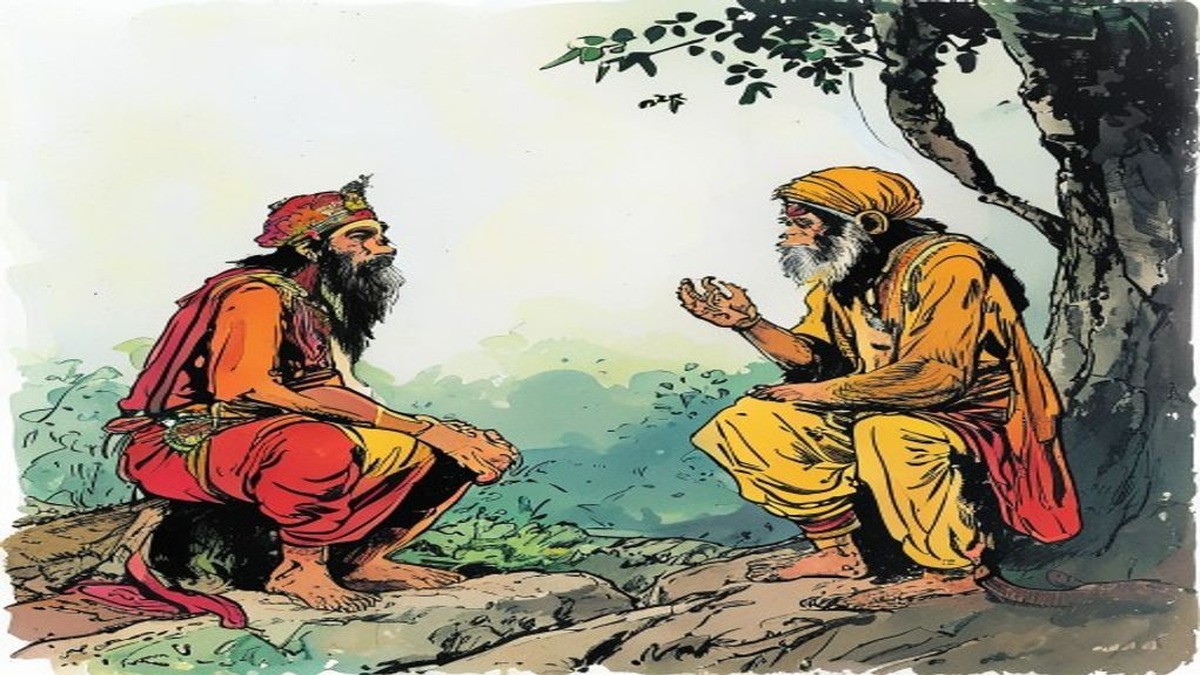
The King’s Trusted Guardian
A certain king had kept a monkey as a pet since it was young, and the bond between them had deepened over years into something the king described as true friendship. The monkey was unusually intelligent by the standard of its kind; it had learned the rhythms of the court, the hierarchy of the servants, the location of every object in the royal chambers. It was devoted to the king with the uncomplicated totality of a creature incapable of political calculation. When the king ate, the monkey ate beside him. When the king walked in the garden, the monkey walked at his side. When the king slept, the monkey sat at the foot of the bed and fanned him.
The chamberlain had advised, more than once, that the animal should not be given unrestricted access to the king’s person. The king dismissed this. “The monkey loves me,” he said. “Love is sufficient credential for trust.” The chamberlain, who knew better than to argue about the king’s feelings, said no more. The monkey was granted access to the inner chamber, to the king’s meals, and eventually, as a mark of the highest trust, to the king’s own sword, which it was allowed to hold and carry in the manner of a guardian.
One summer afternoon the king lay down to sleep during the hottest part of the day. The monkey settled at the bedside with the sword across its knees, fanning the king with a large leaf. The palace was quiet. The guards were posted outside the chamber. The monkey and the king were alone.
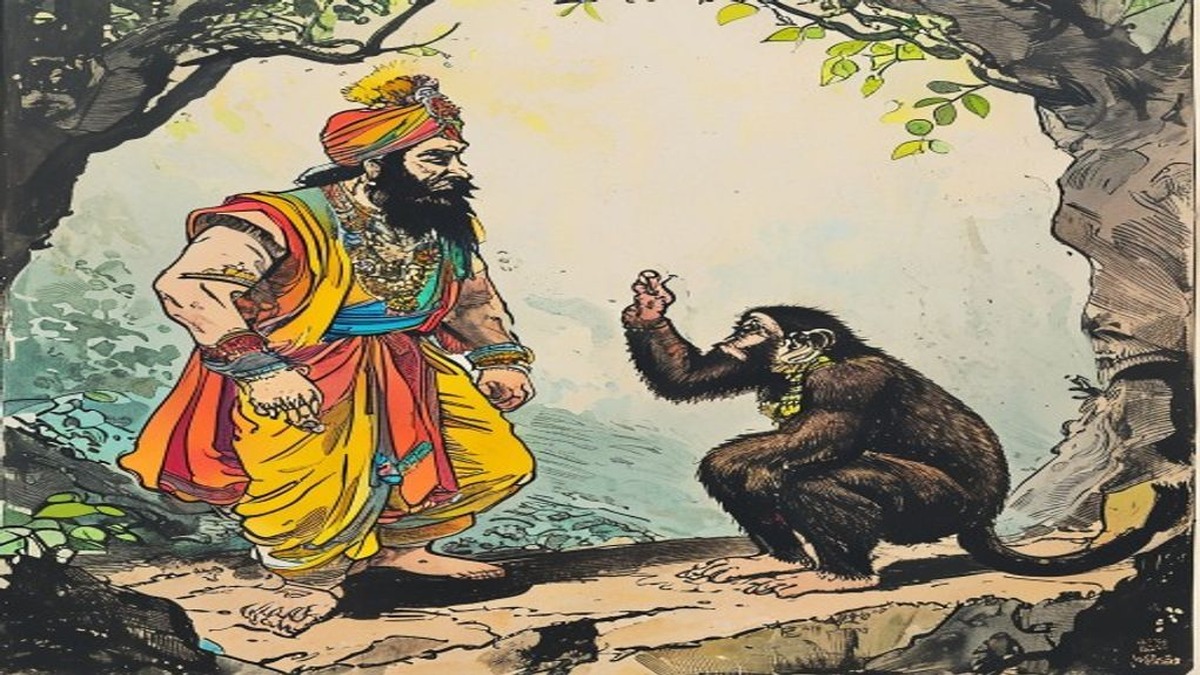
The Fly and the Sword
A fly entered through the latticed window and landed on the king’s chest. The monkey waved the leaf at it. The fly moved to the king’s neck. The monkey waved again. The fly settled on the king’s cheek, walking with the irritating deliberateness of flies, and the monkey’s patience reached its limit. This fly was disturbing the king. The king trusted the monkey to protect him. The sword was in the monkey’s hands.
The monkey raised the sword. It brought it down with the full strength of its arm and the complete conviction of a guardian acting in its charge’s defence. The fly was killed. The sword continued through the king’s pillow and into the king’s neck. The king did not wake up. He never woke up.
The monkey sat beside the bed holding the sword and looking at what it had done. It had not intended this. It had intended to kill a fly. The fly was dead. The king was also dead. Between the intention and the result there had been no malice, no anger directed at the king, no failure of loyalty or devotion. There had been only the absence of the capacity to think through what a sword, swung at something resting on a person, would do to the person it rested on.

The Lesson That Arrived Too Late
When the chamberlain entered the chamber at the hour the king was due to wake, he found the scene before him. He understood in a single glance what had happened and how. He also understood that there was nothing to be done: the king was dead, and the monkey, which had killed him with absolute sincerity, could not be blamed in any moral sense that would undo the facts. The monkey had been given a sword and had used it faithfully according to its nature. The error was not the monkey’s.
The Panchatantra does not provide a concluding court scene or a judgment. It does not need to. Vishnu Sharma closes the tale with a single observation: the king who gave a sword to a creature that could not reason about the consequences of swinging it was the author of his own death. The monkey was the instrument. The king’s misunderstanding of what trust requires was the cause.
The distinction Vishnu Sharma draws is between sneha (affection, love) and vishvasa (trust, reliance). The monkey had earned sneha abundantly and completely. It had not earned vishvasa in any domain requiring the application of reason, because it lacked the capacity for that application. Giving it a sword was not a reward for loyalty; it was a category error that confused emotional closeness with cognitive competence.
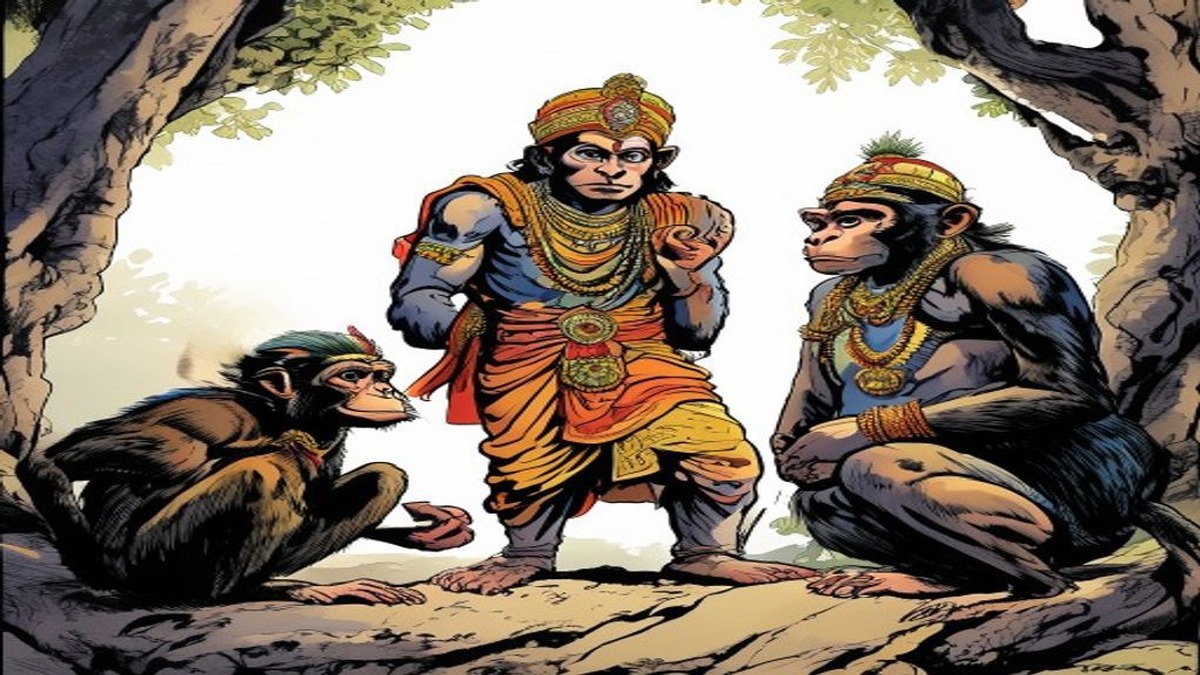
Moral and Sanskrit Wisdom
मूर्खाय न देयं शस्त्राँ्
Murkhaya na deyam shastraani — “Weapons should not be given to the foolish.”
— Panchatantra V, Aparikshitakaraka
The Sanskrit word murkha in this context does not mean wicked or malicious; it means one who acts without thinking through consequences. The monkey is not murkha in the sense of being stupid about most things; it is murkha specifically in its inability to reason about what a sword in motion will do to a body in its path. Vishnu Sharma’s warning is thus carefully targeted: not “do not trust the unintelligent” but “do not give to any being, however beloved, authority over instruments whose consequences they cannot trace.”
Why This Story Has Lasted 2,300 Years
The King and the Foolish Monkey endures because it dramatises a failure mode that recurs wherever authority and capability are misaligned. The king’s error is not that he loved the monkey; love is not the issue. The error is that he allowed love to perform the cognitive work that only capability assessment can do. He answered the question “Should I give this creature a sword?” by consulting his feelings about the monkey rather than by examining the monkey’s capacity to reason about the use of swords.
This is the failure that Panchatantra Book V exists to document: the aparikshitakaraka, the act performed without prior examination. In governance, medicine, engineering, and parenthood, the same failure appears under different names. The consultant hired for charisma rather than competence. The medication prescribed without examining contraindications. The equipment operated by someone whose loyalty to the task is unquestionable but whose understanding of the equipment is not. In each case, the sincerity of the agent is not in doubt; only the fit between the agent’s nature and the task assigned to them.
The chamberlain’s role is structurally important. He saw the problem, articulated it, was dismissed, and was proved right at the cost of the king’s life. Vishnu Sharma includes this element to make clear that the information required to prevent the disaster was available, that a competent advisor had supplied it, and that the king had chosen emotional conviction over rational counsel. The tragedy was not inevitable; it was chosen, step by step, by a king who preferred to be told that his affections were well-placed rather than examine whether they were appropriately directed.
Frequently Asked Questions
What is the moral of the King and the Foolish Monkey?
Weapons and authority must not be given to those who lack the capacity to reason about consequences, however loyal or beloved they may be. Sincerity of intention cannot substitute for the ability to think through what an action will cause.
Which Panchatantra book is this story from?
The tale anchors Panchatantra Book V (Aparikshitakaraka — Acting Without Thinking), compiled by Vishnu Sharma around the 3rd century BCE. The entire fifth book is organised around the theme of catastrophe following unexamined action.
What is the Sanskrit distinction between sneha and vishvasa?
Sneha means affection or love; vishvasa means trust or reliance in a domain requiring reason. The monkey had earned sneha completely. It had not earned vishvasa in any domain requiring consequential reasoning, because it lacked the capacity for it. The king confused the two.
What does the word murkha mean in this context?
Murkha here does not mean wicked or stupid in general terms — it means one who acts without tracing consequences. The monkey is not murkha about most things; it is murkha specifically about what a sword in motion does to a body in its path.
What role does the chamberlain play in the story?
The chamberlain warned the king not to give the monkey unrestricted access, was dismissed, and was proved right at the cost of the king's life. His presence demonstrates that the information needed to prevent the disaster was available — the king simply chose emotional conviction over rational counsel.
You May Also Like
 Panchatantra Stories
Ages 9-12
Panchatantra Stories
Ages 9-12
The Story of Chakradhara.
The Story of Chakradhara.: In a certain town, there lived four young fellows, who were the sons of Brahmins They were very friendlywith each other. But they
 Panchatantra Stories
Ages 9-12
Panchatantra Stories
Ages 9-12
The Story of the Hare and the Partridge
The Story of the Hare and the Partridge: Once upon a time, I was living in a certain tree. In the hollow, at the foot of the tree, lived a partridge, by the
 Panchatantra Stories
Ages 6-8
Panchatantra Stories
Ages 6-8
The Story of Soma Sharma’s Father
The Story of Soma Sharma’s Father: In a certain village, there lived a Brahmin, by the name of Swabhavakripana He used to live by begging. Whenever he got