The Story of the Foolish Heron, the Black Snake and the Mungoose
The Story of the Foolish Heron, the Black Snake and the Mungoose: In a jungle, there was a banyan tree. A number ofherons had built their nes ts in it. The
The Story of the Foolish Heron, the Black Snake and the Mungoose
Origin and Manuscript Tradition
This tale belongs to the first book of the Panchatantra, Mitra-bheda (The Separation of Friends), compiled by the scholar Vishnu Sharma as part of a royal education in statecraft. The fable reached Persia as the Kalila wa Dimna tradition, where Ibn al-Muqaffa rendered it in Arabic in the eighth century, giving it pan-Islamic and eventually European circulation. The Sanskrit text survives in multiple recensions, including the Tantrakhyayika of Kashmir and the Southern family represented by the Purnabhadra version. In every lineage, the heron’s fatal miscalculation stands as the paradigmatic warning against choosing allies whose hunger cannot be safely channelled.
The Serpent That Stole the Seasons
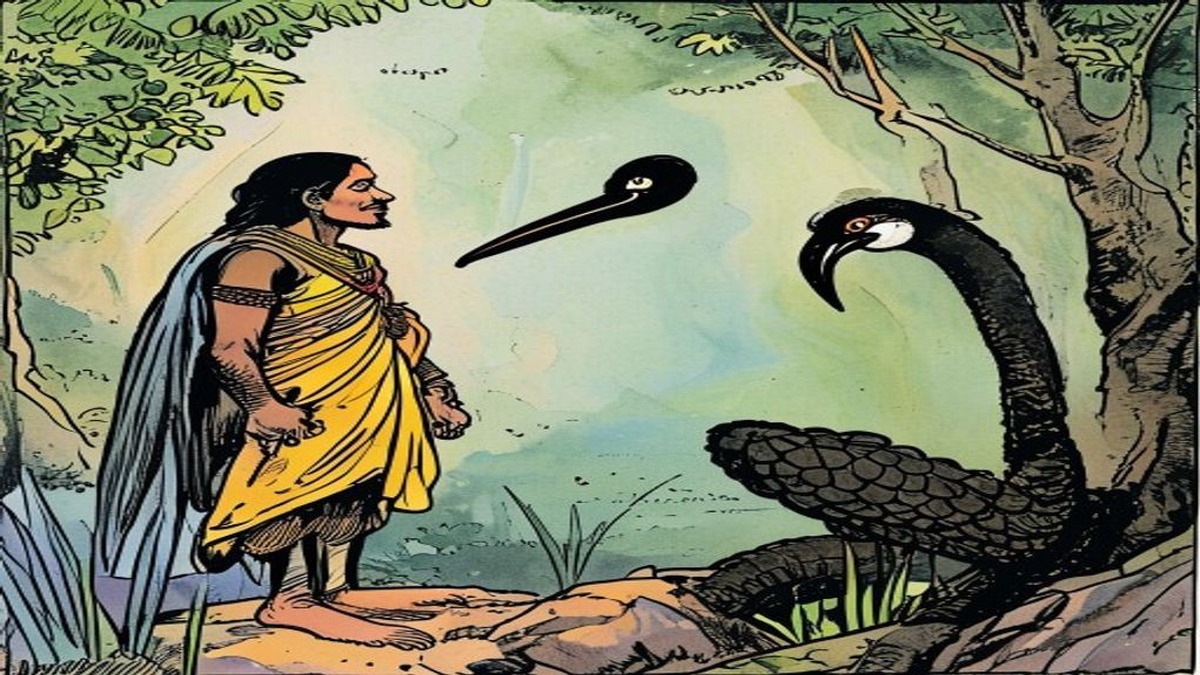
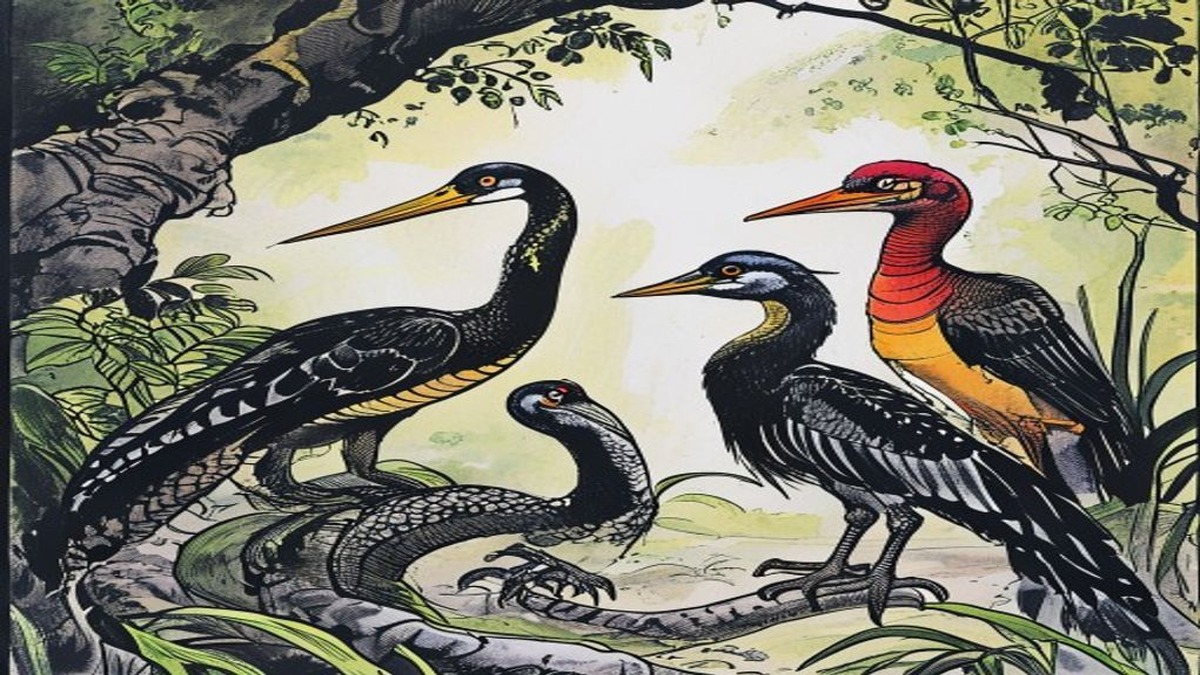
On the bank of a wide, reedy lake called Padmavati there lived an aging heron who had nested in the same fig tree for more seasons than he could remember. Each spring he built a new nest of grass and sticks; each summer his mate laid her pearlescent eggs; each monsoon the chicks hatched and learned to fly. The cycle had seemed eternal until the black snake came.
The serpent had taken up residence in a hollow at the base of the very tree, and year after year, while the heron stood fishing at dawn, the snake ascended the trunk and swallowed the chicks whole. The heron and his mate returned each evening to an empty nest, the twigs still warm, the air faintly carrying the musk of scales. They wept and built again the following spring, and again the snake climbed and again the nest fell silent.
After the fourth such robbery the heron sat alone at the water’s edge, too weary for grief. A crab emerged from the shallows and asked why he looked so hollow-eyed. The heron told his story. The crab was cunning and replied: “Friend, you cannot fight the snake with your beak alone. But I know a way. There is a mongoose burrow at the top of the embankment. Lay a trail of fish from the mongoose’s door to the snake’s hollow, and nature will take its course.”
The Trail of Fish
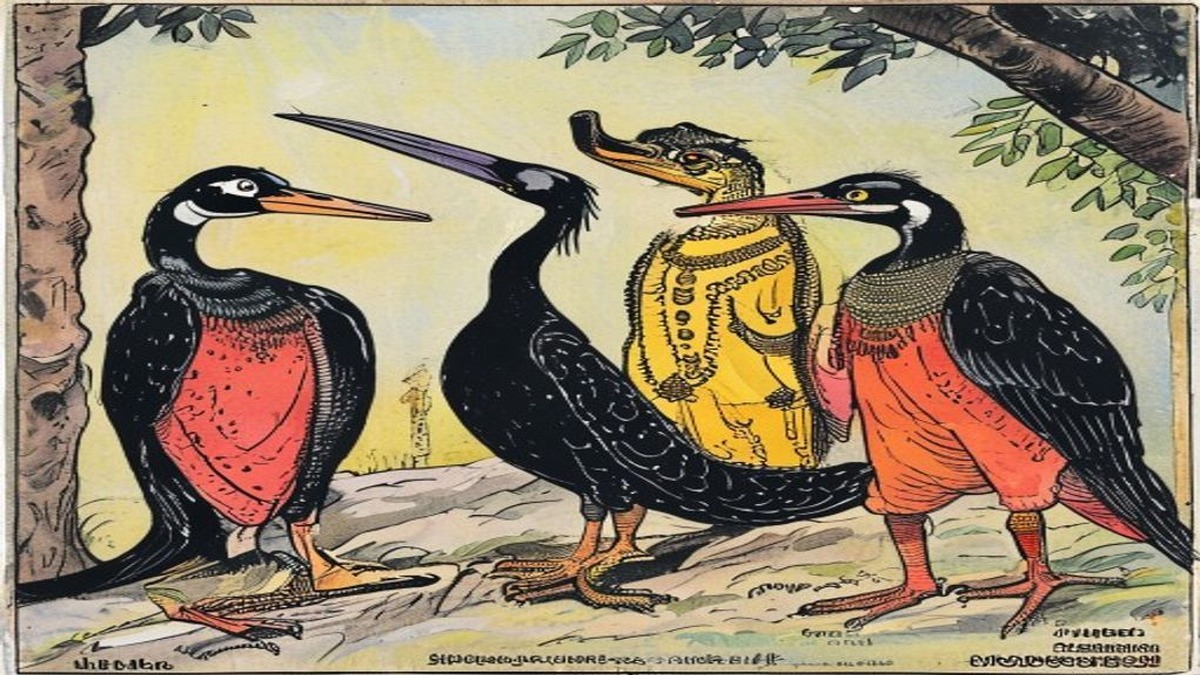
The heron recognised no flaw in this logic. He spent the afternoon catching small fish and laying them in a line, one by one, from the mongoose’s burrow entrance, down the embankment, across the root-laced ground, and directly to the opening of the black snake’s hollow. Then he stepped back and waited in the reeds.
The mongoose emerged at dusk, twitching its rust-coloured nose. It found the first fish, ate it, found the second, ate that, and followed the trail with the methodical confidence of a hunter born to kill snakes. At the hollow’s mouth it smelled the serpent and every muscle in its compact body went taut. The fight was over before the moon rose fully. The mongoose shook the black snake by the neck until the long body went limp, then dragged it out onto the earth as evidence of its victory.
The heron watched from the reed bed and felt, for the first time in four years, something close to relief. He returned to his nest that night and told his mate: the enemy is dead. Next spring their eggs would hatch undisturbed. What the heron failed to calculate was what the mongoose would do once the fish trail was finished and the snake was eaten.
The Price of a Borrowed Fang
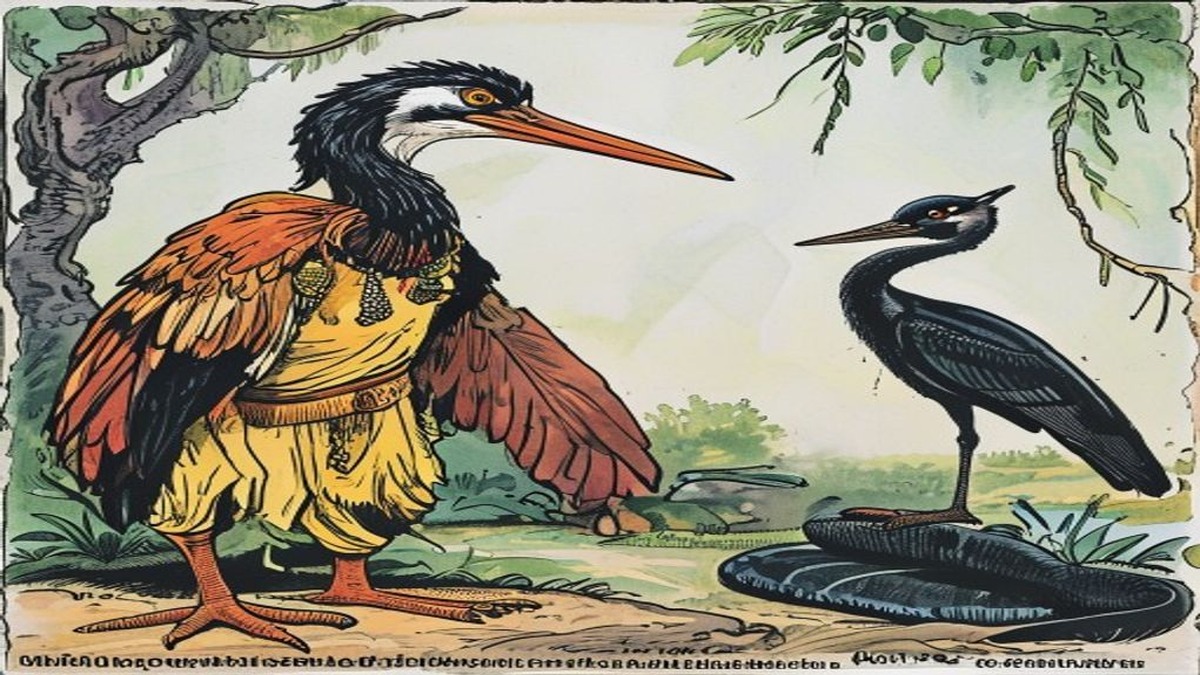
Mongoose are by nature restless, territorial, and perpetually hungry. Having cleared the base of the fig tree of snakes, the creature looked upward. It climbed with the same fluid efficiency it had used to descend into the hollow. In the heron’s nest it found the chicks hatched from that season’s clutch, warm and helpless, and it ate them.
It returned the following night, and the night after. The heron had not destroyed the threat to his chicks; he had merely replaced a serpent with a mammal, a cold-blooded robber with a warm-blooded one. The fig tree was now claimed by the mongoose as its own foraging ground. Driven from the nest by successive loss, the heron and his mate finally abandoned the tree altogether, flying low over the darkened lake, carrying nothing but the lesson they had purchased at the highest possible price.
The crab, having given its counsel, was content. It had watched the mongoose kill the snake and had noted, with professional interest, that the heron would now leave the pond bank undefended, opening the shallows to the crab’s own undisturbed movement. The advice had served the crab perfectly. Whether it served the heron was a question the heron should have asked before following it.
Moral and Sanskrit Wisdom
मित्रं नैव करिष्यं सः यस्य बुद्धिं परीक्षेत
Mitram naiva karishyam sa yasya buddhim pariksheta — “Never form an alliance with one whose mind you have not tested.”
— Panchatantra, Tantrakhyayika recension
The Panchatantra’s ethics are relentlessly practical: wisdom is not sentiment but accurate prediction. The heron failed not by being cowardly or cruel but by being analytically incomplete. He asked only “Will the mongoose kill the snake?” and never asked “What will the mongoose do next?” In Vishnu Sharma’s framework, a statesman or householder who cannot answer the second question deserves the fate that follows from the first.
Why This Story Has Lasted 2,300 Years
The tale endures because it encodes a cognitive error that is universal and recurring. Across governance, medicine, ecology, and technology, the same structure appears: a harmful agent is eliminated by introducing a second agent, and the second agent becomes the new problem. Roman engineers introduced the domestic cat to control rodents in granaries; medieval European towns imported weasels to control rats; twentieth-century farmers released cane toads in Queensland to control beetles. In each case, the solution solved the stated problem while creating an unstated successor.
Vishnu Sharma dramatises this through animal characters because animals are legible: their natures are stable and their hungers are non-negotiable. The mongoose does not choose to climb the tree; it is constitutionally incapable of not climbing. That is precisely the point. When the heron asked the mongoose for help, he was not negotiating with a moral agent who might restrain itself; he was activating a biological process he could not subsequently control. The tale teaches the reader to ask, before any intervention: what is the full nature of the tool I am about to use?
The crab’s role adds a layer of sociopolitical sophistication absent from simpler fables. The advice was not disinterested. The crab had its own territorial agenda and provided counsel calibrated to serve that agenda. Listeners are left to wonder whether the heron’s primary failure was trusting the mongoose or trusting the crab, and the answer is: both, and in that order. The complete version of the tale that survives in Sanskrit manuscripts makes the crab’s motive explicit, elevating the story from a simple warning about dangerous allies to a richer meditation on the interests concealed inside every act of counsel.
Frequently Asked Questions
What is the moral of the Foolish Heron and the Mungoose story?
Never enlist an ally whose full nature you have not examined. The heron solved one problem by introducing another predator without asking what the predator would do afterward.
Which Panchatantra book is this story from?
The tale belongs to Panchatantra Book I, Mitra-bheda (The Separation of Friends), compiled by Vishnu Sharma around the 3rd century BCE as part of a curriculum in royal statecraft.
What is the crab's role in the story?
The crab gives the heron advice that appears helpful but is actually self-serving. By sending the mongoose to kill the snake, the crab clears the pond bank for its own undisturbed movement — illustrating that counsel always carries the interests of the counsellor.
What does the mongoose represent in the Panchatantra's symbolic framework?
The mongoose represents a force that operates according to its own nature and cannot be redirected once activated. It symbolises any intervention whose secondary consequences the actor failed to anticipate.
How does this story relate to modern ecological or governance thinking?
The tale prefigures what ecologists call the invasive species problem and governance theorists call second-order effects: the cure introduces a new problem. Cane toads in Australia, weasels introduced to control rats, and many technological fixes share the heron's logical error.
You May Also Like
 Panchatantra Stories
Ages 3-5
Panchatantra Stories
Ages 3-5
Pride Goeth Before A Fall
Pride Goeth Before A Fall: In a certain village there lived ten cloth merchants, who always went about together. Once upon a time they had travelled far
 Panchatantra Stories
Ages 6-8
Panchatantra Stories
Ages 6-8
Shandili and Sesame Seeds
Shandili's endless greed for sesame seeds transforms a magical gift into the agent of her doom.
 Panchatantra Stories
Ages 9-12
Panchatantra Stories
Ages 9-12
The Grain of Corn
A farmer plants a single grain of corn and cultivates it into an abundant harvest through faith and hard work.