The Story of the Brahmin, the Thief and the Rakshasa
The Story of the Brahmin, the Thief and the Rakshasa: In a certain town, lived a Brahtnin named Drona. He gave up wearing fiqe lothes, using perfumes andall
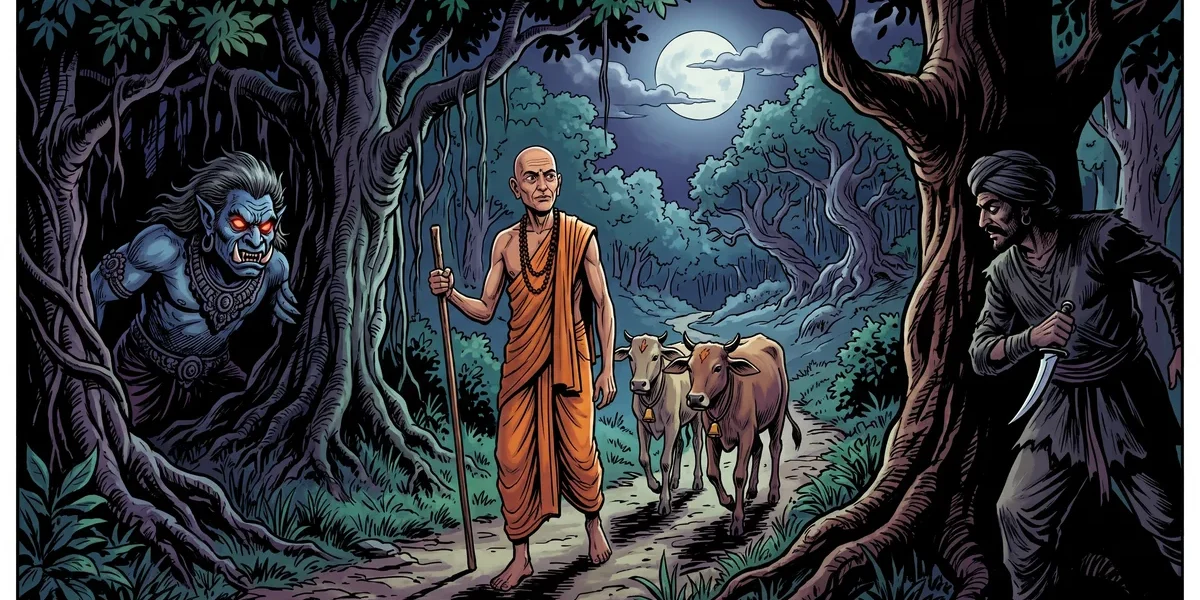
The Story of the Brahmin, the Thief and the Rakshasa
Canonical Attribution and Manuscript Tradition
This tale is preserved in the major Sanskrit recensions of the Pancatantra including the Tantrakhyayika (c. 200 BCE, Kashmir) and presents one of the Pancatantra’s most elegant structural lessons: a thief and a rakshasa (demon) both intend to harm a prosperous brahmin, and in competing to be the first to destroy him, they destroy each other instead, leaving the brahmin unharmed. The tale belongs to the Pancatantra’s extensive treatment of adversarial dynamics and belongs specifically to the argument of Book III: that understanding the structure of opposition — who opposes whom, and on what grounds — is itself a form of protection. The brahmin’s survival is not the result of his own action but of the structural incompatibility between his two enemies. This is among the Pancatantra’s most important political insights: that the wise ruler need not always act directly against an adversary but can sometimes allow the adversary’s own conflicts to neutralise the threat.
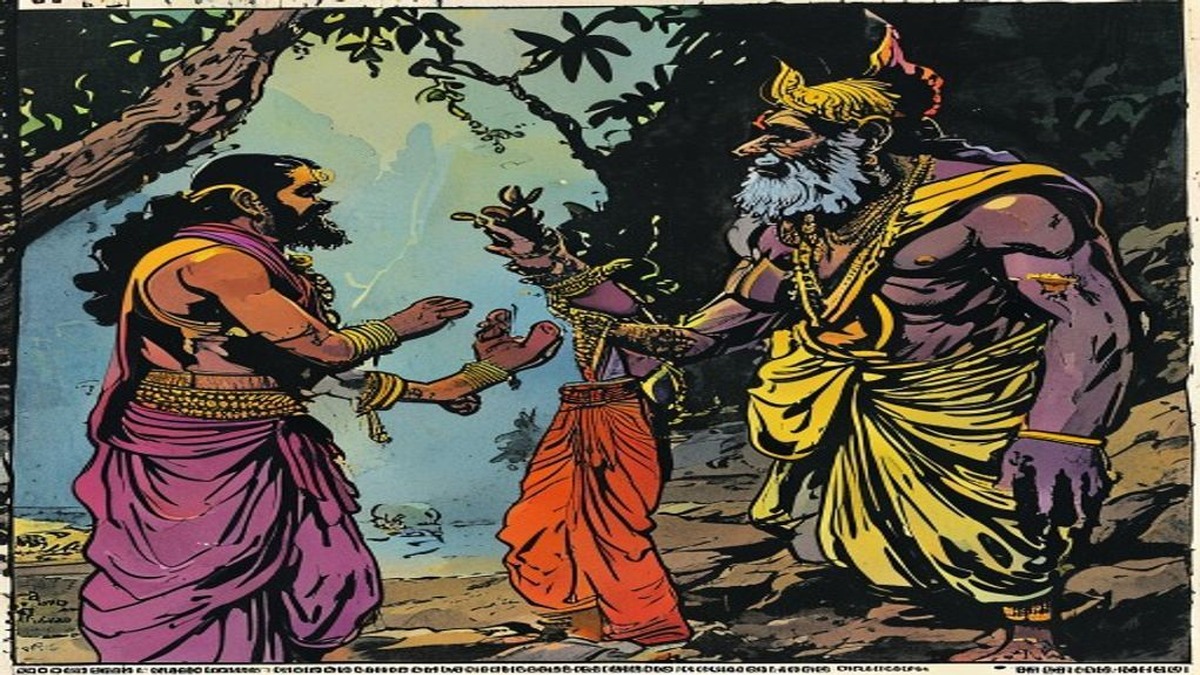
Beat I — The Two Intending Adversaries
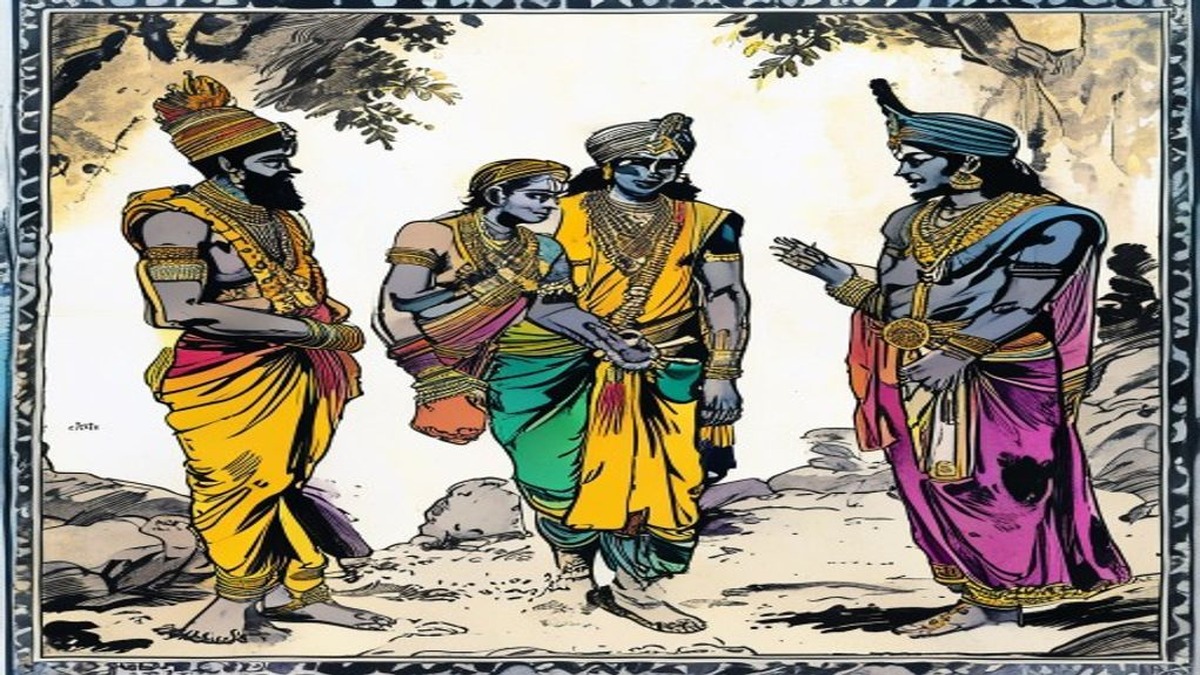
A prosperous brahmin had, without being aware of it, attracted two separate adversaries: a thief who intended to rob him of his wealth, and a rakshasa who intended to eat him. Each adversary was acting independently, unaware of the other. Each believed they had a clear path to their objective. The brahmin, asleep and unaware of either threat, was in a position of apparent vulnerability.
The Pancatantra establishes in this opening movement the structural condition that the tale will exploit: two adversaries with incompatible objectives converging on a single target. The thief wants the brahmin alive and unharmed enough to possess robable wealth; the rakshasa wants to eat the brahmin. These objectives are not merely different but contradictory: a dead or eaten brahmin cannot be robbed, and a robbed brahmin is still there to be eaten but the rakshasa’s operation will be complicated by the prior presence of a criminal accomplice. The conflict between the two adversaries was built into their situation before either knew the other existed.
Beat II — The Confrontation Between the Adversaries
When the thief and the rakshasa encountered each other at the brahmin’s door, each recognised the other as an obstacle. The thief saw the rakshasa as a competitor and a threat; the rakshasa saw the thief as an interference and a potential prior claimant. Neither was willing to defer to the other or to cooperate; cooperation would have required each to sacrifice their own objective in favour of an arrangement that served neither fully.
The confrontation between them escalated from competition into direct conflict. Each adversary, attempting to eliminate the obstacle that the other represented, engaged in a struggle that consumed all the energy and attention that each had intended to direct toward the brahmin. The brahmin, awakened by the commotion, witnessed the confrontation and understood the situation. He did not intervene: he had nothing to gain by inserting himself into a conflict that was resolving itself. He remained safe behind his door while his two adversaries destroyed each other.
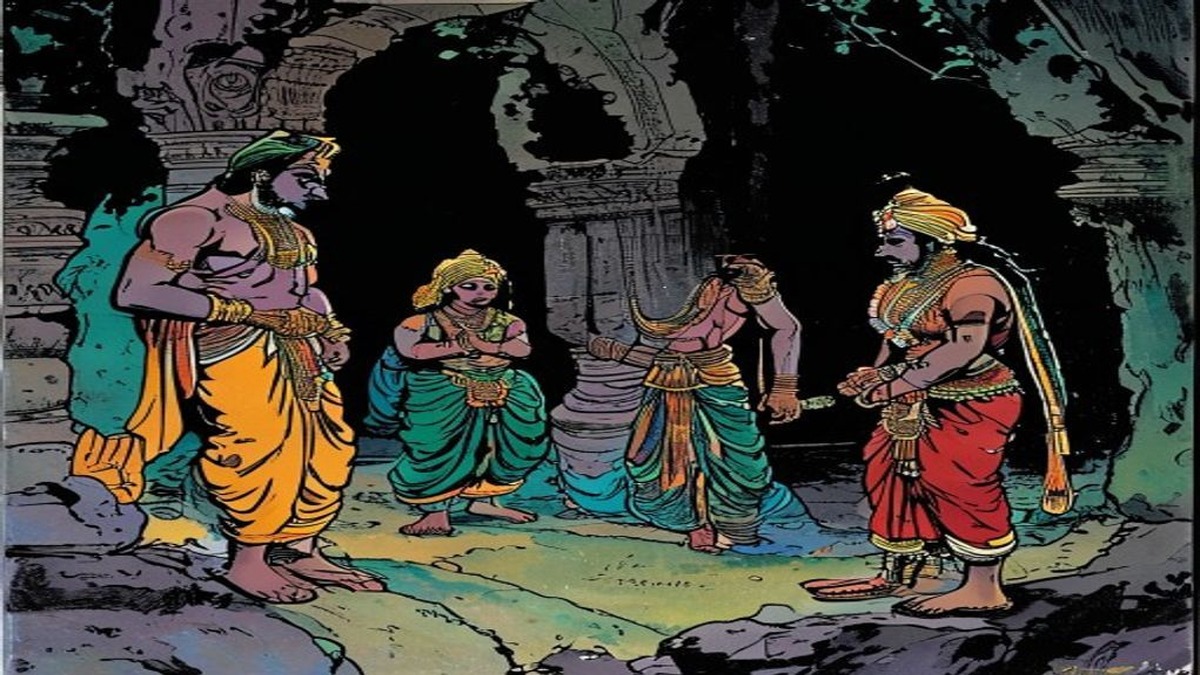
Beat III — The Brahmin’s Survival Through Structural Advantage
The thief and the rakshasa, having destroyed each other, left the brahmin’s house undisturbed. The brahmin survived not through his own defensive action — he had taken none — but through the structural incompatibility between his two adversaries’ objectives. The conflict between them was not something the brahmin had arranged; it was something he had, in retrospect, benefited from.
The Pancatantra’s account of the brahmin’s survival is precise on this point. The brahmin was wise enough not to intervene in the adversaries’ conflict: he did not side with the thief against the rakshasa or with the rakshasa against the thief. Either alliance would have complicated a situation that was resolving itself in his favour. The wise response to adversaries who are destroying each other is, the Pancatantra argues, to stay out of their way and allow the structural incompatibility to do its work.
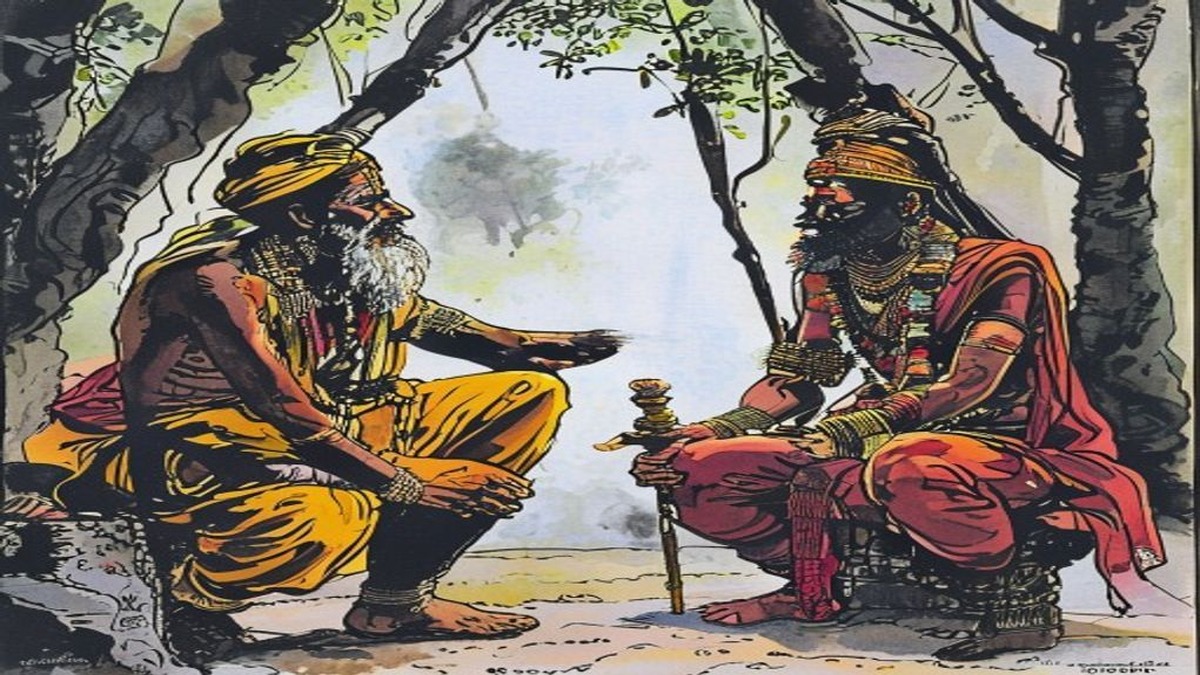
Beat IV — What the Brahmin, the Thief, and the Rakshasa Teaches About Adversarial Structure
Vishnu Sharma’s argument in this tale is one of the Pancatantra’s most politically sophisticated. The brahmin’s survival demonstrates that the ruler or individual facing multiple adversaries need not address each adversary directly; if the adversaries’ objectives are structurally incompatible, the situation may resolve itself without direct intervention. The wise ruler’s task is to understand the structure of the opposition they face: who opposes them, what each adversary wants, and whether the adversaries’ objectives are compatible or contradictory. Incompatible adversaries who are competing over the same target or territory are likely to conflict with each other before they can cooperate against the ruler.
The Arthashastra’s mandala theory of states incorporates this insight at the level of interstate relations: the ruler’s adversaries (neighbouring states) have their own adversaries (those states’ neighbours), and these second-order conflicts can be exploited. The Pancatantra’s brahmin tale provides the concentrated narrative version of the same strategic insight: understanding the adversaries’ conflicts with each other is as important as understanding their conflict with the ruler.
Moral and Sanskrit Wisdom Tradition
“When your adversaries’ objectives are incompatible with each other, the wisest action is often no action; allow their conflict to do what your intervention cannot.”
— Moral of The Story of the Brahmin, the Thief and the Rakshasa, Pancatantra Book III (Kakolukiyam)
This moral engages the Sanskrit political tradition’s treatment of udasina (neutrality or non-involvement) as an active strategic choice rather than a passive default. The Arthashastra identifies udasina as one of the six basic policy options and prescribes it when the cost of intervention exceeds the benefit. The Pancatantra’s tale provides the extreme case: when the adversaries are consuming each other, intervention is not merely unnecessary but potentially destructive — it might interrupt a process that is producing the desired outcome at no cost to the ruler. The Mahabharata’s Udyoga Parva addresses the same insight through the figure of the ruler who allows his enemies’ quarrel to weaken them before engaging.
Why This Story Has Lasted 2,300 Years
The Story of the Brahmin, the Thief and the Rakshasa endures because the strategic insight it contains — that adversaries with incompatible objectives may neutralise each other if left to their conflict — is permanently relevant in political life. The ruler, the official, the institution facing multiple adversaries rarely has the resources to address each directly; the question is which to address and which to leave. The Pancatantra’s answer is structural: map the adversaries’ objectives, identify the incompatibilities among them, and allow the incompatibilities to work before committing resources to direct confrontation. The brahmin’s survival is the model of this strategic patience, and it has remained instructive for 2,300 years.
Sanskrit Tradition: Tantrakhyayika (c. 200 BCE, Kashmir)
Key Concept: Structural incompatibility between adversaries; udasina (strategic non-intervention); allowing adversaries’ conflict to neutralise the threat without direct action
Author: Vishnu Sharma (attributed, c. 3rd century BCE)
Arthashastra Parallel: Mandala theory; udasina as active strategic choice; exploitation of second-order conflicts among adversaries
Frequently Asked Questions
What is the moral of the Story of the Brahmin, the Thief and the Rakshasa in the Panchatantra?
The moral is that when your adversaries' objectives are incompatible with each other, the wisest action is often no action — allow their conflict to do what your intervention cannot. The brahmin survived not through his own defensive action but because the thief and the rakshasa's objectives were structurally incompatible, causing them to destroy each other. The brahmin's wisdom was recognising this and not intervening in a conflict that was resolving in his favour.
What happens in the Story of the Brahmin, the Thief and the Rakshasa?
A prosperous brahmin has two separate adversaries: a thief who wants to rob him and a rakshasa who wants to eat him. Each is unaware of the other. When they converge on the brahmin's house and discover each other, their objectives prove incompatible — a dead brahmin cannot be robbed; a thief complicates the rakshasa's plans. They fight each other and are destroyed, while the brahmin, awakened by the commotion, wisely stays out of their conflict and emerges unharmed.
What does this Panchatantra story teach about dealing with multiple adversaries?
The Pancatantra teaches that the wise ruler or individual facing multiple adversaries should first map the structure of those adversaries' objectives and relationships. If the adversaries' objectives are incompatible with each other, their conflict may neutralise the threat without direct intervention. Inserting oneself into a conflict that is resolving in one's favour can interrupt the process and produce worse outcomes. The strategic task is understanding when to act and when to allow structural dynamics to work.
What is the significance of the brahmin's non-intervention in this Panchatantra story?
The brahmin's choice not to intervene in the thief-rakshasa conflict is the tale's most important action. He recognised that any intervention — siding with the thief against the rakshasa or vice versa — would complicate a situation that was resolving itself. This is what the Arthashastra calls udasina: strategic non-involvement as an active choice, not passive inaction. The brahmin's survival is the product of this discipline combined with his structural understanding of the adversaries' incompatibility.
How does this story relate to the Arthashastra's mandala theory?
The Arthashastra's mandala theory maps the structural relationships among states: the ruler's neighbours are adversaries, the neighbours' neighbours are potential allies, and the adversaries have their own adversaries with their own conflicts. The Pancatantra's brahmin tale applies this insight at the individual scale: understanding the adversaries' conflicts with each other is as important as understanding their conflict with the target. The Arthashastra's prescription to exploit second-order conflicts among adversaries — rather than always engaging directly — is the political application of the brahmin's experience.
You May Also Like
 Panchatantra Stories
Ages 3-5
Panchatantra Stories
Ages 3-5
Pride Goeth Before A Fall
Pride Goeth Before A Fall: In a certain village there lived ten cloth merchants, who always went about together. Once upon a time they had travelled far
 Panchatantra Stories
Ages 6-8
Panchatantra Stories
Ages 6-8
The Tale of Golden Droppings
The Tale of Golden Droppings: Check thoroughly even what seems to be impossible.” There was a special bird named Sindhuka, who lived in a huge tree on the top
 Panchatantra Stories
Ages 6-8
Panchatantra Stories
Ages 6-8
The Price of Indiscretion
Read 'The Price of Indiscretion' — a classic Panchatantra story about moral lessons about greed. The Price of Indiscretion is a beloved Panchatantra tal...