The Story of Dharmabuddhi and Papabuddhi
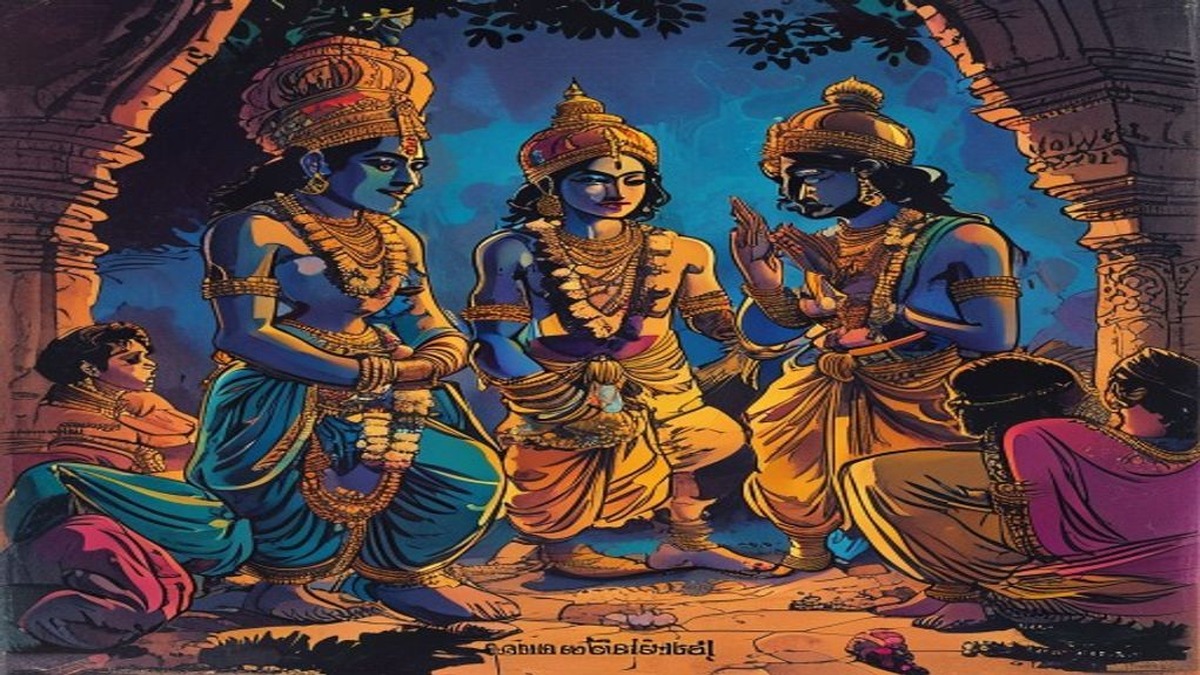
The Story of Dharmabuddhi and Papabuddhi: In a village, there lived two friends, whose nameswere Dharmabuddhi and Papabuddhi. One day Papabuddhi thought to
The Story of Dharmabuddhi and Papabuddhi
Source: Panchatantra, Book I — Mitrabheda (The Separation of Friends), attributed to the sage Vishnu Sharma, composed c. 300 BCE–300 CE; this redaction follows the Sanskrit Tantrakhyayika recension and Patrick Olivelle’s critical translation (Oxford University Press, 2006), with attention to the textual variants documented by Franklin Edgerton.
सत्याद् न चलते लज्जा, सत्यं सर्वत्र भूषणम्ःः
Two childhood friends travel together in trade and accumulate wealth. One — Dharmabuddhi, Right-Mind — conducts every transaction with exact integrity. The other — Papabuddhi, Wrong-Mind — conducts every transaction with exact self-interest, using his partner’s reputation as collateral for his own dealings. The story examines the full arc of a parasitic partnership: how Wrong-Mind exploits Right-Mind’s honesty as a business asset, how the partnership reaches a terminus when honest character can no longer shield dishonest dealings, and what it means that the resolution of the story depends entirely on the one quality Papabuddhi systematically chose not to develop.
Part I: The Partnership’s Architecture
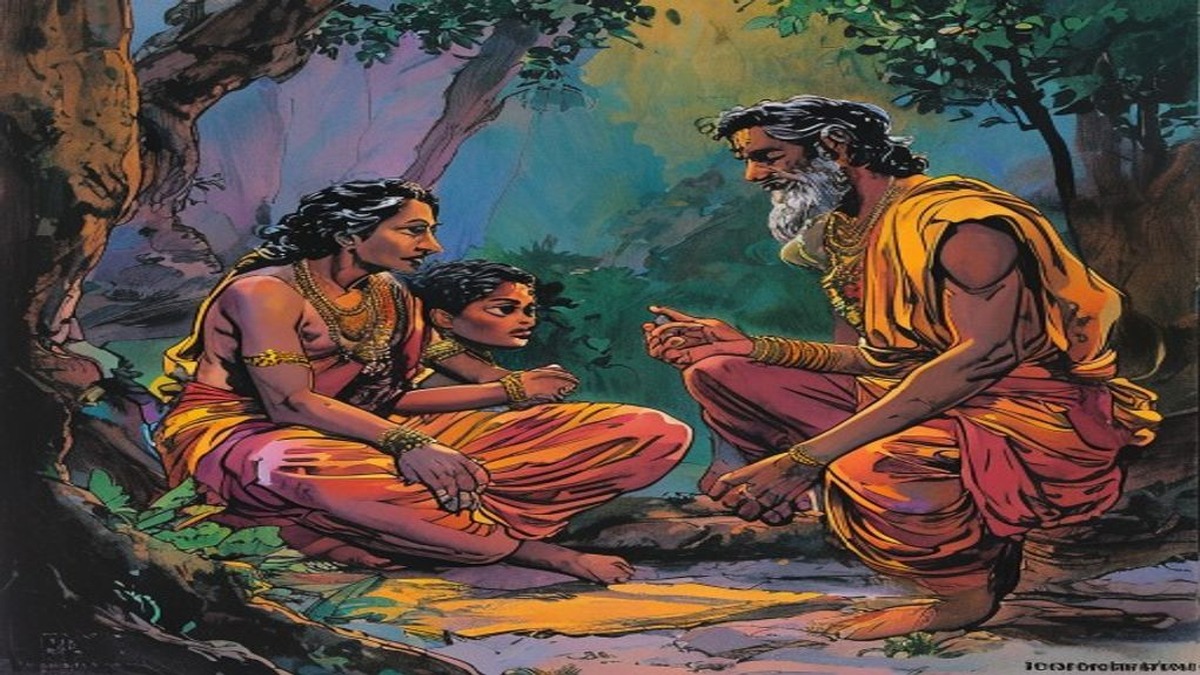
The two men had grown up in adjacent houses in the city of Vardhamana and had the kind of friendship that forms between children who spend their days together before character has fully crystallised. By the time they were adults, their characters had crystallised into something very nearly opposite: Dharmabuddhi was scrupulous in every transaction, returned excess change without being asked, honoured verbal agreements when written ones would have allowed him an escape. Papabuddhi was intelligent, energetic, and oriented entirely toward outcome — the means were interesting only insofar as they produced the desired end.
They entered a trading partnership because each had something the other lacked. Dharmabuddhi had a reputation that opened doors: merchants who had done business with him once gave him credit on the second visit that they would not have given a stranger. Papabuddhi had the energy and cunning to identify opportunities that Dharmabuddhi’s more straightforward temperament would have missed. In the early years this combination was genuinely productive, and both men prospered.
The architecture of the partnership’s problem was visible only in retrospect, but Vishnu Sharma makes it explicit for the reader: Papabuddhi was using Dharmabuddhi’s character as an asset he did not own and could not replenish. Every time he engaged in a sharp practice — a short measure, a misrepresented quality, a promise he did not intend to keep — he drew against the credit that Dharmabuddhi’s reputation had deposited. The account was finite, though neither man knew exactly how finite, and Papabuddhi had no mechanism for adding to it because the only way to build such a reputation is to be honest, which he was constitutionally disinclined to be.
Part II: The Theft and Its Logic
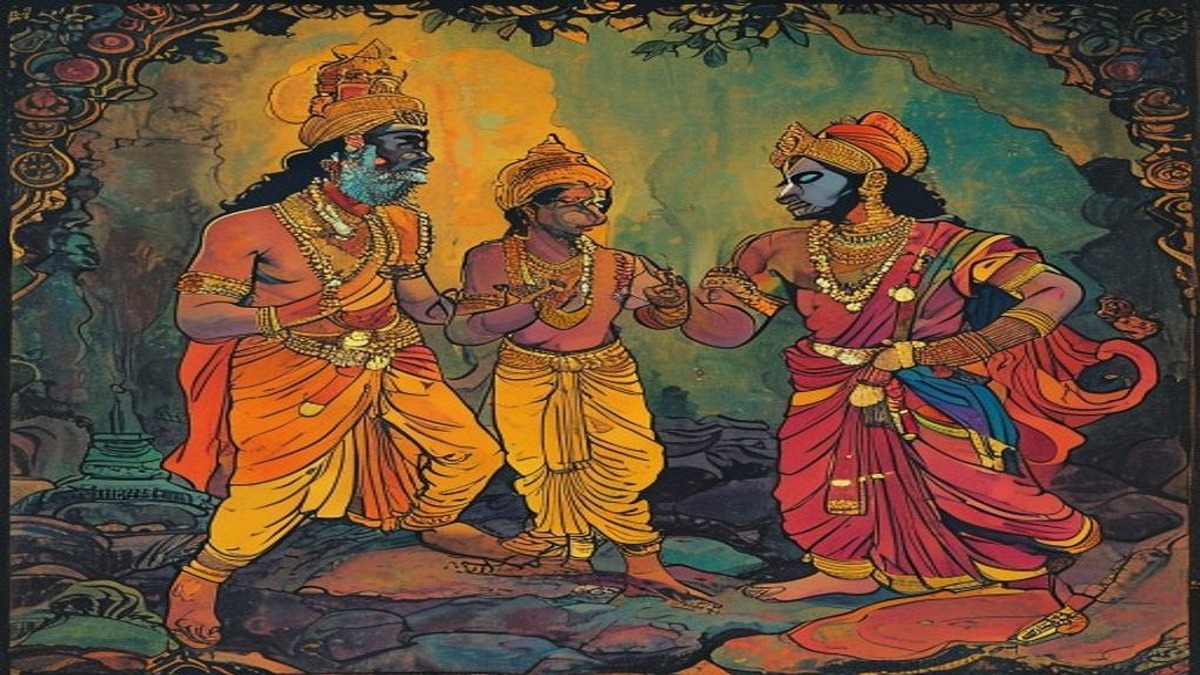
After a successful season of trading, the two buried their joint profits in a forest cache — a common practice for merchants travelling through uncertain territory — and agreed to return to divide it at a later date. That night, Papabuddhi returned to the cache alone and took the entire sum.
His calculation, such as it was, ran as follows: the partnership had been profitable, but its profitability had required him to share with Dharmabuddhi; sharing with Dharmabuddhi was less profitable than having everything; having everything required an accusation that would be difficult to disprove; a difficult-to-disprove accusation against an honest man would therefore require a structural advantage in the proof—which he could create.
The proof structure he designed was elaborate: he would accuse Dharmabuddhi of theft; when the case came to a truth-ordeal, he would have his father hidden inside the hollow of the sacred tree that served as the ordeal’s witness; the voice from the tree would confirm his account; Dharmabuddhi, who had nothing to offer but the truth, would be found guilty.
The plan had one structural vulnerability that Papabuddhi did not identify, because identifying it required him to think about what Dharmabuddhi would do when his honesty failed to protect him — and what an honest man does when his honesty is being actively used against him is to think harder about the mechanism of the attack.
Part III: The Test
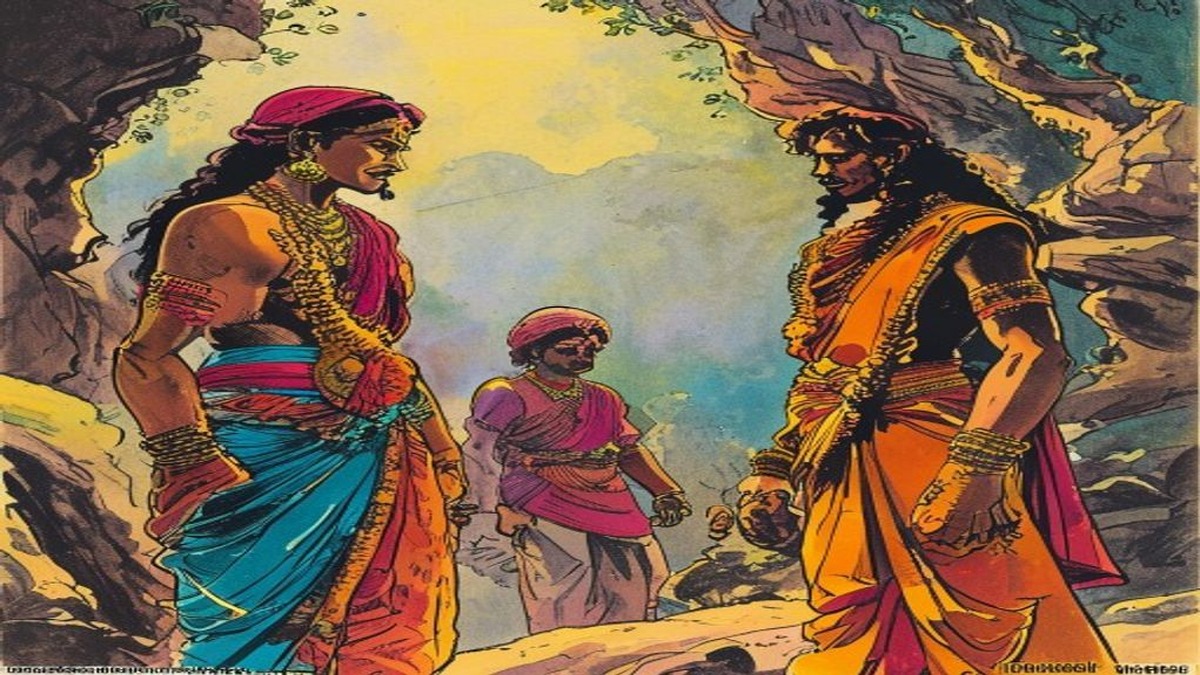
The case came before judges in the city. Both men gave their accounts. The judges requested a truth-ordeal at the sacred tree. Both men attended. Dharmabuddhi swore his innocence. The tree was silent. Papabuddhi swore his accusation. From the tree’s hollow came a voice confirming his account.
Dharmabuddhi paused. He was an honest man, which meant he was also a careful one: he had the habit of examining what was actually in front of him rather than what he had been told was in front of him. What was in front of him was a tree from which a voice had emerged at a convenient moment. He considered this. Trees do not produce voices. Hollow trees sometimes contain animals or people. A hollow tree near a truth-ordeal, producing a voice that confirmed the account of the person who had reason to arrange such a thing, had a specific probability distribution of explanations.
He asked the judges for permission to test the testimony. The test he proposed was simple: if the voice was divine, fire could not harm it. He would light dry grass at the tree’s base. If the voice continued after the fire, he would accept the judgment. If it did not, the judges would know what they were dealing with.
The fire was lit. Within minutes, Papabuddhi’s father emerged from the hollow, burned and suffocating, and gave a complete account of his son’s scheme before his injuries overcame him. Papabuddhi was convicted, the buried money was recovered, and Dharmabuddhi received both his share and compensation.
Part IV: What Honesty Requires
Vishnu Sharma’s closing commentary on this tale is among his most specific: “Dharmabuddhi’s honesty did not protect him automatically. It did not save him from the accusation, from the false testimony, from the moment when the judges were prepared to convict him. What honesty gave him was the capacity to think clearly when his comfortable assumptions had been stripped away. A dishonest man in his position might have panicked, fabricated a counter-story, or submitted to the verdict. An honest man, having nothing to hide and nothing to construct, could look at what was actually in front of him and ask the question the situation required.”
This is a more demanding argument than simple “honesty is the best policy.” Vishnu Sharma is arguing that honesty produces a specific cognitive advantage: the honest person has no internal narrative management to maintain, no false story to keep consistent, no energy spent on managing the gap between what was said and what happened. This cognitive freedom — the freedom to look at a situation as it actually is rather than as it must be made to appear — is what allowed Dharmabuddhi to notice the structural vulnerability in Papabuddhi’s scheme that Papabuddhi himself had missed.
The story’s final lesson is distributed across both men: Papabuddhi’s scheme failed not because dishonesty always fails but because he made a specific technical error — he did not think through what an honest man would do when backed against a wall. And Dharmabuddhi survived not because honesty always wins but because he used the cognitive clarity that his honesty had preserved to find the one test that the deception could not survive.
Why This Story Has Lasted Three Thousand Years
The story of Dharmabuddhi and Papabuddhi endures because it is the Panchatantra’s most detailed portrait of how dishonesty and honesty interact as cognitive styles rather than simply as moral positions. The story is not structured as a reward-and-punishment fable in which virtue is automatically vindicated; it is structured as a detailed examination of how the cognitive habits associated with honesty and dishonesty produce different responses to crisis.
Papabuddhi’s dishonesty requires constant narrative management: keeping track of what he has said, ensuring consistency between the cached money story and the ordeal story, anticipating responses and pre-positioning counter-moves. This management load is invisible when things are going according to plan. It becomes fatal when the plan encounters something it did not anticipate — in this case, an opponent who looked at the mechanism rather than the narrative.
The story entered Arabic Kalila wa Dimna and became a standard reference in Islamic legal philosophy for the argument that truthful testimony has inherent structural advantages over fabricated testimony because it does not require internal consistency management. In European legal tradition, parallel arguments appear in discussions of witness credibility and the cognitive advantages of true accounts over false ones. The modern psychological research on the cognitive load of lying — which consistently shows that maintaining a false account requires measurably more mental resources than telling the truth — is the empirical confirmation of a principle that Vishnu Sharma articulated as narrative two thousand years earlier.
Frequently Asked Questions
What is the central lesson of The Story of Dharmabuddhi and Papabuddhi?
The story argues that honesty is not just a moral position but a cognitive advantage. Dharmabuddhi survives not because honesty automatically wins but because he has no internal narrative to maintain — no false story to keep consistent, no energy spent managing the gap between what he said and what happened. This cognitive freedom allows him to notice the structural weakness in Papabuddhi's scheme that Papabuddhi himself missed.
How does Papabuddhi exploit Dharmabuddhi's reputation?
Papabuddhi uses Dharmabuddhi's honest reputation as an asset he did not earn and cannot replenish. Merchants who trust Dharmabuddhi extend credit and goodwill to the partnership that they would not extend to Papabuddhi alone. Every dishonest transaction Papabuddhi conducts draws against this reputational credit. The arrangement is parasitic: it converts Dharmabuddhi's accumulated character into Papabuddhi's profit without contributing anything to its maintenance.
What is the structural flaw in Papabuddhi's scheme?
Papabuddhi does not think through what an honest man will do when backed against a wall with no recourse to conventional defense. An honest man has nothing to construct, no false account to manage — he can look at the situation as it actually is. Dharmabuddhi looks at the tree producing a convenient voice at a convenient moment and asks the structural question: what could cause a tree to speak? A hollow. A person inside. He tests this. The scheme collapses.
Why does the ordeal by fire work as a test?
The logic is drawn from the ordeal's own framework: if the voice is genuinely divine, fire cannot harm it. By proposing a test that is internally consistent with the ordeal's theology, Dharmabuddhi creates a test the judges cannot refuse without admitting that the ordeal itself is invalid. This forces Papabuddhi's deception into a physical test it cannot survive, because his scheme relied on a mortal witness inside the tree.
What does modern psychology say about the cognitive cost of lying that relates to this story?
Modern psychological research on deception consistently shows that maintaining a false account requires measurably more cognitive resources than telling the truth, because the liar must simultaneously monitor the actual facts, track the false version, ensure internal consistency across statements, and anticipate challenges. This cognitive load is the empirical confirmation of what Vishnu Sharma articulates as narrative: honesty preserves mental bandwidth that dishonesty consumes, and in a crisis, that bandwidth determines who can think clearly enough to survive.
You May Also Like
 Panchatantra Stories
Ages 9-12
Panchatantra Stories
Ages 9-12
The Story of the Brahmin, the Thief and the Rakshasa
The Story of the Brahmin, the Thief and the Rakshasa: In a certain town, lived a Brahtnin named Drona. He gave up wearing fiqe lothes, using perfumes andall
 Panchatantra Stories
Ages 3-5
Panchatantra Stories
Ages 3-5
The Merchant and the Bullock
A bullock left behind in the forest befriends a mighty lion - until a jealous jackal whispers lies.
 Panchatantra Stories
Ages 9-12
Panchatantra Stories
Ages 9-12
The Story of the Farmer’s Wife
The Story of the Farmer’s Wife: In a certain town, there lived a farmer and his wife. As her husband was old, the woman was always thinkingof other men and