The Plucky Maiden
The Plucky Maiden: We are told in the Yol-ryok Keui-sul that when Han was a boy he had for protector and friend a tiger, who used to accompany him as a dog
Origin & Tradition
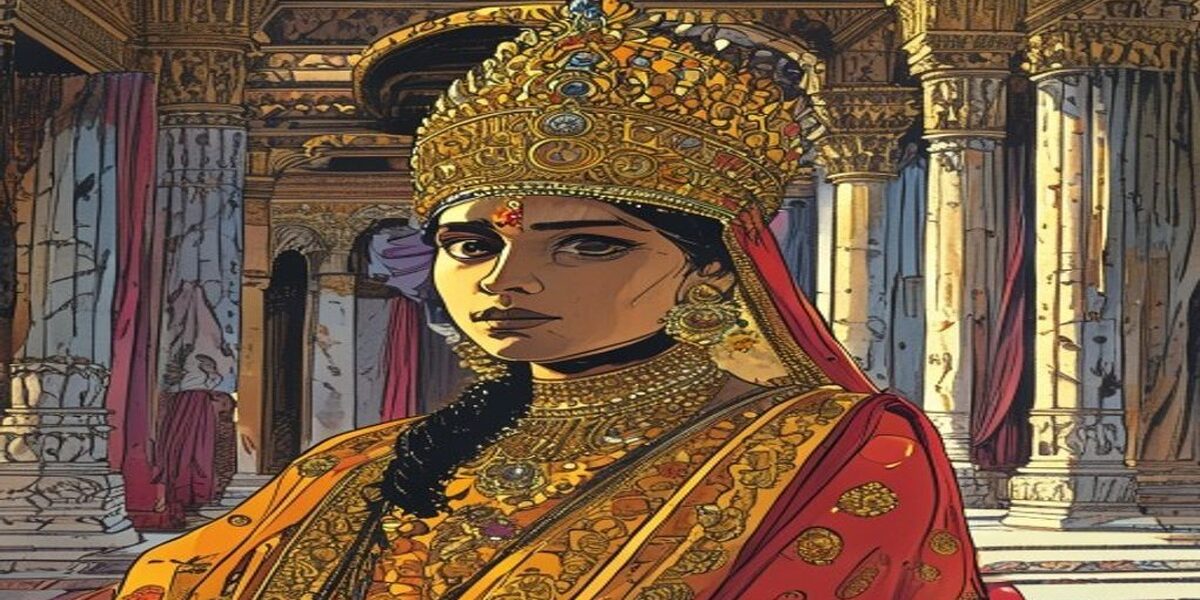
“The Plucky Maiden” belongs to the Korean folk tradition of yeoja yeongung iyagi (여자 영웅 이야기, female hero stories)—a substantial corpus of narratives in which female protagonists face dangerous situations with intelligence, courage, and practical resourcefulness rather than passive reliance on male rescue. These stories coexisted, in Joseon dynasty (1392–1897) Korean culture, with the official Confucian ideal of female virtue as expressed through silence, obedience, and withdrawal from public life. They represent what might be called the folk tradition’s counter-canon: a set of models for female behaviour that celebrated capacities—quick thinking, physical boldness, strategic deception of predators—that official culture preferred to ignore. The “plucky maiden” figure—young, relatively unprotected, facing a threat that the available male social structure is not positioned to handle—is a recurring protagonist who embodies what Korean folk tradition recognised as genuine female virtue: not the passive virtue of obedience but the active virtue of effective response to genuine danger. Her courage is not unfeminine in the story’s evaluation; it is the expression of a quality that the folk tradition valued more highly than the official one acknowledged.
Beat I — The Danger Arrives
The maiden of the story is alone or nearly alone when the threat appears: her family is absent, the ordinary social protections that would normally surround a young woman in Joseon-era village culture are not available, and the threat—typically a bandit, a predator, a malevolent supernatural being, or some combination—presents itself with the confidence of something that has calculated the vulnerability of its target and found the calculation favorable. The threat’s confidence is one of the story’s narrative moves: it establishes that the threat is real, that it has assessed the situation accurately in every respect except one, and that the exception will be the source of everything that follows.
The maiden’s initial response is fear. The story does not pretend otherwise; folk tales that skip past the protagonist’s fear in the interest of heroic presentation miss the point. Her fear is real, physically expressed, and the narrative acknowledges it. What distinguishes her from the threat’s expectation is that her fear does not prevent thinking. As the threat moves toward her—confident, unaware of the exception in its calculation—she is already assessing what is available to her. Not weapons; she does not have weapons. Not help; help is not available. What she has is the immediate environment, the threat’s evident assumptions about her likely behaviour, and the capacity to think through fear rather than paralysing in it.
Beat II — The Wit Deployed
The specific form of the maiden’s response varies across versions of the story but maintains consistent structural elements: she does not attempt to overpower or outrun the threat (both beyond her available capacities), but instead exploits the gap between what the threat expects her to do and what she actually does. In the most widely circulated version, a bandit or predator approaches her in an isolated location expecting panic and submission. Instead she greets him with an expression of surprise and apparent pleasure, addressing him by a family name as though mistaking him for a long-expected relative. The bandit, momentarily confused by an encounter that is going entirely wrong from the start, pauses—and into that pause she inserts a chain of improvised requests, domestic tasks, and social obligations that keep him occupied and off-balance while she works toward the resources she actually needs.
The deception is not elegant; it is desperate improvisation, and the story makes this clear. She is not performing a rehearsed strategy; she is thinking at full speed and executing each step only slightly ahead of the threat’s recognition that something is wrong. The comedy of the sequence—a bandit successfully managed through the rapid deployment of social convention, domestic authority, and confident misdirection—is the comedy of a person thinking faster than the situation allows and just barely staying ahead. By the time the bandit recognises he has been managed, she has either reached safety or turned his confusion into a more permanent disadvantage.
Beat III — Haengdong Yeoja and the Counter-Canon of Female Virtue
Joseon Confucian social thought articulated the female ideal through the concept of samjongjiudo (삼종지도, 三從之道, the three followings): a woman follows her father before marriage, her husband during marriage, and her son in widowhood. This model positioned female virtue as relational, derivative, and essentially passive. Official literary culture—yeoseong siseol (여성 사설, women’s narrative literature)—frequently reproduced this model in its representation of female characters as defined by their relationships to male authority figures.
Korean folk tradition maintained a parallel and substantially different model alongside the official one. In folk narrative, female characters who exercise independent judgment, deploy practical intelligence under pressure, and act effectively without male supervision are consistently presented with admiration rather than disapproval. The haengdong yeoja (행동 여자, woman of action)—a term from folk narrative scholarship rather than the tradition itself—is a recurring type: she is not celebrated for violating female virtue but for expressing a kind of female virtue that the official model does not account for. The capacity to protect oneself and one’s family through intelligence and courage is presented as consistent with, not contrary to, genuine femininity. Folk tradition recognised that the passive female ideal, however suitable as a social aspiration in ordinary circumstances, was catastrophically ill-equipped for the genuine emergencies that ordinary life regularly produced.
The “plucky maiden” figure takes this recognition to its comic extreme: she outmaneuvers a threat that her official social position would have left her entirely vulnerable to, using nothing but the social conventions and domestic authority that her officially subordinate position provides. The bandit is defeated not by force or formal power but by the rapid deployment of precisely the social roles—deferential daughter-in-law, busy household manager, politely insistent host—that official culture assigned to women as marks of their subordination. The irony is pointed: the tools of subordination become, in skilled hands, tools of defence.
Beat IV — The Moral and Its Reach
The threat defeated or escaped, the maiden’s response is not triumph but relief—a narrative choice that preserves the story’s honesty. She was frightened, the situation was genuinely dangerous, and its resolution was the product of desperate thinking rather than cool heroism. The distinction matters: the story does not celebrate her as exceptional but as demonstrating a capacity that is available to anyone who can maintain enough presence of mind under pressure to use what they actually have rather than wishing for what they do not.
The tale’s moral is practical rather than philosophical: in situations where strength and formal help are not available, thinking clearly through fear is the most valuable capacity available, and the tools that a person’s social position provides—however apparently limiting—include some that a resourceful mind can repurpose for uses their designers did not intend. The maiden’s pluck is not heroism in the conventional sense; it is the specific courage of someone who does not stop thinking when thinking is most difficult, and who works with what is available rather than being paralysed by the absence of what would be ideal.
“The woman who keeps her head when her heart is hammering has already won half the battle; the other half depends on how quickly she can think of something that the danger has not thought of yet.”
— Korean folk saying associated with yeoja yeongung (female hero) narrative tradition
Why This Story Has Lasted
“The Plucky Maiden” endures because it models a form of courage that is both accessible and genuinely useful: not the spectacular bravery of someone who charges at danger without fear, but the quieter courage of someone who is afraid and thinks anyway. This is a form of courage that requires no special physical endowment, no formal training, and no male assistance; it requires only the refusal to let fear stop thought, and the willingness to use whatever is immediately available as creatively as the situation demands. The story’s comedy—the spectacle of a bandit managed through social convention—carries the moral more effectively than any solemn lesson could, because comedy that celebrates female intelligence tends to be remembered long after solemn lessons about female virtue are forgotten.
Female Heroes in Korean Folk Narrative
Korean folk narrative maintains a substantial tradition of female protagonists who act with courage, intelligence, and practical effectiveness in dangerous situations—a tradition that coexisted with and implicitly critiqued the official Confucian model of passive female virtue. The most celebrated examples in Korean literary culture include the legendary archer-warrior Namsarang and figures from pansori narratives like Chunhyang, whose fidelity to her husband is expressed not through passive suffering but through active, defiant resistance to official power. In folk narrative proper, the female hero is often less dramatic than these literary figures but no less effective: she is typically a young woman in a situation of genuine vulnerability who escapes through wit, quick thinking, and the creative deployment of the social roles available to her. This tradition of female intelligence celebrated in folk narrative while suppressed in official culture is one of the most striking features of Korean folk literature, and it suggests that popular Korean culture maintained a more complex and more honest evaluation of female capacity than its official institutions acknowledged.
Frequently Asked Questions
- What is the moral of “The Plucky Maiden”?
- That wit and presence of mind under pressure are more reliable defenses than strength or formal authority, and that the capacity to think clearly through fear is a form of courage available to anyone regardless of their physical or social position. The maiden’s pluck is not exceptional heroism but the accessible courage of someone who refuses to stop thinking when thinking is most difficult, and who works with what is available rather than being paralysed by the absence of what would be ideal.
- What happens in “The Plucky Maiden”?
- A young woman alone encounters a serious threat—typically a bandit or predator—in circumstances where physical escape and formal help are both unavailable. Rather than freezing in panic, she improvises a response using the social conventions and domestic roles available to her, addressing the threat with apparent confident familiarity, generating confusion through misdirection, and maintaining the improvisation long enough to reach safety or turn the threat’s confusion to her permanent advantage. Her response is desperate rather than elegant, but effective.
- How does this story relate to the Joseon Confucian model of female virtue?
- It operates as an implicit critique through its celebration of the opposite model. The official Joseon Confucian ideal of female virtue centred on passivity, obedience, and relational identity through father, husband, and son. The plucky maiden exercises independent judgment, acts without male supervision, and deploys practical intelligence to handle a threat that the official model’s passive female would have been unable to address. The folk tradition’s celebration of this figure acknowledges that the passive female ideal, however suitable as a social aspiration in ordinary circumstances, was disastrously inadequate for genuine emergencies.
- What does it mean that the maiden uses social conventions as her weapon?
- It means that her defence draws on precisely the tools that her officially subordinate position provides: the social roles of deferential household woman, polite host, and busy domestic manager. These roles, in official culture, mark her subordination. In the story, they become instruments of control over a threat that does not know how to handle the confident deployment of social normalcy. The irony is the story’s central comic point: the tools of subordination become, in skilled and desperate hands, tools of defence. The bandit is defeated not by force or formal power but by social convention wielded at speed.
- Why is fear included in the story rather than omitted for a more heroic effect?
- Because omitting fear would misrepresent the nature of the courage being celebrated. The plucky maiden’s virtue is specifically the courage of someone who is afraid and thinks anyway—not the absence of fear. If she were simply fearless, her story would be less useful as a model: fearlessness is not a teachable or broadly available quality. The capacity to think through fear rather than paralysing in it is both more honest and more practically valuable as a model, because it describes something that people actually can do rather than something that exceptional people simply are.
You May Also Like
 Korean Folk Tales
Ages 6-8
Korean Folk Tales
Ages 6-8
The Visit Of The Man Of God
The Visit Of The Man Of God: In the thirty-third year of Mal-yok of the Mings (A.D. 1605), being the year Eulsa of the reign of Son-jo, in the seventh moon, a
 Korean Folk Tales
Ages 6-8
Korean Folk Tales
Ages 6-8
The Old Woman Who Became A Goblin
<p>An irreverent old woman’s mockery of a scholar invites shamanic judgment and supernatural transformation.</p>
 Korean Folk Tales
Ages 6-8
Korean Folk Tales
Ages 6-8
The Propitious Magpie
The Propitious Magpie: People say that when the magpie builds its nest directly south of a home that the master of the house will be promoted in office.