The Hermits Daughter
The Hermits Daughter: Near a town in India called Ikshumati, on a beautiful wide river, with trees belonging to a great forest near its banks, there dwelt a
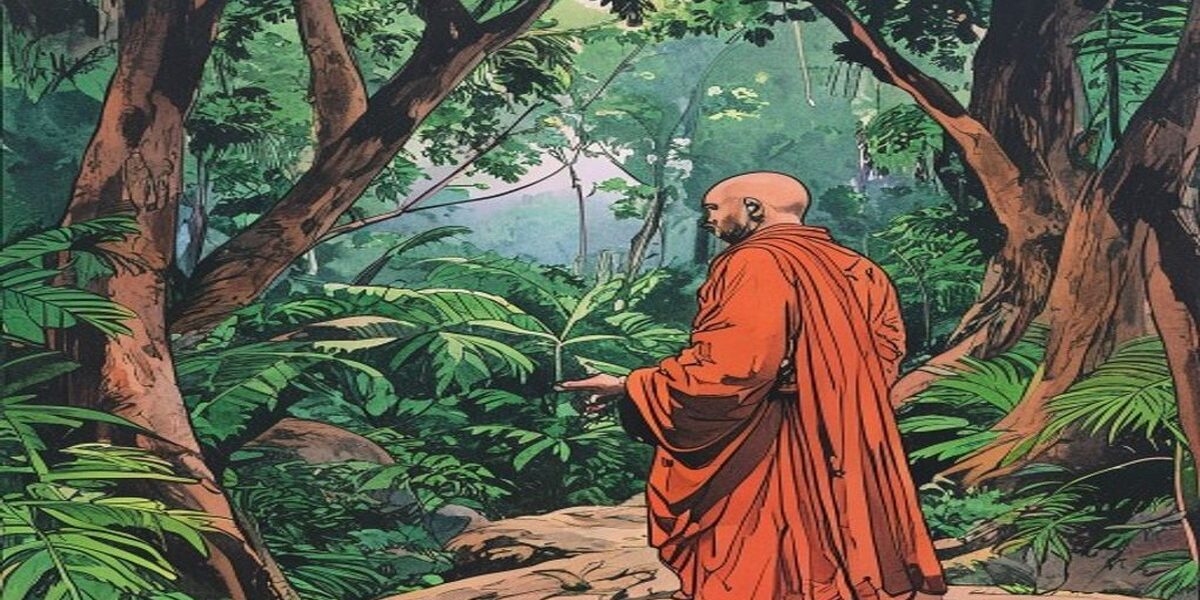
A mouse is transformed into a girl. The hermit and his wife raise her as their daughter, giving her love, education, and the life of the ashram. She grows beautiful, accomplished, and of marriageable age. The hermit, wanting only the best for her, approaches the most powerful beings in the cosmos to seek a husband. The sun? Too hot. The cloud that covers the sun? Too wet. The wind that drives the cloud? Too cold. The mountain that stops the wind? Too still. And finally, the mouse — who digs beneath the mountain — is the most powerful of all. The girl chooses the mouse. And then she becomes a mouse again. The hermit’s daughter tale is one of the most ancient and carefully structured parables about the relationship between nature (svabhava) and nurture (samskara) in world literature.
I. Svabhava and Samskara: The Indian Debate
Indian philosophical tradition engaged seriously with the question of what determines a person’s character: their innate nature (svabhava, literally “own-being”) or the impressions, training, and formation they receive (samskara, literally “perfecting” — the root of the English word “sacrament”). This debate has equivalents in Western philosophy (nature vs. nurture, physis vs. nomos, nativism vs. empiricism), but the Indian version is particularly rich because both poles had strong advocates within the same textual traditions.
The Panchatantra, which is not a philosophical treatise but a practical manual of wisdom, encodes the debate in narrative rather than argument. The hermit’s daughter tale comes down firmly on the svabhava side: nurture (the loving ashram upbringing, the accomplished education, the human identity) does not change what the girl fundamentally is. When the opportunity arises — when the most suitable partner appears — nature reasserts itself, and the transformation is not a degradation but a return. The mouse becomes a mouse; the girl becomes what she always was.
This is a conservative philosophical position, and scholars of the Panchatantra have noted that it serves the conservative social agenda of caste endogamy: marry within your own kind, because what you are cannot ultimately be changed by what you are taught. But the tale is more sophisticated than this summary suggests. The return to mouse-nature is not presented as a tragedy; the girl chooses the mouse, and her choice is presented as a natural recognition — the discovery of what she actually wants, freed from the categories the hermit has imposed on his search for the most powerful husband.
II. The Power Hierarchy and Its Subversion
The tale’s central movement — the hermit’s successive approach to the most powerful beings in the cosmos — is structured as a hierarchy that subverts itself. The sun seems most powerful; but the cloud covers the sun. The cloud seems most powerful; but the wind disperses the cloud. The wind seems most powerful; but the mountain deflects the wind. The mountain seems most powerful; but the mouse tunnels beneath it. Power, the tale suggests, is not a fixed summit but a relational quality: every power is exceeded by something, and the search for the “most powerful” will always loop back to something unexpected.
This subversion of the power hierarchy is philosophically significant. It echoes the Indian concept of maya — that apparent hierarchies of reality are not ultimate. The sun’s power over the mouse is real but partial; the mouse’s power over the mountain is real and, in the context of the girl’s nature, decisive. The tale refuses to endorse any single measure of power as final, which is why the search can only end when it returns to its starting point: the most suitable husband for a mouse-girl is a mouse.
The hermit’s error is methodological as well as metaphysical: he searches for the most powerful being in general, when what he should have sought is the most suitable being for his particular daughter. Power in the abstract is not what she needs; fit is what she needs. The tale thus also encodes a lesson in the difference between absolute standards and relational ones — between asking “what is the best?” and asking “what is best for this person?” This is a lesson that Indian arranged marriage traditions sometimes remembered and sometimes forgot.
III. The Transformation: Return or Becoming?
The tale’s ending — the girl’s return to mouse-nature — can be read in two ways, and the ambiguity is part of what makes it memorable. The conservative reading: nature is fixed; education and nurture cannot change what one fundamentally is; like goes to like, and the girl was always a mouse. The more generous reading: the transformation is not a diminishment but an authentication — the girl has spent her life in a form that did not match her nature, and the mouse-husband reveals what she actually is, allowing her to live authentically for the first time.
The second reading is supported by the emotional texture of the tale in its better versions. The hermit’s daughter does not reluctantly choose the mouse; she chooses him with recognition — the way one recognises something one has always known without knowing it. The return to mouse-nature is experienced not as loss but as arrival. This emotional register suggests that the tale is not simply endorsing social conservatism but exploring the genuine human experience of finding, perhaps late and through a roundabout journey, what one actually is and where one actually belongs.
The broader resonance is with the Indian concept of svadharma — one’s own duty, one’s own proper path. The Bhagavad Gita famously argues that it is better to perform one’s own svadharma imperfectly than another’s perfectly. The hermit’s daughter, raised to perform a kind of duty not her own, finds her svadharma in the end. The tale validates this finding, whatever the social form in which it arrives.
“You can raise a mouse as a daughter, but you cannot make the mountain her home.”
— Proverbial gloss on the Panchatantra’s hermit’s daughter tradition
Why This Story Lasted
The Hermit’s Daughter lasted because it addresses one of the permanent puzzles of human life: the relationship between who we are brought up to be and who we actually are. Every generation contains people who live for years inside an identity not their own — an identity given by family expectation, social pressure, or circumstance — and the question of whether that identity can become genuinely their own, or whether the original nature will eventually reassert itself, is never fully resolved by theory.
The tale also lasted because its power-hierarchy subversion is intellectually delightful: the search for the most powerful husband visits the cosmic hierarchy and discovers that power is circular and relative, that the search always ends somewhere unexpected, and that the appropriate end is often the simplest one rather than the grandest. This structural delight is independent of the tale’s philosophical agenda, and audiences who do not share the svabhava-first view can still enjoy the journey through the cosmic chain and appreciate the mouse’s final, unexpected, perfectly sensible arrival.
What is the origin of The Hermit’s Daughter tale?
The Hermit’s Daughter (also known as The Mouse Maiden) is one of the most widely distributed tales in the Panchatantra tradition. It appears in various forms across South Asia, Southeast Asia, and into European folk literature through translation chains. In its core form, a mouse is transformed into a girl and raised by a hermit, who searches for the most powerful husband in the cosmos, only to discover that the mouse — who tunnels beneath the mountain that stops the wind — is the most powerful of all, and that his daughter’s mouse-nature reasserts itself in choosing her mate.
What is the difference between svabhava and samskara in Indian thought?
Svabhava (literally “own-being”) refers to innate nature — what a being fundamentally is, independent of training or environment. Samskara (literally “perfecting” or “impression”) refers to the formative influences, rites of passage, and education that shape character over time. The Indian philosophical tradition debated vigorously which was more determinative of character. The Hermit’s Daughter tale comes down on the svabhava side: the mouse-girl’s nature was fixed at her origin, and no amount of ashram education or human love could ultimately change it.
How does the tale’s power hierarchy work and why does it subvert itself?
The power hierarchy in the tale — sun, cloud, wind, mountain, mouse — is structured so that each power exceeds the previous one but is exceeded by the next. The sun is covered by the cloud; the cloud is dispersed by the wind; the wind is deflected by the mountain; the mountain is tunnelled beneath by the mouse. This circular structure suggests that power is relational rather than absolute — there is no single “most powerful” being, only the being most powerful in a specific relational context. The tale’s point is that the hermit should have sought not the most powerful being in general but the most suitable being for his particular daughter.
What is svadharma and how does it relate to this story?
Svadharma is one’s own proper duty or path — the role and conduct appropriate to one’s nature and station. The Bhagavad Gita famously argues that performing one’s own svadharma imperfectly is preferable to performing another’s perfectly. The hermit’s daughter, raised in a form not her own, lives for years according to a dharma that does not match her nature. Her choice of the mouse-husband and return to mouse-form can be understood as the discovery and adoption of her true svadharma — living authentically as what she is, rather than as what her upbringing prepared her to be.
Is the girl’s return to mouse-nature a tragedy or a liberation?
The tale’s ambiguity on this point is central to its enduring interest. The conservative reading treats it as an illustration of the fixed nature of species and caste — she was always a mouse, and education did not change that. The more generous reading treats the transformation as an authentication: the girl has spent years in a form not her own, and the mouse-husband reveals what she actually is, allowing her to live authentically for the first time. The emotional texture of the tale — the recognition with which she chooses the mouse — supports the generous reading: the return is experienced as arrival rather than loss.
Frequently Asked Questions
**Q: Why is this story important?**
You May Also Like
 Aesop's Fables
Ages 9-12
Aesop's Fables
Ages 9-12
The Oak and the Reed
The Oak and the Reed: Along the banks of a slow, meandering river, there grew two very different plants in close proximity to one another. One was a mighty oak
 Aesop's Fables
Ages 3-5
Aesop's Fables
Ages 3-5
A Story Weaver By Chance Meet Vani Balaraman Of Cuddles And Reads
A Story Weaver By Chance Meet Vani Balaraman Of Cuddles And Reads: Somethings happen by chance. For Vani Balaraman, it was storytelling. Founder of Cuddles and
 Aesop's Fables
Ages 3-5
Aesop's Fables
Ages 3-5
The Ass and The Mule
A stubborn ass rejects the mule's help and dies from pride. Humility saves; ego destroys.